
Advanced therapies · Coral Springs & Parkland
Graston Technique in Coral Springs
Stainless-steel instruments that find fascial restriction and scar tissue by feel, then break it up so stalled healing can restart. A core soft-tissue tool in the Repair and Rebuild phases of the 4R Method.
Quick answer
The Graston Technique is a form of instrument-assisted soft tissue mobilization (IASTM). A trained provider glides contoured stainless-steel instruments over the skin to locate and treat scar tissue and fascial restrictions. It is used for tendinopathy, plantar fasciitis, chronic strains and post-injury scar tissue, usually in 10–15-minute sessions paired with chiropractic care and rehab.
What is the Graston Technique and how does it work?
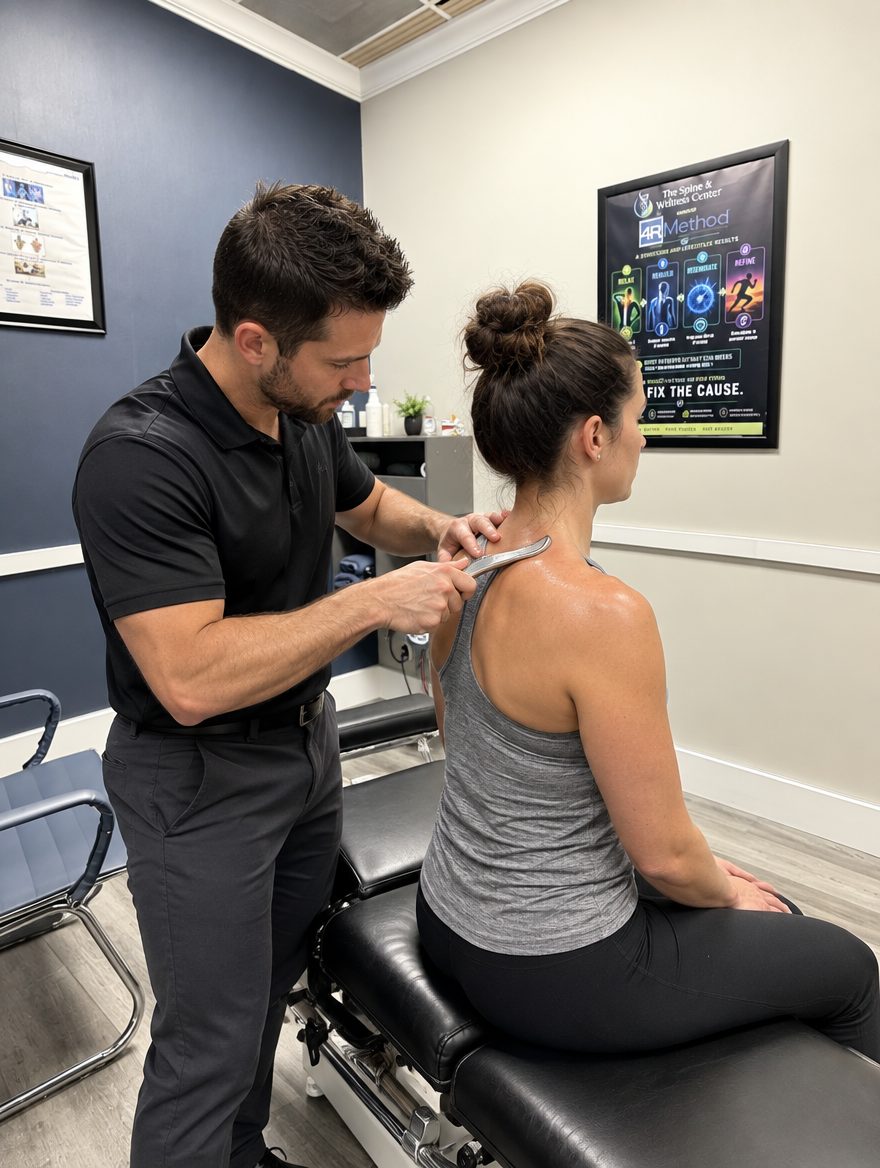
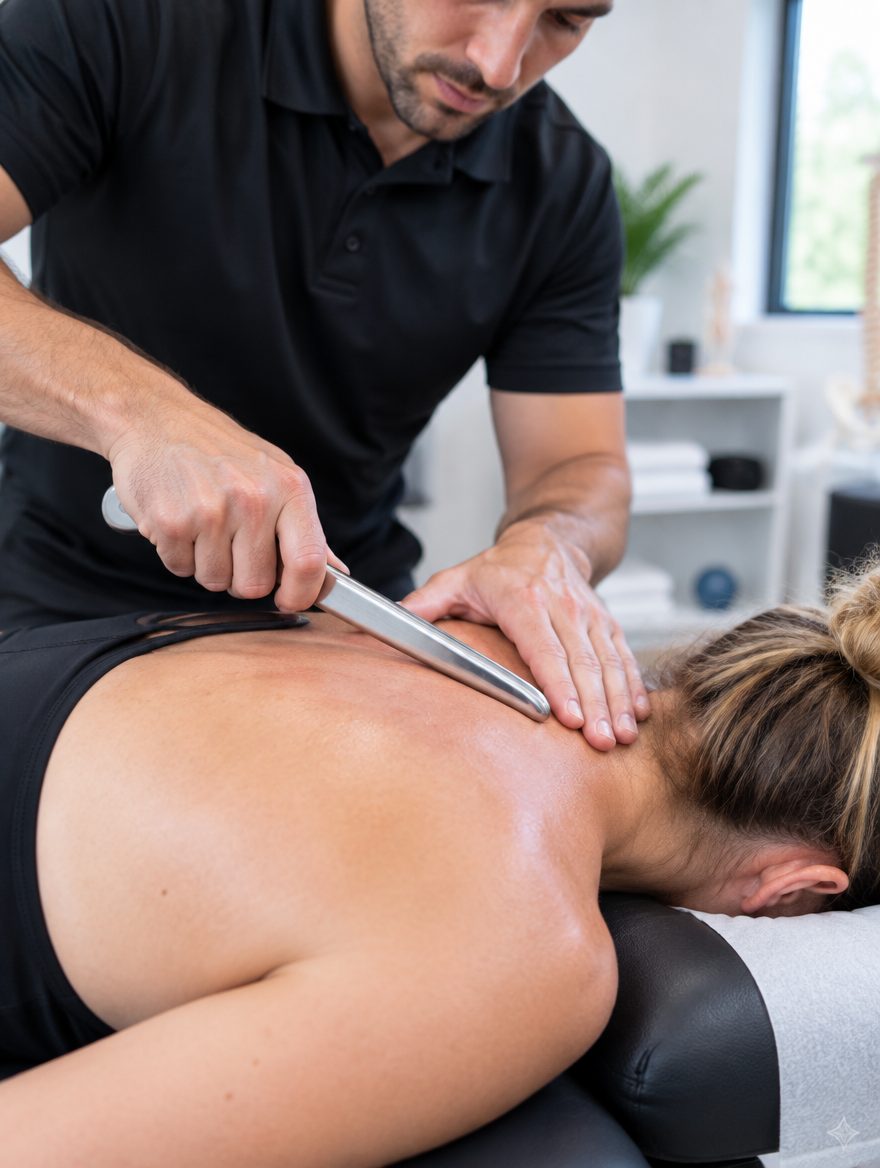
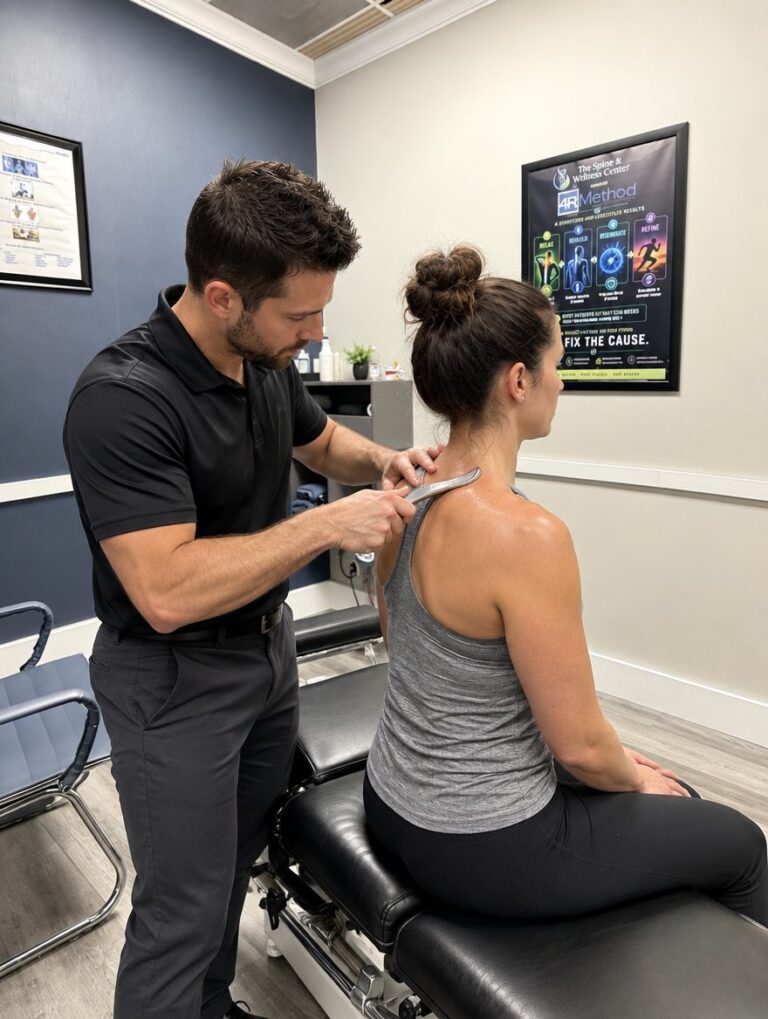
The Graston Technique is a patented form of instrument-assisted soft tissue mobilization, usually shortened to IASTM. Instead of thumbs and fingers, the provider uses six contoured stainless-steel instruments to scan muscle, tendon and fascia for areas that feel gritty, thick or restricted, then treats those areas with controlled strokes.
The instruments do two things that hands cannot do as well. First, they amplify what the provider feels: healthy tissue glides smoothly under steel, while scar tissue and fascial adhesions produce a distinct vibration the clinician can follow. Second, the edge of the instrument delivers a precise, repeatable mechanical load to the restricted tissue.
That controlled load is the point. Chronic strains and old injuries often stall in a half-healed state: the body laid down disorganized collagen (scar tissue) and stopped remodeling it. Graston work creates a small, local, controlled inflammatory response that re-initiates healing, so the tissue can be remodeled along the lines of normal stress with the help of targeted exercise.
- Fascial restriction: the connective-tissue sheath around muscle gets stuck to the layers beside it, limiting glide and range of motion.
- Scar tissue and adhesions: disorganized collagen laid down after injury or surgery that binds tissue layers together.
- Chronic tendinopathy: degenerated, poorly healed tendon tissue that stays sore because remodeling never finished.

What conditions does the Graston Technique help?
The Graston Technique is most useful for soft-tissue problems that have become chronic, recurrent or stuck, rather than for a fresh injury that is still swollen. In our Coral Springs clinic the most common reasons we reach for the instruments are:
- Tendinopathy — Achilles, patellar, rotator cuff, tennis and golfer’s elbow, where the tendon has thickened and stays sore for months.
- Plantar fasciitis — heel and arch pain from a thickened, restricted plantar fascia, common in runners and people who stand all day.
- Chronic muscle strains — hamstring, calf, hip flexor and low back strains that ‘never fully healed’ and keep flaring with activity.
- Post-injury and post-surgical scar tissue — restrictions around old sprains, fractures, knee and shoulder surgeries once the surgeon has cleared soft-tissue work.
- IT band syndrome and shin splints — lateral knee and shin pain from overloaded, adhered fascia.
- Neck and upper-back tension — the tight upper trapezius and levator scapulae pattern of desk work, often alongside neck pain and headaches.
- Low back fascial restriction — the thoracolumbar fascia that locks down after repeated episodes of lower back pain.
It is also a staple of our sports injury rehab programs for Coral Springs and Parkland athletes — runners, pickleball and tennis players, golfers and youth athletes — because it clears the fascial restrictions that limit range of motion before strengthening begins.
Good to know
Graston work treats soft tissue, not the joint or disc underneath it. When the real driver is a locked facet joint or a bulging disc, we combine it with chiropractic adjustments or spinal decompression rather than using it alone.
What does a Graston Technique session feel like?
A Graston Technique session is short, usually 10 to 15 minutes of instrument work on one or two regions, and is almost always combined with other care in the same visit.
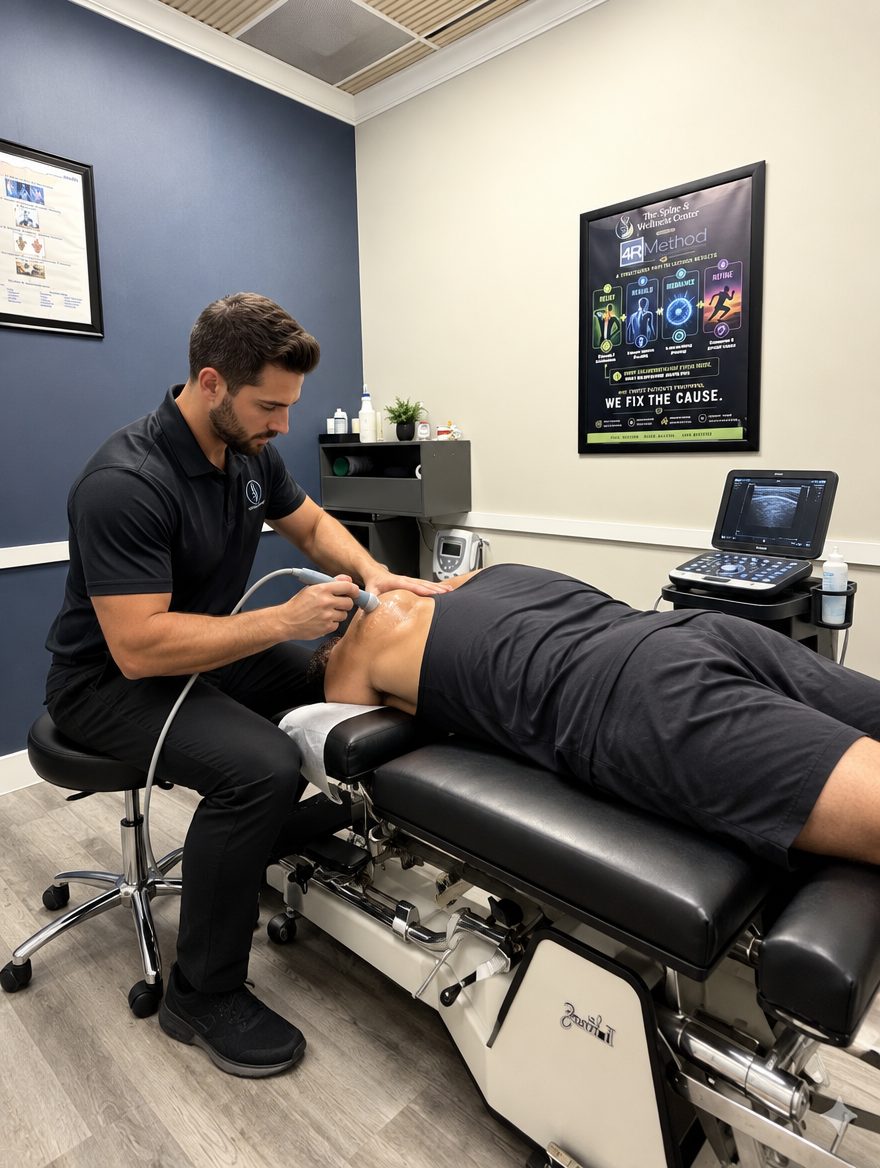
- Warm-up. The area is warmed with a few minutes of movement, heat or therapeutic ultrasound so the tissue is pliable.
- Scanning. An emollient is applied and the provider glides the instrument lightly over the region, feeling for the gritty or ‘crunchy’ texture of restriction.
- Treatment strokes. Short, directed strokes are applied to the restricted tissue at moderate pressure for several minutes. Pressure is adjusted to your tolerance.
- Movement and loading. We follow the instrument work with stretching and specific exercises so the tissue remodels in the direction it needs to move.
Most people describe the sensation as firm, deep and ‘good sore’ rather than painful. Over restricted tissue there is a scratchy or rasping feeling that eases as the session goes on. If a stroke is genuinely painful, tell us; the technique works at a moderate intensity and does not need to hurt to be effective.
Redness and small bruises are normal
Expect the treated skin to turn red for a few hours, and in some people small red or purple dots (petechiae) or light bruising appear and fade within two to four days. That is the local increase in blood flow the technique is designed to create. Mild soreness like a hard workout for 24 to 48 hours is also common, especially after the first session or two.
Where does the Graston Technique fit in the 4R Method?
Every plan at The Spine and Wellness Center follows the 4R Method — Repair, Rebuild, Regenerate, Refine. The Graston Technique lives mainly in the first two phases.
R1 · Repair — calm the pain and restore glide
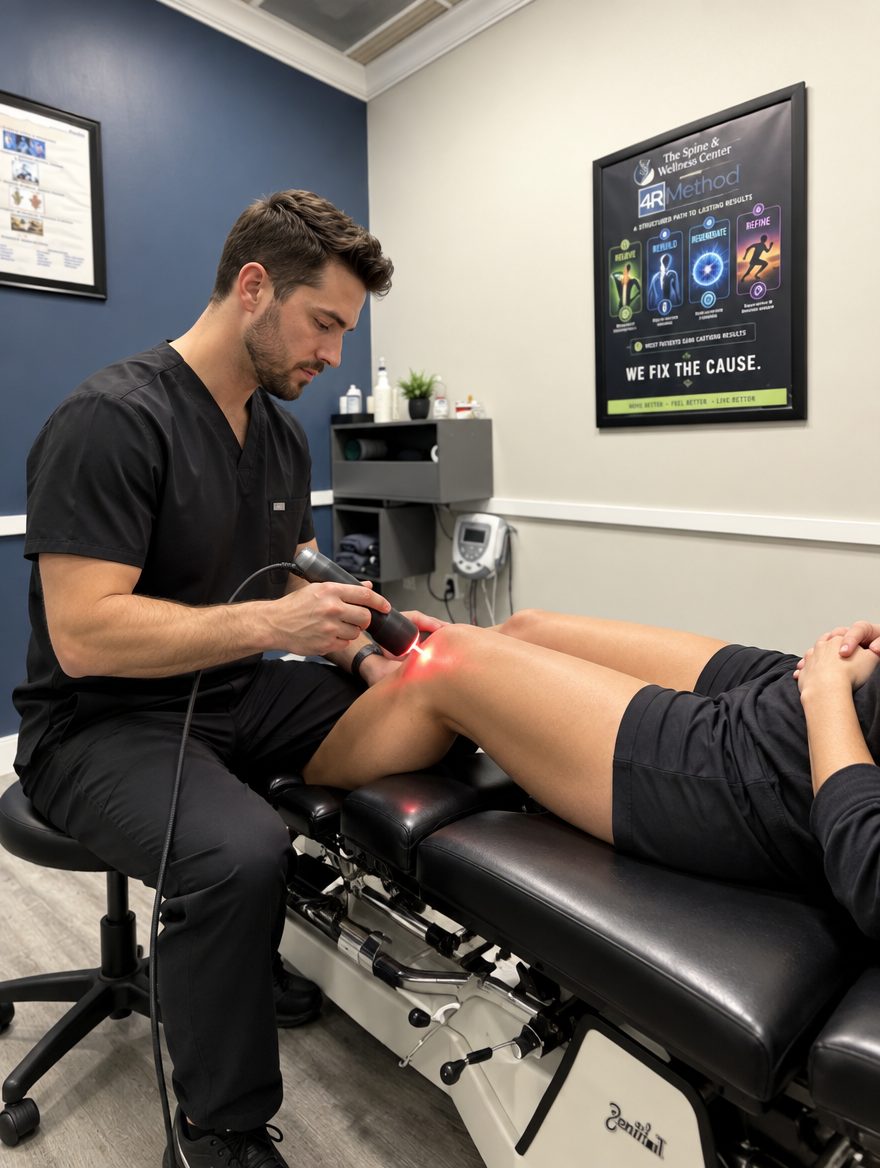
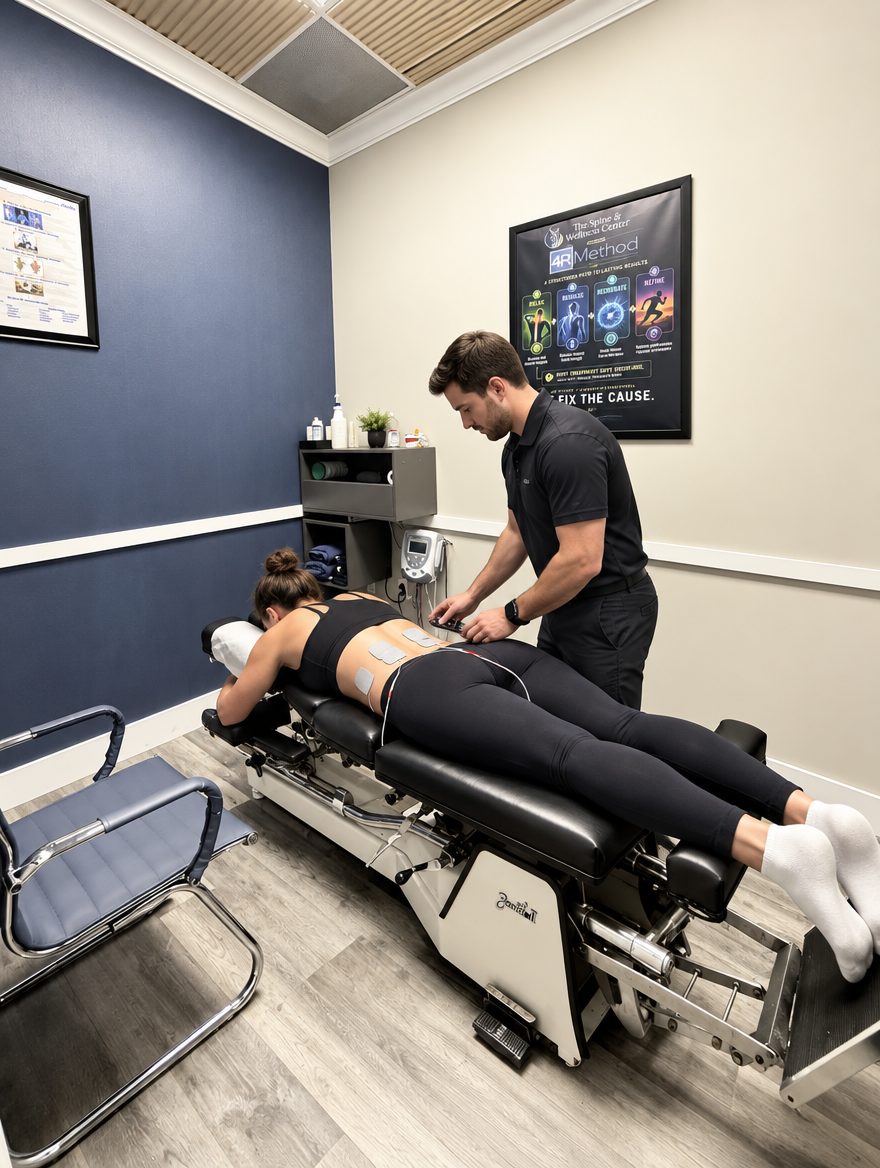
In the Repair phase (typically 3–5 visits a week for 4–8 weeks) instrument work is used lightly and briefly on chronic strains and tendinopathies to restore tissue glide while adjustments, cold laser therapy or electrical muscle stimulation settle the pain. On a fresh, swollen injury we wait; the instruments come in once the acute inflammation has passed.
R2 · Rebuild — remodel the tissue under load
The Rebuild phase (2–3 visits a week for 8–16 weeks) is where the Graston Technique does its most important work. The scar tissue and fascial restriction that kept the injury coming back are treated, and in the same visit physical therapy loads the tissue so new collagen is laid down in an organized pattern. This pairing — break up the restriction, then strengthen through it — is what turns a recurring strain into a tissue that can take the load again.
Most tendon and fascia problems need six to twelve instrument sessions spread across the plan, each one measured against your range of motion and pain scores. In the Regenerate and Refine phases we use it only as needed — for example, a brief session before a golf season or after a long block of desk work.
What does the research say about IASTM?
The evidence for instrument-assisted soft tissue mobilization is promising but still developing, and we say so plainly. A 2016 systematic review published in the Journal of the Canadian Chiropractic Association concluded that IASTM may improve joint range of motion in the short term, while the evidence for pain and function was mixed and many studies were small (Cheatham et al., PMC).
In our clinical experience the technique is most valuable not as a stand-alone fix but as the step that unlocks movement so corrective exercise can do its job. That is why Graston work is always paired with rehab and structural care here rather than offered on its own, and why we re-measure range of motion and pain scores every few weeks to confirm it is earning its place in your plan.
Safety and contraindications
The Graston Technique is well tolerated when performed by a trained, certified provider. We do not use it over open wounds, active infections, unhealed fractures, acute inflammatory conditions such as a rheumatoid flare, areas of known blood clot (DVT), varicose veins, or in people with bleeding disorders or on blood thinners without their physician’s input. Pregnancy, osteoporosis and recent surgery call for modified pressure or a different tool. Your first-visit exam screens for all of these.
Graston Technique vs. massage, cupping and shockwave
Patients often ask which soft-tissue tool is right for them. The honest answer is that each one does a different job, and we frequently combine them:
- Graston Technique: precise mechanical breakdown of scar tissue and fascial restriction. Best for localized, chronic, ‘stuck’ tissue.
- Massage therapy: broad relaxation of muscle tone and improved circulation. Best for diffuse tension and recovery.
- Cupping therapy: negative pressure that lifts and decompresses the fascia. Best for large, tight regions such as the upper back or thigh.
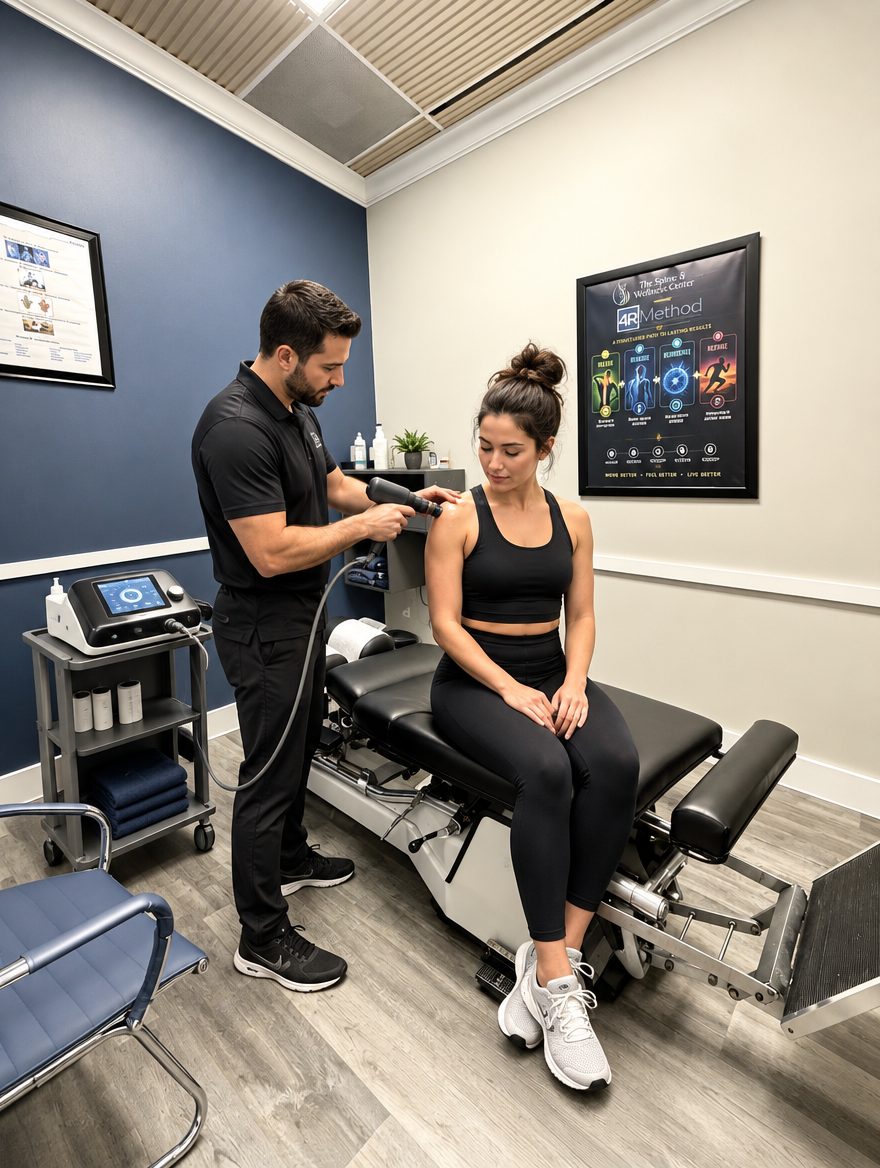
- Acoustic shockwave therapy: acoustic pulses that stimulate healing deep in a tendon or at a calcific deposit. Best for stubborn tendinopathy and plantar fasciitis that has not responded to hands-on care.
Acoustic shockwave therapy
For chronic tendinopathy and plantar fasciitis that need a deeper healing stimulus.
Learn moreCupping therapy
Negative-pressure decompression of fascia; pairs well with Graston on the same region.
Learn morePhysical therapy
The loading program that makes Graston results hold.
Learn moreChiropractic care
Restore joint motion so the soft tissue stops guarding.
Learn moreWhat to expect at your first two visits
We measure before we treat, so Graston work is prescribed for a reason rather than applied to whatever hurts.
Visit one — we measure (and usually begin care)
- A real conversation about the injury history, what has been tried, and what you want to get back to.
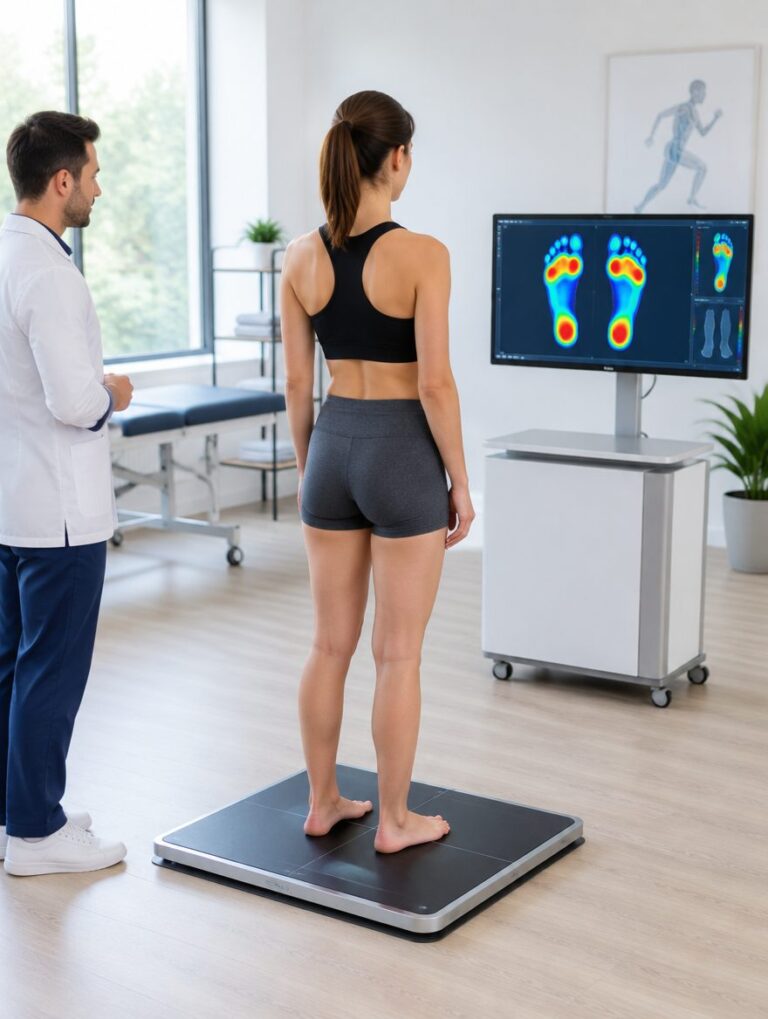
- A hands-on structural exam — range of motion, palpation of the soft tissue for restriction, orthopedic and tendon-loading tests, and posture and gait analysis.
- Surface EMG and thermal scanning along the spine to see where muscles are guarding and compensating.
- Digital X-rays when indicated, to rule out joint or bone causes behind a soft-tissue complaint.
Visit two — your findings and your plan
We walk you through what we found and where Graston fits in your 4R plan, including how many sessions we expect and how we will measure progress. Treatment begins at this visit. If you would like a head start, take the 60-second spine assessment before you come in.
Home care between Graston sessions
- Move the area the same day. Gentle range-of-motion work and the exercises we give you help the tissue remodel in the right direction.
- Hydrate and use heat, not ice. Warmth supports the increased blood flow the treatment created; ice works against it unless the area is unusually swollen.
- Expect redness and mild soreness for a day or two and let bruising fade on its own.
- Skip aggressive foam rolling over the treated area for 48 hours.
- Tell us if soreness lasts more than three days so we can adjust pressure at the next session.
If a soft-tissue injury comes with a sudden pop, rapid swelling, inability to bear weight, or numbness, please see a doctor or urgent care today before starting any soft-tissue therapy.
Serving Graston Technique patients across North Broward
Our clinic at 5675 Coral Ridge Drive, Coral Springs, FL 33076 serves Coral Springs, Parkland, Coconut Creek, Margate, Boca Raton, Tamarac, Pompano Beach and Deerfield Beach. Same-day appointments are usually available — call (954) 341-2256 or book online. Most patients from Parkland and Coral Springs are here in under 15 minutes.
Medically reviewed by Dr. Jared Cohen, DC — Co-Founder & Clinical Director, The Spine and Wellness Center. Last reviewed October 2026.
Frequently asked questions
Does the Graston Technique hurt?
It is usually described as deep and 'good sore' rather than painful. Restricted tissue feels scratchy under the instrument, and that sensation eases during the session. Pressure is always adjusted to your tolerance, and the technique works at moderate intensity, so it does not need to hurt to be effective.
Why does Graston cause bruising?
The strokes increase local blood flow and create a small, controlled inflammatory response that restarts healing in stalled tissue. Redness for a few hours and small dots or light bruising for two to four days are normal and expected. Heavy bruising is not the goal and tells us to lighten the pressure.
How many Graston Technique sessions will I need?
Most tendon and fascia problems respond over six to twelve sessions spread across the Repair and Rebuild phases of your plan, usually once or twice a week alongside adjustments and rehab. We re-measure range of motion and pain every few weeks and stop when the tissue is moving normally.
Is the Graston Technique the same as scraping or gua sha?
They share the idea of instrument-assisted tissue work, but the Graston Technique uses specific stainless-steel instruments, a standardized protocol and certified training, and is paired with exercise to remodel the tissue. Gua sha is a traditional practice with different tools and aims.
Can Graston help plantar fasciitis?
Often, yes. Plantar fasciitis involves a thickened, restricted plantar fascia, and instrument-assisted work along the arch and calf can restore glide and reduce morning heel pain. For cases that have lasted many months we may add acoustic shockwave therapy, and we always include calf and foot strengthening.
Who should not have the Graston Technique?
We avoid it over open wounds, infections, unhealed fractures, known blood clots, varicose veins and acutely inflamed joints, and we modify or skip it for people with bleeding disorders, on blood thinners, with osteoporosis or who are pregnant. Your first-visit exam screens for each of these.
Do you offer the Graston Technique to patients from Parkland and Coconut Creek?
Yes. Our clinic on Coral Ridge Drive in Coral Springs is a short drive from Parkland, Coconut Creek, Margate, Tamarac and Boca Raton, and same-day appointments are usually available.
Same-day appointments
Let's fix the cause.
Measure first, then treat — a plan built on your actual structure.
- Same-day appointments are usually available
- Our team calls you back to confirm your visit
- Coral Springs, serving Parkland & North Broward since 2005
Prefer to talk now? Call or text (954) 341-2256