
Recovery & wellness · Coral Springs & Parkland
Red light therapy in Coral Springs
Recharge at the cellular level. Our full-body SPECTRA S10 system delivers red and near-infrared light that supports inflammation control, tissue recovery and everyday energy — painlessly, with no downtime.
Quick answer
Red light therapy, also called photobiomodulation, uses specific red and near-infrared wavelengths to stimulate the mitochondria inside your cells, supporting ATP production, calming inflammation and helping tissue recover. At The Spine and Wellness Center it is delivered on the full-body SPECTRA S10 system in warm, painless sessions that take only minutes, usually as part of a 4R Method care plan.
What is red light therapy and how does it work?
Red light therapy delivers specific wavelengths of red and near-infrared light into the body, where they are absorbed by the mitochondria — the structures inside every cell that produce energy. The scientific name is photobiomodulation. It is painless, produces no damaging heat, and nothing is injected or swallowed.
When mitochondria absorb these wavelengths they respond by producing more ATP, the fuel cells use to repair themselves. The same light stimulus is associated with better local circulation and a measurable reduction in inflammatory signaling, which is why it is used for recovery in sports medicine and rehabilitation settings around the world.
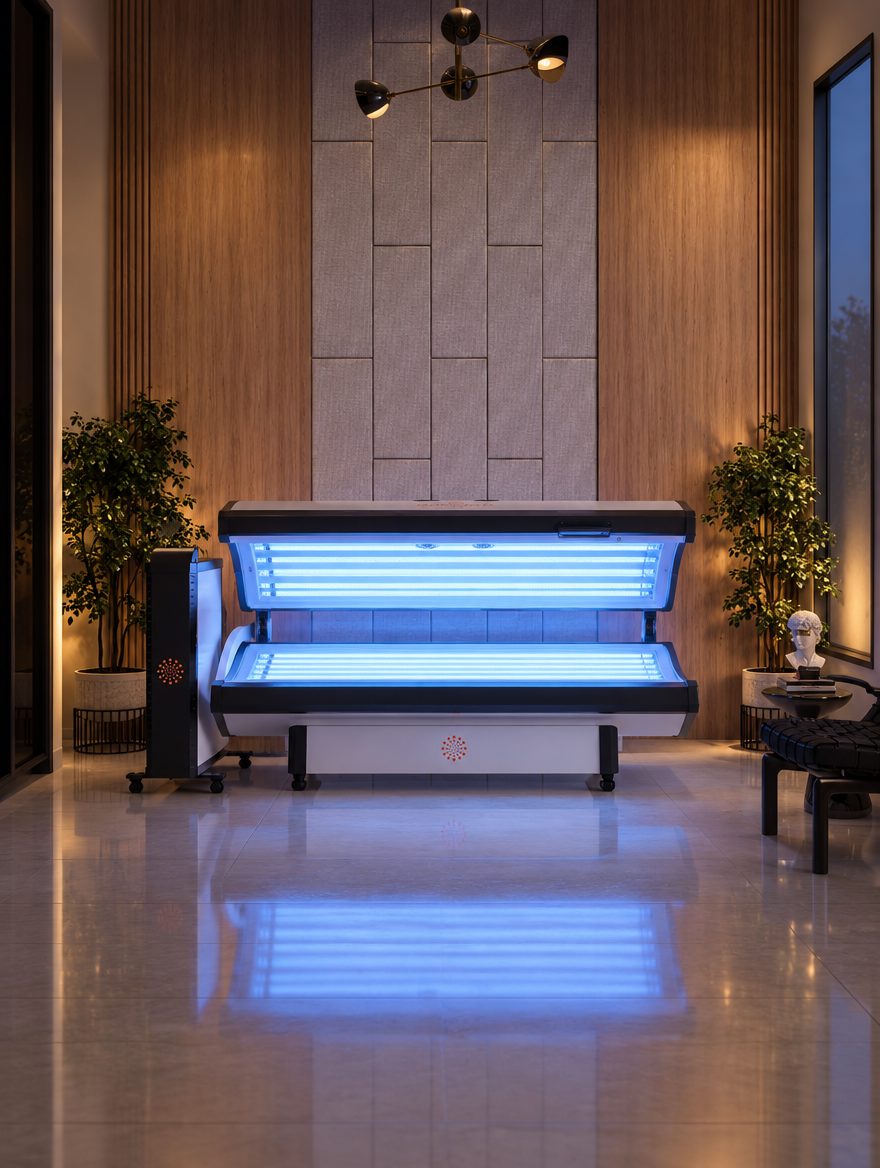
The two wavelength families do different jobs. Visible red light works closer to the surface — skin, superficial tissue and collagen. Near-infrared light travels deeper, reaching muscle, joint capsules and connective tissue. Our SPECTRA S10 system combines arrays of medical-grade diodes tuned to both ranges, so one session can address several goals at once.

Key point
Red light does not mask symptoms the way a pill can. It gives cells the energy they need to do their own repair work, which is why the benefits tend to feel gradual and natural — a little less stiffness, a little more energy, better sleep that builds session over session.
What conditions and goals does red light help with?
Patients in Coral Springs and Parkland come to us for red light with a wide range of goals. The most common reasons, and where each one sits in a care plan, are:
- Joint pain, arthritis and chronic inflammation. Near-infrared light calms the inflamed tissue around irritated joints — see our dedicated page on red light therapy for pain relief.
- Muscle recovery and athletic performance. Faster bounce-back after training, long runs and tournament weekends; often combined with sports injury rehab.
- Post-injury and post-surgical healing. Supports the tissue-repair phase after sprains, strains and procedures, alongside physical therapy.
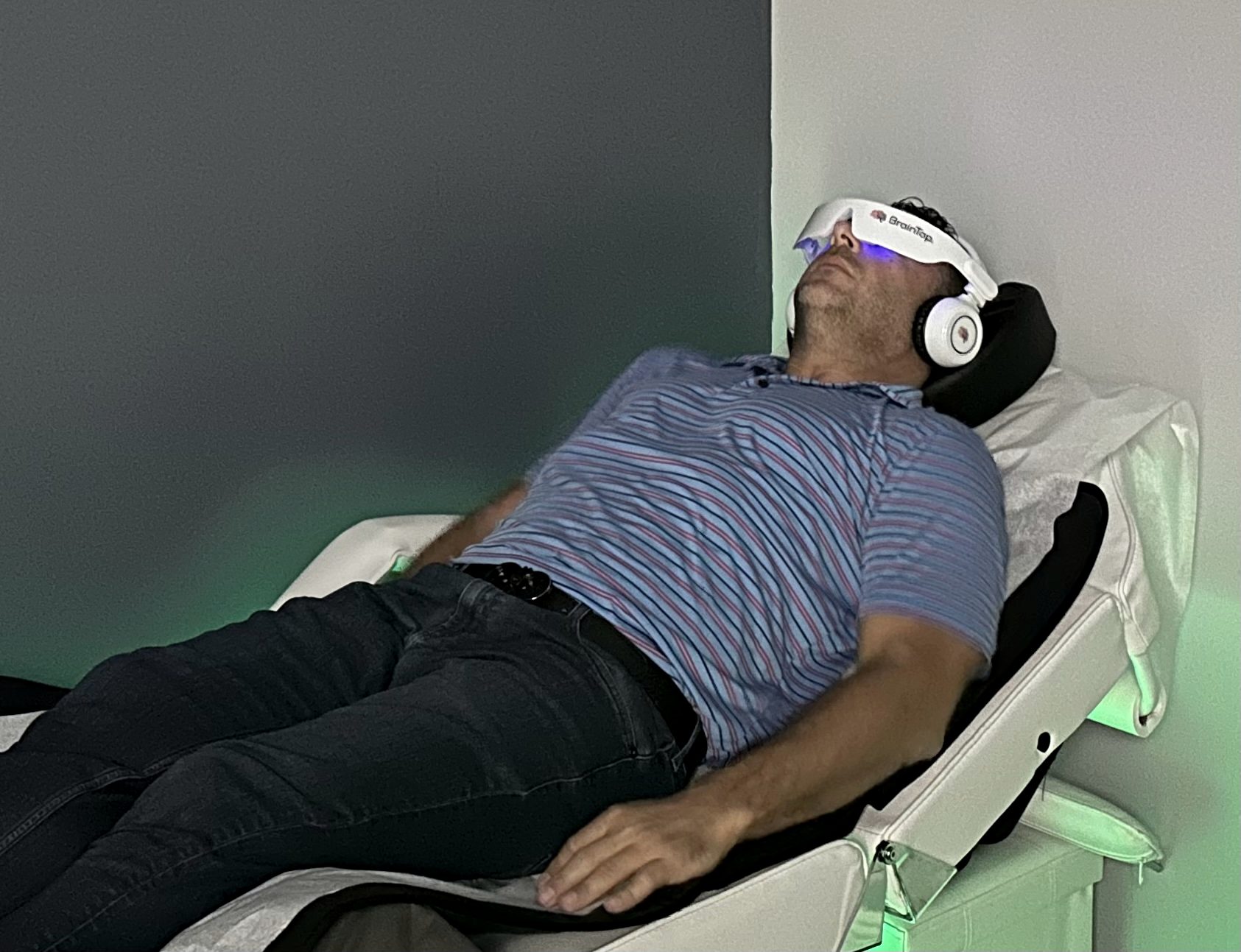
- Low energy, poor sleep and general wellness. Whole-body sessions in the Regenerate phase of the 4R Method, often paired with BrainTap and IHHT oxygen therapy.
- Skin tone, fine lines and tissue health. Visible red light stimulates collagen production in the skin.
- Weight-loss and body-contouring support. A complementary tool inside the NuOla program — read our evidence-cautious page on red light therapy for weight loss.
Spine patients benefit too. Red light calms the guarded, inflamed muscles beside a disc or facet problem, so an adjustment or a session of spinal decompression is more comfortable and holds better. Patients recovering from lower back pain or neck pain often add it to the Repair phase for exactly that reason.
What is a session like on the SPECTRA S10 system?
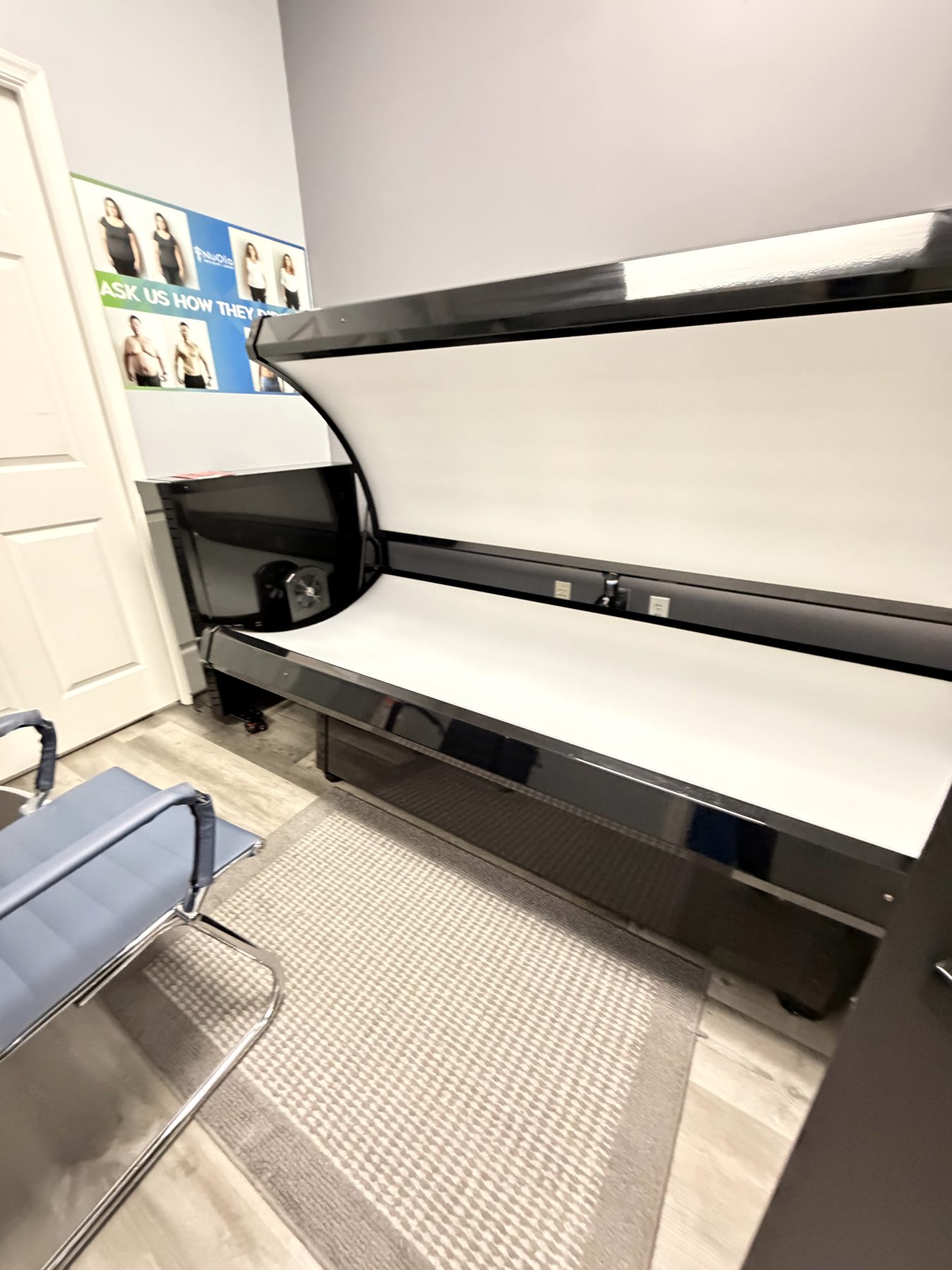
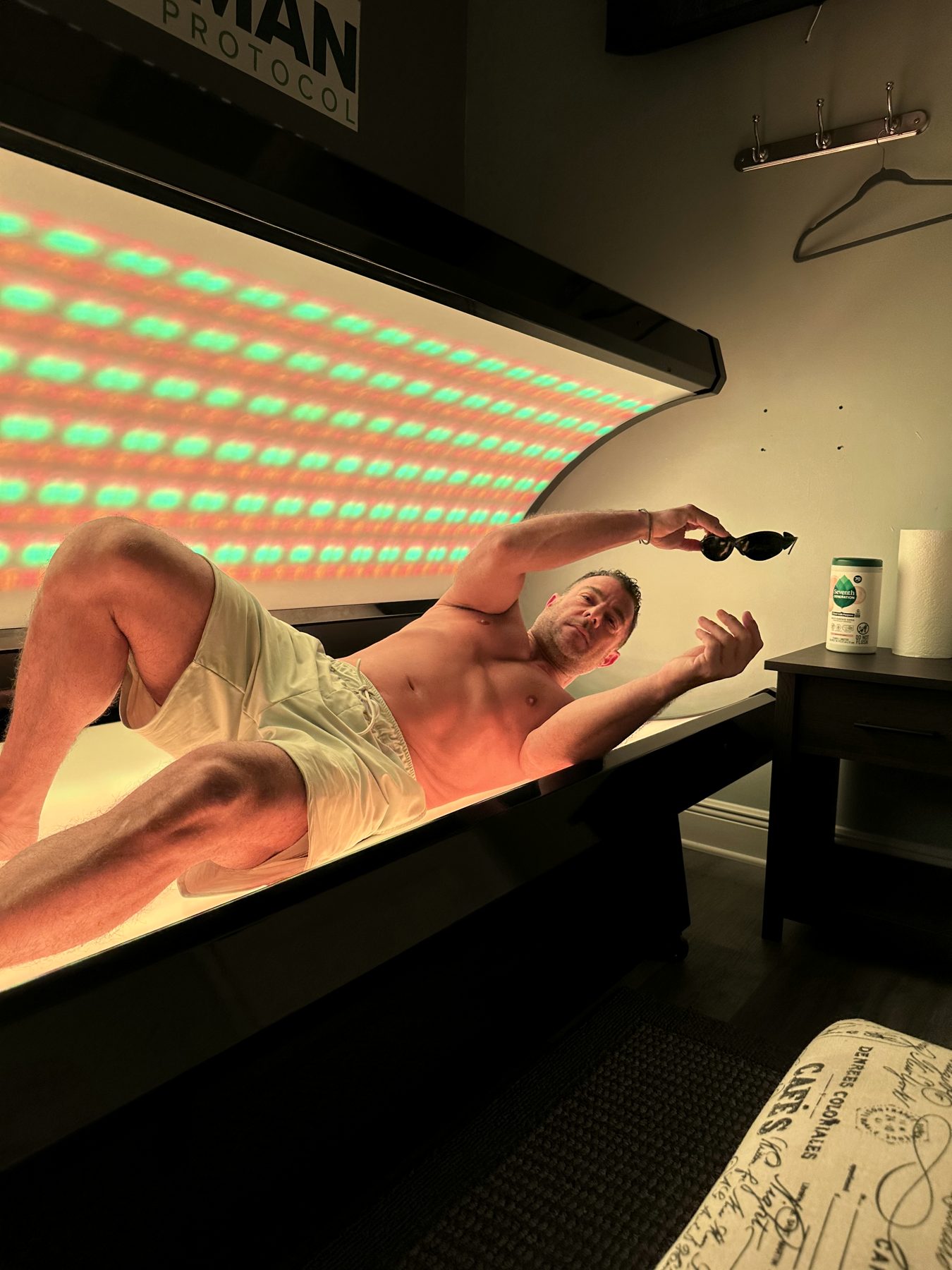
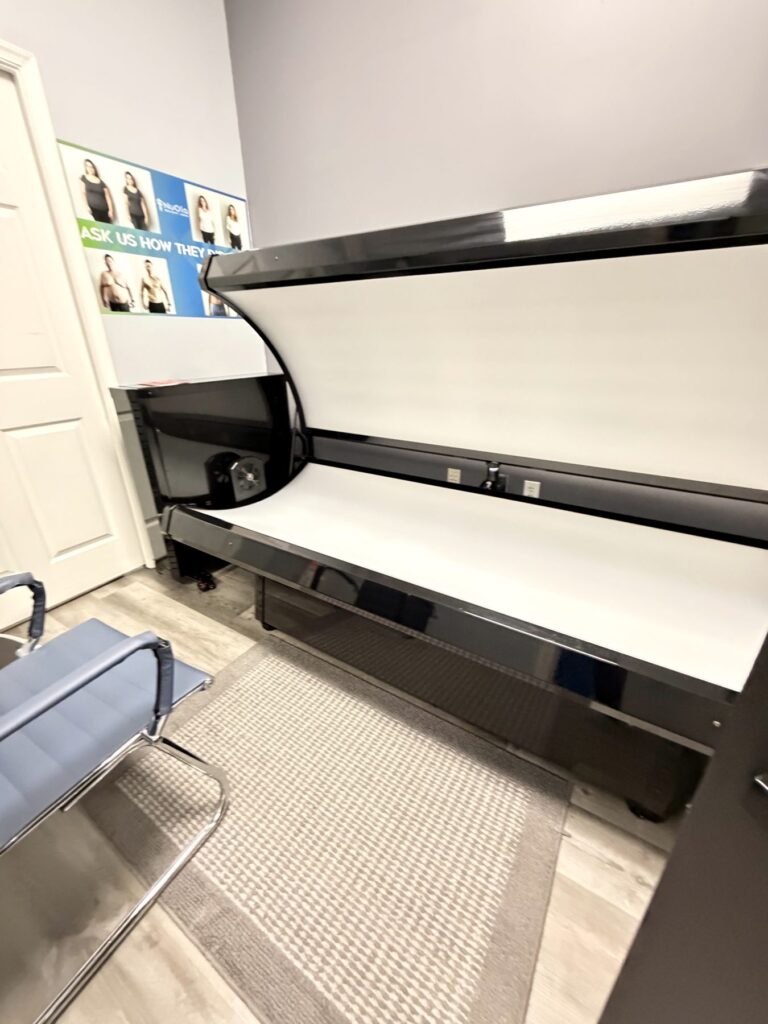
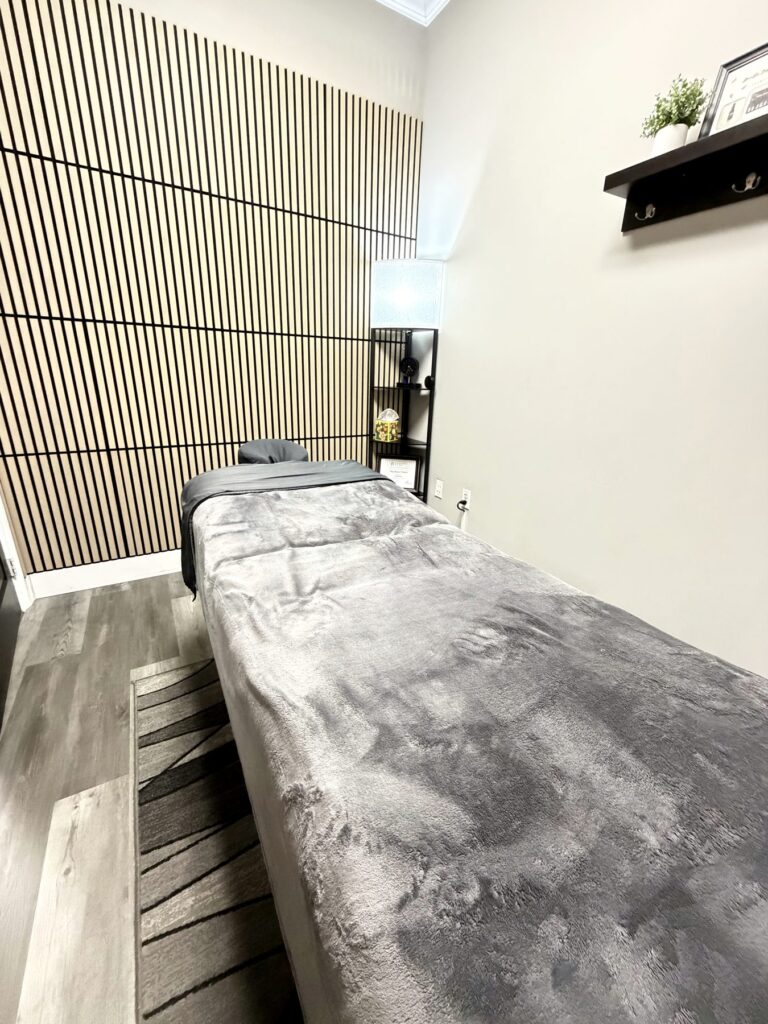
A session is one of the easiest appointments you will ever have. There is no special clothing, no gel and no preparation. You lie back on the full-body system, we position the arrays over the areas we are treating, and you rest in a soft, warm glow while the light does its work.
Most people describe the sensation as gentle warmth, similar to lying in the morning sun without the UV. There is no vibration and no sound. A session takes only a few comfortable minutes, so it fits between an adjustment and the drive home on the Sawgrass. Many patients use the time to close their eyes and unwind.
- Check-in and goal review. We confirm what we are targeting today — a sore lumbar region, a recovering shoulder, or a whole-body energy protocol.
- Positioning. You lie on the SPECTRA S10 bed; eye protection is provided for full-body sessions.
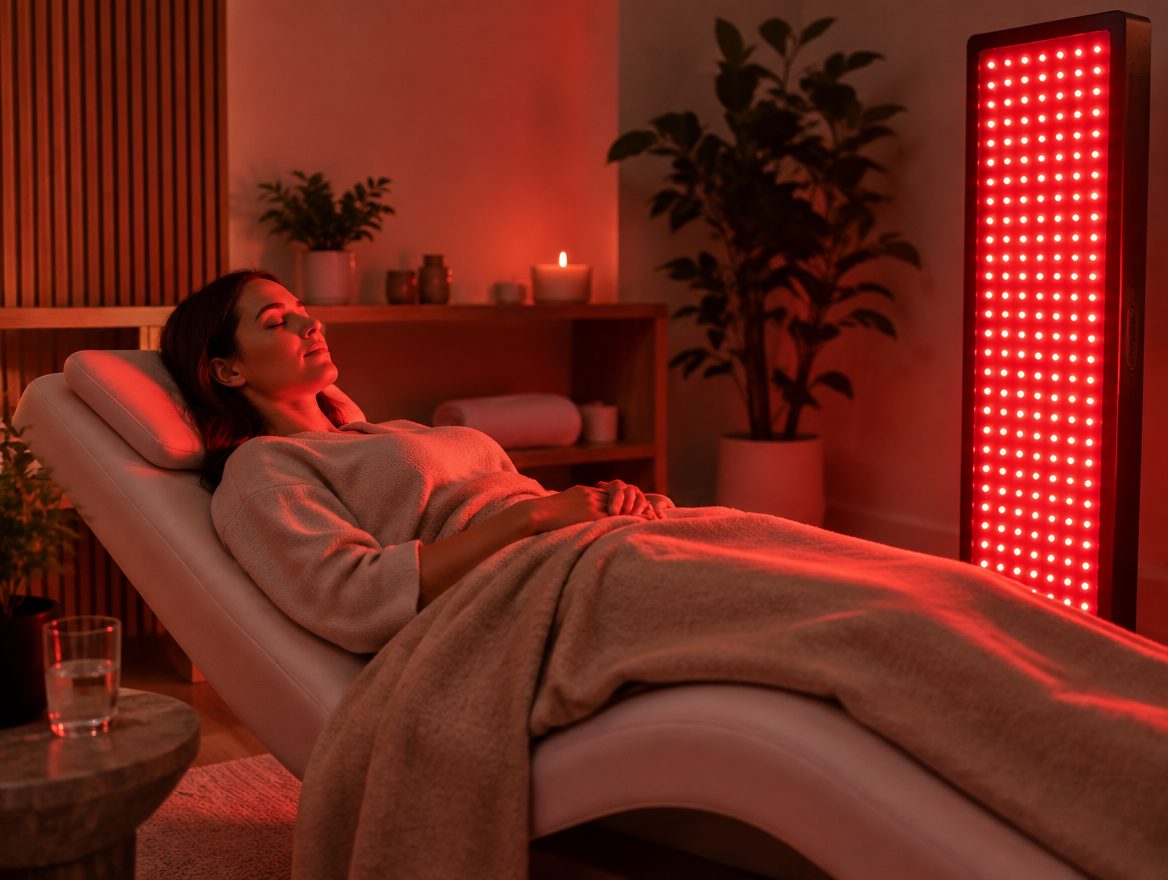
- The session. Relax while the red and near-infrared arrays deliver consistent, even light energy to the tissue.
- Back to your day. No downtime, no recovery, nothing to wash off. Most patients schedule red light on the same day as their other care.
Where does red light therapy fit in the 4R Method?
Every plan at The Spine and Wellness Center follows the 4R Method — Repair, Rebuild, Regenerate, Refine — and red light appears in three of the four phases, doing a different job in each.
R1 · Repair — calm the inflammation
In the Repair phase (3–5 visits a week for 4–8 weeks) targeted red and near-infrared light is applied over the painful region, usually right before decompression on the Triton DTS table or before an adjustment. Its job is to lower inflammation so structural work is comfortable and holds between visits. For acute, localized problems we may use cold laser on the same principle at a single point.
R2 · Rebuild — support tissue adaptation
During Rebuild (2–3 visits a week for 8–16 weeks) the body is remodeling: corrective adjustments, Graston soft-tissue work and rehab are loading tissue on purpose. Red light and PEMF support that adaptation so the gains from each session consolidate.
R3 · Regenerate — whole-body performance protocols
This is where full-body red light therapy comes into its own. In the Regenerate phase (about 2 visits a week for 2+ months) we move from treating a spot to elevating the whole system — energy, sleep, recovery and resilience — with whole-body light sessions alongside PEMF, IHHT and BrainTap. Refine then keeps the gains with a monthly tune-up.
Spinal decompression
The Triton DTS table takes pressure off the disc; red light calms the tissue around it.
Learn morePEMF therapy
Pulsed electromagnetic fields pair naturally with light for recovery between visits.
Learn moreIHHT oxygen therapy
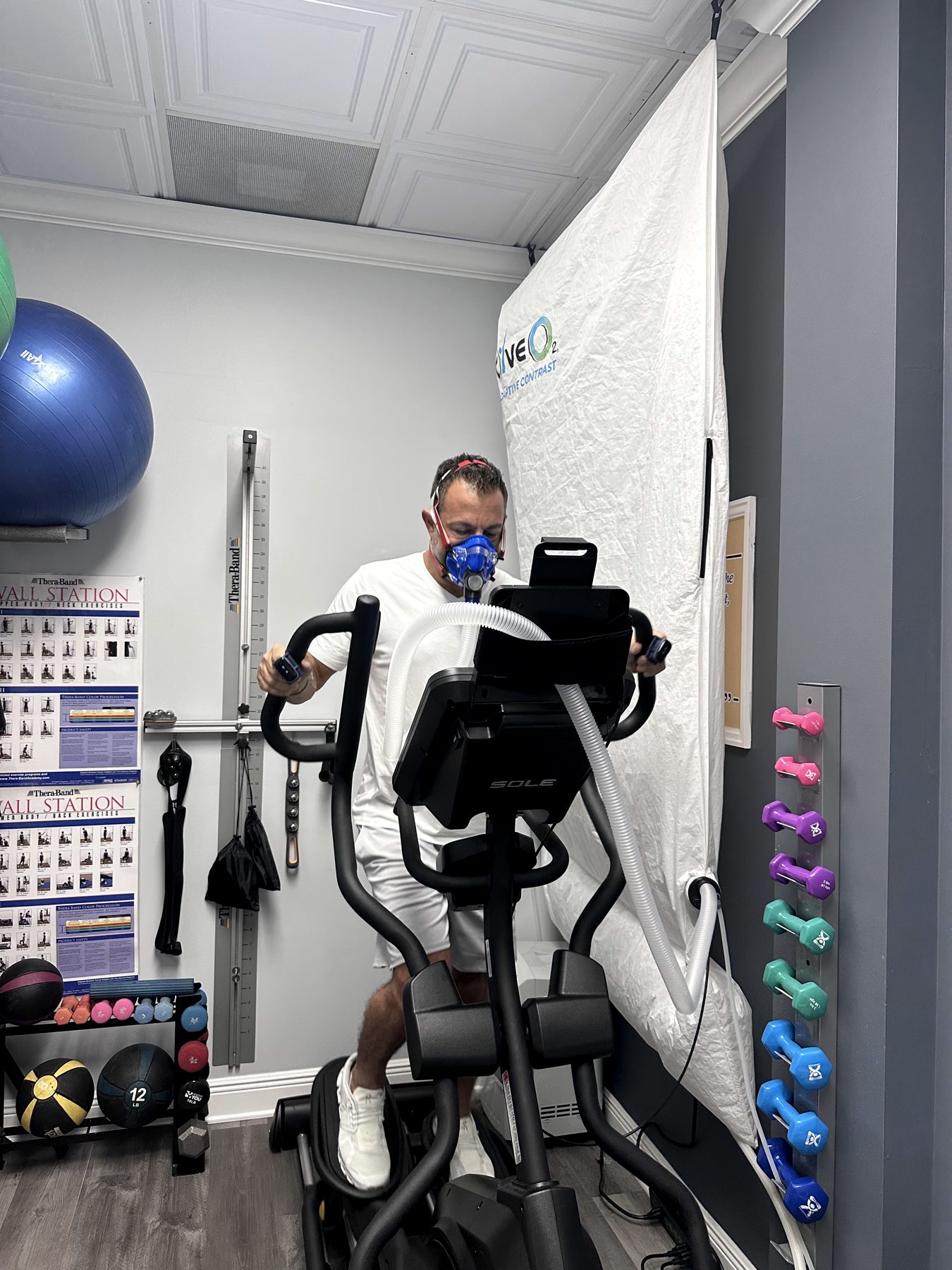
Mitochondrial conditioning through intermittent hypoxic-hyperoxic breathing.
Learn moreBrainTap
Guided light-and-sound sessions for stress, sleep and focus in the Regenerate phase.
Learn moreIs photobiomodulation safe? Evidence and precautions
Red light therapy is non-invasive, drug-free and well tolerated. Because the light is low-intensity and non-ionizing, there is no burning, no UV exposure and no recovery time. A widely cited review of the anti-inflammatory mechanisms of photobiomodulation, published in the National Library of Medicine, describes how these wavelengths influence mitochondrial signaling and inflammatory pathways (Hamblin, 2017).
We keep expectations honest. Cleveland Clinic notes that red light therapy shows promise for skin, wound healing and some pain conditions, while larger studies are still needed for many of the newer claims (Cleveland Clinic). Results vary from person to person — some feel a difference quickly, others build benefit over a series of sessions.
When we hold off or adjust the protocol
- Photosensitizing medications (some antibiotics, retinoids, certain supplements) — tell us before your first session.
- Active cancer in the treatment area or recent radiation — we defer to your oncology team.
- Pregnancy — we avoid direct treatment over the abdomen and discuss any session with you first.
- Light-sensitive eye conditions — eye protection is provided for every full-body session.
- Open wounds or recent injections at the site — we wait until cleared.
If it is not the right fit for you, we will say so and suggest a better path. It is a complement to a structured care plan, never a replacement for medical treatment.
What to expect at your first two visits
We measure before we treat, even for a wellness service like red light, because the right protocol depends on what is actually going on in your spine and tissue.
Visit one — we measure (and usually begin care)
- A real conversation about your goals: pain, recovery, energy, skin, or support for a weight-loss plan.
- A hands-on structural exam — posture, range of motion and orthopedic testing of the regions that bother you.
- Surface EMG and thermal scanning along the spine, which shows where muscles are guarding and where inflammation is likely (see the MyoVision sEMG scan).
- Digital X-rays, when indicated, so structural problems are not missed under a wellness label.
Visit two — your findings and plan
Dr. Jared Cohen, DC walks you through the findings in plain English and maps your plan across the 4R Method, including where red light therapy fits and how often. Treatment begins on this visit. You can get a head start with the 60-second spine assessment, which gives us your Spine Score before you walk in.
Serving red light therapy patients across North Broward
Our clinic at 5675 Coral Ridge Drive, Coral Springs, FL 33076 serves Coral Springs, Parkland, Coconut Creek, Margate, Boca Raton, Tamarac, Pompano Beach and Deerfield Beach. Same-day appointments are usually available — call (954) 341-2256 or book online. Most patients from Parkland and Coral Springs are here in under 15 minutes.
Medically reviewed by Dr. Jared Cohen, DC — Co-Founder & Clinical Director, The Spine and Wellness Center. Last reviewed October 2026.
Frequently asked questions
Does the light hurt?
No. The light feels like gentle warmth and most people find it relaxing. There are no needles, no heat damage and no soreness afterward. Eye protection is provided for full-body sessions, and the only thing you have to do is rest while the arrays deliver the light.
How long is a session?
A session takes only a few comfortable minutes on the full-body SPECTRA S10 system, so it fits easily on the same day as an adjustment, decompression or rehab. There is no preparation and no downtime, which is a big reason patients stay consistent — and consistency is what produces results over time.
How many sessions will I need?
It depends on your goal and your phase of care. Repair-phase protocols for an inflamed region run alongside 3–5 weekly visits for several weeks; Regenerate-phase whole-body protocols are typically about twice a week for two months or more. We review how you respond and adjust the schedule, and you are never locked in.
What is the difference between red light therapy and cold laser?
Both are photobiomodulation. Cold laser uses a focused handpiece to treat a single point — a tendon, a nerve root, a swollen joint — for a few minutes. Full-body red light uses large arrays to treat a whole region or the whole body at once, which makes it the better tool for recovery, energy and general inflammation.
Can I combine it with chiropractic care or decompression?
Yes, and we usually recommend it. Red light calms the inflamed, guarded tissue around a disc or joint, so adjustments and spinal decompression on the Triton DTS table are more comfortable and tend to hold better between visits. Most patients schedule the light session in the same visit.
Is red light therapy available near Parkland and Boca Raton?
Yes. Our clinic on Coral Ridge Drive in Coral Springs is a short drive from Parkland, Coconut Creek, Margate, Tamarac and Boca Raton, and same-day appointments are usually available. Call (954) 341-2256 or book online.
Same-day appointments
Let's fix the cause.
Measure first, then treat — a plan built on your actual structure.
- Same-day appointments are usually available
- Our team calls you back to confirm your visit
- Coral Springs, serving Parkland & North Broward since 2005
Prefer to talk now? Call or text (954) 341-2256