
Conditions · Coral Springs & Parkland
Shoulder pain treatment in Coral Springs
Reaching for the seatbelt, sleeping on your side, the serve that used to be easy — when the shoulder hurts, it is usually the rotator cuff, the space it works in, or the posture feeding it. We find which, and treat it without injections or surgery.
Quick answer
Shoulder pain treatment at our Coral Springs clinic starts by identifying the structure at fault — rotator cuff tendons, impingement, a frozen capsule, or a neck and upper-back posture problem driving all three. We then combine acoustic shockwave, Graston Technique, cold laser, gentle adjustments and targeted rehab inside the 4R Method to restore pain-free reach, drug-free.
What is actually hurting in your shoulder
Lasting shoulder pain treatment starts with the shoulder’s design problem. The glenohumeral joint is a large ball on a shallow socket — the most mobile joint in the body, held together mostly by soft tissue. Four rotator cuff tendons center the ball in the socket on every reach, and they do that work inside a narrow space beneath the acromion, the bony roof of the shoulder.
Three structures account for most of the shoulder pain we see in Coral Springs and Parkland. The rotator cuff tendons (especially the supraspinatus), which fray and inflame under repetitive overhead load; the subacromial space, where a cuff tendon and its bursa get pinched — impingement — when the shoulder blade sits wrong; and the joint capsule, which can thicken and tighten into frozen shoulder (adhesive capsulitis), often after a period of disuse.
Underneath all three is a driver most plans ignore: the thoracic spine and shoulder blade. A rounded upper back and forward-rolled shoulders tip the acromion down and shrink the space the cuff works in. That is why posture and the neck are examined on every shoulder visit, and why upper back and neck care so often belong in a shoulder plan.

Rotator cuff, impingement or frozen shoulder? How to tell
The way your shoulder hurts points to the structure before any scan does:
- Rotator cuff tendinopathy or tear: a deep ache on the outside of the upper arm, worse lifting the arm out to the side or reaching behind you; weakness lifting or rotating; pain lying on that side at night. A sudden tear after a fall adds marked weakness.
- Shoulder impingement (with bursitis): a sharp catch between roughly 60 and 120 degrees of raising the arm — the ‘painful arc’ — with overhead activity and reaching into the back seat the usual triggers. Often fine at rest.
- Frozen shoulder (adhesive capsulitis): progressive stiffness in every direction, not just pain — you cannot reach the back pocket or fasten a bra, and someone else cannot move the arm further either. More common between 40 and 60 and with diabetes or thyroid conditions.
- Referred pain from the neck: pain over the top of the shoulder and shoulder blade that changes when you turn or tilt your head, sometimes with tingling into the arm; the shoulder itself tests normal.
- AC joint sprain or arthritis: pain on the very top of the shoulder, at the bump where the collarbone meets it, worse reaching across the body.
The distinction matters because the treatments differ. Impingement needs space restored; a cuff tendon needs load managed and rebuilt; a frozen shoulder needs patient, progressive capsule work over months; and a neck-driven shoulder needs the neck treated. The American Academy of Orthopaedic Surgeons notes that most rotator cuff and impingement problems improve with non-surgical care (AAOS OrthoInfo).
Good to know
Rotator cuff tears are common on MRI in people over 50 who have no shoulder pain at all. An imaging finding is not a surgery decision — how the shoulder functions and responds to care is.
How we approach shoulder pain treatment at TSAWC
Our shoulder pain treatment follows the 4R Method — Repair, Rebuild, Regenerate, Refine. Calming the tendon or capsule comes first; restoring the shoulder blade and thoracic mechanics that overloaded it comes second; strength and durability are built on top.
R1 · Repair — calm the tendon and open the space
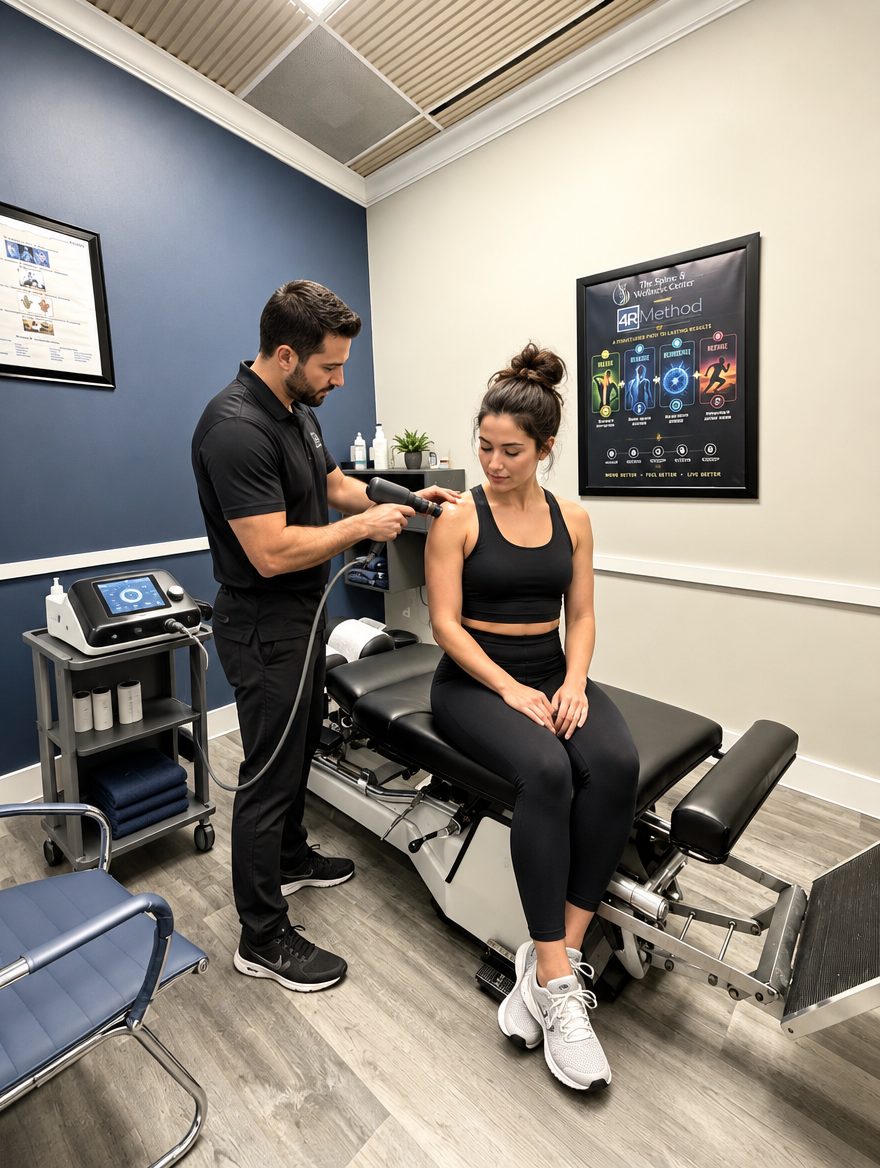
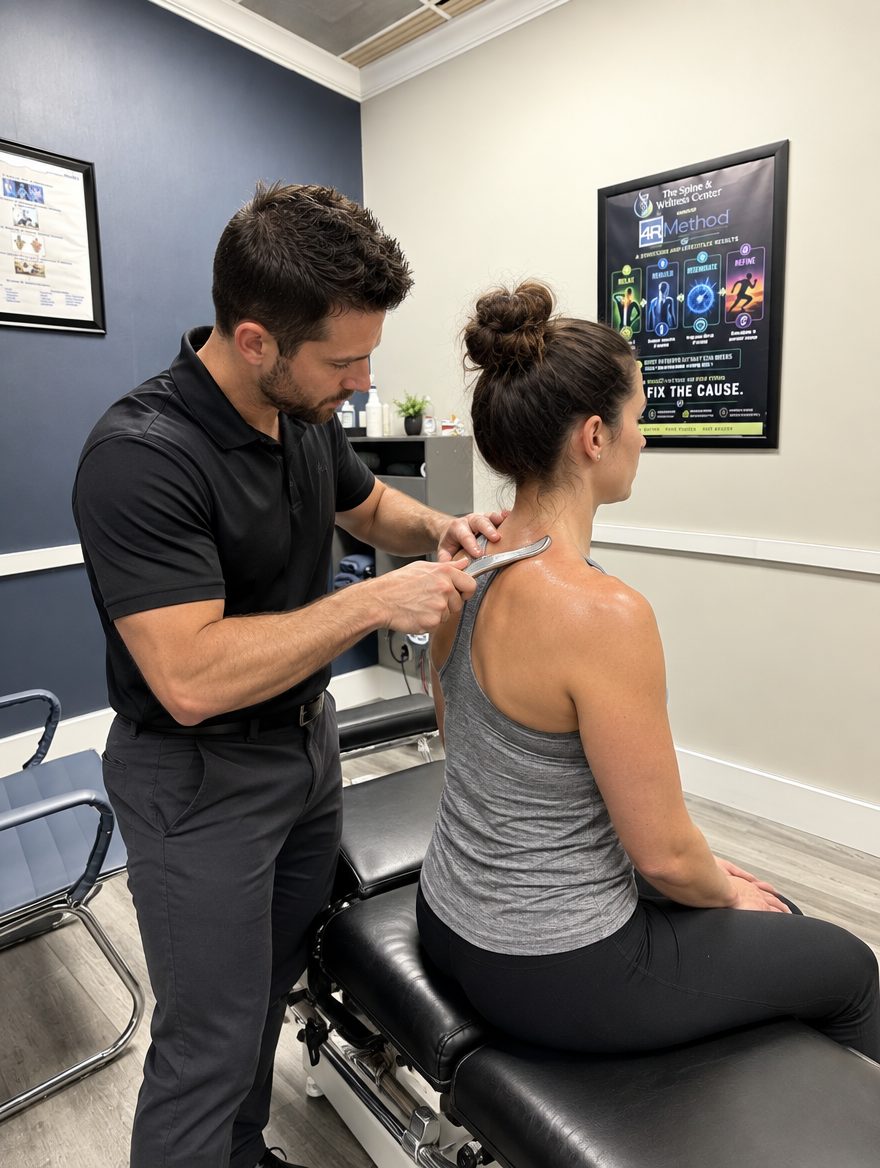
The Repair phase settles the painful structure. Acoustic shockwave therapy targets chronically irritated cuff tendons and calcific deposits; cold laser therapy reduces inflammation in the bursa and tendon; Graston Technique releases the thickened tissue around the cuff, pec minor and capsule; and gentle adjustments of the thoracic spine, first rib and shoulder restore the motion that opens the subacromial space. Typical commitment is 3–5 visits a week for 4–8 weeks, and night pain usually eases within the first two to three weeks.
R2 · Rebuild — fix the mechanics that caused it
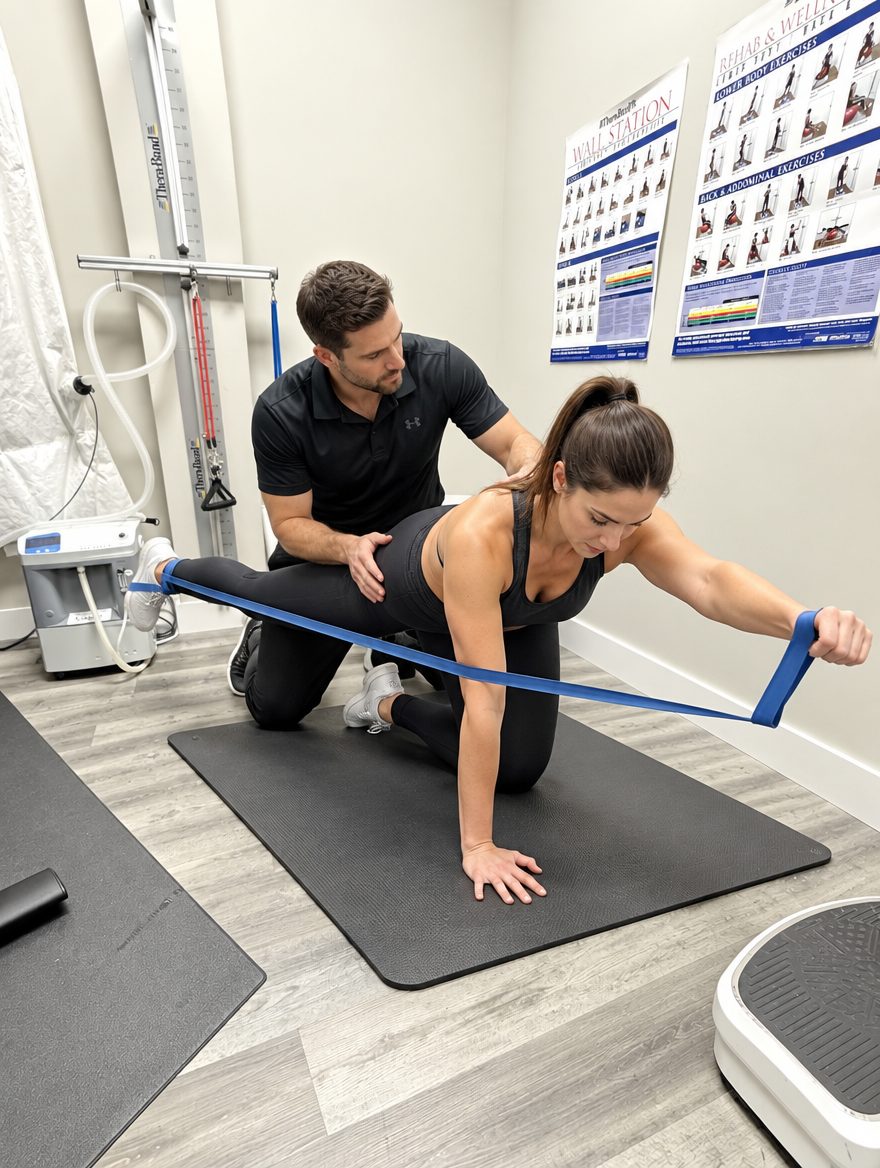
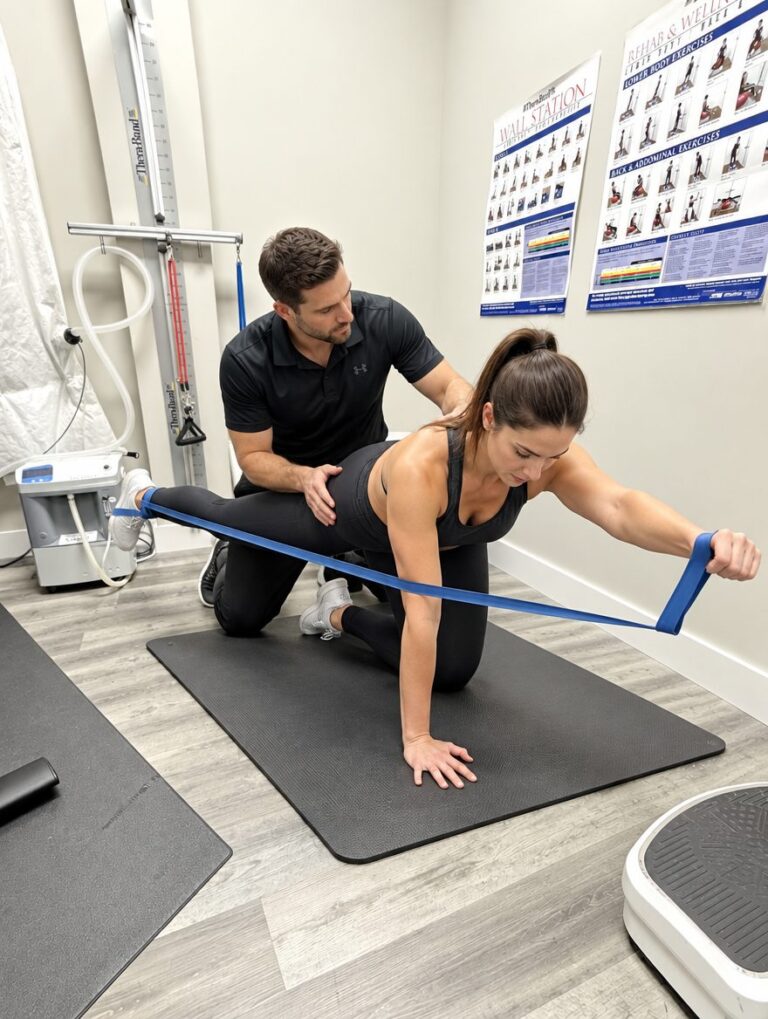
Once the shoulder is quieter, physical therapy retrains the shoulder blade stabilizers and rotator cuff with progressive loading, and posture correction reverses the rounded upper back that tipped the acromion down in the first place. Frozen shoulders get patient, graded capsule mobilization here — pushing too hard too soon makes them worse. Rebuild usually runs 2–3 visits a week for 8–16 weeks.
R3 and R4 · Regenerate and Refine
Tendons remodel slowly. Regenerate supports that remodeling with PEMF and red light therapy at about 2 visits a week for two months or more. Refine is a brief tune-up every month or two — valuable for the swimmers, tennis and pickleball players, and overhead workers whose shoulders never fully rest.
Acoustic shockwave therapy
Focused acoustic pulses restart healing in stubborn rotator cuff tendons and calcific tendinitis.
Learn moreGraston Technique
Instrument-assisted release of the fibrotic tissue around the cuff, pec minor and capsule.
Learn morePhysical therapy
Progressive rotator cuff and shoulder blade rehab that makes the relief hold.
Learn morePosture correction
Reverses the rounded upper back that shrinks the space the cuff works in.
Learn more6 proven non-surgical options for shoulder pain (and when each fits)
These are the six tools we use most in shoulder pain treatment, matched to the pattern they suit:
- Acoustic shockwave therapy. Best for chronic rotator cuff tendinopathy and calcific deposits that have stopped responding to rest. A few minutes per session, usually weekly.
- Graston Technique. Best for impingement with a tight pec minor and posterior capsule, and for the fibrotic tissue of a thawing frozen shoulder.
- Cold laser therapy. Best for acute bursitis and tendon inflammation — painless, drug-free, about 10–15 minutes.
- Thoracic and shoulder adjustments. Best when a stiff upper back or elevated first rib is pinning the shoulder blade and shrinking the subacromial space.
- Progressive rehab. Best for every shoulder. Cuff and scapular strengthening is the single most durable shoulder pain treatment there is, and the reason relief holds after the last visit.
- Cupping and massage. Best for the guarded upper trap and neck muscles that lock down around a sore shoulder; see cupping and massage therapy.
What is not on the list as a first step: repeated cortisone injections, which can weaken tendon over time, or surgery. Full-thickness cuff tears with marked weakness, a dislocation, or a shoulder that fails a proper course of conservative care do need an orthopedic opinion — and we will say so and refer you.
What to expect at your first two visits
We measure before we treat, so your plan targets the structure that is actually generating the pain.
Visit one — we measure (and usually begin care)
- A real conversation. How it started, which movements hurt, whether it wakes you, what you do overhead at work or on the court, and what you want back.
- A hands-on structural exam. Active and passive range of motion in every direction, the painful arc, rotator cuff strength tests, impingement and capsule tests, shoulder blade tracking, posture, and a cervical screen to rule the neck in or out.
- Surface scanning: sEMG + thermal. Surface EMG shows guarding along the cervical and thoracic spine; thermal scanning maps inflammation and nerve irritation. Painless and repeatable.
- Digital X-rays, when indicated. To assess the AC joint, calcific deposits, the shape of the acromion and cervical alignment. We review any MRI you already have.
Visit two — your findings and your plan
Everything explained plainly with your findings in front of you: which structure is at fault, what is driving it, and a phase-by-phase plan with a realistic timeline — frozen shoulders are told honestly that recovery is measured in months. Treatment begins at this visit. For a head start, take the 60-second spine assessment.
Shoulder pain treatment at home: what helps and what makes it worse
Between visits, these habits decide whether the shoulder settles or keeps flaring:
- Keep it moving below the pain line. Pendulum swings and gentle range of motion prevent a sore shoulder from stiffening into a frozen one. Total rest is the enemy.
- Fix the sleeping position. Avoid lying on the painful side; on your back, a small pillow under the elbow keeps the cuff from being pinched all night.
- Sit tall at the desk. Screen at eye height, shoulders back and down — a rounded upper back shrinks the space the cuff works in.
- Modify, don’t stop, overhead work. Lower the load, shorten the sets, keep the elbow in front of the body during the Repair phase.
- Ice after activity, heat before. Fifteen minutes of ice on a hot, irritated cuff; warmth before stretching a stiff capsule.
When shoulder pain needs a doctor instead
A few patterns need same-day medical evaluation: a shoulder that looks deformed or was dislocated, sudden inability to lift the arm after a fall, a hot, red, swollen joint with fever, or left shoulder and arm pain with chest pressure, shortness of breath or sweating. If any of these apply, please see a doctor or urgent care today.
For everything else — the ache that wakes you, the painful arc, the shoulder that is slowly freezing, the serve you have stopped hitting — this is daily work for us with shoulder pain patients across Coral Springs and Parkland. If your pain started with sport, our sports injury rehab page is the next read; if it is paired with elbow pain, see tennis and golfer’s elbow.
Serving shoulder pain patients across North Broward
Our clinic at 5675 Coral Ridge Drive, Coral Springs, FL 33076 serves Coral Springs, Parkland, Coconut Creek, Margate, Boca Raton, Tamarac, Pompano Beach and Deerfield Beach. Same-day appointments are usually available — call (954) 341-2256 or book online. Most patients from Parkland and Coral Springs are here in under 15 minutes.
Medically reviewed by Dr. Jared Cohen, DC — Co-Founder & Clinical Director, The Spine and Wellness Center. Last reviewed October 2026.
Frequently asked questions
Can a chiropractor treat rotator cuff pain?
Yes. Most rotator cuff tendinopathy and partial tears respond to conservative care: calming the tendon with shockwave and cold laser, releasing tight surrounding tissue, restoring thoracic and shoulder blade motion, and progressively strengthening the cuff. Full-thickness tears with marked weakness are referred for an orthopedic opinion.
How do I know if I have frozen shoulder?
Frozen shoulder is defined by stiffness, not just pain — the arm loses motion in every direction, and someone else cannot move it further either. It usually develops gradually, often after a period of disuse, and is more common between 40 and 60 and with diabetes. The exam on visit one distinguishes it from impingement.
Is my shoulder pain coming from my neck?
It can be. Irritated nerve roots in the lower neck refer pain over the top of the shoulder and into the shoulder blade and arm, often with tingling, while the shoulder itself tests normal. That is why the cervical spine is examined on every shoulder visit and treated when it is part of the picture.
Does shockwave therapy help shoulder tendinitis?
Acoustic shockwave is used for chronic rotator cuff tendinopathy and calcific tendinitis that have stopped responding to rest. The pulses stimulate circulation and the tendon's repair response. It is one part of a plan alongside soft-tissue work, joint mobilization and strengthening rather than a stand-alone fix.
How long does shoulder pain treatment take?
Impingement and cuff irritation usually improve within two to three weeks of the Repair phase, with strength rebuilt over the following two to three months. Frozen shoulder is slower and honestly measured in months. We map a realistic timeline after your evaluation.
Do you see shoulder pain patients from Parkland and Boca Raton?
Yes. Our clinic on Coral Ridge Drive in Coral Springs is minutes from Parkland, Coconut Creek, Margate, Tamarac and Boca Raton, and same-day appointments are usually available.
Keep reading
From the blog
Same-day appointments
Let's build your plan.
Find out what's actually going on and get a clear path forward. Same-day appointments available.
- Same-day appointments are usually available
- Our team calls you back to confirm your visit
- Coral Springs, serving Parkland & North Broward since 2005
Prefer to talk now? Call or text (954) 341-2256