
Advanced therapies · Coral Springs & Parkland
Cupping therapy in Coral Springs
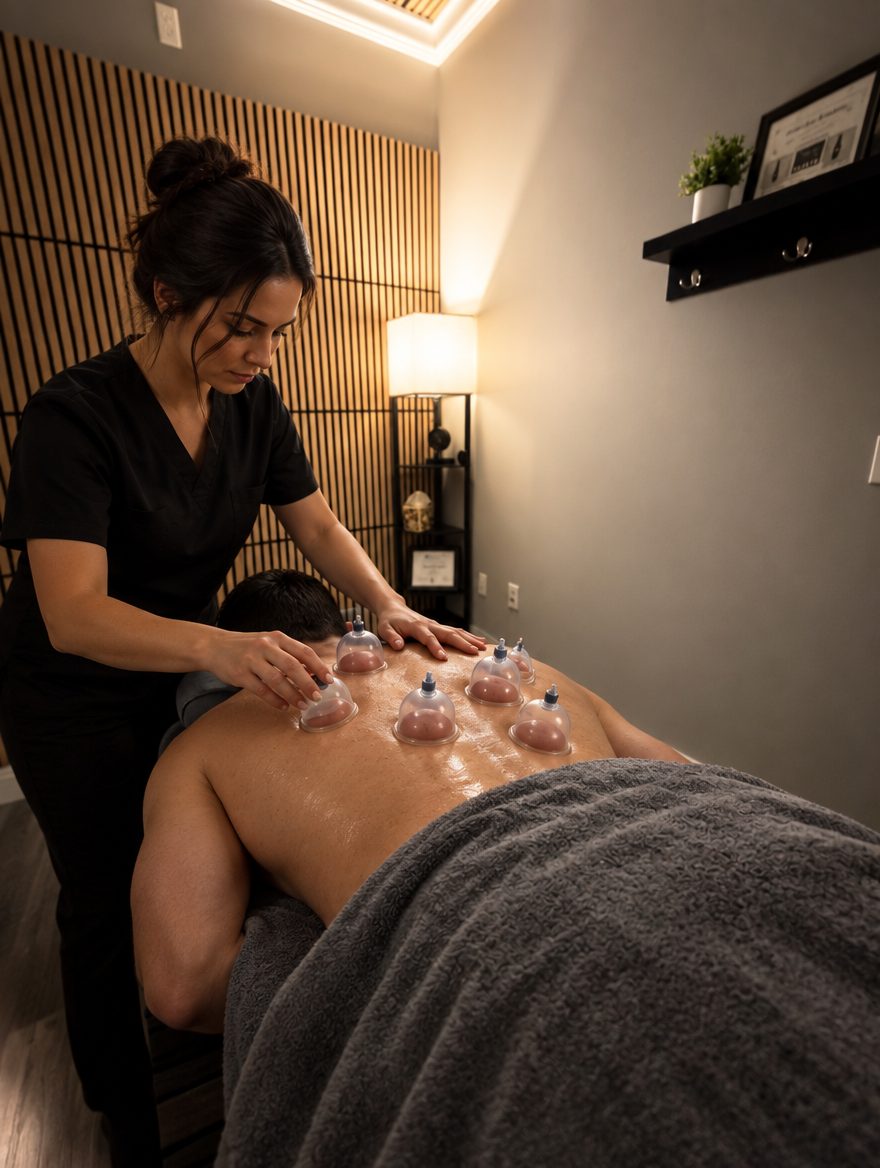
Where every other soft-tissue tool pushes down, cupping lifts. Negative pressure that decompresses stuck fascia, floods tight tissue with blood, and leaves those famous circles behind.
Quick answer
Cupping therapy uses silicone or plastic cups to create suction on the skin, lifting the skin and fascia away from the muscle beneath. The negative pressure separates stuck tissue layers, increases blood flow and eases tight, adhered muscle. A session takes 10–15 minutes, feels like a firm pulling, and leaves temporary round marks that fade within days. We use it for tight backs, shoulders, hips and legs.
What is cupping therapy and how does it work?
Cupping therapy is a soft-tissue treatment in which cups are placed on the skin and the air inside is drawn out, creating suction. The vacuum pulls the skin, the fat layer and the fascia — the connective-tissue sheet that wraps every muscle — upward into the cup. In modern clinical use it is often called myofascial decompression, because that is exactly what it does.
Almost every other soft-tissue technique compresses tissue: massage, foam rolling, Graston Technique instruments. Cupping is the opposite. By lifting the layers apart it creates space between fascia and muscle that have become stuck together, lets fluid and blood move into the area, and gives tissue that has been compressed all day a chance to decompress.
What the negative pressure does
- Separates adhered layers: fascia that has glued itself to the muscle below after injury, overuse or long hours of sitting is lifted and allowed to glide again.
- Floods the tissue with blood: the suction draws blood into the capillaries of the skin and superficial fascia, bringing oxygen and nutrients and clearing metabolic waste from a tight, stagnant area.
- Stretches fascia and muscle: especially when the cups are slid along the muscle or the patient moves while cupped, the tissue is stretched in a way hands cannot replicate.
- Calms the nervous system: the sustained pull on skin receptors reduces muscle guarding and pain sensitivity in the region.

What conditions does cupping therapy help?
Cupping therapy suits broad, tight, congested regions of muscle and fascia rather than a single pinpoint restriction. In our Coral Springs clinic we use it most for:
- Upper back and shoulder tension — the tight trapezius, rhomboid and levator scapulae pattern of desk work and driving, often alongside neck pain and tension headaches.
- Low back tightness — the thick thoracolumbar fascia that locks down with recurring lower back pain, and the glutes and hip rotators beside it.
- IT band and lateral thigh tightness — in runners and cyclists, where foam rolling has not moved the needle.
- Hamstring, calf and quadriceps tightness and strains in the sub-acute stage, as part of sports injury rehab.
- Myofascial trigger points — tender knots that refer pain elsewhere; a cup left over the point for several minutes often releases it.
- Chronic scar tissue and post-surgical adhesions, once cleared, where lifting the scar away from the tissue beneath restores glide.
- Recovery for Coral Springs and Parkland athletes — golfers, pickleball and tennis players, CrossFit and running — between training blocks.
Good to know
Cupping works on skin, fascia and the superficial muscle layer. It does not restore motion to a locked joint or take pressure off a disc. We pair it with chiropractic adjustments or spinal decompression so the structural cause of the tightness is treated too.
What does a cupping therapy session feel like?
A cupping therapy session is 10 to 15 minutes of focused work on one or two regions, usually combined with massage, Graston work or an adjustment in the same visit.
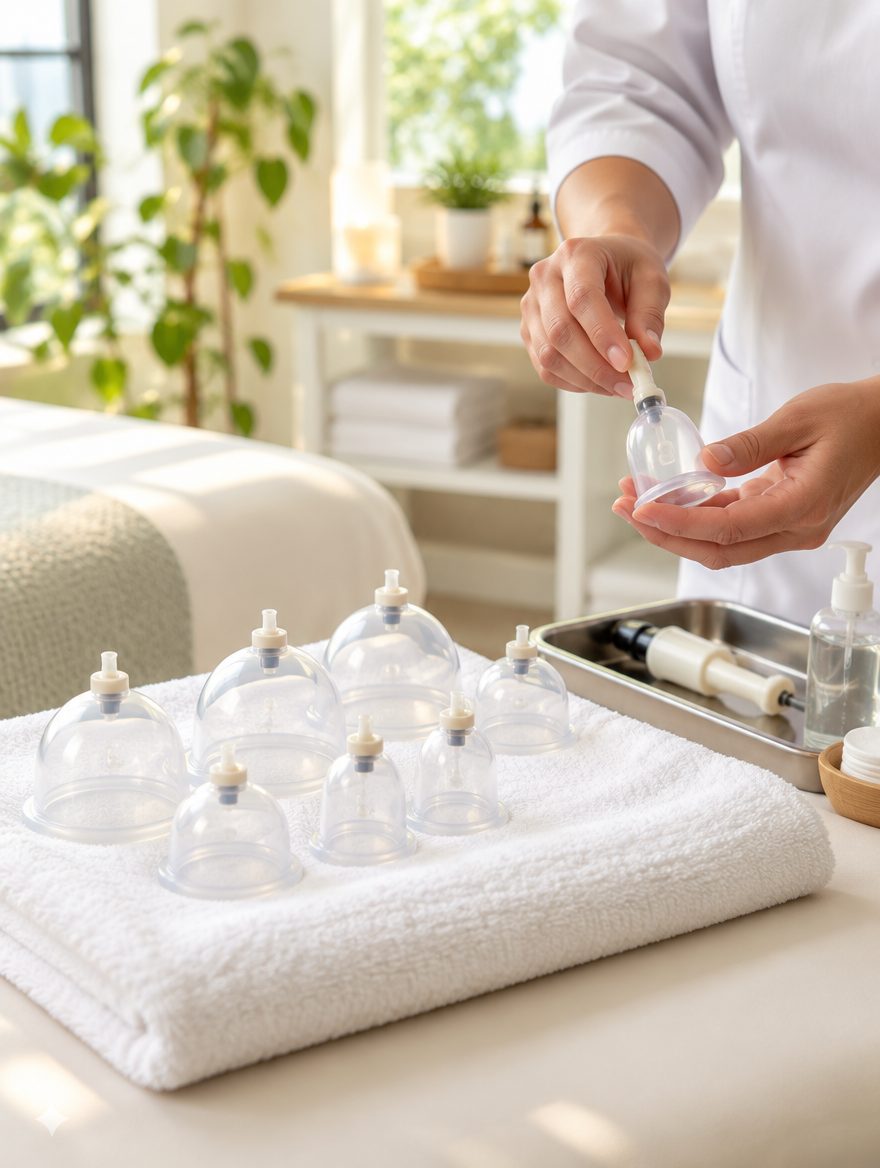
- Preparation. A light oil or lotion is applied so cups can be moved; the provider chooses silicone or pump-valve plastic cups of the right size for the region.
- Placement. Cups are applied over the tight tissue. Static cups stay in place for 3 to 8 minutes; for gliding cupping the provider slides the cup slowly along the length of the muscle.
- Movement. Often you will be asked to move — reach overhead, bend, extend the knee — while the cups are on, so the lifted fascia is stretched through its range.
- Removal and follow-on care. The cups release with a soft pop. We follow with stretching, Graston instruments on any remaining localized restriction, or your adjustment.
The sensation is a firm, steady pulling, like a strong stretch from the inside. Tight, congested tissue feels more intense than healthy tissue, and the pull eases as the area releases. It should not be sharp or painful; suction is always set to your tolerance. Most people feel noticeably lighter and looser immediately afterward.
What the marks mean
The round marks are the signature of cupping, and they are not bruises. A bruise comes from impact that tears blood vessels; cupping marks are blood and fluid drawn into the skin by suction. Their color tells us about the tissue: light pink means healthy circulation, while darker red or purple circles usually appear over tissue that was congested and stagnant. Marks fade within three to seven days and tend to be lighter with each session as circulation improves. Static cups mark more than gliding cups, and we can keep marks minimal if you have an event coming up.
Where does cupping therapy fit in the 4R Method?
Every plan at The Spine and Wellness Center follows the 4R Method — Repair, Rebuild, Regenerate, Refine. Cupping has a role in both Repair and Rebuild, and a different job in each.
R1 · Repair — release guarding and congestion
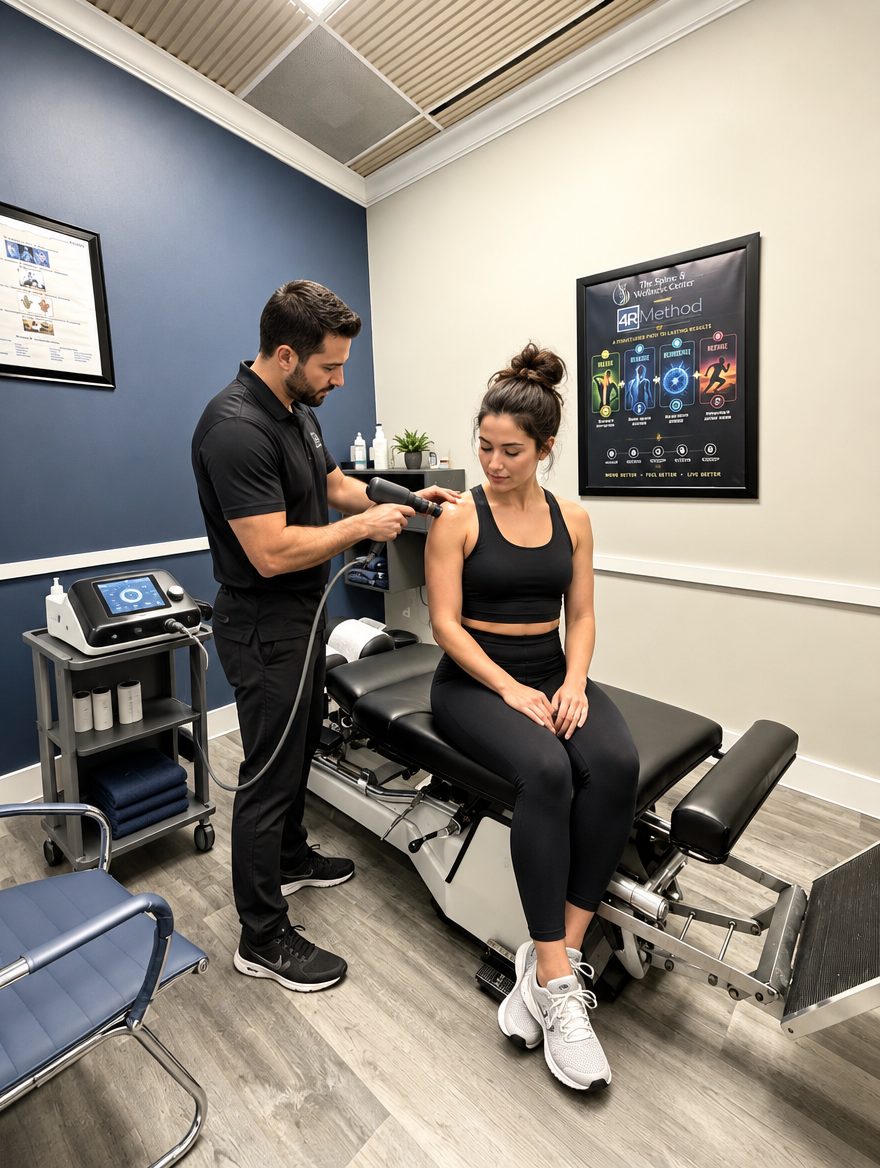
In the Repair phase (3–5 visits a week for 4–8 weeks) cupping is used gently and briefly on the broad muscle guarding that surrounds an irritated joint or disc — the clamped-down upper back of a whiplash patient or the locked low back fascia of a disc patient — so the adjustment or decompression that follows is comfortable. On a fresh, swollen injury we hold off; cupping draws fluid into tissue, which is the wrong direction when the area is already swollen. Cold laser therapy or electrical muscle stimulation cover that stage.
R2 · Rebuild — restore glide so tissue can be strengthened
In the Rebuild phase (2–3 visits a week for 8–16 weeks) cupping does its most useful work: lifting adhered fascia so that the muscle underneath can lengthen and then be loaded through physical therapy. A typical sequence on a tight region is cups first to decompress the broad area, then Graston Technique instruments on any specific restriction that remains, then stretching and strengthening. In Regenerate and Refine it becomes a recovery tool, often paired with massage therapy at a monthly tune-up.
Graston Technique
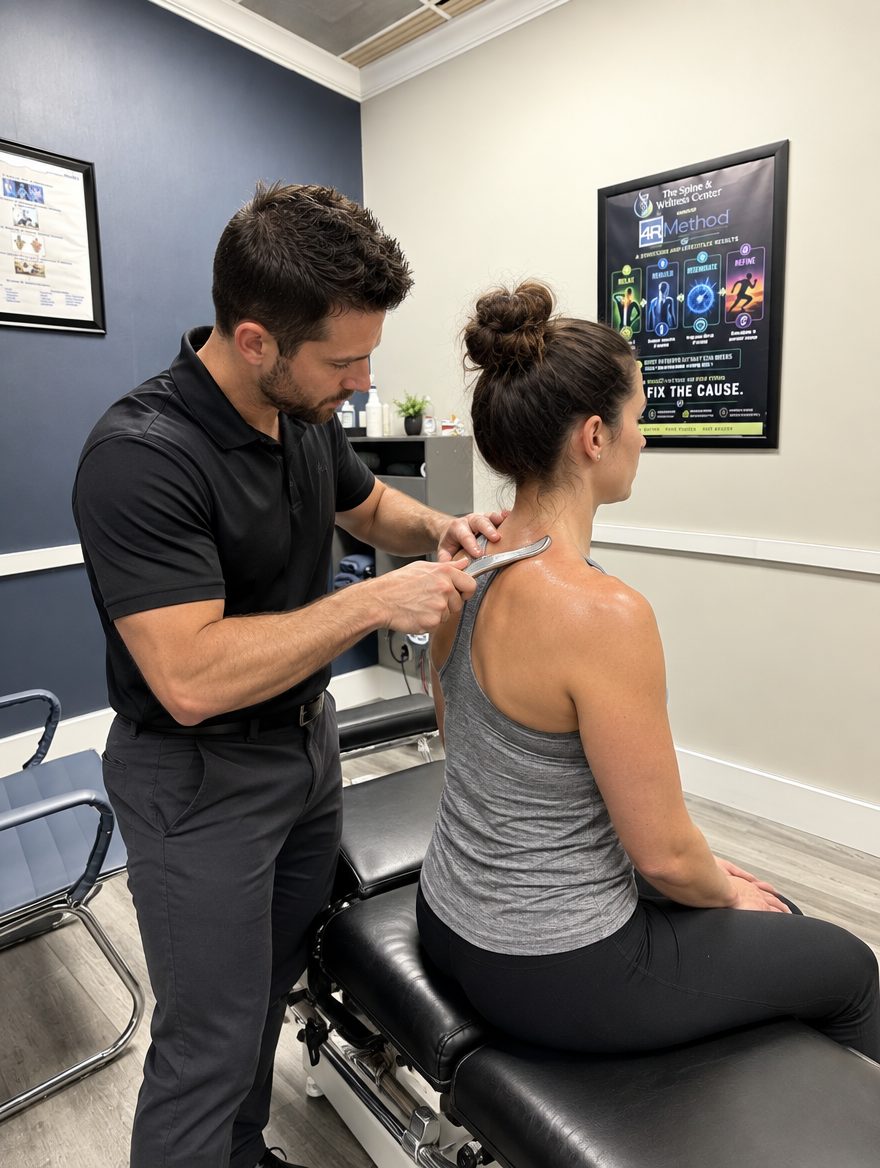
Compression-based instrument work for the specific restriction cupping reveals.
Learn moreMassage therapy
The natural partner to cupping for broad tension and recovery.
Learn moreChiropractic care
Restore joint motion so the fascia stops tightening to protect it.
Learn moreSports injury rehab
Return-to-play programs where cupping keeps tissue moving between loading sessions.
Learn moreIs cupping therapy safe? Evidence and contraindications
Cupping has a long history in traditional medicine and a growing, if still limited, modern research base. The National Center for Complementary and Integrative Health, part of the NIH, notes that some studies suggest cupping may help with pain conditions such as neck and low back pain, while cautioning that many studies are small and of low quality and that more rigorous research is needed (NCCIH, Cupping). We agree with that assessment and use cupping as one tool inside a plan with stronger-evidence treatments, measuring your range of motion and pain scores rather than relying on how the marks look.
We use only dry cupping — suction without any cutting of the skin. Side effects are generally limited to the marks, mild soreness for a day, and occasionally a small blister if suction was too strong or left too long, which we avoid by setting pressure to your tolerance and timing each cup.
When we do not use cupping
- Over open wounds, rashes, sunburn, eczema or psoriasis, or over a fresh, swollen injury.
- Over varicose veins, a known blood clot (DVT), or an area of active bleeding.
- In people with bleeding disorders or taking blood thinners, without their physician’s input.
- Over the abdomen or low back during pregnancy.
- Over a known tumor, an active infection, or an unhealed fracture.
- In people with severe anemia, uncontrolled heart or kidney disease, or very fragile skin.
Your first-visit exam and history screen for each of these before any cup is applied.
What to expect at your first two visits
We measure before we treat, so cupping is prescribed for a confirmed fascial or muscular restriction rather than applied wherever it feels tight.
Visit one — we measure (and usually begin care)
- A real conversation about your pain, your activity, your work setup and your medical history, including any blood thinners.
- A hands-on structural exam — posture, range of motion, palpation of the fascia and muscle for restriction and trigger points, and orthopedic tests to find the joint or disc the tissue is protecting.
- Surface EMG and thermal scanning along the spine, which show exactly which levels the muscles are guarding.
- Digital X-rays when indicated, to see the alignment underneath the muscle pattern.
Visit two — your findings and your plan
We explain what we found and where cupping therapy fits in your 4R plan — which regions, how often and what it will be paired with. Treatment begins at this visit. For a head start, take the 60-second spine assessment before you come in.
Home care after cupping
- Drink water and keep the area warm for the rest of the day; the goal is to keep the circulation you just gained moving.
- Move gently. A walk and the stretches we give you help the lifted fascia stay mobile. Skip heavy lifting on that region for 24 hours.
- Avoid cold and hot extremes — no ice baths, saunas or very hot showers on the cupped area for 24 hours.
- Expect marks for three to seven days and mild soreness for a day. Cover them from strong sun while they fade.
- Tell us if a mark is painful, raised or blistered, or if soreness lasts more than two days.
If an injury came with a pop, rapid swelling, numbness or inability to bear weight, please see a doctor or urgent care today before any soft-tissue therapy.
Serving cupping therapy patients across North Broward
Our clinic at 5675 Coral Ridge Drive, Coral Springs, FL 33076 serves Coral Springs, Parkland, Coconut Creek, Margate, Boca Raton, Tamarac, Pompano Beach and Deerfield Beach. Same-day appointments are usually available — call (954) 341-2256 or book online. Most patients from Parkland and Coral Springs are here in under 15 minutes.
Medically reviewed by Dr. Jared Cohen, DC — Co-Founder & Clinical Director, The Spine and Wellness Center. Last reviewed October 2026.
Frequently asked questions
Does cupping therapy hurt?
It feels like a firm, steady pulling — a strong stretch from the inside — rather than pain. Tight, congested tissue feels more intense than healthy tissue, and the sensation eases as the area releases. Suction is always set to your tolerance, and the cups should never feel sharp. Most people feel looser immediately afterward.
Are cupping marks bruises?
No. A bruise is bleeding from impact that tears blood vessels. Cupping marks are blood and fluid drawn into the skin by suction, and their color reflects how congested the tissue was: light pink over healthy circulation, darker red or purple over stagnant tissue. They fade in three to seven days and get lighter with each session.
How long do the marks last?
Usually three to seven days, sometimes a little longer after a first session on very tight tissue. Static cups mark more than gliding cups. If you have a wedding, photo shoot or beach day coming up, tell us and we can use gliding cupping with lighter suction to keep marks minimal.
How is cupping different from massage or the Graston Technique?
Massage and Graston work compress tissue; cupping lifts it. Cupping is best for broad, congested regions and for separating fascia from the muscle beneath, while Graston instruments are best for a specific, localized restriction. We often use cups first on a region and Graston on whatever restriction remains.
How many cupping sessions will I need?
Most tight-tissue problems respond over four to eight sessions spread across the Repair and Rebuild phases, usually once or twice a week alongside adjustments and rehab. Athletes and desk workers often continue a session every few weeks as part of a maintenance routine. We re-measure range of motion and stop when the tissue moves normally.
Who should not have cupping?
We avoid cupping over wounds, rashes, sunburn, varicose veins, known blood clots, fresh swollen injuries, tumors, infections and unhealed fractures, and over the abdomen or low back in pregnancy. People with bleeding disorders or on blood thinners need their physician's input first. Your first-visit exam screens for each of these.
Do you offer cupping therapy to patients from Parkland and Coconut Creek?
Yes. Our clinic on Coral Ridge Drive in Coral Springs is a short drive from Parkland, Coconut Creek, Margate, Tamarac and Boca Raton, and same-day appointments are usually available.
Keep reading
From the blog
Same-day appointments
Let's fix the cause.
Measure first, then treat — a plan built on your actual structure.
- Same-day appointments are usually available
- Our team calls you back to confirm your visit
- Coral Springs, serving Parkland & North Broward since 2005
Prefer to talk now? Call or text (954) 341-2256