
Conditions · Coral Springs & Parkland
Back pain treatment in Coral Springs & Parkland
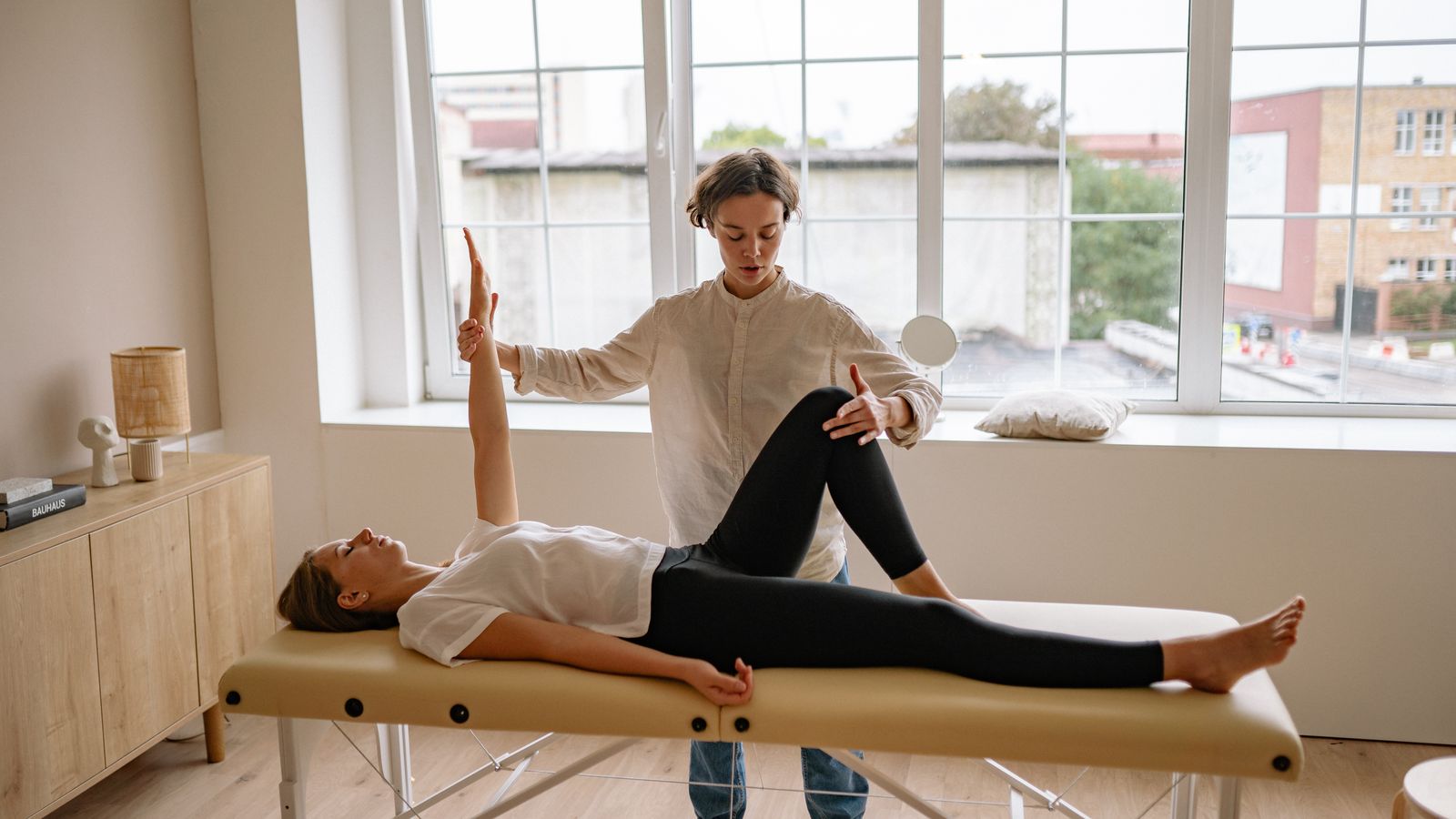
Upper, lower, acute or chronic — back pain has a cause, and the cause decides the treatment. We measure first, then match decompression, adjustments and rehab to what is actually hurt.
Quick answer
Effective back pain treatment starts by identifying the source: a disc, a facet or sacroiliac joint, or muscle guarding. At The Spine and Wellness Center we measure on visit one, then match non-surgical spinal decompression, chiropractic care and physical therapy to that pattern inside the 4R Method, so relief is earned in the right order and holds.
What kind of back pain do you have? The four patterns we see
Good back pain treatment begins with a simple truth: ‘back pain’ is not one condition. It is a symptom produced by a handful of structures — the discs, the small joints behind them, the sacroiliac joints at the base of the spine, and the muscles that guard all of them. The first thing Dr. Jared Cohen and the team do at our Coral Springs clinic is sort out which one is generating your pain, because each responds to a different plan.
Four patterns account for the large majority of back pain we treat:
- Disc pattern. A bulging or herniated disc that is loaded when you sit, bend forward, cough or sneeze. Often a deep ache that spreads into the buttock, and when a nerve root is involved, pain or tingling down one leg (sciatica).
- Joint pattern (facet). Sharp, localized pain that is worse standing, arching backward or first thing in the morning. People describe it as ‘I can’t stand up straight’ or ‘it catches when I turn.’
- Sacroiliac (SI) pattern. One-sided pain just off-center at the belt line, over the dimple above the buttock, that flares when you stand up from a chair, roll over in bed, or climb stairs.
- Muscle pattern. A broad, tight ache after lifting, a long drive on the Sawgrass or a hard round of golf, improving over a few days. Recurring ‘strains’, though, usually mean a disc or joint underneath is the real driver.
Most people have a combination — a disc that is slightly loaded, a joint that has locked to protect it, and muscles that have been guarding for months. That is why a one-tool approach (only adjusting, only stretching, only medicating) tends to deliver temporary results. Durable back pain treatment addresses the disc, the joints and the stabilizing muscles together, in the right order.
Acute vs chronic back pain: why the timeline changes the plan
Acute back pain is pain that started in the last six weeks; chronic back pain has persisted for twelve weeks or longer. The distinction matters because the two behave differently and need different emphasis in treatment.
Acute episodes are usually dominated by inflammation and muscle guarding. The priority is calming the irritated structure quickly — taking load off the disc or joint, settling the spasm, and keeping you moving gently so the back does not stiffen. Most acute back pain improves substantially within a few weeks when the cause is addressed early. According to the National Institute of Neurological Disorders and Stroke, the majority of acute low back pain improves with conservative care and does not require surgery (NINDS, Back Pain).
Chronic back pain is a different problem. By twelve weeks the original injury has usually produced secondary changes: the deep stabilizers (multifidus and transversus abdominis) have switched off, scar tissue has formed, neighboring joints are compensating, and the nervous system has become sensitized. Chronic back pain treatment therefore has to correct the architecture that keeps producing flares, not just quiet the current one.
Good to know
If your back has ‘gone out’ more than twice, treat it as chronic even if each episode felt acute. Recurrence is the signature of a structure that was never fully corrected — the most common reason Coral Springs and Parkland patients reach us after years of short-term fixes.
Upper back pain vs lower back pain: different segments, different causes
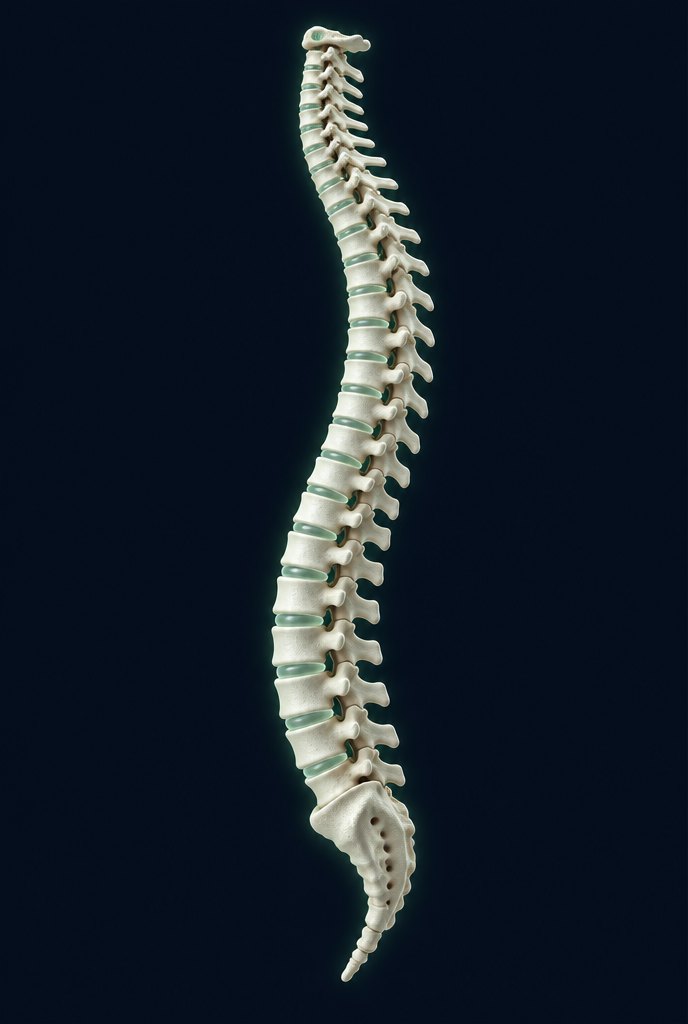
Lower back pain lives in the lumbar spine — five large vertebrae and discs that carry most of your body weight through every step, lift and twist. Upper back pain lives in the thoracic spine, the twelve vertebrae that anchor the rib cage. Because the two regions are built for different jobs, they fail in different ways.
- Lower back (lumbar): disc herniation, facet irritation and SI joint dysfunction dominate. Leg symptoms — sciatica, numbness, foot weakness — point to a nerve root, most often at L4–L5 or L5–S1. Sitting, lifting and long drives are the usual loads.
- Upper back (thoracic): rib-joint (costovertebral) irritation, stiff thoracic segments, and postural muscle strain from forward-head posture and rounded shoulders dominate. Disc herniations are far less common here. Desk work, phones and laptops are the usual loads, and the pain often sits between the shoulder blades.
- Both regions: a postural chain. A stiff, flexed thoracic spine shifts load down to the lumbar spine and up to the neck — which is why someone who ‘only has lower back pain’ often has an upper back that stopped moving years ago.
This page is the hub. For region-specific guides, read our lower back pain guide (discs, sciatica, SI joint) and our upper back pain guide (thoracic stiffness, rib joints, posture). If your pain is one-sided and hip-centered, start with the hip and SI joint guide.
How we diagnose back pain before we treat it (visit 1)
Back pain treatment is only as good as the diagnosis under it, so we measure before we treat. Your first visit at our Coral Springs clinic is an evaluation, not a quick adjustment, and it is built to answer one question: which structure is producing this pain, and is a nerve involved?
- A real conversation. Where it hurts, when it started, what makes it worse, what you have already tried, and what you want to get back to.
- A hands-on structural exam. Posture, lumbar and thoracic range of motion, orthopedic tests that isolate the disc, facet or SI joint, nerve-tension tests, and neurological screening (reflexes, strength, sensation).
- Surface EMG and thermal scanning. A painless scan along the spine. Surface EMG shows where the muscles beside each vertebra are guarding; thermal scanning maps asymmetries that point to nerve irritation. Objective and re-scannable to track progress.
- Digital X-rays, when indicated. Disc spacing, curvature, alignment and wear — and we review any MRI you already have.
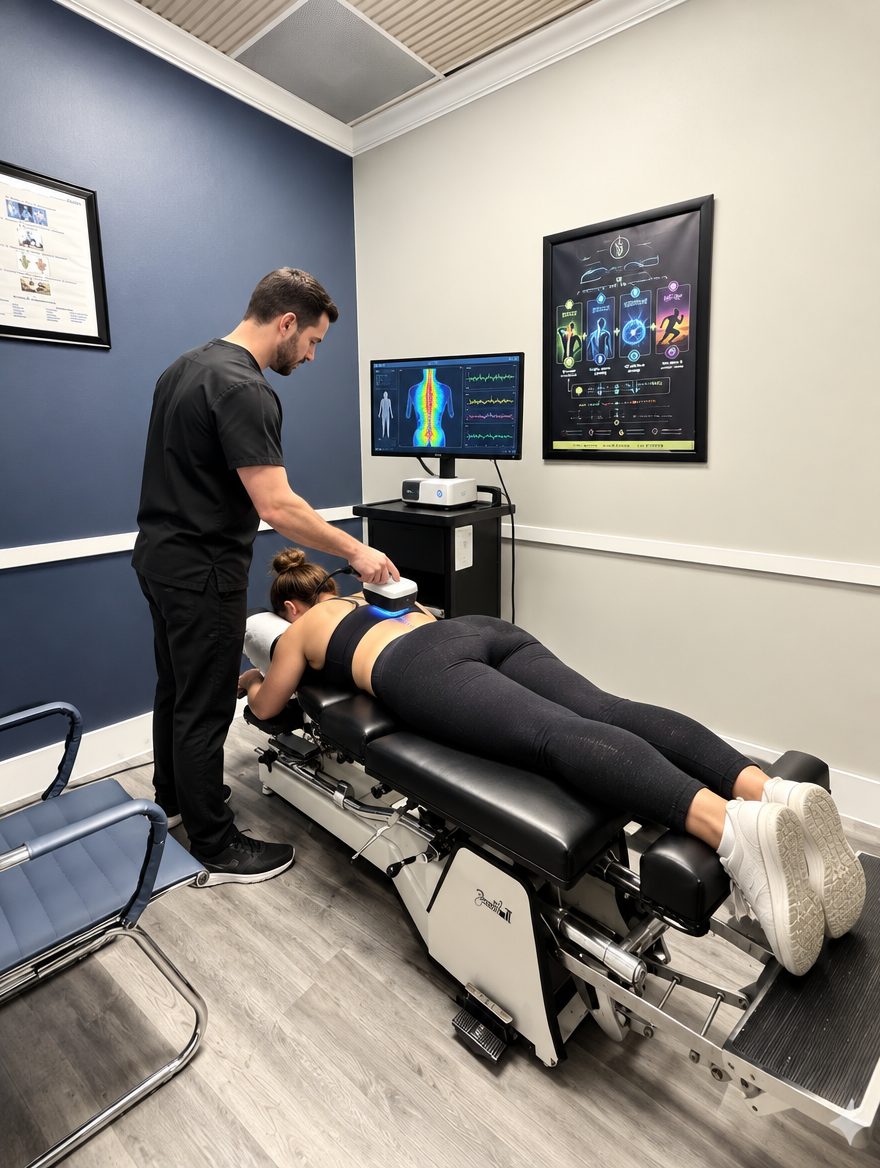
Visit two is your report of findings: scans and images in front of you, explained in plain English, mapped to the four phases of the 4R Method with a recommended frequency and duration. Treatment begins at that second visit. For a head start, take the 60-second spine assessment and we will have your Spine Score before you arrive.
Back pain treatment options matched to the cause
The right back pain treatment depends on the pattern we find on visit one. This is the matrix we work from — not every tool fits every back, and the sequence matters as much as the selection.
Disc pattern (bulge, herniation, sciatica)
Non-surgical spinal decompression on the Triton DTS table is the centerpiece. Computer-controlled cycles of pull and release lower the pressure inside the disc so herniated material can retract away from the nerve and the disc can rehydrate — about 20 minutes on the table per session. It is paired with precise adjustments at the segments above and below, and cold laser or therapeutic ultrasound to calm inflammation around the nerve root.
Joint pattern (facet and SI)
Chiropractic adjustments are the primary tool: specific, low-force corrections restore motion to the locked facet or sacroiliac joint and switch off the protective muscle guarding. Sacroiliac patterns usually add pelvic balancing and hip-stabilizer rehab, because a rotated pelvis reloads the joint with every step.
Muscle and fascial pattern
Graston Technique instrument-assisted soft tissue work breaks up fibrotic tissue and restarts healing where it has stalled, and therapeutic massage reduces guarding so the joints underneath can be corrected. For acute flares, acoustic shockwave therapy targets stubborn trigger points and tendon attachments.
Every pattern
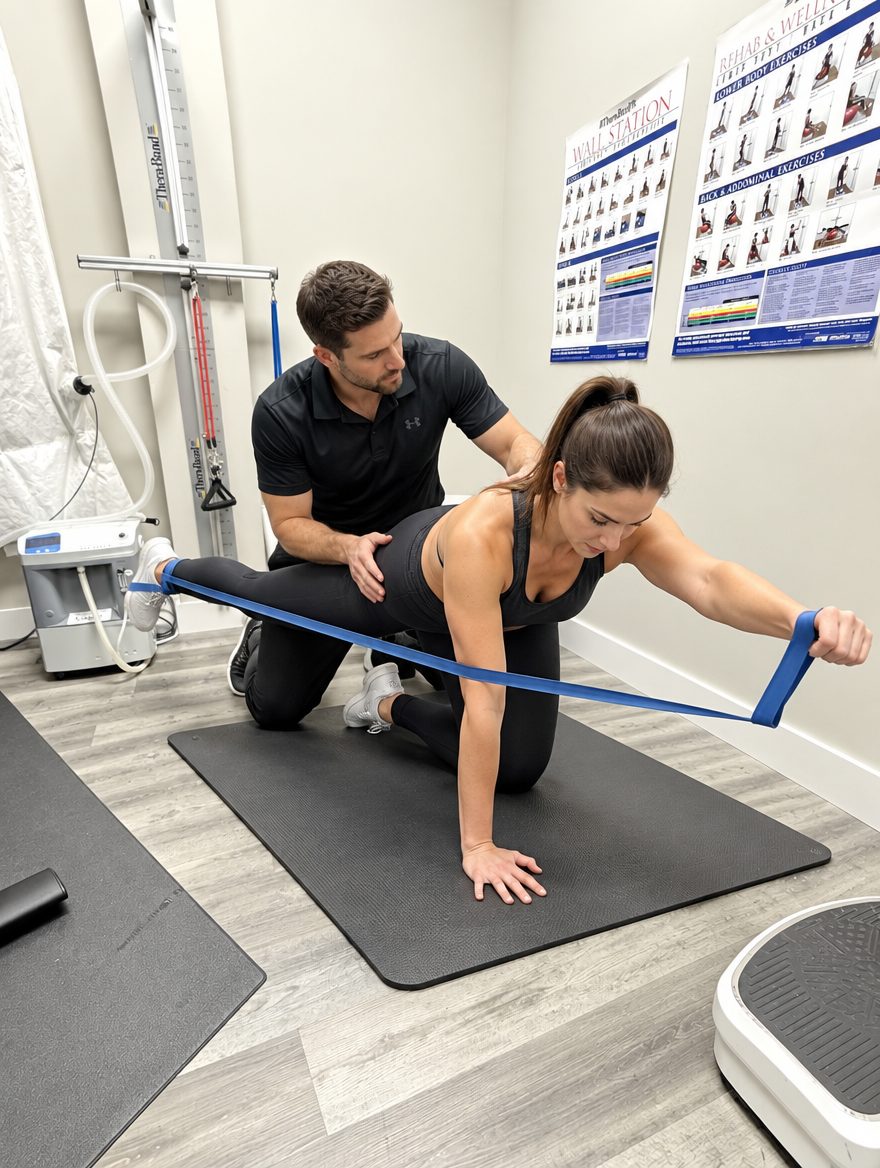
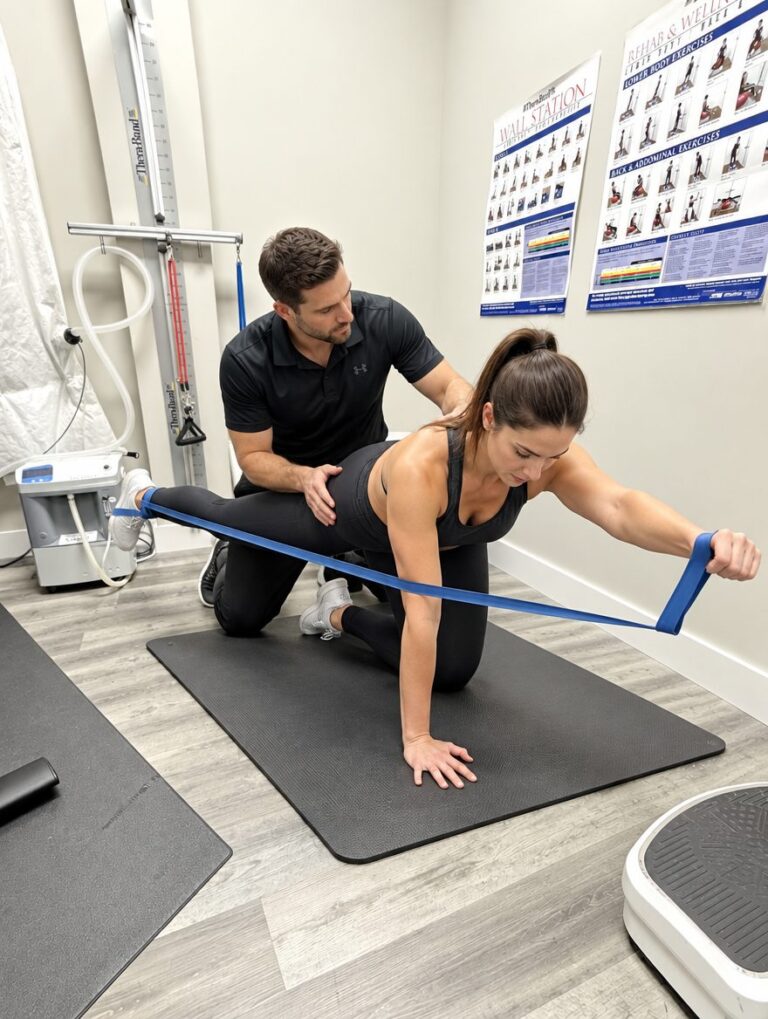
Physical therapy rebuilds the deep core and hip stabilizers that protect the spine when you sit, lift and play; PEMF and red light therapy support tissue repair between visits; and posture correction removes the daily load that started the problem.
Non-surgical spinal decompression
Computer-controlled traction that opens the disc space and pulls pressure off herniated discs and pinched nerves.
Learn moreChiropractic adjustments
Restore motion to locked facet and SI joints and calm the inflamed segments behind sharp, 'locked' back pain.
Learn morePhysical therapy
Rebuild the deep core and hip stabilizers so a corrected spine stays corrected.
Learn moreCold laser therapy
Low-level laser calms inflammation and nerve irritation during acute flares — no heat, no drugs.
Learn moreThe 4R Method: the order of back pain treatment matters
Every back pain treatment plan at The Spine and Wellness Center follows the 4R Method — Repair, Rebuild, Regenerate, Refine — because the body heals in a sequence. Pain relief without structural correction is temporary by design; structural correction on an inflamed, guarded spine does not stick.
R1 · Repair — take the pressure off (3–5 visits a week, 4–8 weeks)
The Repair phase interrupts the pain at its source: decompression for disc and nerve patterns, adjustments for joint patterns, cold laser, ultrasound and soft tissue work to settle inflammation and guarding. Most patients notice meaningful change in the first two to three weeks, and we re-scan so progress is measured, not guessed.
R2 · Rebuild — correct what caused it (2–3 visits a week, 8–16 weeks)
Once the nerve is quiet and the joints are moving, we correct the architecture that produced the problem: corrective chiropractic to restore the spinal curves, physical therapy to retrain the deep core and hip stabilizers, Graston for fibrotic tissue, and posture correction for the daily loads. This is the phase most clinics skip — and the reason their patients come back.
R3 · Regenerate (2 visits a week, 2+ months) and R4 · Refine (monthly)
With structure restored, Regenerate elevates the cellular side of recovery — red light, PEMF, IHHT oxygen therapy and BrainTap — so energy, sleep and resilience improve along with the back. Refine is the long game: a brief structural tune-up roughly monthly protects the gains.
Back pain treatment at home: what helps between visits
Between visits, small choices speed recovery or stall it. These are the habits that matter most, whichever region is hurting:
- Keep moving, gently. Short, frequent walks beat bed rest; prolonged rest stiffens joints and weakens the stabilizers.
- Break up sitting. Stand or walk for two minutes every 30–45 minutes — sitting is the single biggest daily load we see in Coral Springs and Parkland patients.
- Hinge, don’t bend. Keep loads close and hinge at the hips; rounding the lower back under load is how discs get hurt.
- Raise the screen. Laptops and phones at eye level keep the thoracic spine and neck out of hours of flexion.
- Skip aggressive stretching early on. Forcing a flexion stretch on an irritated disc can make sciatica worse; your plan includes the right movements at the right stage.
Ice for the first 48 hours of a flare, heat for stiffness after that. If pain is radiating into a leg or arm, do not wait weeks to see if it settles — nerve symptoms respond faster the sooner the pressure comes off.
When back pain needs urgent care instead
A small number of symptoms are not chiropractic problems and need same-day medical evaluation: loss of bladder or bowel control, numbness in the groin or inner thighs, rapidly worsening leg weakness, back pain with fever, unexplained weight loss or a history of cancer, chest pain or shortness of breath with upper back pain, or pain after a serious fall or accident. If any of these apply, please see a doctor or urgent care today — we will be here for the recovery afterwards.
For everything else — the ache that will not quit, the back that goes out, the sciatica, the stiff upper back from a decade at a desk, the disc you were told might need surgery — back pain treatment is what we do all day in Coral Springs and Parkland, and we are usually able to see you the same day you call.
Serving back pain patients across North Broward
Our clinic at 5675 Coral Ridge Drive, Coral Springs, FL 33076 serves Coral Springs, Parkland, Coconut Creek, Margate, Boca Raton, Tamarac, Pompano Beach and Deerfield Beach. Same-day appointments are usually available — call (954) 341-2256 or book online. Most patients from Parkland and Coral Springs are here in under 15 minutes.
Medically reviewed by Dr. Jared Cohen, DC — Co-Founder & Clinical Director, The Spine and Wellness Center. Last reviewed October 2026.
Frequently asked questions
What is the most effective back pain treatment?
The most effective back pain treatment is the one matched to the cause. Disc and nerve patterns respond best to non-surgical spinal decompression; facet and SI joint patterns to specific adjustments; muscle and fascial patterns to Graston and soft tissue work. All of them need a Rebuild phase of core and hip stabilization so the relief holds.
How long does back pain treatment take?
Most patients notice meaningful change within the first two to three weeks of the Repair phase, which typically runs 4–8 weeks at 3–5 visits a week. The Rebuild phase that corrects the underlying structure usually takes another 8–16 weeks at 2–3 visits a week. Chronic or recurrent cases sit at the longer end.
Do I need an MRI before starting treatment?
Usually not. The exam, surface EMG and thermal scanning, and digital X-rays when indicated identify the pattern in most cases. We request or review an MRI when nerve symptoms are significant, when progress stalls, or when imaging would change the plan — and we read any MRI you already have on visit one.
Is chiropractic care safe for a herniated disc?
Yes, when the disc has been properly evaluated first. For disc patterns we lead with gentle, computer-controlled spinal decompression and use low-force adjustments at the segments around the disc rather than forceful manipulation of the injured level. Your exam and imaging on visit one determine which techniques are appropriate.
Can you treat upper back pain as well as lower back pain?
Yes. Upper (thoracic) back pain usually comes from stiff thoracic segments, rib joints and postural strain rather than discs, so the plan leans on adjustments, Graston, posture correction and mobility work. Lower back pain more often involves discs and SI joints. We treat both, and often both at once.
Will I be treated on my first visit?
Your first visit is a full evaluation: conversation, hands-on structural exam, surface EMG and thermal scanning, and digital X-rays when indicated. On visit two we review the findings with you, explain the plan, and Most patients have already begun care on visit one; this is where the full plan takes over. Measuring first is what lets us match the treatment to the real cause.


Same-day appointments
Let's build your plan.
Find out what's actually going on and get a clear path forward. Same-day appointments available.
- Same-day appointments are usually available
- Our team calls you back to confirm your visit
- Coral Springs, serving Parkland & North Broward since 2005
Prefer to talk now? Call or text (954) 341-2256