
Stretches & Exercises · 6 min read
8 Stretches for Lower Back Pain Relief
Gentle, chiropractor-approved low-back stretches you can do at home — plus the honest guidance on when stretching alone is not going to fix it.

Quick answer
The best stretches for lower back pain are gentle, held for 20–30 seconds, and done daily: knee-to-chest, double knee-to-chest, pelvic tilt, cat-cow, child's pose, figure-4, a supported spinal twist and a hamstring stretch. They help muscular tightness. Pain that shoots down the leg, or numbness, means a disc or nerve is involved and needs an exam, not more stretching.
Before you begin: what stretches for lower back pain can and cannot do
Stretches for lower back pain are one of the simplest tools we hand patients at The Spine and Wellness Center, because back trouble is the most common reason people walk through our Coral Springs door. For mild, muscular low-back tightness — the ache after a long drive, the stiffness after a weekend of yard work — a consistent routine brings real relief.
A stretch should feel like a mild, comfortable pull, never sharp pain. Move slowly, breathe normally, and never bounce or force a position. These moves are for general muscular tightness; they are not a treatment for an undiagnosed disc, nerve or joint problem. Knowing the difference matters — our guide to what causes lower back pain walks through the patterns.
Stop and get checked
Stop any stretch if pain radiates down the leg, if numbness or tingling appears, or if symptoms worsen. Back pain with leg weakness, numbness in the groin or inner thighs, bladder or bowel changes, fever, or pain after a fall — please see a doctor or urgent care today.
8 gentle stretches for lower back pain
Do these on a mat or carpet, in order, once or twice a day. The whole routine takes about eight minutes.
- Knee-to-chest. Lie on your back, gently pull one knee toward your chest, hold 20–30 seconds, then switch. Eases the low back and glutes.
- Double knee-to-chest. Bring both knees toward the chest together for a broader low-back release. Hold 20–30 seconds.
- Pelvic tilt. Knees bent, flatten your low back into the floor by tightening the abdominals, then relax. 10–15 repetitions. This one wakes up the deep core.
- Cat-cow. On hands and knees, slowly alternate between arching and rounding your back. 8–10 slow cycles to mobilize each segment.
- Child’s pose. Sit back toward your heels with arms stretched forward to lengthen the low back. Hold 30 seconds and breathe into the stretch.
- Figure-4 (piriformis) stretch. On your back, cross one ankle over the opposite knee and draw the thigh toward you. Targets the deep hip rotators that often refer pain into the back. 20–30 seconds per side.
- Supported spinal twist. Lying down, knees bent, let both knees fall gently to one side while the shoulders stay flat. Eases rotational stiffness. 20–30 seconds per side.
- Hamstring stretch. On your back, loop a towel around one foot and gently straighten the leg toward the ceiling. Tight hamstrings tip the pelvis and pull on the low back. 20–30 seconds per side.
If sciatica-type leg symptoms are part of your picture, our sciatica stretches you can do at home adjusts this list — some of these moves (especially the hamstring stretch) need to be gentler when a nerve is irritated.

Building a daily routine that actually sticks
Consistency beats intensity. A short routine done daily does more than an aggressive session once a week. Most patients do best with five to ten minutes in the morning, when the back is stiffest, and again in the evening after a day of sitting. Pair it with a trigger you already have — after the coffee is poured, before the shower — so it stops relying on willpower.
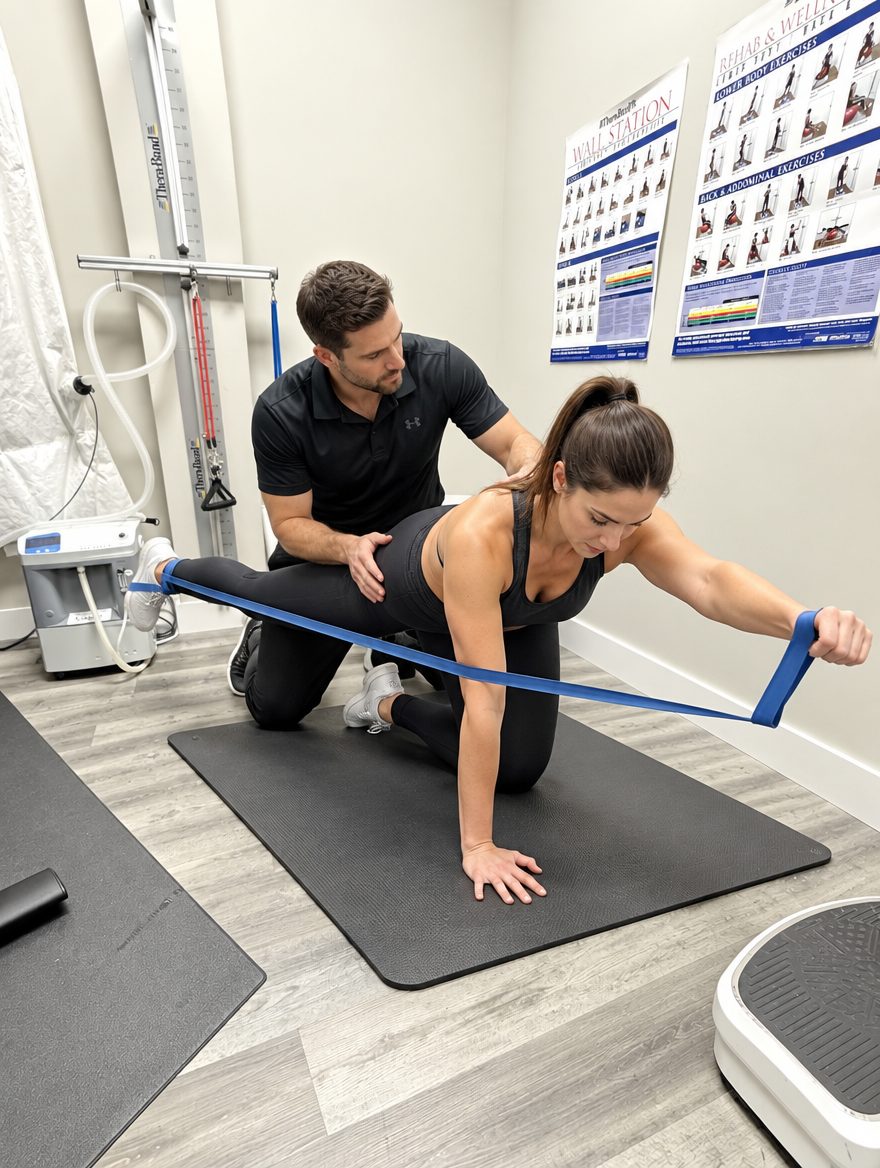
Stretching alone is half the equation. The muscles that protect the low back — the deep abdominals, glutes and the small spinal stabilizers — need strengthening too, or the tightness simply returns. Add bird-dogs, glute bridges and side planks a few times a week once the stretches feel easy — our physical therapy team coaches the progression. Movement through the day matters as much as the routine; see how sitting strains your back for why the 30-minute rule works.
The National Institute of Neurological Disorders and Stroke notes that staying active and gradually resuming normal activity tends to speed recovery from most low back pain, while prolonged bed rest slows it. The routine above is a practical way to do exactly that.
When stretches are not enough: what we look for
If two to three weeks of consistent stretching has not changed your pain, something structural is usually driving it, and more stretching will not fix a disc or an irritated facet joint. The signs that it is time for an exam:
- Pain that shoots or tingles into the buttock, leg or foot — a sciatica pattern that needs a different plan
- Pain that is worse sitting, bending forward, coughing or sneezing (a disc pattern)
- Sharp, localized pain that is worse standing or arching backward (a facet pattern)
- One-sided pain over the dimple above the buttock that flares rising from a chair (an SI joint pattern)
- A back that ‘goes out’ more than once or twice a year
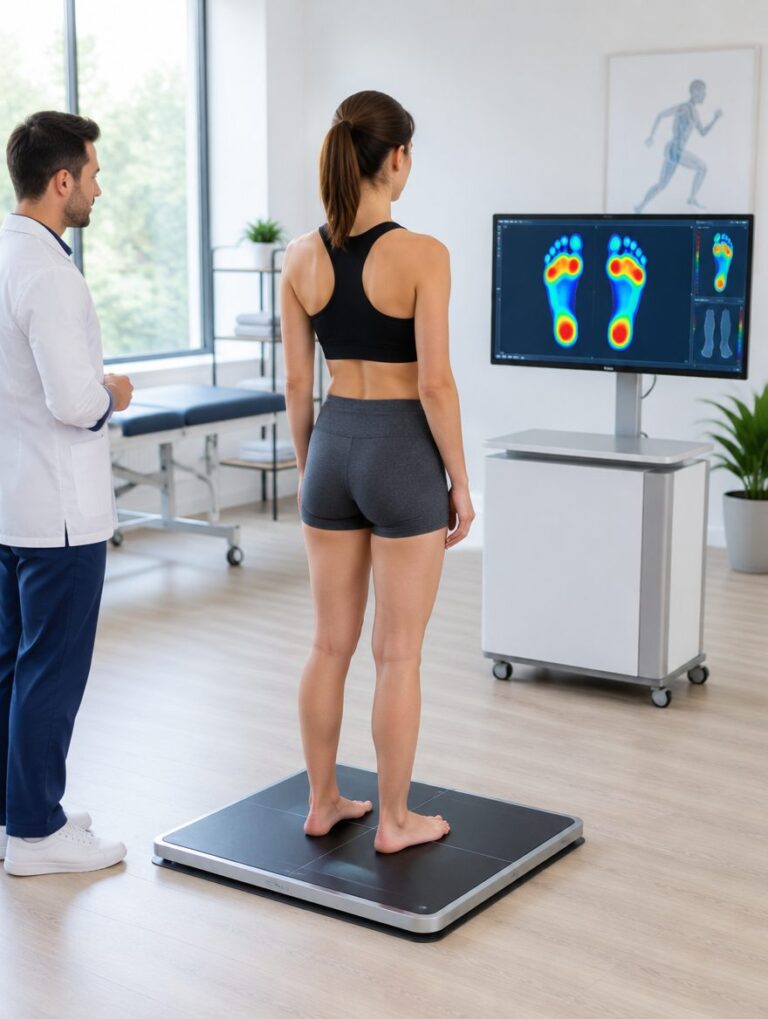
At your first visit we measure: a conversation, a hands-on structural exam, surface EMG and thermal scanning, and digital X-rays when indicated. Visit two is your full report of findings and plan. Care then follows the 4R Method — Repair to take pressure off the disc or joint (non-surgical decompression, specific adjustments), Rebuild to restore stability with a real exercise program, then Regenerate and Refine to keep it. Our lower back pain relief page explains each step, and back pain treatment covers the full toolkit.
Lower back pain relief
Non-surgical care for discs, facet joints and SI joints in Coral Springs and Parkland.
Learn moreBack pain treatment
Decompression, adjustments, laser and rehab — matched to the cause.
Learn morePhysical therapy
Hands-on coaching for the stretches and the strengthening that keeps them working.
Learn moreSciatica treatment
When the pain runs down the leg, the plan changes.
Learn moreServing lower back pain patients across North Broward
Our clinic at 5675 Coral Ridge Drive, Coral Springs, FL 33076 serves Coral Springs, Parkland, Coconut Creek, Margate, Boca Raton, Tamarac, Pompano Beach and Deerfield Beach. Same-day appointments are usually available — call (954) 341-2256 or book online. Most patients from Parkland and Coral Springs are here in under 15 minutes.
Medically reviewed by Dr. Jared Cohen, DC — Co-Founder & Clinical Director, The Spine and Wellness Center. Last reviewed October 2026.
Frequently asked questions
How often should I do stretches for lower back pain?
Daily, ideally twice: a short five-to-ten-minute routine in the morning when the back is stiffest and again in the evening. Consistency matters far more than intensity. Hold each stretch 20 to 30 seconds, breathe normally, and never bounce. Most people notice a difference within one to two weeks of daily practice.
Which stretches should I avoid with lower back pain?
Avoid aggressive forward bends such as touching your toes while standing, deep loaded twists, and anything that reproduces shooting leg pain, numbness or tingling. If a stretch sharpens your pain rather than easing it, stop. Those symptoms suggest a disc or nerve is involved and should be evaluated rather than stretched.
Can stretching fix a herniated disc?
No. Gentle movement can reduce muscle guarding around a herniated disc, but stretching does not change the disc itself and the wrong stretch can aggravate it. Disc-driven pain usually responds better to non-surgical spinal decompression and specific care, followed by core stabilization once the nerve has calmed.
Should I stretch or strengthen for lower back pain?
Both, in that order. Stretching relieves the tightness that makes the back feel locked; strengthening the deep core, glutes and spinal stabilizers is what keeps it from returning. Once the daily stretches feel easy, add bird-dogs, bridges and side planks two or three times a week.
Same-day appointments
Reading about it is step one.
Step two is a measurement. Visit one we measure — and usually begin care; visit two you get your full findings and plan.
- Same-day appointments are usually available
- Our team calls you back to confirm your visit
- Coral Springs, serving Parkland & North Broward since 2005
Prefer to talk now? Call or text (954) 341-2256