
Back & Neck · 6 min read
How sitting strains your back, and how to fix it
Long hours at a desk quietly compress your discs, shorten your hips and round your shoulders. Here is what prolonged sitting does to the spine and how to undo it.

Quick answer
Sitting strains your back in four ways: it shortens the hip flexors that pull on the lumbar spine, keeps the back muscles contracted for hours, raises pressure inside the lumbar discs more than standing does, and drifts the head forward so the neck carries extra load. The fix is movement every 30–60 minutes, lumbar support, a screen at eye level, hip and core work, and care for any joint that has already locked up.
Why sitting strains your back more than standing
Knowing how sitting strains your back explains a complaint we hear every week in Coral Springs and Parkland: “I didn’t do anything, my back just aches by the end of the workday.” The human body is built to move, yet most of us sit for eight hours or more between the desk, the commute and the couch. Classic pressure studies found that slouched sitting loads the lumbar discs more than standing does, and the body pays for that load in four specific ways.
The Mayo Clinic summarizes the broader risks of prolonged sitting; this article is about the mechanical ones your spine feels first.
4 ways sitting strains your back
- Your hip flexors shorten. The psoas runs from the front of the lumbar spine to the thigh bone. Sitting folds it, and after hours it adapts to the short position. Stand up and it pulls the low back into extra arch, which is why the first steps after a long drive feel stiff.
- Your back muscles never switch off. Without a backrest doing its job, the erector muscles hold the trunk up continuously. Held short and contracted for hours, they ache, guard and can irritate the nerves beside them.
- Disc pressure climbs. Slouching flattens the natural lumbar curve and shifts load to the front of the discs. Over years that contributes to bulging discs, sciatica and the chronic low back pain we treat with spinal decompression; What’s Really Causing Your Lower Back Pain explains the structures.
- Your head drifts forward. As you focus on a screen, the head moves ahead of the shoulders and the shoulders round. That forward-head, tech-neck posture loads the top of the spine and is one of the most common drivers of upper-back and neck pain we see.

Warning signs your sitting is hurting your back
- Low back ache or stiffness that builds through the workday and eases when you stand and walk
- Tight hips and hamstrings; trouble standing fully upright after a long drive
- Rounded shoulders and a head that sits forward of the collarbones in a side-view photo
- An ache between the shoulder blades by mid-afternoon
- Tingling, numbness or pain radiating into the buttock or leg, which means a disc or nerve is now involved
The first four are mechanical and respond well to habit changes plus care. The fifth is the one not to wait on. Please see a doctor or urgent care today for back pain with loss of bowel or bladder control, numbness in the groin, progressive leg weakness, fever or unexplained weight loss.
5 fixes for sitting-related back pain
- Move every 30–60 minutes. Stand, walk to the water cooler, do ten slow hip extensions. Brief movement relieves disc pressure and restores blood flow better than any chair feature.
- Support the lumbar curve. A small cushion or rolled towel behind the low back keeps the discs loaded evenly. Hips slightly above the knees, feet flat.
- Raise the screen to eye level so the head stays stacked over the shoulders; a laptop needs a stand and a separate keyboard. Work-From-Home Ergonomics covers the full setup.
- Stretch the hip flexors, strengthen the glutes and core. A half-kneeling hip flexor stretch and a set of glute bridges each day undo most of what the chair did. 8 Stretches for Lower Back Pain Relief has the routine.
- Fix the joints that have already locked up. Habits prevent the next problem; they do not release a facet joint or hip that has stiffened over years. That is where care comes in.
Stop any stretch if pain radiates or worsens, and see a doctor or urgent care today for the red-flag symptoms above.
When to see a chiropractor in Coral Springs or Parkland
If back pain from sitting is starting to disrupt your day, or it has been there most days for more than a few weeks, do not wait for it to become chronic. At The Spine and Wellness Center on Coral Ridge Drive, visit one measures the problem: a conversation about your workday, a hands-on structural exam, surface EMG and thermal scanning that show which muscles are overworking, and digital X-rays when indicated. Visit two is the report of findings and the plan, and Most patients have already begun care on visit one; this is where the full plan takes over.
The drive matters as much as the desk. Thirty to sixty minutes each way on the Sawgrass or I-95 in a reclined seat with the hips below the knees is one of the heaviest sitting loads of the day. Bring the seat upright and closer to the wheel so the knees sit level with the hips, and use the lumbar support the car came with.
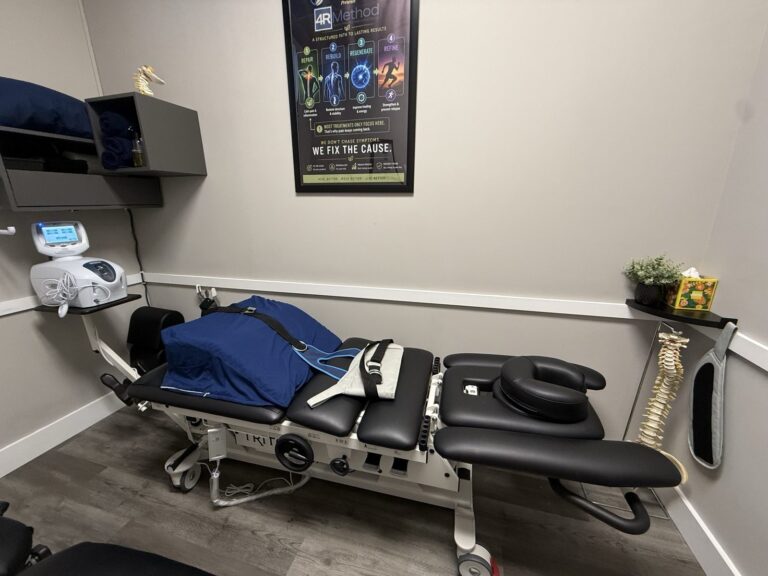
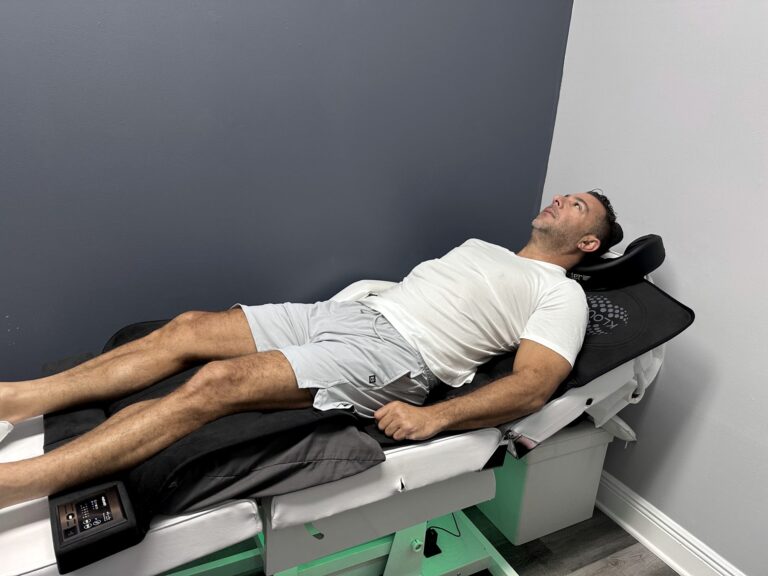
Inside the 4R Method, the Repair phase restores motion to the stiff lumbar and hip joints and, when a disc is involved, unloads it on the decompression table; see our back pain treatment and lower back pain relief pages. The Rebuild phase, 2–3 visits a week for 8–16 weeks, is posture correction and the hip and core strength that keep the chair from winning. How to Fix Your Posture explains the habits side.
Good to know
A standing desk is not a cure. Standing still for eight hours loads the spine differently, not less. The goal is variety: sit, stand, walk, and change position before your back asks you to.
Same-day appointments are usually available, and a spine assessment is the place to start. Most patients from Parkland, Coconut Creek and Margate are here in under fifteen minutes.
Serving desk workers and commuters across North Broward
Our clinic at 5675 Coral Ridge Drive, Coral Springs, FL 33076 serves Coral Springs, Parkland, Coconut Creek, Margate, Boca Raton, Tamarac, Pompano Beach and Deerfield Beach. Same-day appointments are usually available — call (954) 341-2256 or book online. Most patients from Parkland and Coral Springs are here in under 15 minutes.
Medically reviewed by Dr. Jared Cohen, DC — Co-Founder & Clinical Director, The Spine and Wellness Center. Last reviewed October 2026.
Frequently asked questions
Why does sitting hurt my back more than standing?
Slouched sitting flattens the lumbar curve and raises the pressure inside the discs above what standing produces, while the hip flexors shorten and the back muscles stay contracted. Standing distributes load more evenly through the spine and lets the muscles alternate. The combination is why a desk day can hurt more than a day on your feet.
Can sitting too long cause permanent back damage?
Occasional long sitting will not. Years of slouched, sedentary sitting can contribute to disc degeneration, bulging discs and chronic pain, and those changes are slow to reverse. Movement, posture changes and care for the joints that have stiffened can relieve most of the strain, and starting earlier is easier than starting later.
What is the best sitting posture to protect my back?
Feet flat, hips slightly above the knees, a small lumbar support behind the low back, shoulders relaxed and the screen at eye level so the head stays over the shoulders. Even perfect posture becomes a strain after an hour, so the most important rule is to stand and move every 30–60 minutes.
How often should I get up from my desk?
At least once every 30 to 60 minutes. A two-minute stand, a short walk or ten slow hip extensions relieves disc pressure, restores blood flow to the back muscles and resets your posture. Frequent short breaks beat one long break at lunch.

Same-day appointments
Reading about it is step one.
Step two is a measurement. Visit one we measure — and usually begin care; visit two you get your full findings and plan.
- Same-day appointments are usually available
- Our team calls you back to confirm your visit
- Coral Springs, serving Parkland & North Broward since 2005
Prefer to talk now? Call or text (954) 341-2256