
Core care · Coral Springs & Parkland
Non-surgical spinal decompression therapy in Coral Springs
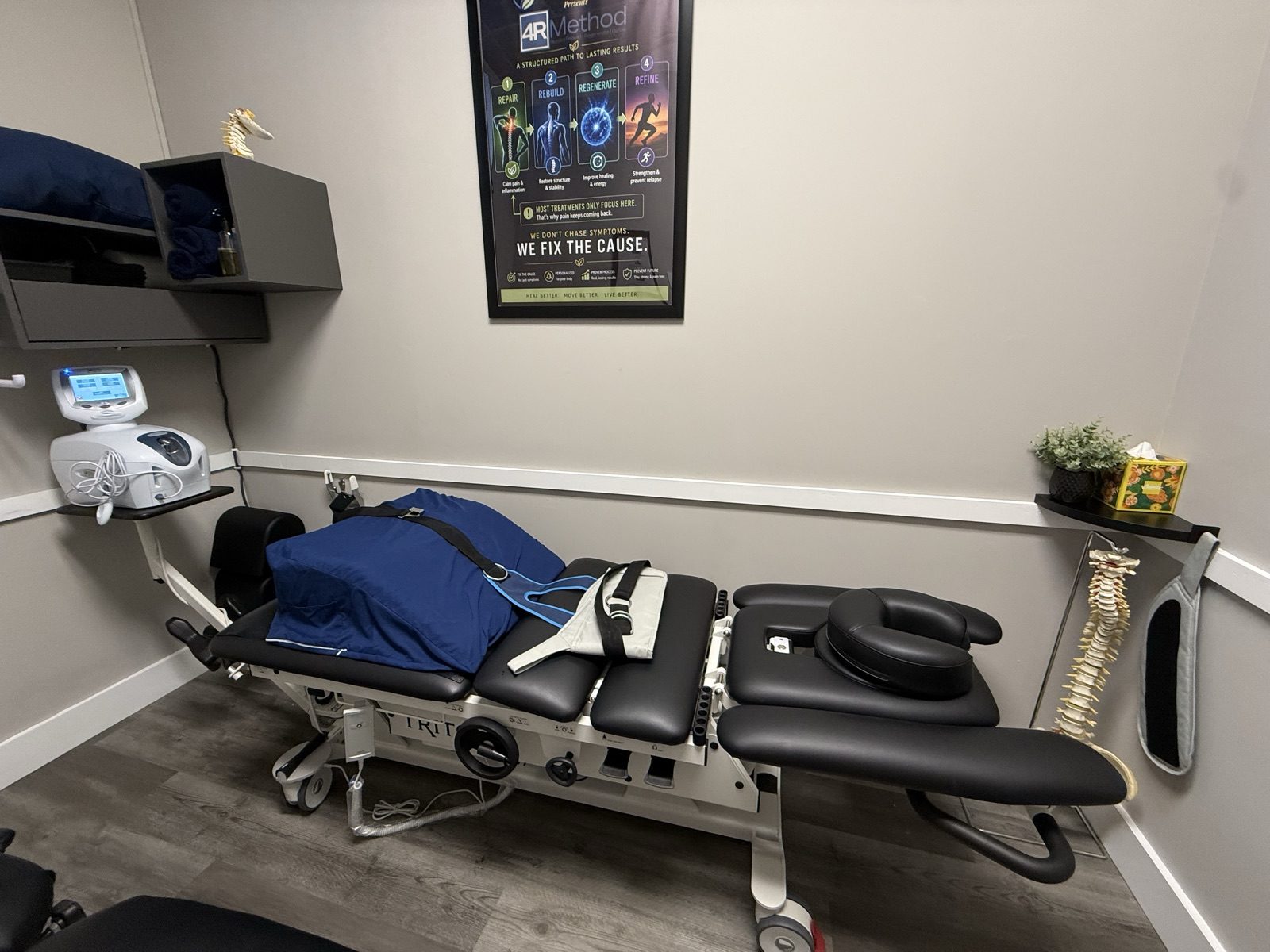
Herniated and bulging discs, sciatica, pinched nerves — the Triton DTS table gently takes the pressure off so the disc can heal. No surgery, no injections, about 20 minutes on the table.
Quick answer
Non-surgical spinal decompression therapy uses a computer-controlled table, the Triton DTS, to gently cycle pulling and relaxing forces along the spine. Each cycle lowers the pressure inside an injured disc so a bulge can retract away from the nerve and the disc can rehydrate. Sessions take about 20 minutes and sit inside the Repair phase of the 4R Method.
What is spinal decompression therapy and how does the Triton DTS work?
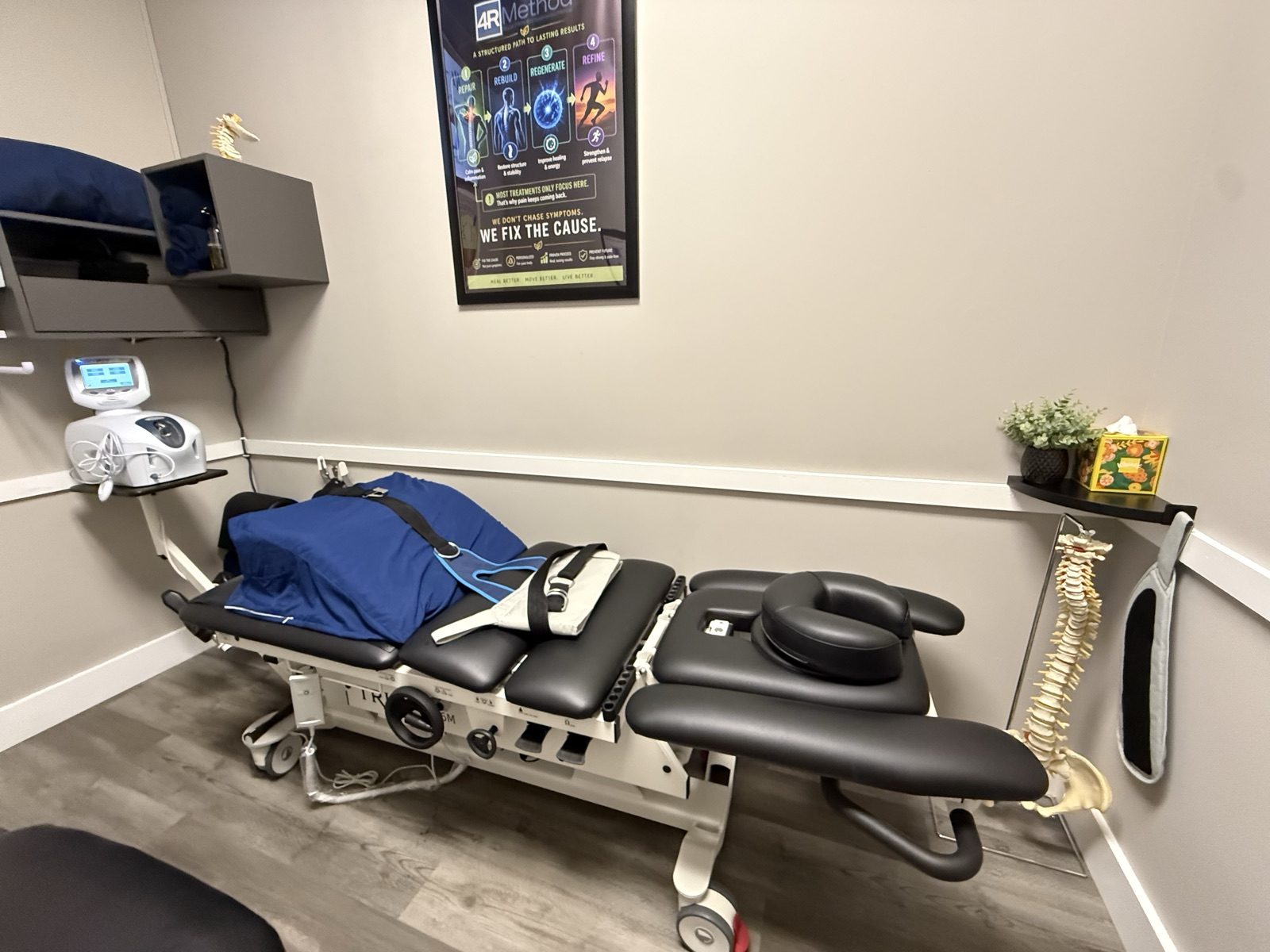
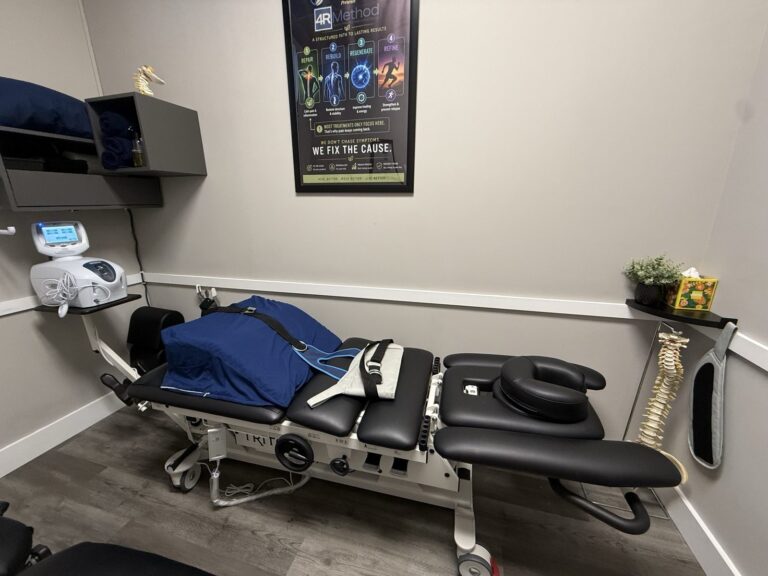
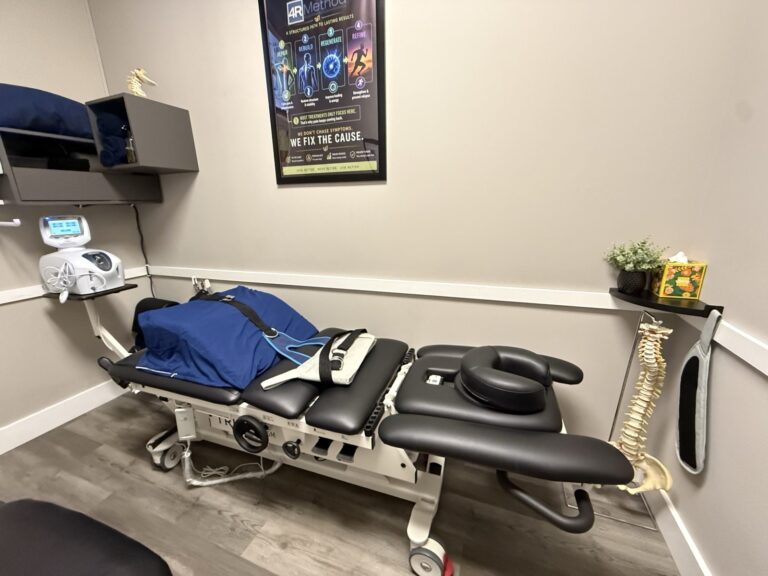
Non-surgical spinal decompression therapy is a computer-controlled form of spinal traction that gently separates the vertebrae to lower the pressure inside an injured disc. At our Coral Springs clinic it is delivered on the Triton DTS table — the centerpiece of the Repair phase for disc and nerve problems in the lower back and neck.
A spinal disc is a fluid-filled cushion between two vertebrae. When the outer wall weakens, the inner material bulges or herniates and presses on the nerve root beside it. That pressure — not the disc itself — is what produces sciatica down the leg, or pain and tingling into the arm.
Decompression works by changing the pressure inside the disc. The Triton DTS applies a precisely controlled pull along the spine, holds it, then eases off, in repeating cycles. Separating the vertebrae this way is intended to create negative intradiscal pressure — a mild vacuum effect inside the disc that can draw the bulging material inward, away from the nerve, and pull fluid and nutrients back into the disc so it can rehydrate and heal.
The computer matters. It monitors resistance and adjusts the force in real time so the muscles beside the spine stay relaxed instead of bracing against the pull. That is the difference between decompression and old-fashioned traction, and it is why patients describe the sessions as relaxing rather than uncomfortable.

Is spinal decompression the same as traction?
No. Both pull on the spine, but they do it differently and for different reasons. The distinction matters when you are choosing care for a herniated disc or sciatica:
- Traction applies a steady, mostly constant pull. The paraspinal muscles sense the stretch and tighten against it, which limits how much the vertebrae actually separate. It is useful for stiffness and mild nerve irritation.
- Decompression uses computer-controlled cycles of pull and release, with the force ramping up and down smoothly. Keeping the muscles relaxed allows a deeper, more targeted separation at the injured level, which is what produces the negative pressure inside the disc.
- Targeting. On the Triton DTS the angle of pull is set to the specific disc level — L4–L5 and L5–S1 in the lower back, C5–C6 and C6–C7 in the neck — rather than stretching the whole spine evenly.
In our clinic, simpler spinal traction therapy is sometimes the right starting point for a very irritated neck or back, and decompression takes over once the spine tolerates it. For true disc herniation with nerve symptoms, decompression is the tool we reach for first.
Who is spinal decompression therapy for?
Spinal decompression therapy is designed for pain that comes from a disc pressing on a nerve. The patterns we see most often in Coral Springs and Parkland are:
- Herniated and bulging discs in the lumbar spine or neck, confirmed on MRI or strongly suggested by the exam.
- Sciatica — pain, tingling or numbness running from the buttock down the back of one leg, usually from a disc at L4–L5 or L5–S1. See our lower back pain guide for how we tell disc pain from joint pain.
- Cervical radiculopathy — a pinched nerve in the neck causing pain, tingling or weakness into the shoulder, arm or hand. Our neck pain page covers the full picture.
- Degenerative disc disease (DDD) — discs that have thinned and dried out over years of sitting, lifting and driving, producing a deep, stubborn ache.
- Facet-related low back pain where the disc has lost height and the small joints behind it are overloaded.
- Failed conservative care — people who tried medication, injections or stretching and the pain came back, and who want to avoid surgery.
Leg or arm symptoms are the strongest signal. When numbness, tingling or weakness travels into a limb, a nerve is involved, and nerve compression responds to decompression in a way that more stretching or stronger medication usually does not.
Good to know
Decompression is not only for the lower back. The Triton DTS has a dedicated cervical setup, and neck disc problems with arm symptoms are among the cases that respond most consistently.
What does a spinal decompression session feel like?
A session on the Triton DTS takes about 20 minutes and most patients find it relaxing. Here is what happens, step by step:
- Harnessing. You lie on the table — face up for the lower back, with a padded cervical cradle for the neck. A pelvic harness and a chest harness anchor you so the pull is delivered precisely to the injured level.
- Programming. Dr. Cohen sets the angle of pull, the target force and the cycle pattern for your specific disc level. Force starts low on the first visit and increases gradually across the program.
- Cycles. The table pulls smoothly, holds for about a minute, then eases back for a rest period. This repeats for roughly 15 cycles. You feel a gentle, progressive stretch — never a jerk or a snap.
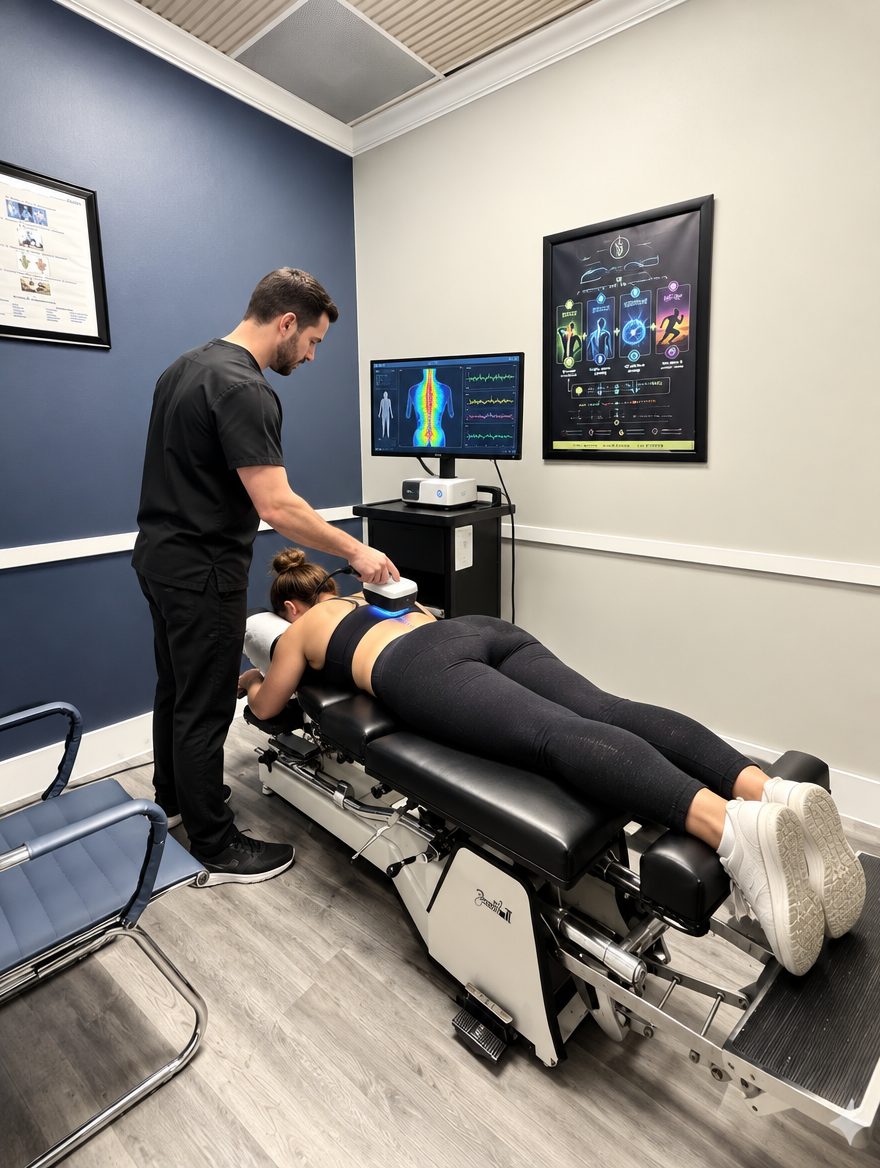
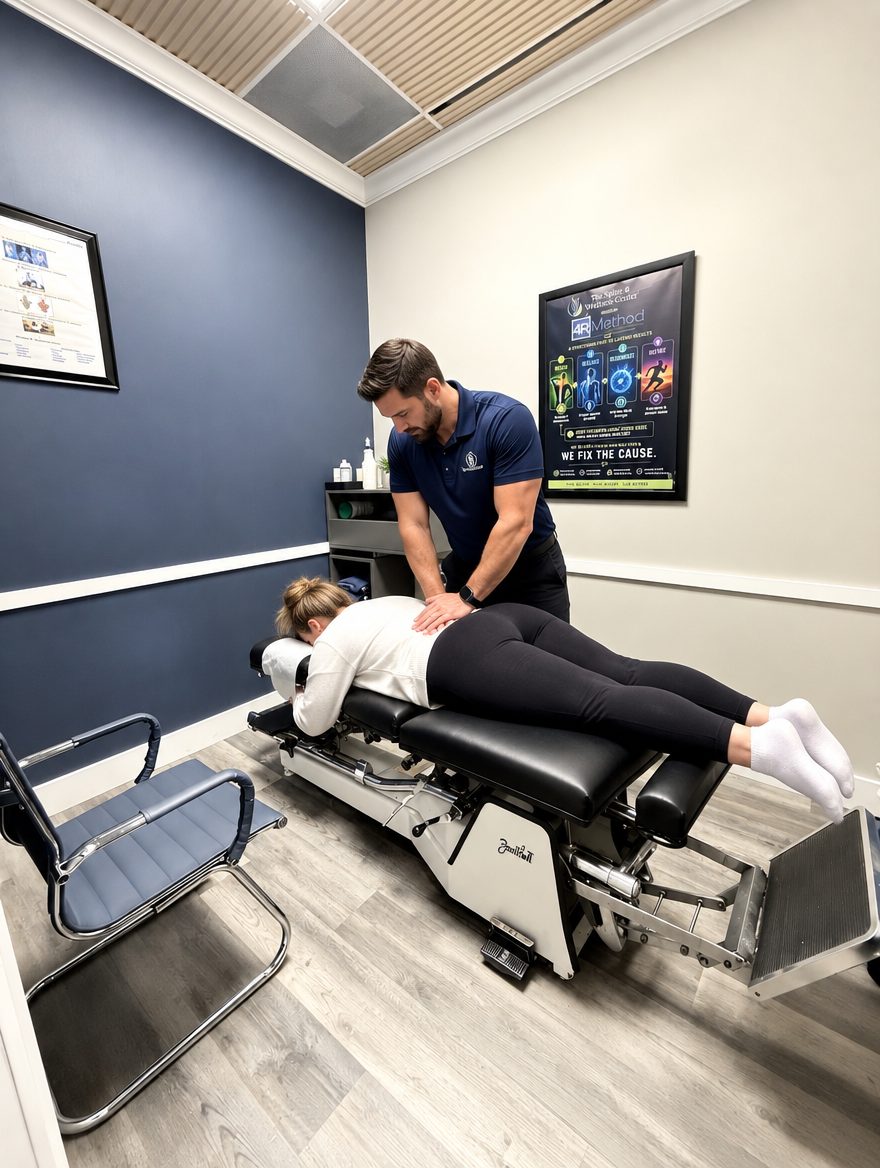
- Support therapy. Sessions are usually paired with a specific chiropractic adjustment, cold laser or PEMF therapy to calm inflammation and support disc healing between visits.
Afterward, some people feel lighter immediately; others notice a mild, pleasant soreness like after a good stretch. We ask you to avoid heavy lifting and long sitting for the rest of the day so the disc keeps the space it gained.
Where does decompression sit in the 4R Method?
Spinal decompression therapy is a Repair-phase tool inside the 4R Method — Repair, Rebuild, Regenerate, Refine. Its job is to take the pressure off the nerve and calm the inflammation first, so the rest of the plan has a stable spine to work with.
R1 · Repair — a structured decompression program
A typical disc program runs 3–5 visits a week for 4–8 weeks. Decompression is the anchor of each visit, paired with adjustments, cold laser or PEMF. Most patients notice meaningful change within the first two to three weeks, and we re-scan with surface EMG and thermal imaging to confirm the nerve is quieting objectively, not just by feel.
R2 · Rebuild — decompression tapers, stabilization takes over
As symptoms settle, decompression tapers down and Rebuild takes over: corrective chiropractic protocols, physical therapy to retrain the deep core and hip stabilizers, and Graston Technique for the fibrotic tissue around the injury. This phase runs 2–3 visits a week for 8–16 weeks and is the reason the relief holds — the disc is now protected when you sit, lift and play.
R3 and R4 · Regenerate and Refine
Regenerate elevates healing with red light and PEMF protocols at about two visits a week for two or more months. Refine is a brief structural tune-up every month or two — a short decompression session can be part of it for patients with degenerative discs who want to stay ahead of flare-ups.
What does the research say about spinal decompression therapy?
The evidence base is encouraging but still developing, and we say so plainly. The strongest published signal is about disc height: a retrospective cohort study in BMC Musculoskeletal Disorders found that patients who completed a non-surgical spinal decompression program showed restored disc height on imaging, and that the restoration was associated with reduced discogenic low back pain (Apfel et al., 2010, PubMed). Studies like this suggest a plausible mechanism; they do not prove decompression works for everyone.
What the broader literature does support is the conservative-first approach. The National Institute of Neurological Disorders and Stroke notes that most low back pain improves with non-surgical care, and that surgery is generally reserved for progressive neurological deficits or pain that fails to respond to other treatment (NINDS, Back Pain).
Our clinical experience in Coral Springs lines up with that: a structured decompression program inside the full 4R sequence — not a handful of isolated sessions — is what produces disc relief that outlasts the last appointment. We track every case with re-scans so you can see the change, not just feel it.
Who should not have spinal decompression?
Non-surgical decompression is gentle and well tolerated, but it is not for every spine. We screen for the following on your first visit, and digital X-rays are taken when indicated:
- Pregnancy
- Spinal fracture, or significant osteoporosis that raises fracture risk
- Spinal tumor or infection
- Spondylolisthesis with instability, or other unstable segments
- Recent spinal surgery with hardware (rods, screws, cages) at the level to be treated
- Abdominal aortic aneurysm, or a hernia that a pelvic harness could aggravate
- Severe peripheral neuropathy, or an inability to communicate discomfort during a session
Previous spinal surgery without hardware, such as a microdiscectomy, is often fine after the surgical site has healed — we review your records and imaging first. If any symptom is rapidly worsening, or you have loss of bladder or bowel control, numbness in the groin, or back pain with fever, please see a doctor or urgent care today before booking with us.
What to expect at your first two visits
We measure before we treat. Decompression is only prescribed once we know it is the right tool for your pattern, which is why the first visit is an evaluation, not a session on the table.
Visit one — we measure (and usually begin care)
- A real conversation about where it hurts, what radiates where, what you have tried, and what you want to get back to.
- A hands-on structural exam — posture, range of motion, straight-leg and nerve-tension tests, reflexes, strength and sensation to confirm which nerve root is involved.
- Surface EMG and thermal scanning along the spine to map muscle guarding and nerve irritation objectively, and to give us a baseline to re-scan against.
- Digital X-rays when indicated, plus a review of any MRI you already have, to confirm disc spacing, alignment and that none of the exclusions above apply.
Visit two — report of findings, and the full plan is set
Dr. Cohen walks you through the findings with your scans in front of you, maps your decompression program to the four 4R phases, and Most patients have already begun care on visit one; this is where the full plan takes over. Want a head start? Take the 60-second spine assessment and we will have your Spine Score and likely pattern before you arrive.
Serving spinal decompression patients across North Broward
Our clinic at 5675 Coral Ridge Drive, Coral Springs, FL 33076 serves Coral Springs, Parkland, Coconut Creek, Margate, Boca Raton, Tamarac, Pompano Beach and Deerfield Beach. Same-day appointments are usually available — call (954) 341-2256 or book online. Most patients from Parkland and Coral Springs are here in under 15 minutes.
Medically reviewed by Dr. Jared Cohen, DC — Co-Founder & Clinical Director, The Spine and Wellness Center. Last reviewed October 2026.
Frequently asked questions
Does spinal decompression therapy hurt?
No. You lie comfortably in a harness while the Triton DTS table works in gentle, computer-controlled cycles of pull and release. Most patients find the 20-minute sessions relaxing, and some feel relief during the very first one. A mild, stretch-like soreness afterward is normal and fades quickly.
How many spinal decompression sessions will I need?
A typical disc program runs multiple sessions a week for several weeks inside the Repair phase of the 4R Method, usually paired with adjustments and supporting therapies. We re-evaluate regularly with re-scans and taper decompression as Rebuild takes over, so the number depends on how your disc responds.
Can decompression help a herniated disc without surgery?
Often, yes. Most lumbar disc herniations improve with conservative care, and decompression gives the disc the space and lower pressure it needs to retract and rehydrate. Surgery is generally reserved for progressive neurological loss or pain that does not respond to other treatment, which is a small minority of cases.
Is spinal decompression the same as an inversion table?
No. An inversion table hangs you upside down and applies a uniform, unmeasured pull using your own body weight. The Triton DTS applies a measured force at a specific angle to a specific disc level, in cycles that keep the muscles relaxed. It is far more precise and is supervised at every session.
Does it work for neck disc problems too?
Yes. The Triton DTS has a dedicated cervical setup for disc bulges and pinched nerves in the neck that cause arm pain, tingling or weakness. Neck decompression uses lighter forces and a padded cradle rather than a harness, and sessions are similarly about 20 minutes.
Do I need an MRI before starting?
Not always. The exam, nerve tests and surface scans on your first visit usually tell us whether a disc is the driver, and digital X-rays are taken when indicated. If you already have an MRI, bring it. If the picture is unclear or symptoms are severe, we will refer you for imaging before Most patients have already begun care on visit one; this is where the full plan takes over.


Same-day appointments
Let's fix the cause.
Measure first, then treat — a plan built on your actual structure.
- Same-day appointments are usually available
- Our team calls you back to confirm your visit
- Coral Springs, serving Parkland & North Broward since 2005
Prefer to talk now? Call or text (954) 341-2256