
Advanced therapies · Coral Springs & Parkland
Therapeutic ultrasound therapy in Coral Springs
Sound waves that warm and gently massage tissue an inch below the skin. For stiff tendons, sprained ligaments, muscle strains and early scar tissue — a quiet workhorse of the Repair phase.
Quick answer
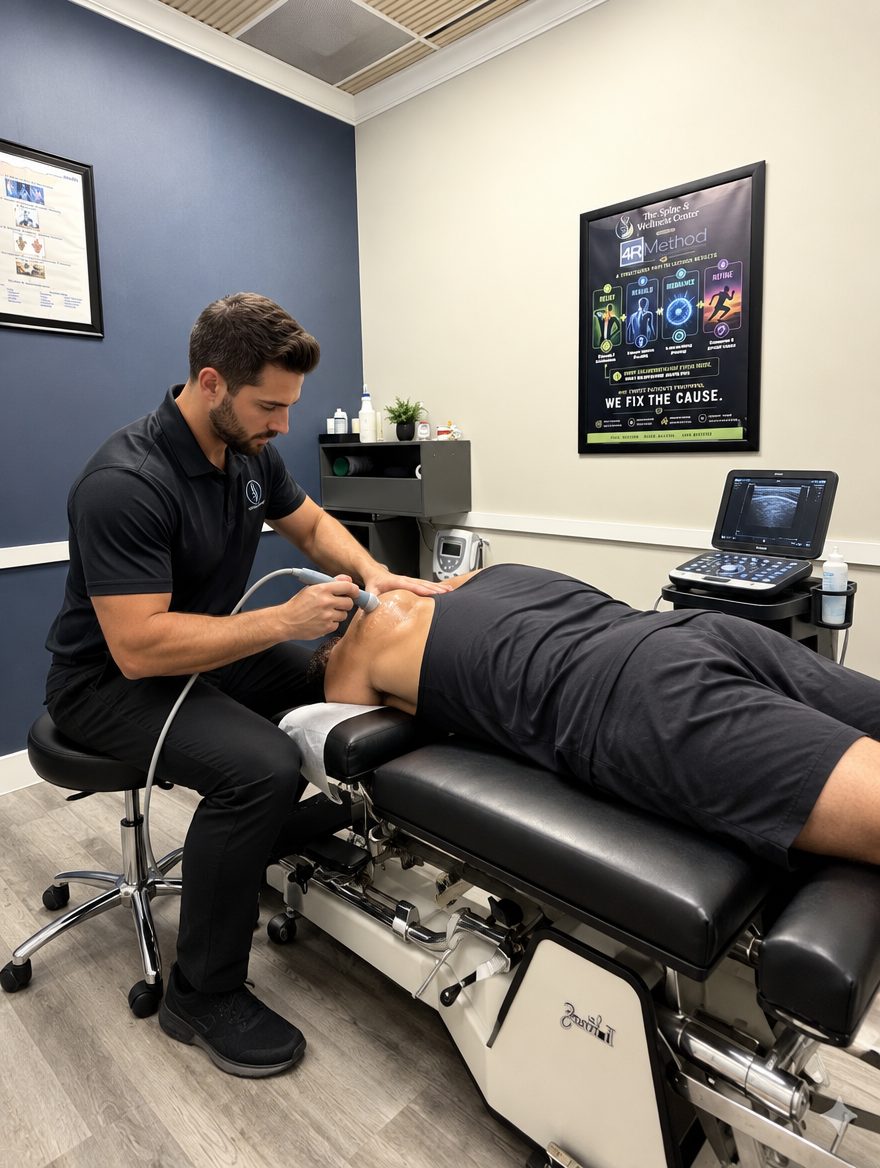
Therapeutic ultrasound uses high-frequency sound waves, delivered through a gel-coated wand, to produce deep heat and micro-vibration in tendons, ligaments and muscle. The heat increases blood flow and tissue elasticity; the vibration helps early scar tissue organize and swelling clear. Sessions take 5–10 minutes, are painless, and are paired with adjustments or soft-tissue work in the same visit.
What is therapeutic ultrasound and how does it work?
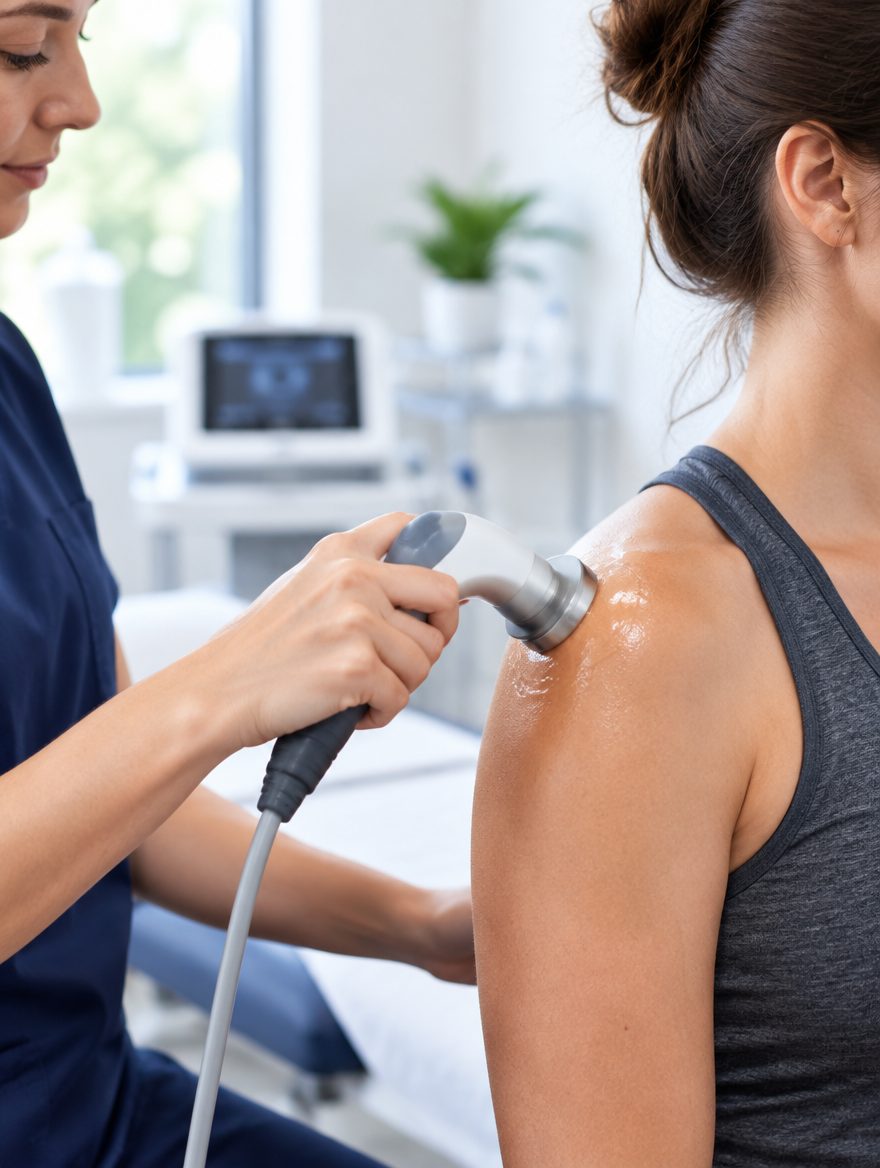
Therapeutic ultrasound delivers sound waves at frequencies far above hearing (typically 1 or 3 megahertz) into injured tissue through a small handheld wand and a layer of gel. It is not the imaging ultrasound used to look at a baby or a tendon; the same physics is used here to treat tissue rather than picture it.
The sound waves have two effects on tissue, and we choose which one to emphasize by adjusting the settings.
Thermal effect — deep heating
Delivered continuously, the sound energy is absorbed by dense, collagen-rich tissue — tendons, ligaments, joint capsules and scar — and converts to heat one to two inches below the skin, deeper than a hot pack can reach. That warmth increases local blood flow, makes collagen more elastic and stretchable, reduces muscle spasm and raises the pain threshold. It is the setting we use for stiff, chronic, tight tissue.
Mechanical effect — micro-massage
Delivered in pulses, the energy produces little heat but creates a rapid micro-vibration in cells and fluid. This is thought to speed the clearance of swelling, stimulate the cells that build collagen, and help early scar tissue lay down in an organized pattern rather than a tangled one. It is the setting for fresh sprains, strains and post-injury scar in its first weeks.

What conditions does therapeutic ultrasound help?
Therapeutic ultrasound suits soft-tissue problems where deep warmth or gentle mechanical stimulation will help — stiff, tight, dense tissue in particular. In our Coral Springs clinic the most common uses are:
- Tendon problems — rotator cuff, Achilles, patellar and elbow tendinopathy, especially when the tendon is stiff and needs to stretch before loading.
- Ligament sprains — ankle, knee and wrist sprains, and the ligaments of the neck after whiplash.
- Muscle strains and spasm — hamstring, calf, hip flexor and paraspinal strains, and the guarding that accompanies lower back pain and neck pain.
- Early scar tissue — in the first weeks after an injury or cleared surgery, before it has matured and needs instrument work.
- Joint capsule tightness — frozen shoulder and stiff hips and knees, where heat before stretching improves range of motion.
- Bursitis and plantar fasciitis — in the stiff, non-acute stage.
It is a routine part of our sports injury rehab programs for Coral Springs and Parkland athletes, where it prepares tight tissue for the stretching and strengthening that follows in the same visit.
Good to know
Ultrasound warms and loosens soft tissue; it does not restore joint motion or take pressure off a disc. We pair it with chiropractic adjustments or spinal decompression so the structural cause is addressed, not just the tight tissue around it.
What does a therapeutic ultrasound session feel like?
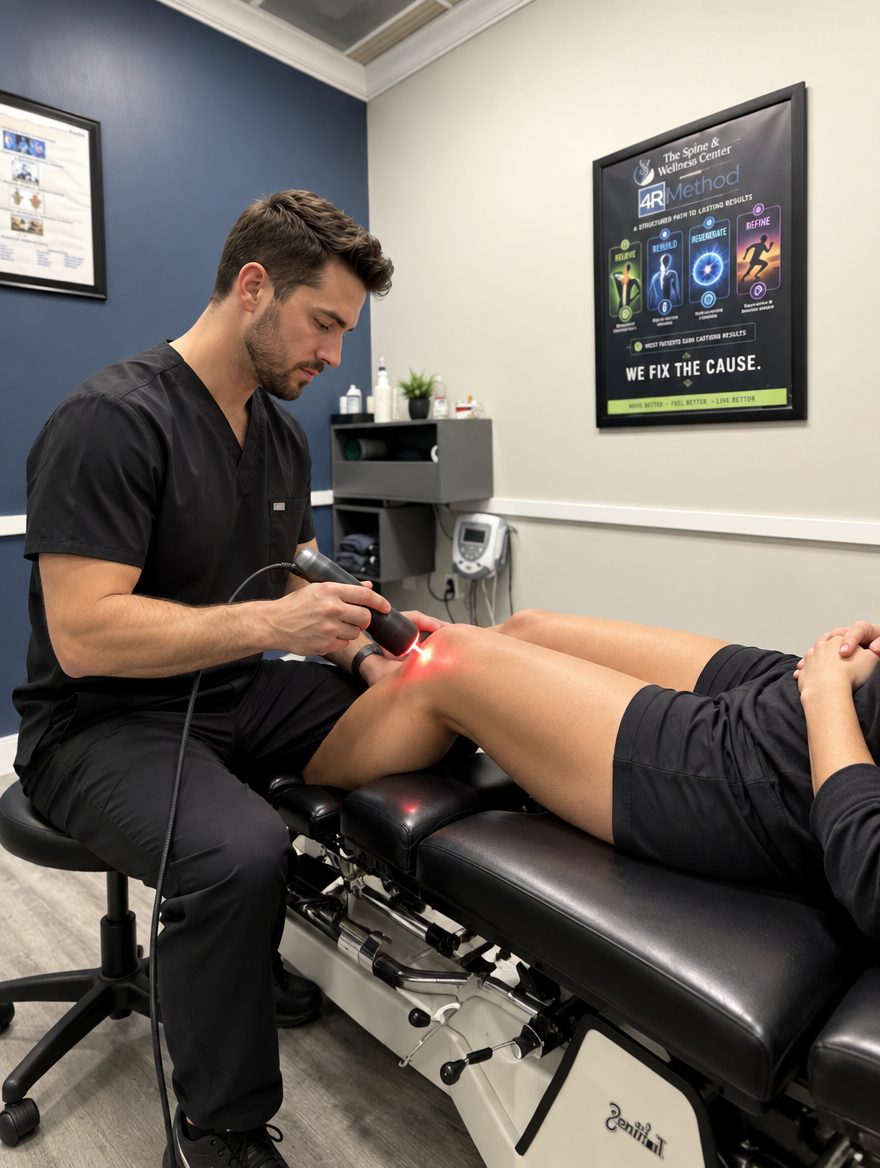
An ultrasound session is relaxed and short — usually 5 to 10 minutes on one region — and almost always leads into another treatment in the same visit.
- Settings. The provider selects continuous (heating) or pulsed (mechanical) mode, and a 1 MHz or 3 MHz frequency depending on how deep the target tissue is.
- Gel. A cool, water-based gel is spread over the area so the sound waves pass into the tissue instead of bouncing off air.
- Application. The wand is kept moving in slow circles over the area the whole time. Holding it still would concentrate heat in one spot, so constant motion is part of the technique.
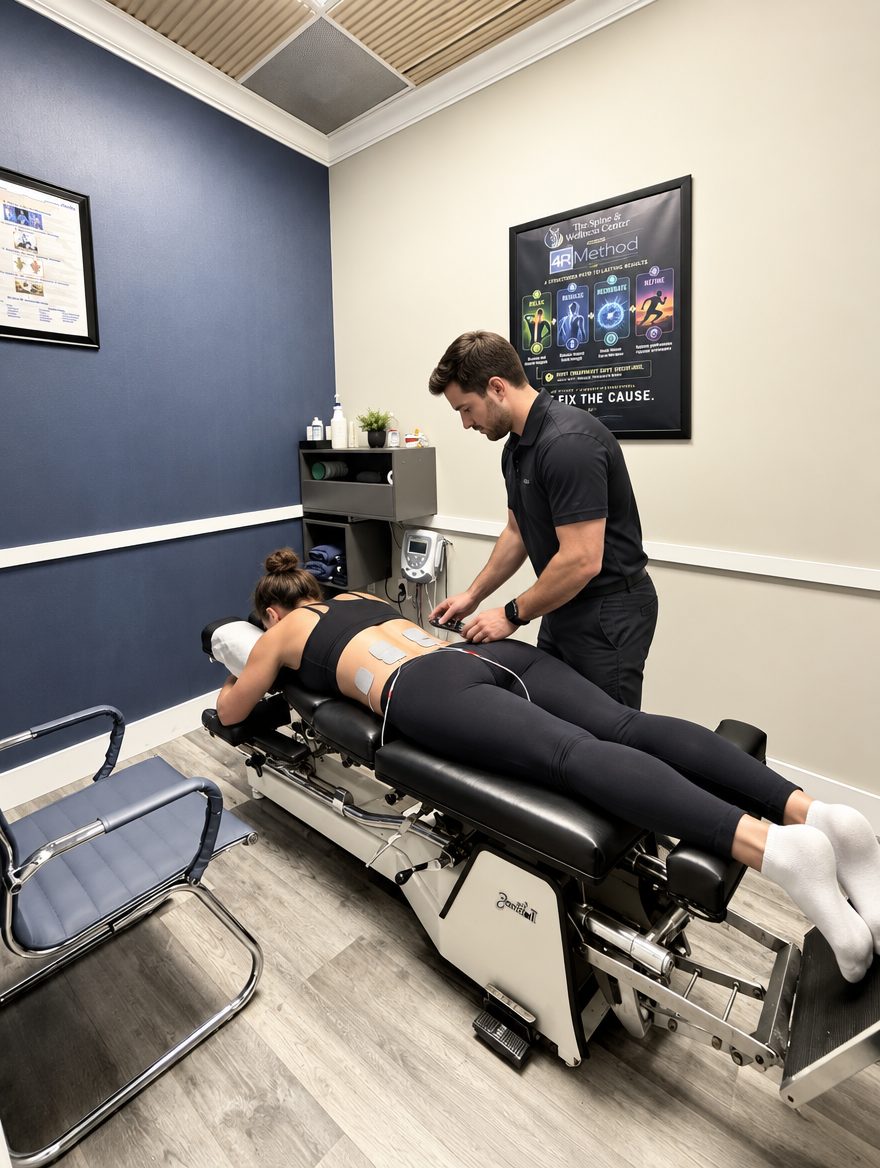
- Follow-on care. With the tissue warm and pliable, we move straight into stretching, soft-tissue work or an adjustment.
In continuous mode you feel a gentle, pleasant warmth building under the wand after a minute or two; in pulsed mode you usually feel nothing beyond the gel and the wand moving. It should never feel hot or sharp — if it does, tell us immediately so the intensity can be reduced. There is no soreness afterward and no downtime.
Where does therapeutic ultrasound fit in the 4R Method?
Every plan at The Spine and Wellness Center follows the 4R Method — Repair, Rebuild, Regenerate, Refine. Ultrasound is a Repair-phase tool, with a supporting role early in Rebuild.
R1 · Repair — calm, warm and loosen
During the Repair phase (3–5 visits a week for 4–8 weeks) pulsed ultrasound is used on fresh sprains and strains to help swelling clear and early scar tissue organize. As the injury settles, continuous ultrasound takes over to warm stiff tendons and ligaments before an adjustment or a stretch. Typical use is two to three sessions a week for two to four weeks on a given region, re-evaluated against your range of motion and pain scores.
R2 · Rebuild — prepare tissue for loading
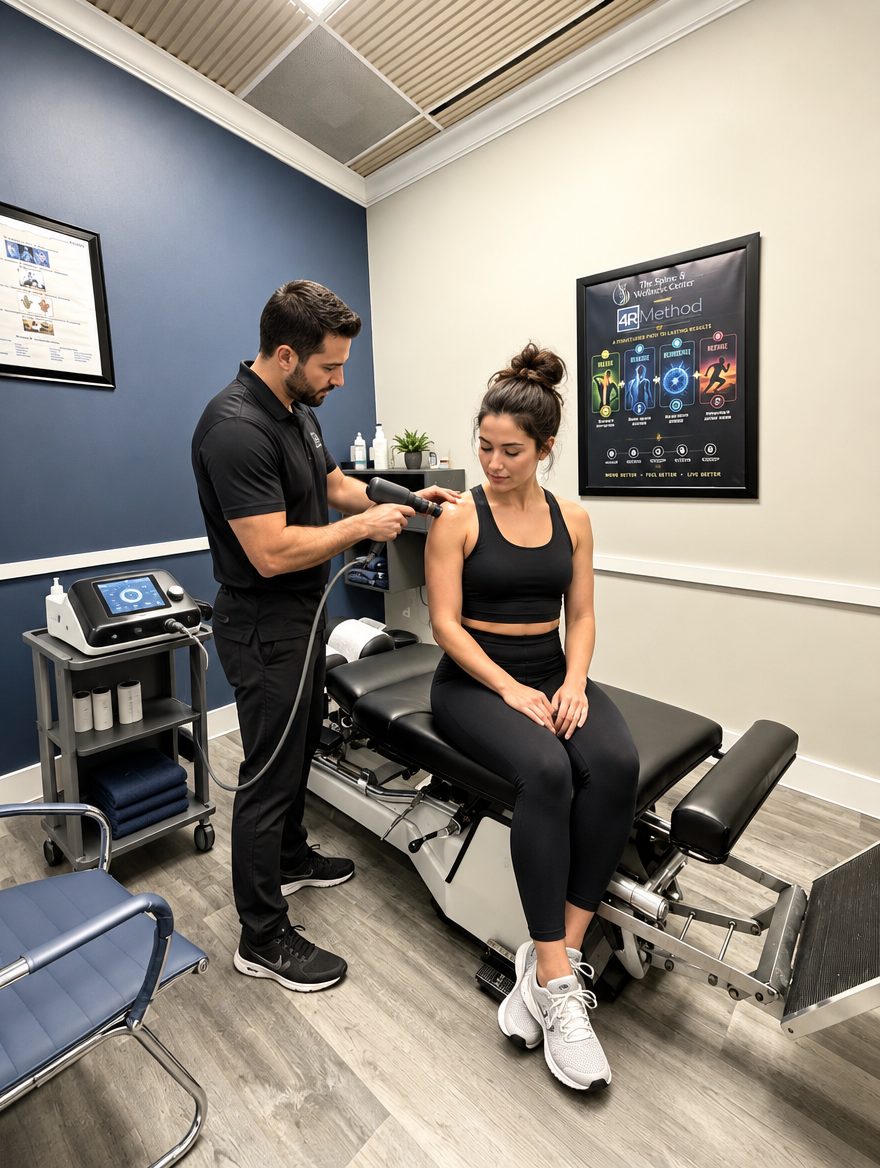
Early in the Rebuild phase (2–3 visits a week for 8–16 weeks) ultrasound is a warm-up: heating a tight tendon or capsule for a few minutes before physical therapy or Graston Technique work makes the tissue more receptive to stretch and load. As strength returns it is phased out; by the Regenerate and Refine phases it is rarely needed except after a flare.
Cold laser therapy
Light-based alternative for inflammation and nerve pain when heat is not appropriate.
Learn moreGraston Technique
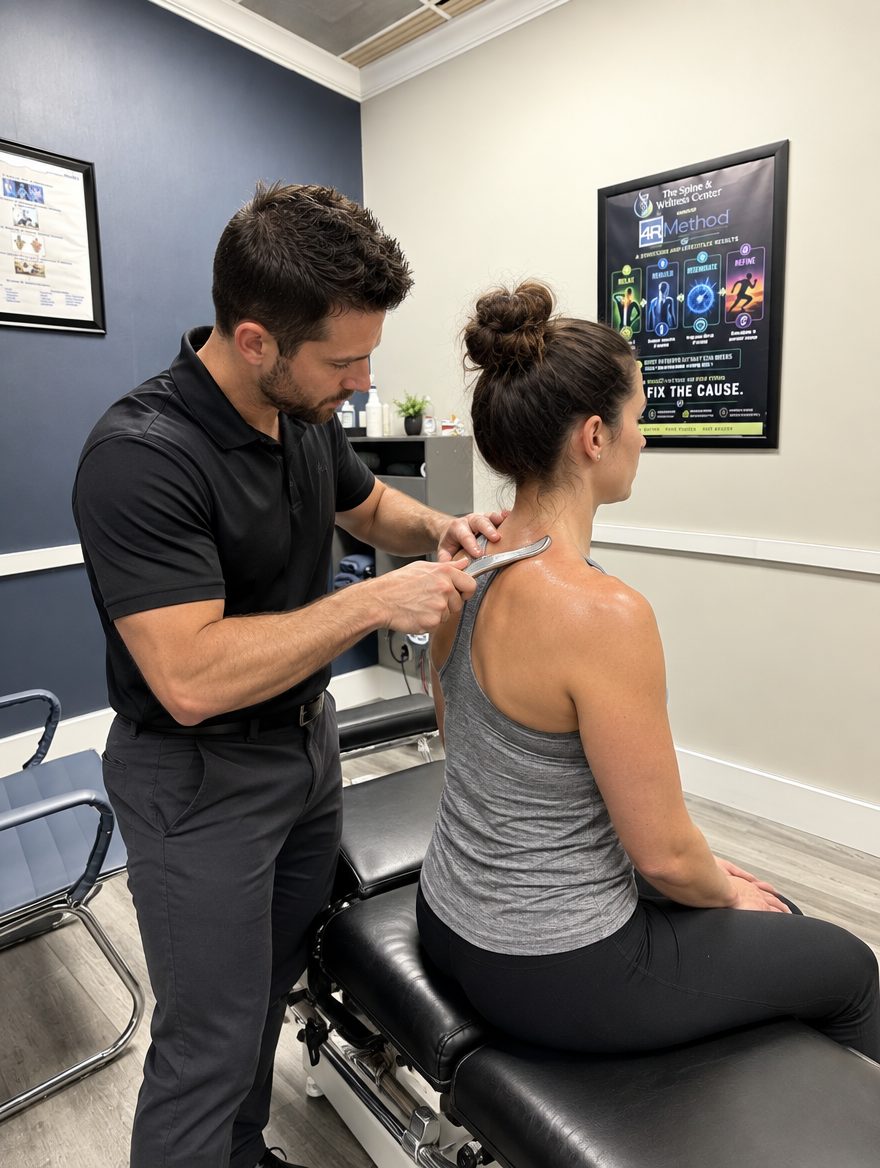
Instrument-assisted work for scar tissue once it has matured.
Learn moreElectrical muscle stimulation
Often applied alongside ultrasound for spasm relief and muscle re-education.
Learn morePhysical therapy
The stretching and strengthening that follows the warm-up.
Learn moreTherapeutic ultrasound vs. cold laser: how we choose
Patients often ask why one visit uses ultrasound and another uses laser. The two overlap, but they are chosen for different tissue states:
- Choose therapeutic ultrasound when the tissue is stiff, tight, dense or scarred and would benefit from deep warmth and stretch — chronic tendons, joint capsules, matured strains. Also when the target is one to two inches deep.
- Choose cold laser therapy when the tissue is inflamed, swollen or nerve-irritated and heat would make it worse — acute flare-ups, disc-related nerve pain, fresh injuries in the first 48 hours.
- Use pulsed ultrasound as the middle ground: mechanical stimulation without heat for sub-acute sprains and early scar.
- Use both on the same region at different stages — laser first while it is hot and swollen, ultrasound later when it is stiff.
In practice the choice is made at each visit based on how the tissue feels and how you responded last time, not on a fixed script.
Is ultrasound therapy safe? Evidence and contraindications
Ultrasound has been used in physical medicine since the 1950s, and its safety profile is well understood. A review in the Journal of Ultrasound in Medicine summarizes the thermal and mechanical mechanisms and notes that, while it is widely used for soft-tissue injury and pain, the clinical evidence for benefit is mixed and depends on dose and condition (Miller et al., PMC). We are honest about this: ultrasound is a useful adjunct that prepares tissue for the treatments with stronger evidence — adjustments, decompression, loading — rather than a stand-alone solution.
Side effects are rare when the wand is kept moving and intensity is appropriate. A burning or sharp sensation means the energy is too high for that spot and the provider lowers it immediately.
When we do not use ultrasound
- Over the eyes, heart, reproductive organs, or the pregnant abdomen or low back.
- Over a known cancer or tumor, an active infection, or a recent blood clot (DVT).
- Over a cardiac pacemaker or other implanted electronic device.
- Over growth plates in children and teenagers, or over a fresh fracture.
- Over areas with impaired sensation or circulation, where you cannot feel excess heat.
- Directly over the spinal cord after a laminectomy, or over metal implants in continuous (heating) mode.
Your first-visit exam screens for each of these before any ultrasound is used.
What to expect at your first two visits
We measure before we treat, so ultrasound is prescribed for a specific tendon, ligament or muscle rather than applied wherever it hurts.
Visit one — we measure (and usually begin care)
- A real conversation about the injury, how long it has lasted and what you have tried.
- A hands-on structural exam — palpation of the soft tissue, range of motion, ligament stress tests, tendon-loading tests and posture and gait analysis.
- Surface EMG and thermal scanning along the spine to map where muscles are guarding and compensating.
- Digital X-rays when indicated, to rule out fracture, calcification or joint causes behind a soft-tissue complaint.
Visit two — your findings and your plan
We explain what we found and where therapeutic ultrasound fits in your 4R plan — which mode, how often and what it will be paired with. Treatment begins at this visit. For a head start, take the 60-second spine assessment before you come in.
Home care between ultrasound sessions
- Stretch while the tissue is warm. The hour after a continuous-mode session is the best window for the mobility work we give you.
- Use heat at home for stiffness — a warm shower or heat pack for 15 minutes before stretching mirrors what the ultrasound does in the clinic.
- Ice only fresh swelling. If an area is hot and puffy, ice it and let us know; that tissue needs pulsed mode or laser, not heat.
- Keep the loading program going. Warmed tissue that is then strengthened is what makes the result last.
- Tell us if an area ever felt hot or sharp during treatment so we can adjust the settings.
If an injury came with a pop, rapid swelling, deformity or inability to bear weight, please see a doctor or urgent care today before any soft-tissue therapy.
Serving therapeutic ultrasound patients across North Broward
Our clinic at 5675 Coral Ridge Drive, Coral Springs, FL 33076 serves Coral Springs, Parkland, Coconut Creek, Margate, Boca Raton, Tamarac, Pompano Beach and Deerfield Beach. Same-day appointments are usually available — call (954) 341-2256 or book online. Most patients from Parkland and Coral Springs are here in under 15 minutes.
Medically reviewed by Dr. Jared Cohen, DC — Co-Founder & Clinical Director, The Spine and Wellness Center. Last reviewed October 2026.
Frequently asked questions
Does therapeutic ultrasound hurt?
No. In continuous mode you feel a gentle, pleasant warmth building under the wand; in pulsed mode you usually feel nothing beyond the gel and the wand moving. It should never feel hot or sharp — if it does, tell the provider and the intensity is lowered immediately. There is no soreness afterward.
Is therapeutic ultrasound the same as an ultrasound scan?
No. Both use high-frequency sound waves, but an imaging ultrasound sends low-energy pulses to create a picture, while therapeutic ultrasound delivers more energy to warm and mechanically stimulate tissue. It does not produce an image, and it cannot be used to diagnose.
How long is a session and how many will I need?
A session on one region takes about 5 to 10 minutes and is combined with other care in the same visit. Most soft-tissue problems are treated two to three times a week for two to four weeks inside the Repair phase, then re-evaluated against range of motion and pain scores.
Can therapeutic ultrasound break up scar tissue?
It helps early scar tissue in its first weeks organize along normal lines of stress and increases the elasticity of older scar so it stretches more easily. For mature, dense scar tissue and adhesions we usually move to the Graston Technique, which applies direct mechanical load to the restriction.
Why would you choose ultrasound instead of cold laser?
Ultrasound is chosen when tissue is stiff, tight or scarred and would benefit from deep warmth, and when the target is one to two inches deep. Cold laser is chosen when tissue is inflamed, swollen or nerve-irritated and heat would make it worse. Many regions get laser early and ultrasound later.
Who should not have ultrasound therapy?
We avoid it over the eyes, heart, reproductive organs and the pregnant abdomen; over tumors, infections, recent blood clots, fresh fractures and growth plates; over pacemakers and other implanted electronics; and over areas with reduced sensation. Your first-visit exam screens for each of these.
Do you offer therapeutic ultrasound to patients from Parkland and Coconut Creek?
Yes. Our clinic on Coral Ridge Drive in Coral Springs is a short drive from Parkland, Coconut Creek, Margate, Tamarac and Boca Raton, and same-day appointments are usually available.
Same-day appointments
Let's fix the cause.
Measure first, then treat — a plan built on your actual structure.
- Same-day appointments are usually available
- Our team calls you back to confirm your visit
- Coral Springs, serving Parkland & North Broward since 2005
Prefer to talk now? Call or text (954) 341-2256