
Treatments & Technology · 6 min read
How non-surgical spinal decompression works
The idea is simple: gently take the pressure off a painful disc so it can draw back from the nerve and pull in what it needs to heal. Here is the mechanism, the session, and who it is for.

Quick answer
Non-surgical spinal decompression is computer-controlled, cyclical traction on a specialized table. By gently separating two vertebrae it lowers pressure inside the disc — a vacuum effect that helps bulging or herniated material retract from the nerve and draws in fluid and nutrients. Sessions last about 20 minutes and are typically relaxing.
What spinal decompression actually is
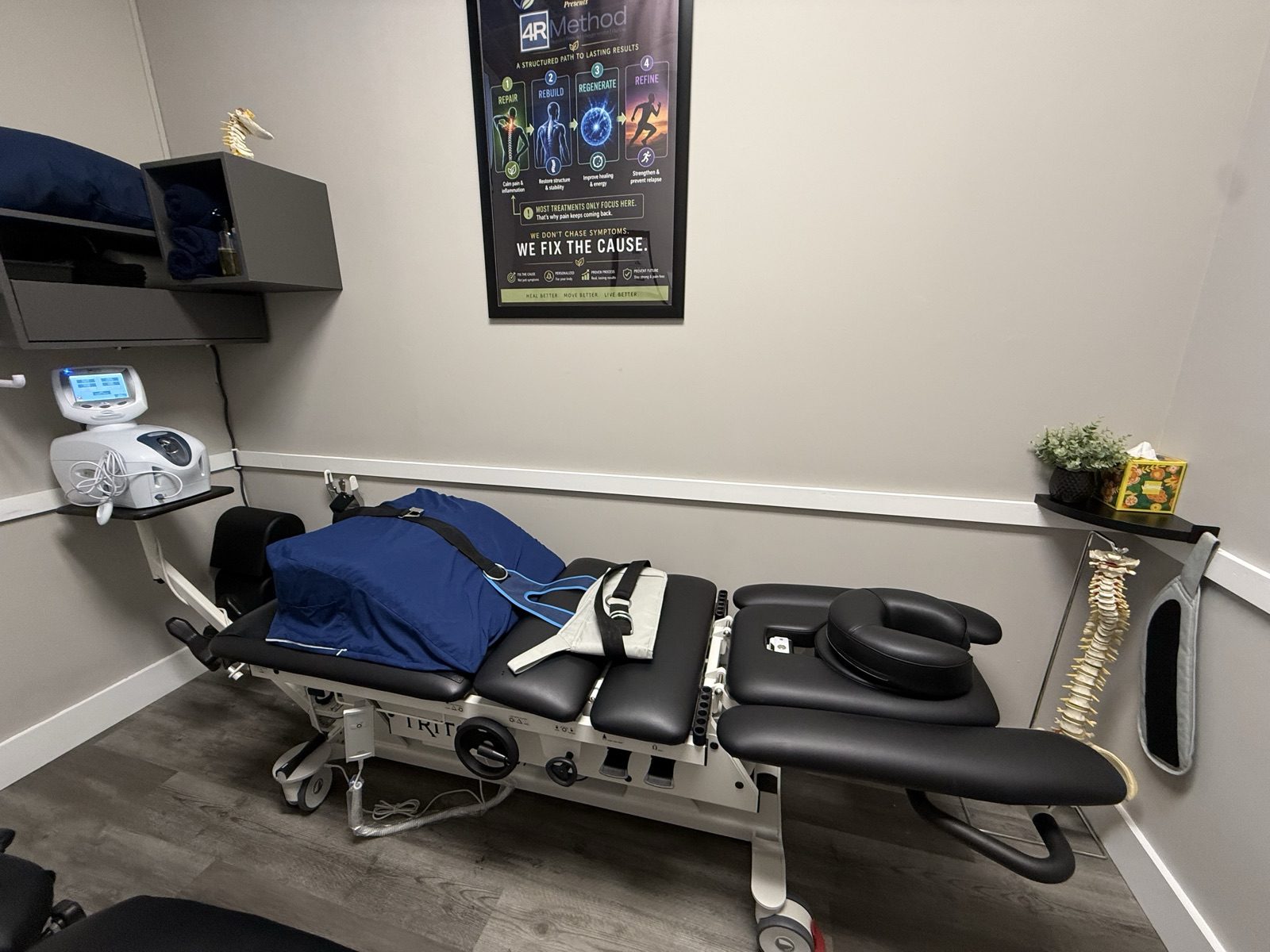
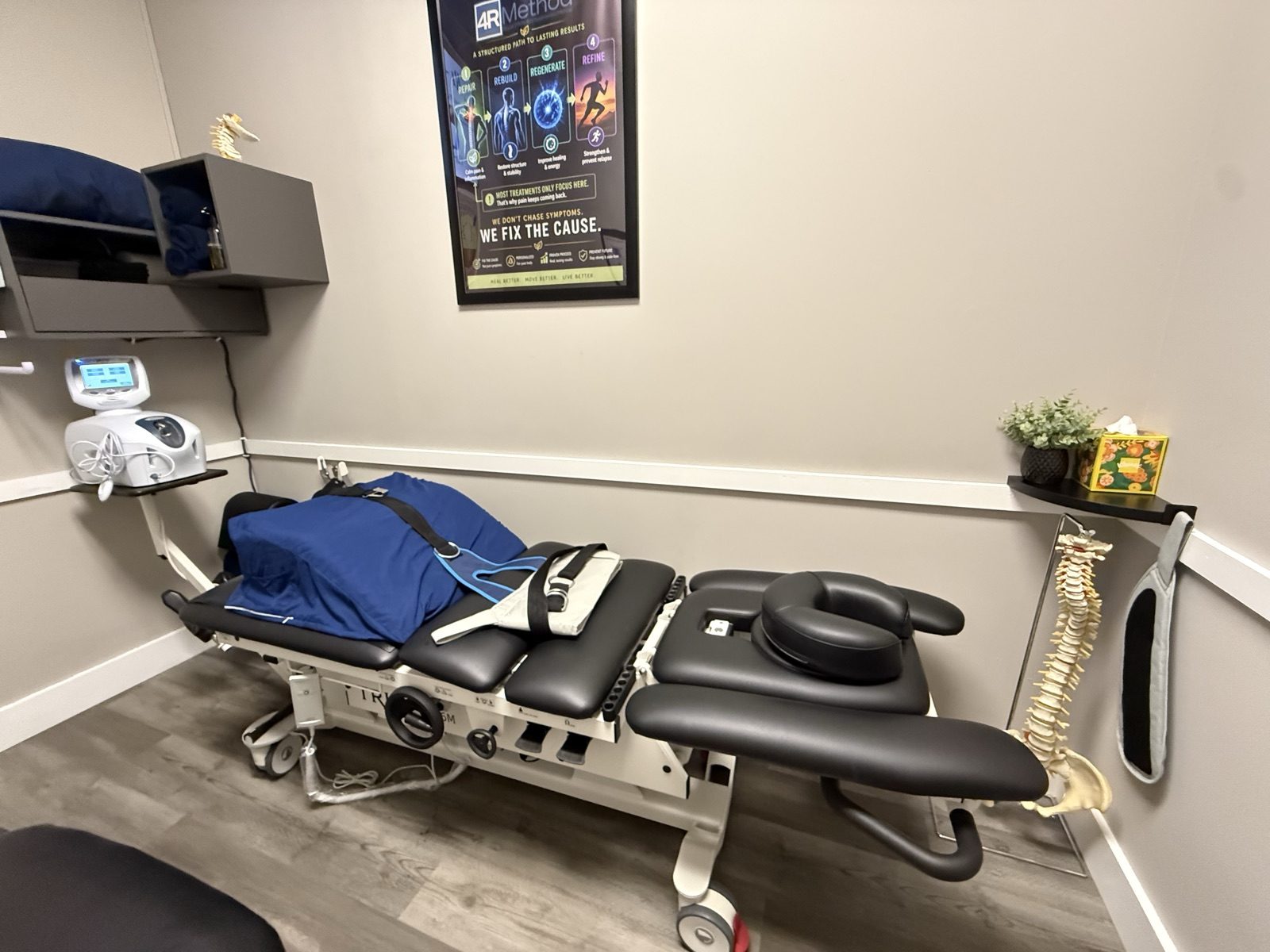
Non-surgical spinal decompression is motorized traction delivered on a specialized, computer-controlled table — in our Coral Springs clinic, the Triton DTS. Rather than pulling steadily the way old-fashioned traction did, the table applies gentle, cyclical stretching to a targeted segment of your spine: pull, hold, ease off, repeat. That alternating rhythm is what keeps the muscles from guarding against the pull, and it is the reason modern decompression is both effective and comfortable.
You lie down fully clothed. A harness around the pelvis (for the low back) or a cradle under the head (for the neck) connects you to the table, and the program — angle, force, cycle timing — is set for your condition, body weight and tolerance. I have used this therapy since the early years of our practice, and it remains the cornerstone of our spinal decompression therapy for disc and nerve problems.

The science: creating negative pressure inside the disc
Here is the core idea. A disc under load has positive pressure inside it, which is what pushes a bulge outward against the nerve. When the table gently separates the two vertebrae above and below, the pressure inside the disc drops — negative intradiscal pressure, or a vacuum effect. That gentle suction can help draw displaced disc material back toward the center and away from the irritated nerve root.
The same negative pressure pulls in water, oxygen and nutrients — the raw materials discs need to repair. Because discs have almost no direct blood supply, this fluid exchange is one of the few ways to feed tissue that otherwise struggles to heal. A clinical study published in BMC Musculoskeletal Disorders found that restoring disc height through non-surgical decompression was associated with reduced discogenic low back pain. The disc is a sponge; decompression wrings it out and lets it refill.
How a session works, in 4 steps
- Set-up (2–3 minutes). You lie on the table, the harness is fitted, and the angle is adjusted to target the disc level in question — a slight flexion angle for a lumbar disc or stenosis, a different vector for the neck.
- Ramp-up. The program builds the pull gradually over the first cycles so the muscles stay relaxed rather than bracing. You feel a comfortable, growing stretch — never sharp pain.
- Cycles (about 20 minutes). The table alternates between a higher pull and a lower hold, typically 30 to 60 seconds each. Many patients find it so relaxing they nearly fall asleep.
- Ramp-down and follow-up. The force eases off over the last cycles, then we usually add cold laser or therapeutic ultrasound to the segment, and on Rebuild-phase visits, rehab for the stabilizers.
What it should feel like
A firm, pleasant stretch through the low back or neck that builds and releases. If anything is uncomfortable, the program is adjusted on the spot. Most people walk out looser than they walked in.
Conditions spinal decompression can help
- Herniated discs and bulging discs in the neck or lower back — see bulging disc vs. herniated disc
- Sciatica and radiating leg or arm pain from a compressed nerve root
- Degenerative disc disease — a thinned disc that benefits from fluid exchange
- Pinched nerves and some facet-driven pain where the joint is compressed
- Some cases of spinal stenosis, especially foraminal narrowing
Decompression is not appropriate for everyone. Pregnancy, recent fractures, advanced osteoporosis, spinal hardware or fusion, certain tumors or infections, and severe instability generally rule it out. That is why the evaluation comes first: visit one is measurement — history, hands-on structural exam, surface EMG and thermal scanning, digital X-rays when indicated, and a review of any MRI you bring. Visit two is your full report of findings and plan, and Most patients have already begun care on visit one; this is where the full plan takes over.
Where it sits in the 4R Method — and how many sessions
Decompression is a Repair-phase tool in our 4R Method (Repair → Rebuild → Regenerate → Refine). Disc healing is gradual, so it works as a series rather than a single visit: typically 3–5 visits a week for 4–8 weeks, with frequency tapering as you improve. Most patients notice meaningful change in the first two to three weeks, and we re-scan along the way to adjust the count to your response rather than a fixed package.
What makes the relief last is the Rebuild phase that follows: 2–3 visits a week for 8–16 weeks of core and hip retraining, soft-tissue work and posture correction, so the disc you just decompressed is protected when you sit, lift and play. For neck and upper-back patterns, the closely related spinal traction therapy on the same system is often the better fit — spinal traction with the Triton table explains the difference.
Self-care that supports your results
- Drink water through the day so the disc can hold the fluid it just pulled in
- Take a movement break every 30 to 45 minutes — long sitting reloads the disc
- Walk daily; it is the gentlest way to keep fluid cycling through the discs
- Lift with the load close to your body, hinging at the hips
- Do your home exercise program between visits — it is the Rebuild phase in miniature
Curious whether decompression fits your spine? Start with a spine assessment, and read herniated disc: symptoms, causes and treatment if a disc is the suspected source.
Serving spinal decompression patients across North Broward
Our clinic at 5675 Coral Ridge Drive, Coral Springs, FL 33076 serves Coral Springs, Parkland, Coconut Creek, Margate, Boca Raton, Tamarac, Pompano Beach and Deerfield Beach. Same-day appointments are usually available — call (954) 341-2256 or book online. Most patients from Parkland and Coral Springs are here in under 15 minutes.
Medically reviewed by Dr. Jared Cohen, DC — Co-Founder & Clinical Director, The Spine and Wellness Center. Last reviewed October 2026.
Frequently asked questions
Is spinal decompression painful?
No. Most patients describe a comfortable stretch that builds and releases in cycles, and many find it relaxing enough to doze. The force ramps up gradually so the muscles do not brace, and the program is adjusted immediately if anything feels sharp. You should walk out looser than you walked in.
How many spinal decompression sessions will I need?
It depends on the condition and how long the nerve has been irritated, but plans typically run 3–5 visits a week for 4–8 weeks inside the Repair phase, tapering as you improve. We re-evaluate and re-scan along the way so the count follows your response rather than a fixed package.
Who should not have spinal decompression?
People who are pregnant, or who have recent fractures, advanced osteoporosis, spinal hardware or fusion, certain tumors or infections, or significant spinal instability are generally not candidates. That is why a thorough first-visit evaluation — often with imaging — comes before any table time.
How is decompression different from regular traction?
Old-style traction pulls steadily, which makes the muscles guard against it. Decompression on a computer-controlled table pulls and releases in programmed cycles at a specific angle, keeping the muscles relaxed so the force reaches the disc and creates the negative pressure that helps it retract and rehydrate.

Same-day appointments
Reading about it is step one.
Step two is a measurement. Visit one we measure — and usually begin care; visit two you get your full findings and plan.
- Same-day appointments are usually available
- Our team calls you back to confirm your visit
- Coral Springs, serving Parkland & North Broward since 2005
Prefer to talk now? Call or text (954) 341-2256