
Treatments & Technology · 6 min read
Spinal traction with the Triton DTS table: how it unloads your spine
Computer-guided pull, measured in pounds and seconds, aimed at the one disc that is pressing on a nerve. Here is what the table does and who it is for.

Quick answer
Spinal traction applies a controlled pulling force along the spine to open the space between vertebrae and reduce pressure on discs, joints and nerve roots. On the Triton DTS table the angle, force and rhythm are computer-controlled, so each 15–25 minute session targets a specific level. It is used for disc, sciatica and nerve pain inside the Repair phase of the 4R Method.
What does the Triton DTS table actually do?
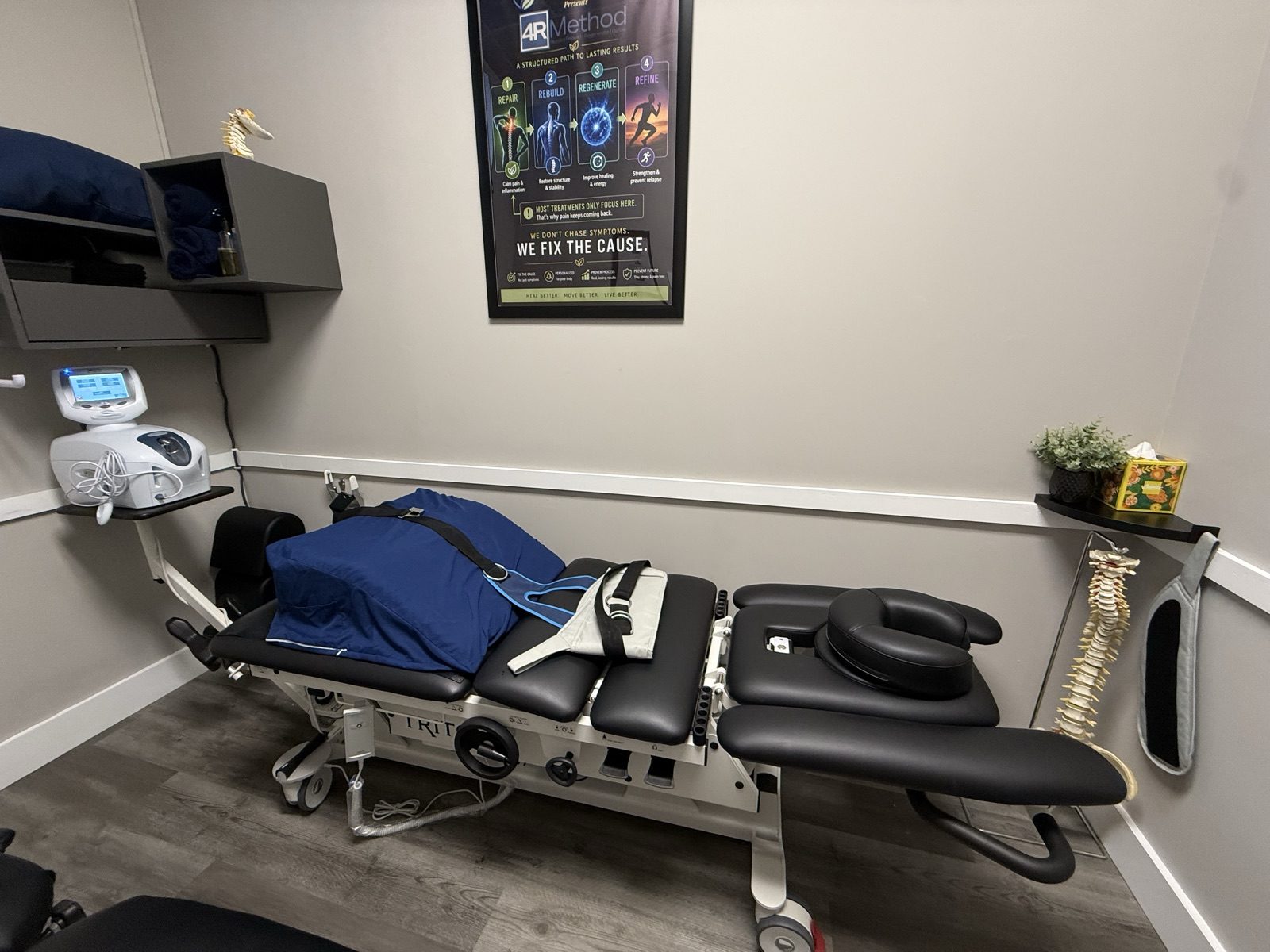
Spinal traction is a controlled pull applied along the length of the spine to separate the vertebrae slightly and reduce the pressure on the discs, joints and nerves between them. The Triton DTS table at The Spine and Wellness Center does this with a computer rather than a weight stack: Dr. Cohen sets the angle of pull, the force in pounds, the hold time and the rest time, and the table reproduces that prescription exactly, every cycle, every visit.
That precision matters because the lumbar and cervical spine are not uniform. A disc at L5–S1 is unloaded best at a different angle than one at L3–L4, and a neck is pulled with a fraction of the force a low back needs. Manual traction and door-frame devices cannot target a level; the Triton table can.
The table is the centerpiece of the clinic’s disc care and the reason patients from Parkland, Coconut Creek and Boca Raton drive to Coral Springs for it. You can read the full treatment page at spinal traction therapy.

Spinal traction vs. decompression: what is the difference?
The two terms are used interchangeably, but they describe different settings on the same table. Traction applies a steady or gently intermittent pull to open space and relax guarding muscle. Non-surgical spinal decompression uses cycles of pull and release timed to lower the pressure inside the disc itself, creating a pumping effect that can draw a bulge inward and pull fluid and nutrients back into the disc.
- Traction: lighter, steadier, better tolerated by a very irritated or sensitive spine. Often where we start.
- Decompression: stronger, cyclic, aimed at changing pressure inside the disc. Where we go once the spine tolerates it.
- Both: computer-controlled, fully clothed, about 20 minutes, painless for most patients.
In practice many patients begin with traction for the first several visits and progress to decompression as the pain settles. We explained the disc-pressure side in detail in How Non-Surgical Spinal Decompression Works.
Which conditions respond to traction?
Traction helps most when the pain comes from pressure: a disc leaning on a nerve, joints compressed by guarding muscle, or a narrowed canal. The patterns we treat with it most often:
- Herniated and bulging discs in the low back or neck; see Bulging Disc vs. Herniated Disc for how to tell them apart
- Sciatica and other pinched nerves, with pain, tingling or numbness traveling into a leg or arm
- Degenerative disc disease and the stiffness that comes with it
- Spinal stenosis, where opening the canal even slightly eases leg symptoms
- Facet joint pain and the chronic tightness that follows years of desk work or driving
Leg or arm symptoms are the strongest sign that traction belongs in your plan. Numbness, tingling or weakness means a nerve is involved, and nerve pain responds to pressure relief far better than to more stretching.
Cervical traction uses a head cradle and a fraction of the lumbar force, and it is how we treat the pinched nerve in the neck that sends tingling into the hand. The same table handles both ends of the spine; only the settings change.
What a session feels like
Most patients are surprised by how uneventful it is. You lie fully clothed on the padded table, a harness is fitted around the pelvis for the low back or a cradle under the head for the neck, and the table begins a slow pull that builds over several seconds, holds, then eases. Each cycle lasts about a minute; a session runs 15–25 minutes. Many people describe it as a deep, pleasant stretch, and some fall asleep.
A typical course is 12–24 sessions over 4–8 weeks, inside the Repair phase of the 4R Method, at 3–5 visits a week early on. Traction is almost always paired with chiropractic stabilization, and often with cold laser to calm the inflamed nerve root. It is a series, not a single-visit fix; the disc needs repeated cycles to change.
The sequence is the same for everyone. Visit one measures: a conversation, a hands-on structural exam, surface EMG and thermal scanning, and digital X-rays when indicated. Visit two is the report of findings and the plan, including whether traction or decompression is the right starting point. Treatment begins from there.
Who is a good candidate, and who is not
Good candidates have disc-related or nerve-related pain, have usually tried rest, medication or general stretching without lasting change, and want a conservative option before considering injections or surgery. A 2010 study in BMC Musculoskeletal Disorders reported restored disc height and reduced pain in patients with chronic discogenic low back pain after a course of non-surgical decompression, which is the mechanism the Triton table is built around.
Spinal traction is not appropriate for everyone. We do not use it with advanced osteoporosis, spinal fracture, spinal tumor or infection, certain surgical hardware or fusions, severe instability, or during pregnancy. That list is exactly why imaging and a careful exam come before the first session, never after.
Good to know
Traction opens the space; it does not rebuild the muscle that keeps it open. The patients whose results hold are the ones who move into the Rebuild phase, physical therapy and core strength, instead of stopping the day the pain stops.
If you are weighing surgery or simply tired of disc pain that keeps returning, a spine assessment will tell you whether the table fits your case. For the symptom side, Herniated Disc: Symptoms, Causes and Non-Surgical Treatment is the companion read.
Serving disc and nerve pain patients across North Broward
Our clinic at 5675 Coral Ridge Drive, Coral Springs, FL 33076 serves Coral Springs, Parkland, Coconut Creek, Margate, Boca Raton, Tamarac, Pompano Beach and Deerfield Beach. Same-day appointments are usually available — call (954) 341-2256 or book online. Most patients from Parkland and Coral Springs are here in under 15 minutes.
Medically reviewed by Dr. Jared Cohen, DC — Co-Founder & Clinical Director, The Spine and Wellness Center. Last reviewed October 2026.
Frequently asked questions
Is spinal traction the same as spinal decompression?
They are closely related settings on the same Triton DTS table. Traction applies a lighter, steadier pull to open space and relax guarding muscle; decompression uses stronger pull-and-release cycles to lower the pressure inside the disc. Many patients start with traction and progress to decompression as the spine tolerates it.
Does the Triton traction table hurt?
No. You lie fully clothed on a padded table while the computer applies a slow, gentle pull that builds and releases in cycles for 15–25 minutes. Most patients describe it as a deep, relaxing stretch, and some fall asleep. If anything is uncomfortable, the force is lowered immediately.
How many traction sessions will I need?
A typical course is 12–24 sessions over 4–8 weeks, at 3–5 visits a week early on, inside the Repair phase of the 4R Method. The exact number depends on the disc, the nerve involvement and how your body responds; we give you a specific estimate at the report of findings on visit two.
Who should not use spinal traction?
Traction is not used with advanced osteoporosis, spinal fracture, tumor or infection, certain fusions or surgical hardware, severe instability, or during pregnancy. A thorough exam and imaging when indicated come before the first session so that these are ruled out.

Same-day appointments
Reading about it is step one.
Step two is a measurement. Visit one we measure — and usually begin care; visit two you get your full findings and plan.
- Same-day appointments are usually available
- Our team calls you back to confirm your visit
- Coral Springs, serving Parkland & North Broward since 2005
Prefer to talk now? Call or text (954) 341-2256