
Discs & Nerves · 6 min read
Bulging disc vs. herniated disc: what’s the difference?
An MRI report says 'bulge' or 'herniation' and leaves you worried. Here is what each term actually means, which one hurts more (it's not what you think), and what we do about both.

Quick answer
A bulging disc spreads past its normal edge while the outer wall stays intact; a herniated disc has a tear that lets the inner gel escape. Herniations more often cause sharp, radiating nerve pain; bulges tend to ache broadly. Neither is automatically worse, and both respond to the same non-surgical decompression-based care.
What your spinal discs actually do
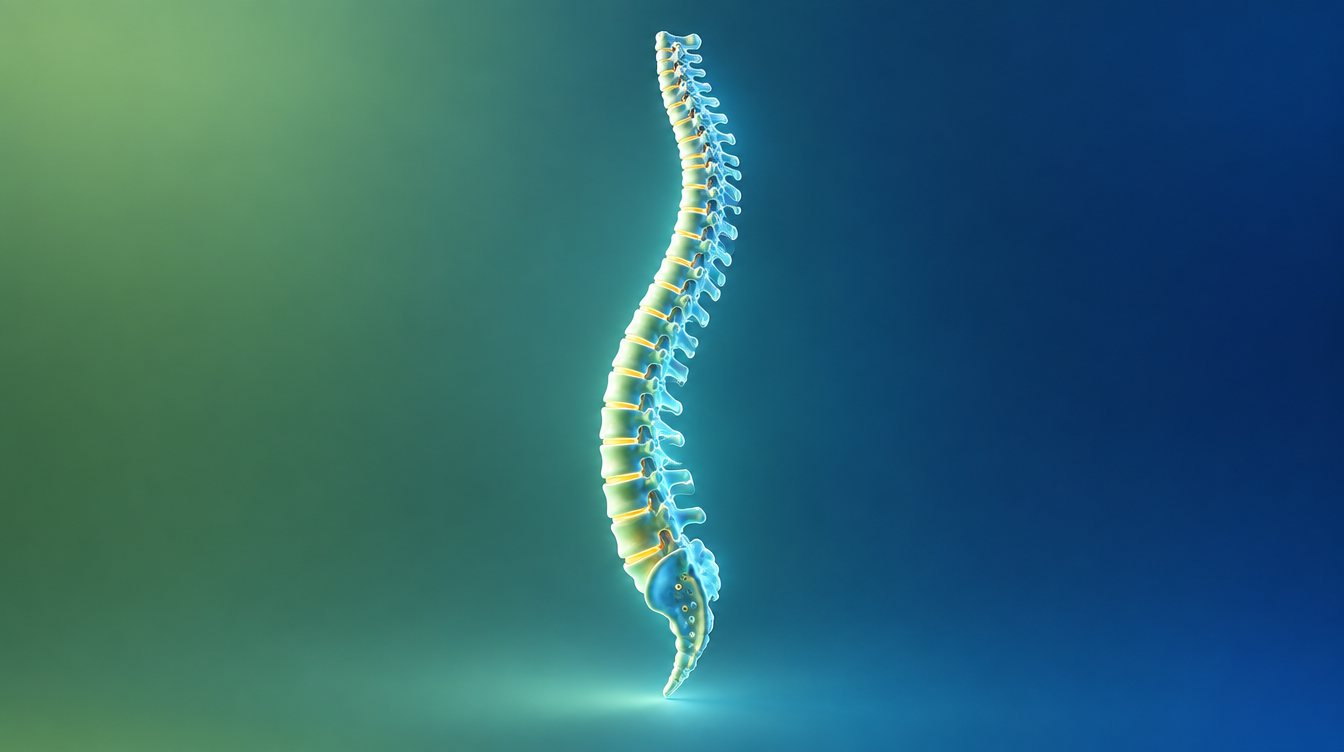
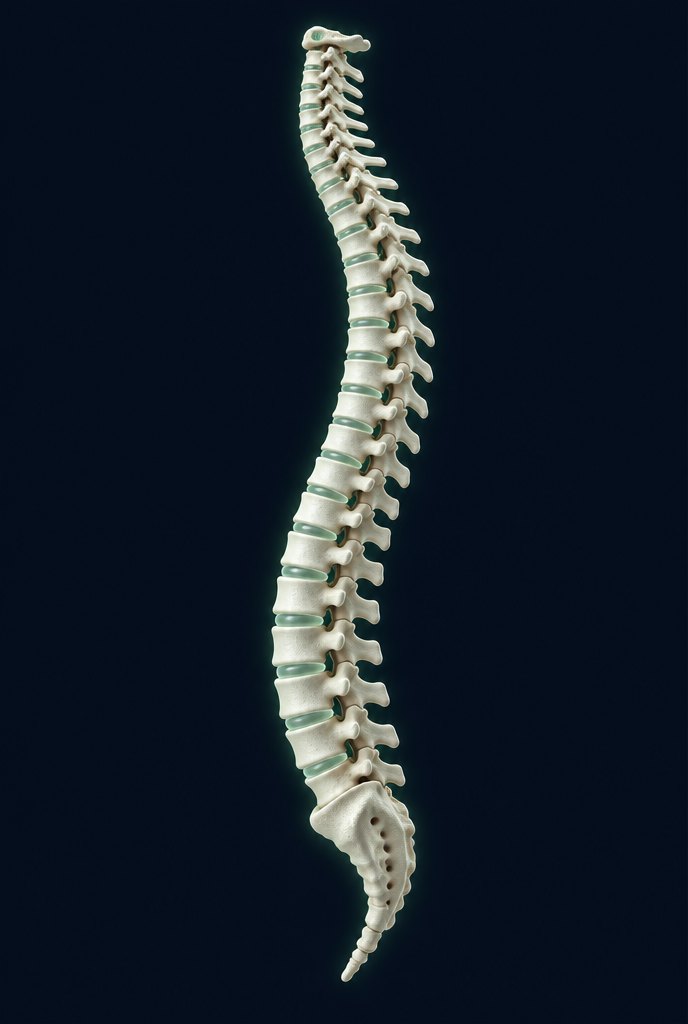
The bulging disc vs. herniated disc question comes up in our Coral Springs clinic almost every week, usually from someone holding an MRI report. Before the comparison, a quick look at the structure. Between each pair of vertebrae sits an intervertebral disc: a tough outer ring of layered fibers (the annulus fibrosus) around a soft, water-rich center (the nucleus pulposus). Discs absorb shock, let the spine bend and twist, and keep the bones from grinding.
Both terms describe the same structure changing shape. The difference is how far the disc material has moved and whether the outer wall has actually torn — and that distinction decides how the problem tends to feel.

What is a bulging disc?
A bulging disc flattens and spreads outward past its normal boundary, a bit like a tire sagging under weight. The outer wall stays intact, but the disc now occupies space it should not, sometimes brushing a nerve. Bulges are extremely common, develop gradually with age, posture and repetitive load, and many people have one with no symptoms at all.
When a bulge does hurt, the pain is usually dull, achy and broad rather than sharp: stiffness, a deep ache, discomfort that builds after long sitting or standing. Our bulging disc treatment is built around relieving that pressure and restoring normal disc mechanics before the wall ever tears.
What is a herniated disc?
A herniated disc (also called ruptured or ‘slipped’) is a step further: the outer wall tears and the soft inner gel pushes through. That escaped material can press directly on a spinal nerve, and because the nucleus contains chemicals that inflame nerve tissue, a herniation often produces sharper, more specific symptoms than a bulge.
Typical signs are burning, shooting or electric pain that travels into an arm (neck herniation) or down a leg (lumbar herniation — sciatica), with possible numbness, tingling or weakness. Our herniated disc care focuses on calming that nerve irritation and giving the disc room to heal; the full symptom breakdown is in herniated disc: symptoms, causes and treatment.
Bulging disc vs. herniated disc: 5 ways to tell them apart
- Quality of pain. Bulge: dull, aching, stiff, spread across a region. Herniation: sharp, burning or shooting along one specific nerve path.
- Where it goes. A bulge often stays near the spine. A herniation more often radiates — into the arm from the neck, or down the leg from the low back.
- Nerve signs. Numbness, pins-and-needles or weakness in a hand or foot point toward a herniation pressing on a nerve root (a bulge can do this too, but less often).
- Onset. Bulges tend to build slowly over months. Herniations frequently have a moment — a lift, a twist, a sneeze — after which everything changed.
- Imaging. An MRI is the clearest way to see whether the outer wall is intact or torn; X-rays show alignment and disc height but not the disc material itself.
Which one is worse?
Neither label automatically. A large bulge pressing firmly on a nerve can hurt far more than a small, contained herniation that touches nothing. What matters is whether disc material is irritating a nerve and how your body is responding — which is why we always correlate the image with the exam rather than treating a picture.
Shared non-surgical treatment for both
The encouraging part of the bulging disc vs. herniated disc discussion is that both respond to the same conservative strategy. The Cleveland Clinic notes that most herniated discs improve without surgery, and bulges are more forgiving still. Our plan follows the 4R Method:
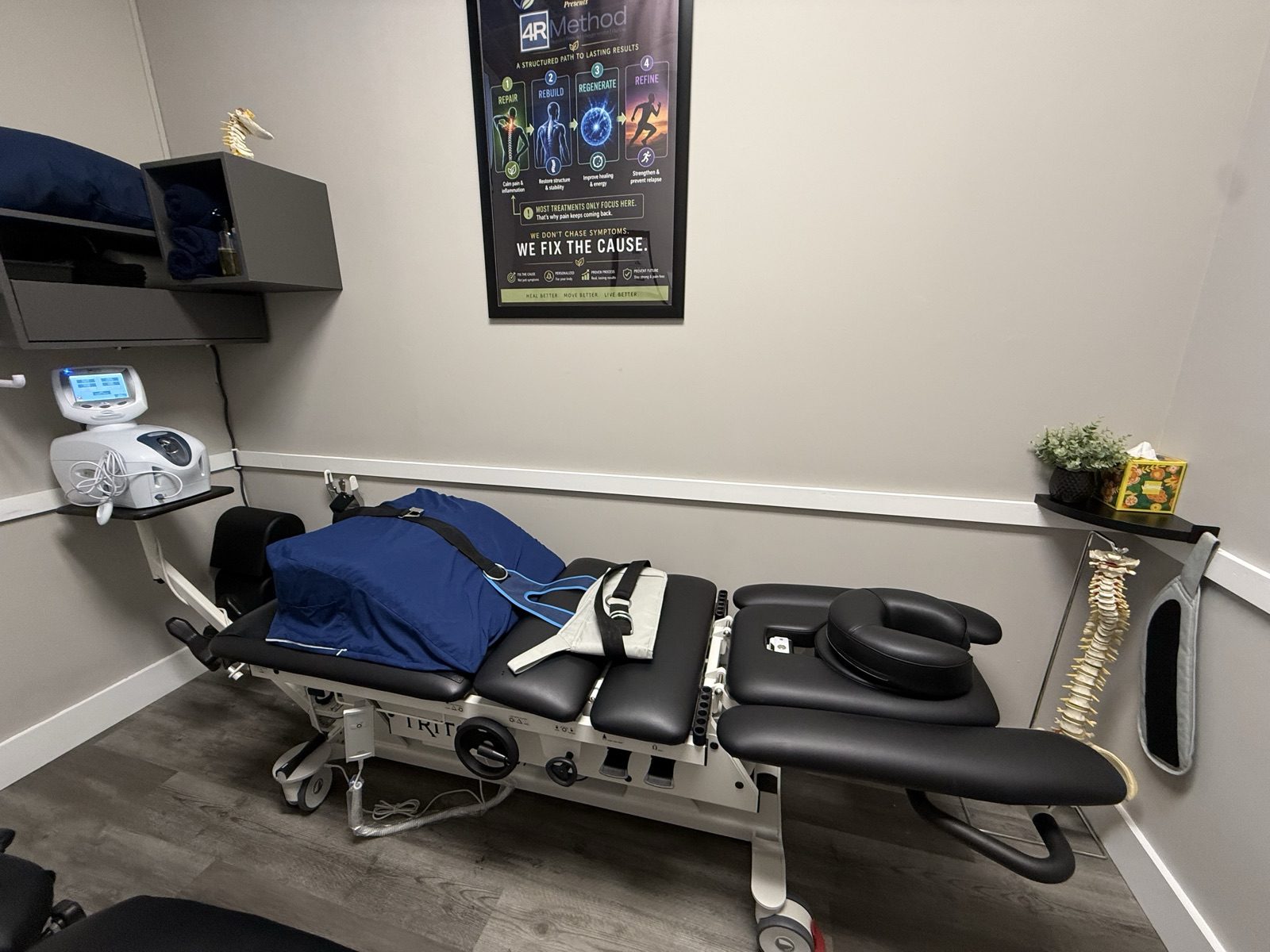
- Repair (3–5 visits a week, 4–8 weeks): non-surgical spinal decompression on the Triton DTS table creates negative pressure inside the disc so displaced material can retract and the disc can pull in fluid and nutrients — about 20 minutes per session. Precise adjustments and cold laser calm the irritated segment. How spinal decompression works explains the mechanism.
- Rebuild (2–3 visits a week, 8–16 weeks): physical therapy for the deep core and hips, plus Graston soft-tissue work, so the disc is protected when you sit, lift and play.
- Regenerate and Refine: red light, PEMF and monthly tune-ups to keep a healed disc healed.
Visit one is measurement — history, hands-on structural exam, surface EMG and thermal scanning, digital X-rays when indicated, and a review of any MRI you bring. Visit two is your full report of findings and plan, and Most patients have already begun care on visit one; this is where the full plan takes over. If leg pain is the dominant symptom, sciatica relief without surgery covers that version of the plan; for the broader picture see lower back pain relief in Coral Springs.
Simple habits that protect your discs
- Lift with your legs and keep loads close to your body — no twisting under weight
- Take a movement break every 30 to 60 minutes of sitting; the Sawgrass commute counts
- Strengthen your core so the muscles share the load with the discs
- Stay hydrated — discs are mostly water and depend on fluid to stay supple
- Set up chair, desk and screen height so you are not bent forward for hours
- Not sure which you have? A spine assessment correlates your symptoms with your imaging and tells you where to start
Serving disc patients across North Broward
Our clinic at 5675 Coral Ridge Drive, Coral Springs, FL 33076 serves Coral Springs, Parkland, Coconut Creek, Margate, Boca Raton, Tamarac, Pompano Beach and Deerfield Beach. Same-day appointments are usually available — call (954) 341-2256 or book online. Most patients from Parkland and Coral Springs are here in under 15 minutes.
Medically reviewed by Dr. Jared Cohen, DC — Co-Founder & Clinical Director, The Spine and Wellness Center. Last reviewed October 2026.
Frequently asked questions
Is a herniated disc worse than a bulging disc?
Not automatically. A large bulge pressing on a nerve can hurt more than a small, contained herniation that touches no nerve. What matters is whether disc material is irritating a nerve and how your symptoms behave — not the label. Both respond to the same non-surgical, decompression-based care.
How can I tell if I have a bulging disc or a herniated disc?
An MRI is the most reliable way, since it shows whether the disc wall is intact or torn. Symptoms offer clues: bulges tend to ache dully and broadly, herniations tend to shoot or burn along one nerve path with tingling or weakness. We correlate the image with a hands-on exam on your first visit.
Do bulging and herniated discs heal on their own?
Many improve over time, and research suggests most disc problems get better without surgery. Conservative care speeds that process by lowering pressure inside the disc, calming the nerve and rebuilding the stabilizing muscles so the problem is less likely to return.
When should I see someone for disc pain?
See us if back or neck pain lasts more than a few days, radiates into an arm or leg, or comes with numbness, tingling or weakness. Please see a doctor or urgent care today for rapidly worsening weakness, numbness in the groin, or any change in bladder or bowel control.

Same-day appointments
Reading about it is step one.
Step two is a measurement. Visit one we measure — and usually begin care; visit two you get your full findings and plan.
- Same-day appointments are usually available
- Our team calls you back to confirm your visit
- Coral Springs, serving Parkland & North Broward since 2005
Prefer to talk now? Call or text (954) 341-2256