
Discs & Nerves · 6 min read
Herniated disc: symptoms, causes & non-surgical treatment
What a herniated disc actually is, how to tell it from a bulge, which symptoms point to which level of the spine, and how most people heal without surgery.

Quick answer
A herniated disc is a tear in the disc's outer ring that lets the gel-like center push out and irritate a nerve. Most cause leg or arm pain, tingling or weakness, and most heal without surgery. We use non-surgical spinal decompression, precise adjustments and rehab to take pressure off the nerve and stabilize the spine.
What is a herniated disc?
A herniated disc is a tear in the tough outer ring of a spinal disc (the annulus) that lets the soft, gel-like center (the nucleus) push outward. The disc itself rarely hurts much. The trouble starts when that escaped material presses on, or chemically irritates, the nerve root sitting right beside it. That is what turns a simple bend or sneeze into a wave of back and leg pain.
I have been treating herniated discs in Coral Springs and Parkland since we opened in 2005, and it remains one of the most common reasons people walk through our door. The lower back (L4–L5 and L5–S1) is by far the most frequent site, followed by the lower neck (C5–C7). Where the disc herniates decides where you feel it.

Is it a herniation or a bulge? How to tell
A bulging disc flattens and spreads past its normal edge, like a tire low on air, but the outer wall stays intact. A herniated disc has an actual tear that lets inner material escape. Bulges tend to cause broad, dull, achy symptoms. Herniations more often cause sharp, electric pain along one nerve, because the leaked nucleus is chemically irritating as well as mechanically crowding.
Neither label automatically means ‘worse’. A large bulge pressing firmly on a nerve can hurt more than a small, contained herniation that touches nothing. We wrote a full comparison in bulging disc vs. herniated disc, and our bulging disc treatment uses the same non-surgical principles described below.
Symptoms by spinal level: where it hurts tells you where it is
The pattern of your symptoms usually points to the level involved before any scan does. These are the herniated disc symptoms we see most often:
- Lower back (lumbar): pain, numbness or weakness that travels from the low back or buttock down one leg — the pattern most people call sciatica. Below-the-knee symptoms strongly suggest a nerve root is involved.
- Neck (cervical): pain that spreads into the shoulder blade, arm or hand, often with tingling in specific fingers and a weaker grip.
- Worse with sitting, bending forward, coughing or sneezing — each raises pressure inside the disc.
- Better standing or walking in many lumbar cases, which is one way we separate a disc from spinal stenosis.
- Weakness such as a foot that slaps or a hand that drops things. This matters more than pain and moves the evaluation up the priority list.
See a doctor today if
You develop numbness in the groin or inner thighs, new difficulty controlling your bladder or bowel, or rapidly worsening leg weakness. Those are rare but urgent — please see a doctor or urgent care today rather than waiting for an appointment.
What causes a disc to herniate?
Most herniations are the last straw rather than a single accident. Discs lose water content with age and become less able to spread load, so an ordinary lift or twist can finally tear an annulus that has been weakening for years. The common contributors we find on the history:
- Age-related disc dehydration and the stiffness that comes with it
- Lifting with a rounded back, especially twisting while carrying weight
- Long daily sitting — desk work, or the Sawgrass commute — which loads the front of the disc
- Sudden trauma such as a fall, a sports collision or a car accident
- Extra body weight, smoking and a sedentary routine, all of which starve the disc of nutrition
According to the American Academy of Orthopaedic Surgeons, most lumbar herniations improve with non-surgical care over weeks to months, and surgery is reserved for the minority with persistent or progressive nerve deficits. That matches what we see in the clinic.
5 proven non-surgical treatments (and the order we use them)
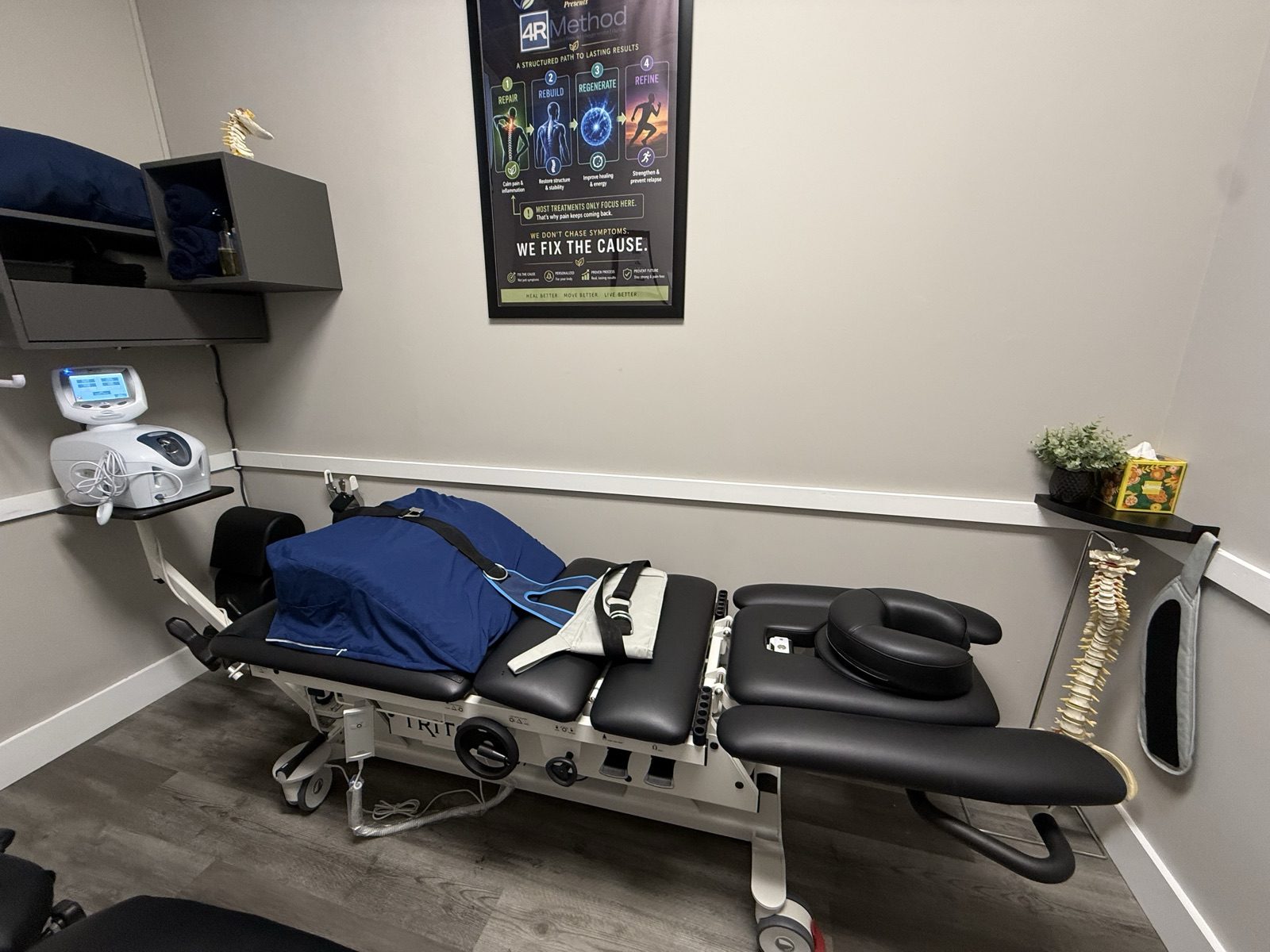
Our herniated disc care follows the 4R Method: Repair, Rebuild, Regenerate, Refine. A disc problem lives mostly in Repair and Rebuild. These are the five tools we lean on, in the order they usually enter the plan:
- Non-surgical spinal decompression. The Triton DTS table gently pulls and relaxes the spine in cycles, lowering pressure inside the disc so the herniated material can draw back from the nerve and the disc can pull in fluid. About 20 minutes on the table; most patients find it relaxing. Read how spinal decompression works.
- Precise chiropractic adjustments. Restore motion to the locked segments above and below the herniation so the injured level stops absorbing every movement.
- Cold laser and therapeutic ultrasound. Calm the inflamed nerve root and the chemical irritation that makes a herniated disc so painful in the first weeks.
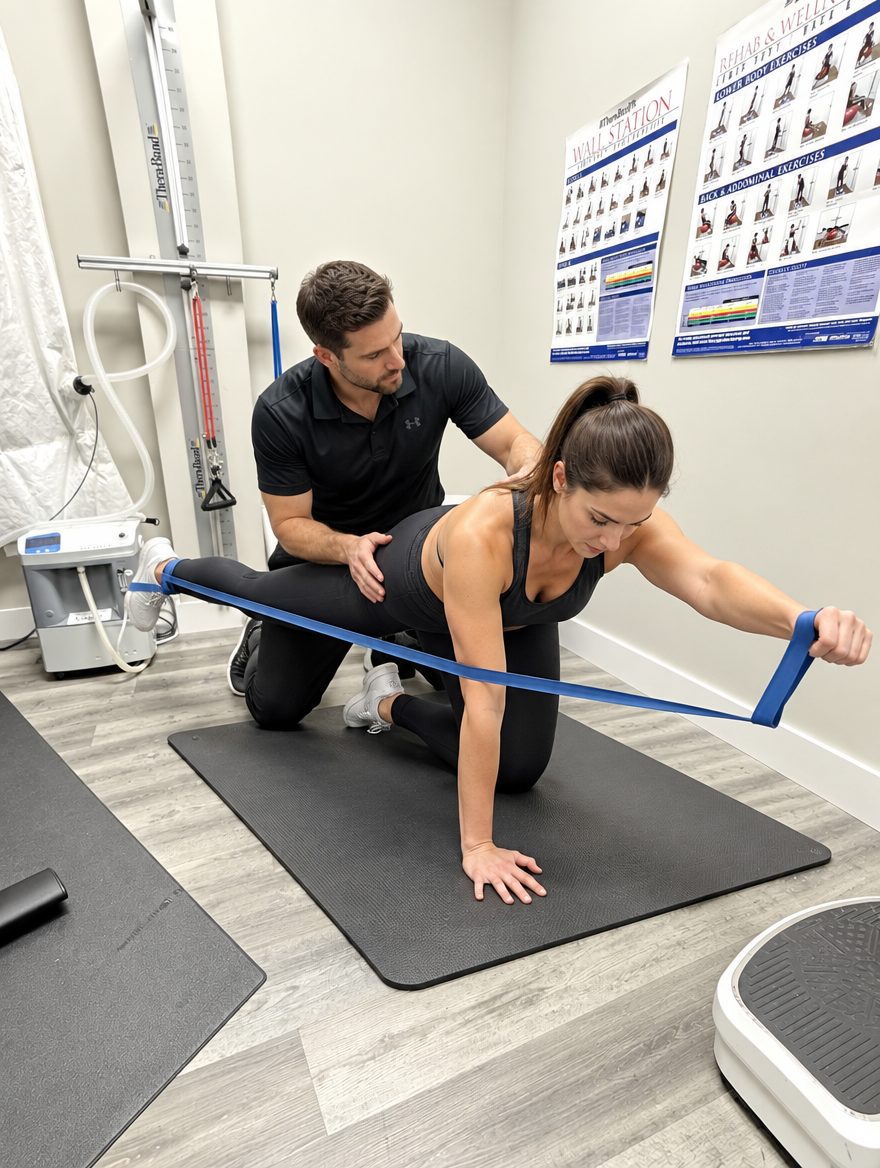
- Core and hip rehab. In the Rebuild phase, physical therapy retrains the deep stabilizers that protect the disc when you sit, lift and play.
- PEMF and red light. Support tissue repair between visits — discs have a poor blood supply and benefit from every bit of help.
Repair-phase care typically runs 3–5 visits a week for 4–8 weeks; Rebuild tapers to 2–3 visits a week for 8–16 weeks. If your leg pain is the dominant symptom, sciatica relief without surgery walks through that version of the plan in detail.
What recovery looks like, visit by visit
Visit one is measurement: a conversation about how it started, a hands-on structural exam, surface EMG and thermal scanning, and digital X-rays when indicated. If you already have an MRI, bring it — we correlate the picture with how you actually move. Visit two is your full report of findings and plan, and Most patients have already begun care on visit one; this is where the full plan takes over. Many patients notice meaningful change in the first two to three weeks; larger herniations take a few months of steady work.
Between visits, walk daily, avoid long sitting, and lift with the load close to your body. If you are not sure whether your back or neck pain is disc-related, start with a spine assessment — it is the fastest way to find out what is actually pressing on the nerve, and whether lower back pain relief or a neck-focused plan is the right door.
Serving herniated disc patients across North Broward
Our clinic at 5675 Coral Ridge Drive, Coral Springs, FL 33076 serves Coral Springs, Parkland, Coconut Creek, Margate, Boca Raton, Tamarac, Pompano Beach and Deerfield Beach. Same-day appointments are usually available — call (954) 341-2256 or book online. Most patients from Parkland and Coral Springs are here in under 15 minutes.
Medically reviewed by Dr. Jared Cohen, DC — Co-Founder & Clinical Director, The Spine and Wellness Center. Last reviewed October 2026.
Frequently asked questions
Can a herniated disc heal without surgery?
In most cases, yes. The majority of disc herniations improve with conservative care, and non-surgical spinal decompression gives the disc the space it needs to retract and heal. Surgery is generally reserved for the small percentage of people with progressive weakness or pain that does not respond to a well-run non-surgical plan.
How long does a herniated disc take to heal?
Many people improve within several weeks of consistent care; larger herniations can take two to three months. Recovery depends on the size of the herniation, how long the nerve has been irritated, your overall health and how closely you follow the plan and home care. We re-scan along the way and adjust.
Does spinal decompression help a herniated disc?
Decompression lowers pressure inside the disc by gently and cyclically stretching the segment, which can help the herniated material draw back from the nerve and pull nutrients into the disc. We pair it with adjustments, rehab and anti-inflammatory therapies so the relief holds.
When should I see a doctor for a herniated disc?
See us if pain radiates into a limb, lasts more than a week, or comes with numbness or weakness. Please see a doctor or urgent care today for severe or rapidly worsening weakness, numbness in the groin, or any change in bladder or bowel control.

Same-day appointments
Reading about it is step one.
Step two is a measurement. Visit one we measure — and usually begin care; visit two you get your full findings and plan.
- Same-day appointments are usually available
- Our team calls you back to confirm your visit
- Coral Springs, serving Parkland & North Broward since 2005
Prefer to talk now? Call or text (954) 341-2256