
Conditions · Coral Springs & Parkland
Herniated disc treatment in Coral Springs (non-surgical)
A herniated disc does not need to be pushed back — it needs space and time. Non-surgical spinal decompression on the Triton DTS table gives it both, inside a plan built to keep it from happening again.
Quick answer
Non-surgical herniated disc treatment works by lowering the pressure inside the disc so the herniated material can retract from the nerve and the disc can rehydrate. At The Spine and Wellness Center that means a structured spinal decompression program on the Triton DTS table, paired with low-force adjustments, inflammation control and core rehab — most lumbar and cervical herniations improve without surgery.
Bulging disc vs herniated disc vs extrusion: what is actually happening
Herniated disc treatment starts with understanding what a disc is and how it fails. Each intervertebral disc has a tough fibrous outer ring (the annulus fibrosus) around a soft, gel-like center (the nucleus pulposus). The disc is a shock absorber and a spacer that keeps the nerve exits open. When the annulus weakens, the nucleus pushes outward — and the degree to which it does is what the different terms describe.
- Bulging disc. The annulus is intact but sags outward around a broad section of its edge, like a tire low on air. Common with age and often painless; it becomes a problem when the bulge narrows the space a nerve runs through.
- Herniated disc (protrusion). The nucleus pushes through a tear in the inner annulus layers and creates a focal bump that can press directly on a nerve root. This is the classic ‘slipped disc’ and the stage we treat most often.
- Extrusion. The nucleus breaks fully through the annulus but stays connected to the disc. Symptoms are often more intense, yet extruded material is also the most likely to be reabsorbed by the body over time.
- Sequestration. A fragment separates entirely from the disc. This is the least common stage and the one most likely to need a surgical opinion if neurological symptoms are progressive.
The amount of disc material on an MRI does not predict the amount of pain. Many people in Coral Springs and Parkland walk around with bulges and even herniations they never feel; others have severe sciatica from a modest protrusion that happens to sit right on a nerve root. That is why we treat the patient and the nerve, not the picture.

Which disc is it? Nerve root symptoms by level
Where a herniated disc presses determines where you feel it, because each nerve root supplies a predictable strip of skin and set of muscles. These are the levels we see most, and their typical patterns:
- L4–L5 (compressing the L5 root). Pain from the low back down the outside of the thigh and shin to the top of the foot and big toe; weakness lifting the foot or big toe (foot drop in severe cases). The most common lumbar herniation.
- L5–S1 (compressing the S1 root). Pain down the back of the thigh and calf to the outer foot and little toe; a weak calf when rising onto the toes; a diminished ankle reflex. Classic sciatica.
- L3–L4 (compressing the L4 root). Pain across the front of the thigh and inner shin; weakness straightening the knee; a diminished knee reflex. Less common but often missed because it does not look like ‘typical’ sciatica.
- C5–C6 (compressing the C6 root). Neck pain radiating to the shoulder, outer arm, thumb and index finger; weak biceps and wrist extension. The most common cervical herniation.
- C6–C7 (compressing the C7 root). Pain down the back of the arm into the middle finger; weak triceps; a diminished triceps reflex.
- C4–C5 (compressing the C5 root). Shoulder and upper arm pain with deltoid weakness — often mistaken for a rotator cuff problem.
Your visit-one exam maps your symptoms to a level using nerve-tension tests, reflexes, strength and sensation, then confirms it against imaging. Matching the clinical level to the MRI level matters, because herniated disc treatment aimed at the disc that looks worst on a scan is not always aimed at the disc causing the pain.
Good to know
Numbness, tingling and weakness are nerve signs, and nerve signs are what decide the plan. A herniation producing leg or arm symptoms is a decompression case from day one — stretching, forceful manipulation of the injured level or ‘waiting to see’ tends to prolong it.
Why herniated discs can heal when you give them space
A herniated disc is not a permanent structural fact. Discs are living tissue, and a large share of herniations shrink over months as the body reabsorbs the displaced material — a process that is best documented for larger extrusions. What slows healing is sustained pressure: sitting, lifting and guarding keep the disc compressed, keep the nucleus pushed outward and keep the nerve irritated.
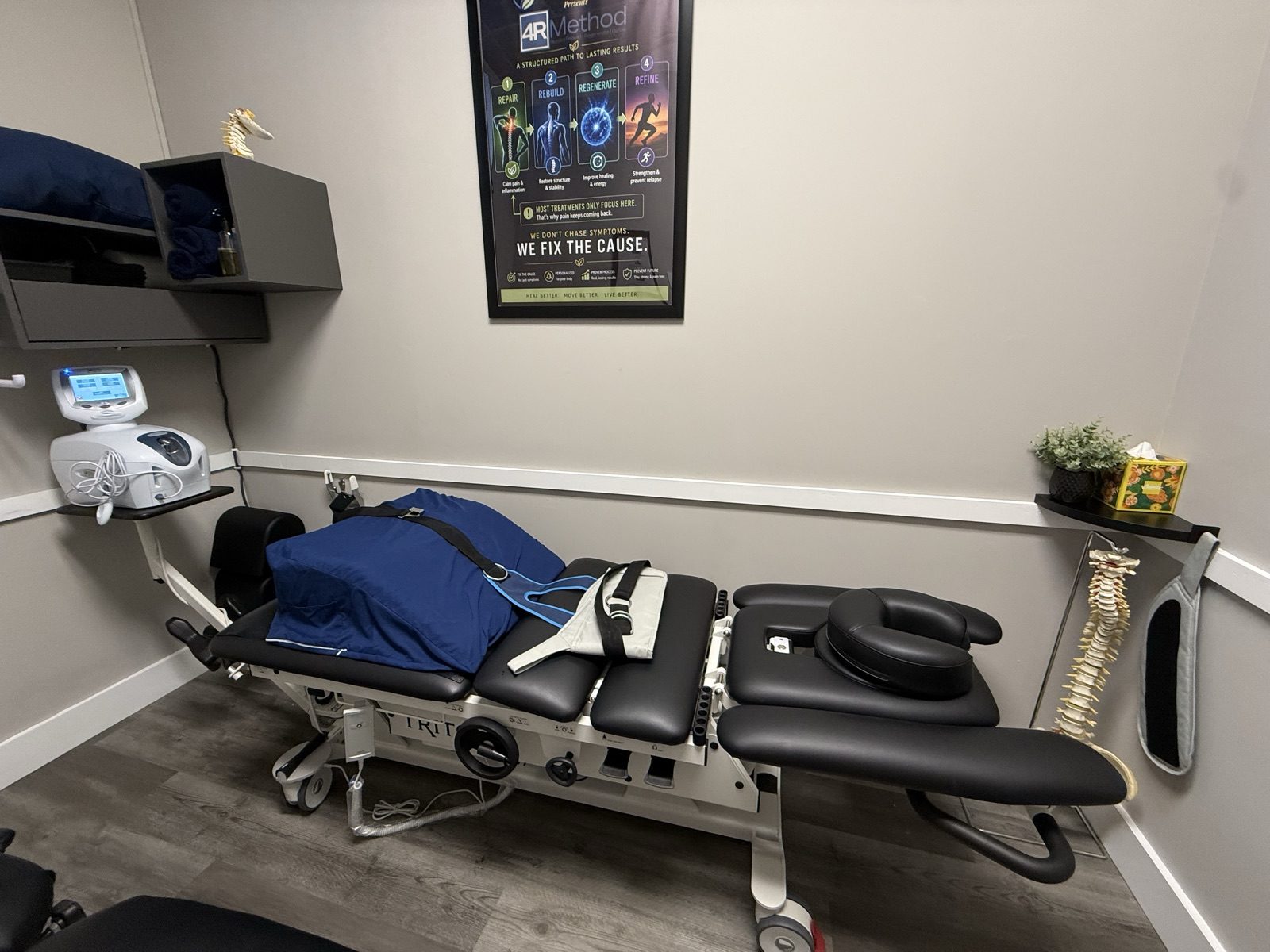
Non-surgical spinal decompression reverses that load. The Triton DTS table applies computer-controlled cycles of gentle pull and release that lower the pressure inside the disc, drawing the herniated material inward and pulling in fluid, oxygen and nutrients that the disc cannot get while compressed. Decompression differs from ordinary traction, which applies a constant pull that the muscles quickly resist; the cycling keeps the muscles relaxed so the force reaches the disc.
The clinical result is a nerve root with more room and a disc that is better hydrated and better nourished. That is the environment in which a herniated disc actually heals — and the reason our spinal decompression program is the core of herniated disc treatment at our Coral Springs clinic rather than an add-on.
Our herniated disc treatment program, step by step
Herniated disc treatment at The Spine and Wellness Center follows the 4R Method — Repair, Rebuild, Regenerate, Refine. The disc is decompressed in Repair, the structure that overloaded it is corrected in Rebuild, and the gains are protected after that.
R1 · Repair — decompress the disc (3–5 visits a week, 4–8 weeks)
- Decompression on the Triton DTS table. About 20 minutes per session, lying comfortably on your back with a harness around the pelvis (lumbar) or a padded cradle at the base of the skull (cervical). Force is set for your weight and tolerance and increased gradually. Most patients describe it as a relieving stretch.
- Inflammation control. Cold laser or therapeutic ultrasound over the irritated nerve root, and PEMF to support disc healing between visits.
- Low-force adjustments. Specific corrections at the segments above and below the herniation to restore motion and reduce load on the injured disc — not forceful manipulation of the injured level.
- Soft tissue release. Hands-on or Graston work on the muscles guarding the segment, so decompression reaches the disc instead of fighting spasm.
R2 · Rebuild — correct the cause (2–3 visits a week, 8–16 weeks)
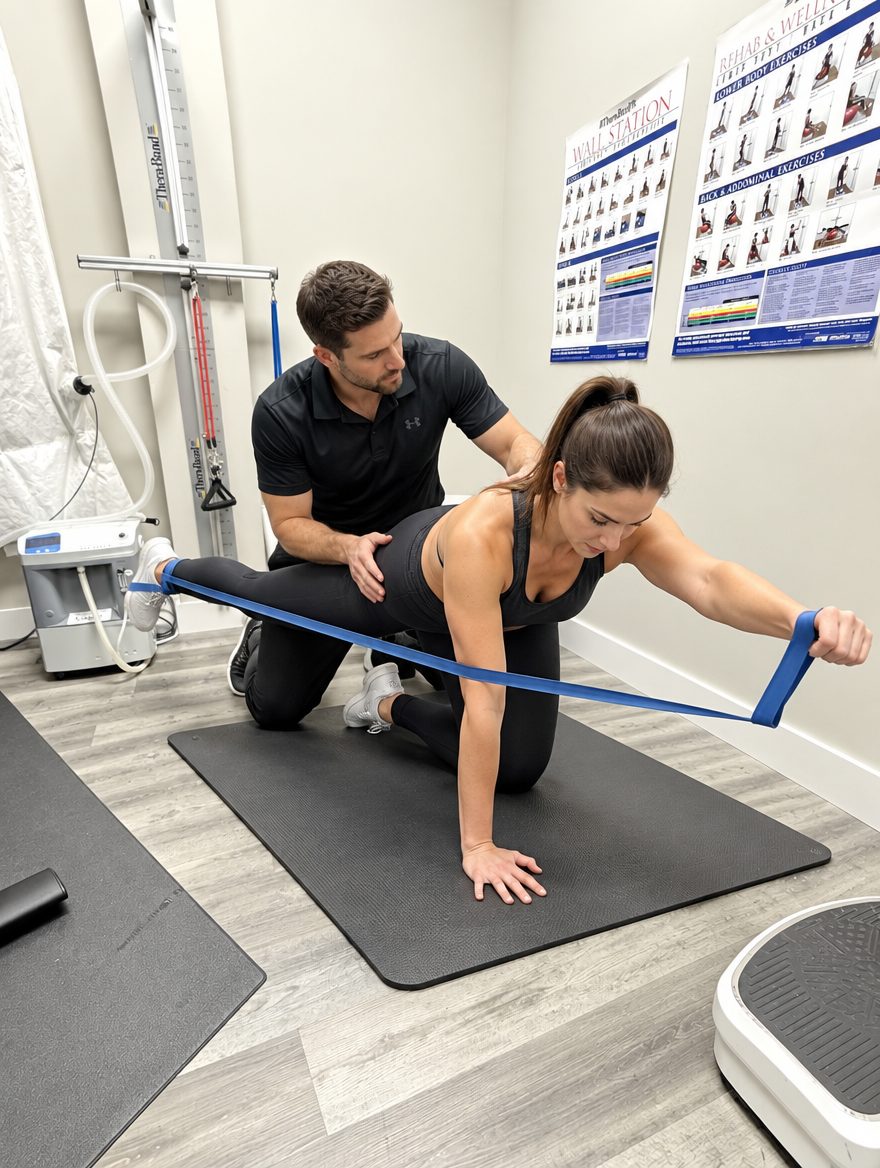
Once the nerve is quiet, physical therapy retrains the deep core (multifidus and transversus abdominis for lumbar discs; deep neck flexors for cervical discs), corrective chiropractic restores the spinal curves that distribute load across the disc, and posture correction removes the daily sitting and screen load that compressed it in the first place.
R3 · Regenerate and R4 · Refine
Regenerate (about 2 visits a week for 2+ months) adds red light, PEMF and recovery protocols to improve tissue quality. Refine is a brief monthly tune-up that keeps the correction — the part of herniated disc treatment that makes a second herniation less likely.
Non-surgical spinal decompression
Computer-controlled traction that lowers disc pressure so the herniation can retract and rehydrate.
Learn moreChiropractic care
Low-force adjustments at the segments around the disc to restore motion and offload the injury.
Learn moreCold laser therapy
Calms the inflamed nerve root during the Repair phase without heat or medication.
Learn morePhysical therapy
Rebuilds the stabilizers that protect the disc when you sit, lift and play.
Learn moreWhen is surgery actually indicated for a herniated disc?
Surgery is the right call for a small minority of herniated discs, and it is important to know which. According to the National Institute of Neurological Disorders and Stroke, most people with a herniated disc improve with conservative, non-surgical care, and surgery is generally considered when there are progressive neurological deficits or when pain fails to respond to other treatment (NINDS, Back Pain). The American Academy of Orthopaedic Surgeons gives similar guidance for lumbar herniations: non-surgical treatment first, with surgery reserved for persistent or worsening symptoms (AAOS OrthoInfo, Herniated Disk in the Lower Back).
In practical terms, these are the situations in which we refer for a surgical opinion rather than continue conservative care:
- Cauda equina signs — loss of bladder or bowel control, numbness in the groin or inner thighs. This is a same-day emergency: please see a doctor or urgent care today.
- Progressive weakness — a foot drop, a grip or arm that is getting measurably weaker visit to visit.
- Failure to respond — nerve pain that does not improve after a full, properly executed course of decompression and conservative care, typically six to twelve weeks.
- Intractable pain — pain that cannot be controlled enough to allow sleep or basic function despite care.
Everyone else — which is most people — is a candidate for non-surgical herniated disc treatment first. If you have been told you need surgery, bring the MRI; Dr. Jared Cohen reviews it on visit one and will tell you candidly whether a decompression program is a reasonable step before an operation.
Herniated disc recovery timeline: what to expect
Herniated disc treatment is measured in weeks for symptoms and months for structure. This is the realistic arc for a typical lumbar or cervical herniation in our program:
- Weeks 1–3. Leg or arm pain usually begins to centralize — moving out of the limb and back toward the spine, which is the sign we look for. Sleep improves. Sitting tolerance starts to increase.
- Weeks 4–8. Nerve symptoms become intermittent, then rare. We re-scan with surface EMG and thermal imaging and compare to the visit-one baseline. Decompression frequency begins to taper as rehab enters.
- Weeks 8–16. Rebuild: strength, posture and curve correction. Most patients are back to full work and recreation — golf, pickleball, the gym — with a program for keeping the spine protected.
- Beyond. Monthly tune-ups and the home routine. A disc that herniated once has a weakened annulus, and the Refine phase exists to keep the load off it.
Between visits: walk often, break up sitting every 30–45 minutes, hinge at the hips rather than rounding the back, sleep on your side with a pillow between the knees, and avoid aggressive forward-bending stretches that push the nucleus toward the nerve. Ice in the first 48 hours of a flare, heat for stiffness afterwards.
What to expect at your first two visits
Visit one is a measurement visit. A real conversation about your symptoms and goals; a hands-on structural exam with nerve-tension tests, reflexes, strength and sensation to identify the level; surface EMG and thermal scanning to show where the body is guarding; and digital X-rays when indicated — plus a careful read of any MRI you already have.
Visit two is your report of findings, with the plan mapped to the 4R phases and a clear frequency and duration. Treatment begins that day. If you would like a head start, take the 60-second spine assessment and we will have your Spine Score before you arrive. For the broader picture of lumbar pain patterns, see our lower back pain guide; for cervical herniations, our neck pain treatment page covers the cervical program in detail.
Serving herniated disc patients across North Broward
Our clinic at 5675 Coral Ridge Drive, Coral Springs, FL 33076 serves Coral Springs, Parkland, Coconut Creek, Margate, Boca Raton, Tamarac, Pompano Beach and Deerfield Beach. Same-day appointments are usually available — call (954) 341-2256 or book online. Most patients from Parkland and Coral Springs are here in under 15 minutes.
Medically reviewed by Dr. Jared Cohen, DC — Co-Founder & Clinical Director, The Spine and Wellness Center. Last reviewed October 2026.
Frequently asked questions
Can a herniated disc heal on its own?
Often, yes — many herniations shrink over months as the body reabsorbs displaced material, and most people improve without surgery. The catch is sustained load: sitting, lifting and guarding keep the disc compressed and the nerve irritated. Decompression speeds the process by creating the low-pressure environment the disc needs to retract and rehydrate.
How long does herniated disc treatment take?
Most patients notice leg or arm pain beginning to centralize within two to three weeks of starting herniated disc treatment. The Repair phase typically runs 4–8 weeks at 3–5 visits a week, followed by 8–16 weeks of Rebuild at 2–3 visits a week to correct the structure that overloaded the disc. Larger herniations and long-standing cases sit at the longer end.
Is spinal decompression safe for a herniated disc?
Yes for most patients. It uses gentle, computer-controlled traction at a force set for your weight and tolerance. The main exclusions are fracture, spinal instability, tumor, severe osteoporosis, pregnancy and recent spinal surgery with hardware. Your exam and imaging on visit one determine whether decompression is appropriate.
Do I need an MRI before treatment?
Not always. The exam identifies the level in most cases and digital X-rays show disc spacing and alignment. We request an MRI when nerve symptoms are significant or progressive, when the clinical picture is unclear, or when it would change the plan — and we review any MRI you already have on visit one.
Will a chiropractor adjust a herniated disc?
Not the injured level directly. For disc cases we lead with decompression and use low-force, specific adjustments at the segments above and below the herniation to restore motion and reduce load on the disc. Technique is chosen from your exam and imaging, and instrument-assisted options are available.
What symptoms mean I should see a doctor instead?
Loss of bladder or bowel control, numbness in the groin or inner thighs, rapidly worsening leg or arm weakness, or disc symptoms after a serious fall or accident need same-day medical evaluation — please see a doctor or urgent care today. For everything else, conservative care is the recommended first step.
Same-day appointments
Let's build your plan.
Find out what's actually going on and get a clear path forward. Same-day appointments available.
- Same-day appointments are usually available
- Our team calls you back to confirm your visit
- Coral Springs, serving Parkland & North Broward since 2005
Prefer to talk now? Call or text (954) 341-2256