
Core care · Coral Springs & Parkland
Massage therapy in Coral Springs
Clinical, not spa. Therapeutic massage releases the guarding and trigger points that keep a spine locked — so adjustments go in easier and hold longer.
Quick answer
Therapeutic massage therapy at The Spine and Wellness Center targets the muscle guarding, trigger points and fascial tension that hold a painful spine in place. It is paired with chiropractic adjustments in the Repair phase of the 4R Method and used for recovery in Refine. Sessions are 30 or 60 minutes, specific to your findings, and prescribed as part of your plan.
What is therapeutic massage therapy (and how is it different from a spa massage)?
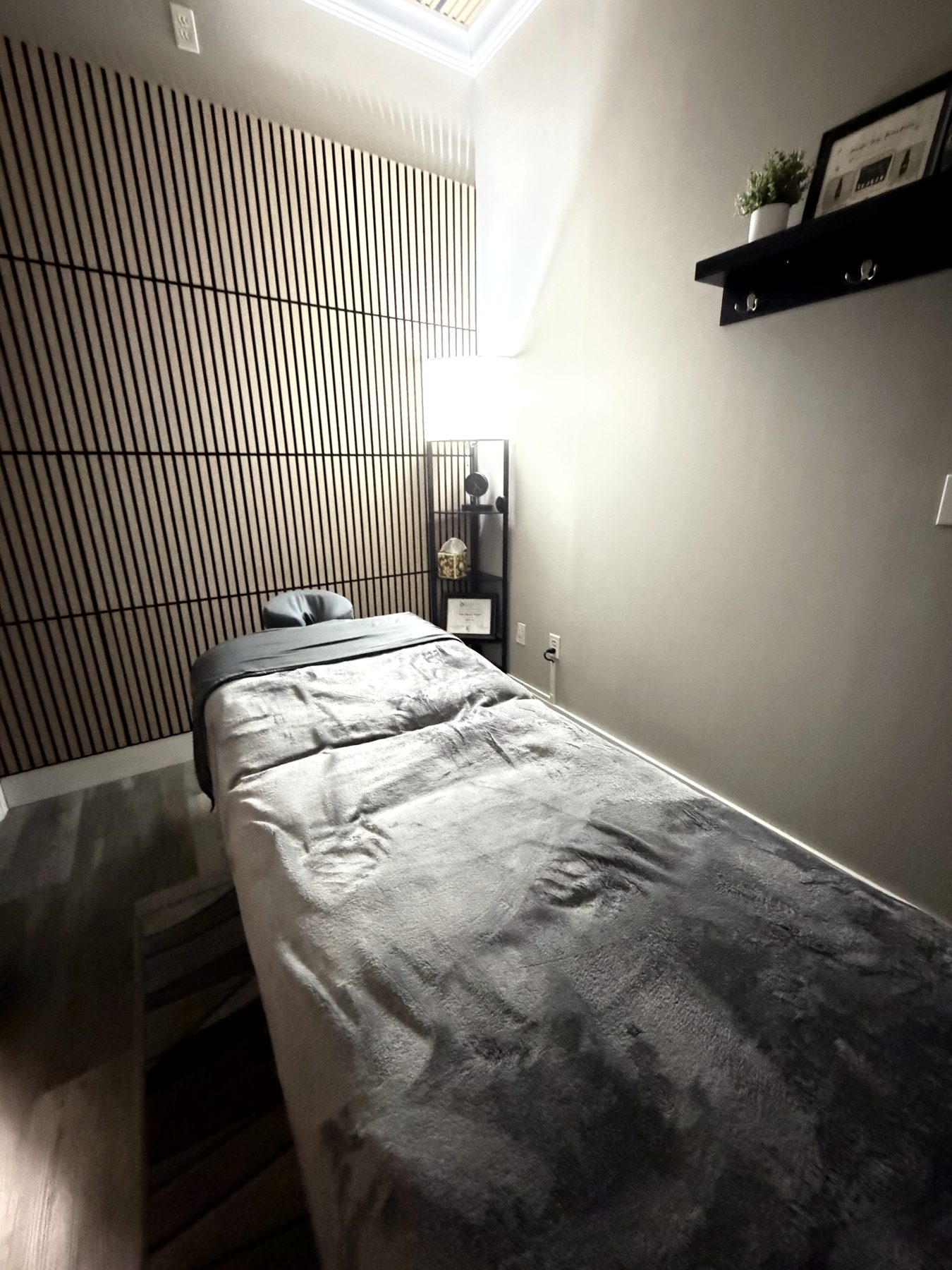
Therapeutic massage therapy is hands-on soft-tissue treatment prescribed for a specific clinical reason — to release the muscle guarding, trigger points and fascial restriction that keep a painful spine locked. At our Coral Springs clinic it is part of your treatment plan, not a separate relaxation service.
A spa massage is designed to feel good for an hour. Clinical massage is designed to change something: the tone of the muscles beside an irritated joint, the knot in the upper trapezius that is pulling your neck forward, the tight hip flexors tilting your pelvis. It is often more focused and sometimes more intense than a spa session — and the point is what your spine does the next day, not just how you feel on the table.
That focus is why it belongs in a chiropractic clinic. The therapist works from the same exam findings and surface EMG scans as Dr. Cohen, so the muscles being treated are the ones the scans show are guarding.

How does massage release muscle guarding and trigger points?
Guarding is the body’s reflex to protect an injured joint or disc with muscle spasm. It is useful for a day or two; after that it becomes part of the problem, because a guarded joint cannot move and a joint that cannot move keeps the nerve beside it irritated.
- Guarding release. Sustained pressure and slow, deep strokes along the paraspinal muscles reduce their resting tone and improve blood flow, interrupting the spasm-pain-spasm loop so the joint underneath can move again.
- Trigger point therapy. A trigger point is a tight, tender band within a muscle that refers pain somewhere else — a knot in the upper trapezius that produces headaches, or one in the gluteus medius that mimics sciatica. Direct, sustained pressure followed by stretch deactivates it.
- Myofascial release. Slow, low-load stretching of the connective tissue that wraps muscles, used where fascia has thickened after injury or years of one posture.
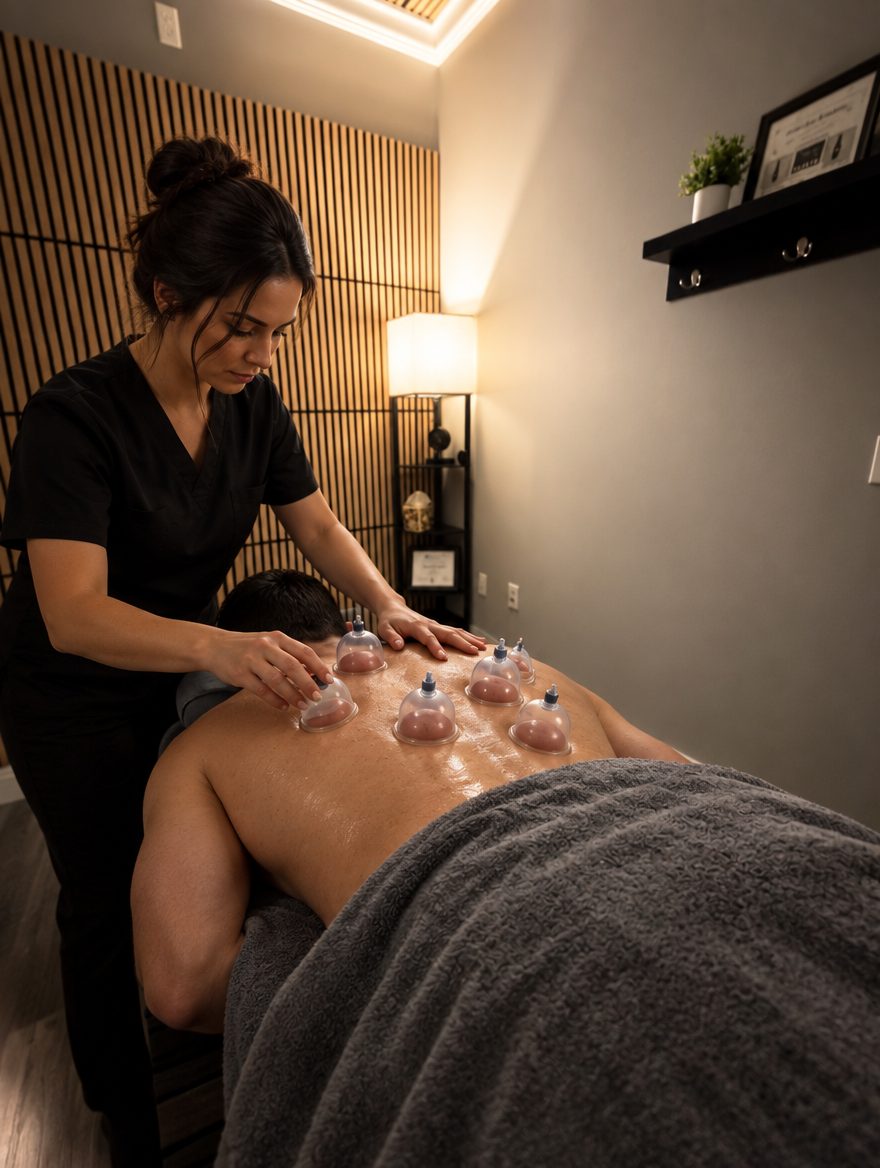
- Cupping. Suction cups lift the tissue rather than compress it, decompressing fascia and increasing circulation in stubborn areas like the mid-back and shoulders.
The National Center for Complementary and Integrative Health notes that research suggests massage may help with low back pain and neck pain in the short term, and that it is generally safe when provided by a trained professional (NCCIH, Massage Therapy: What You Need To Know). We use it for exactly that role — short-term tissue change that sets up the structural correction.
Why pair massage therapy with chiropractic adjustments?
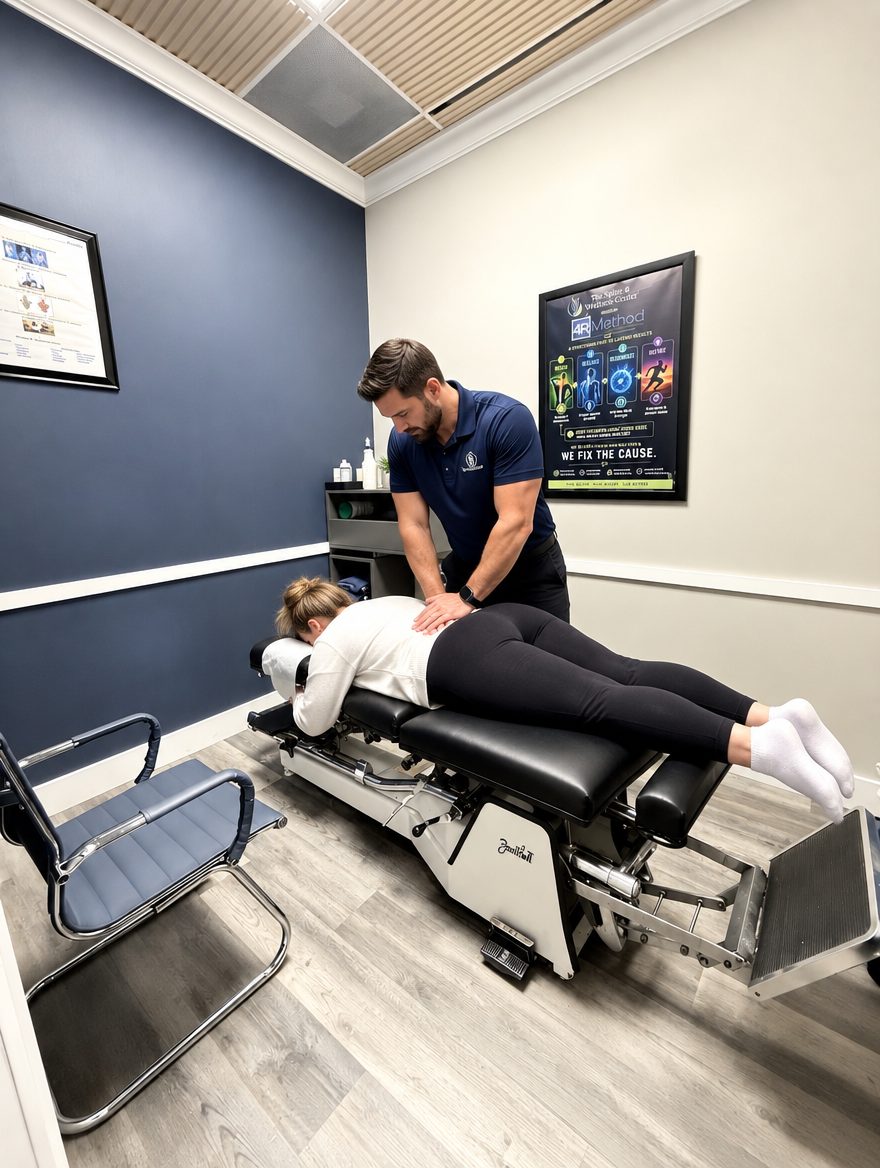
Because muscles and joints are one system. An adjustment restores motion to a locked joint, but if the muscles around it are still in spasm they pull the joint right back. Massage before an adjustment relaxes those muscles so the adjustment goes in with less force and holds longer; massage after calms any soreness and keeps the segment moving.
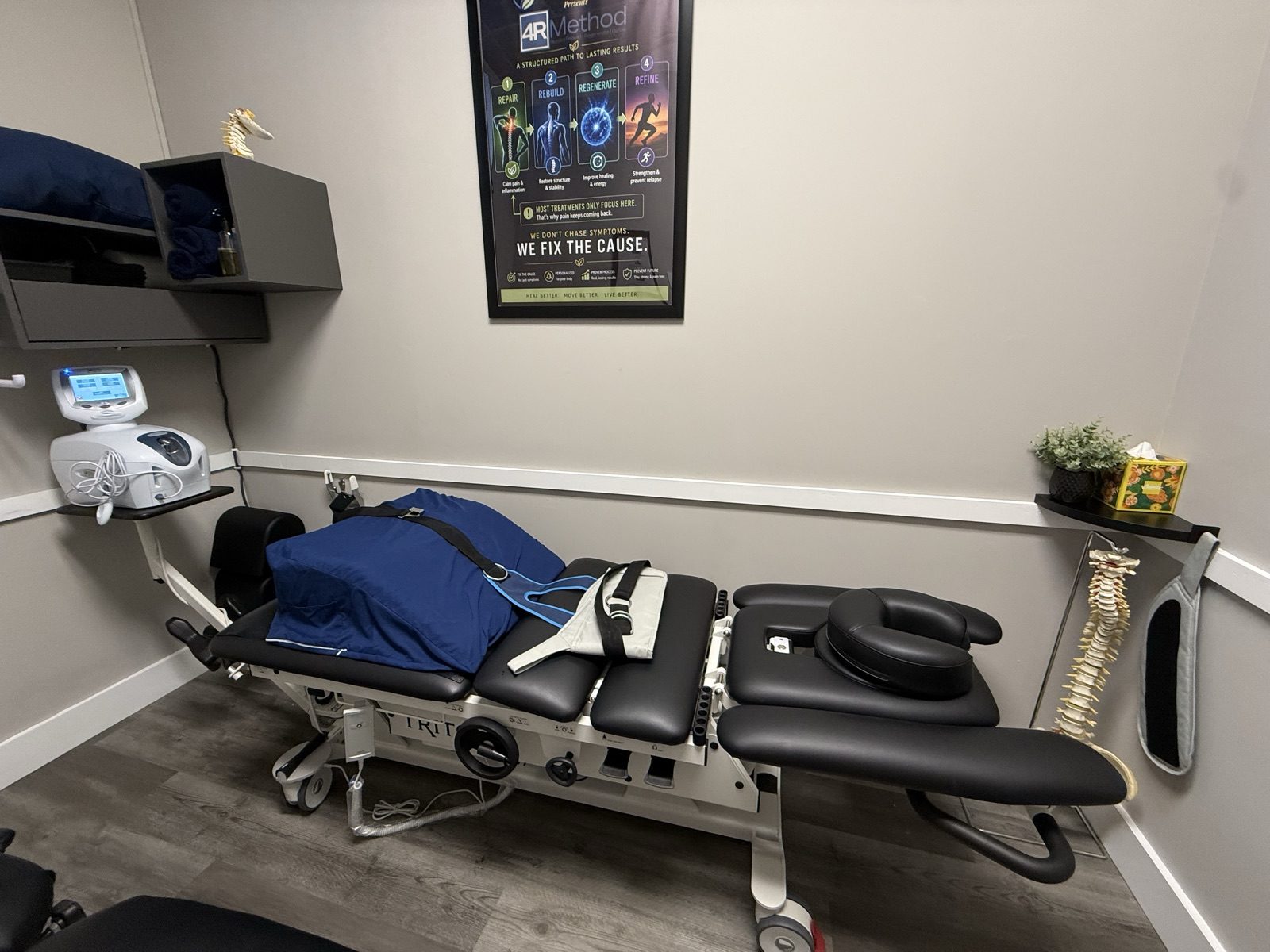
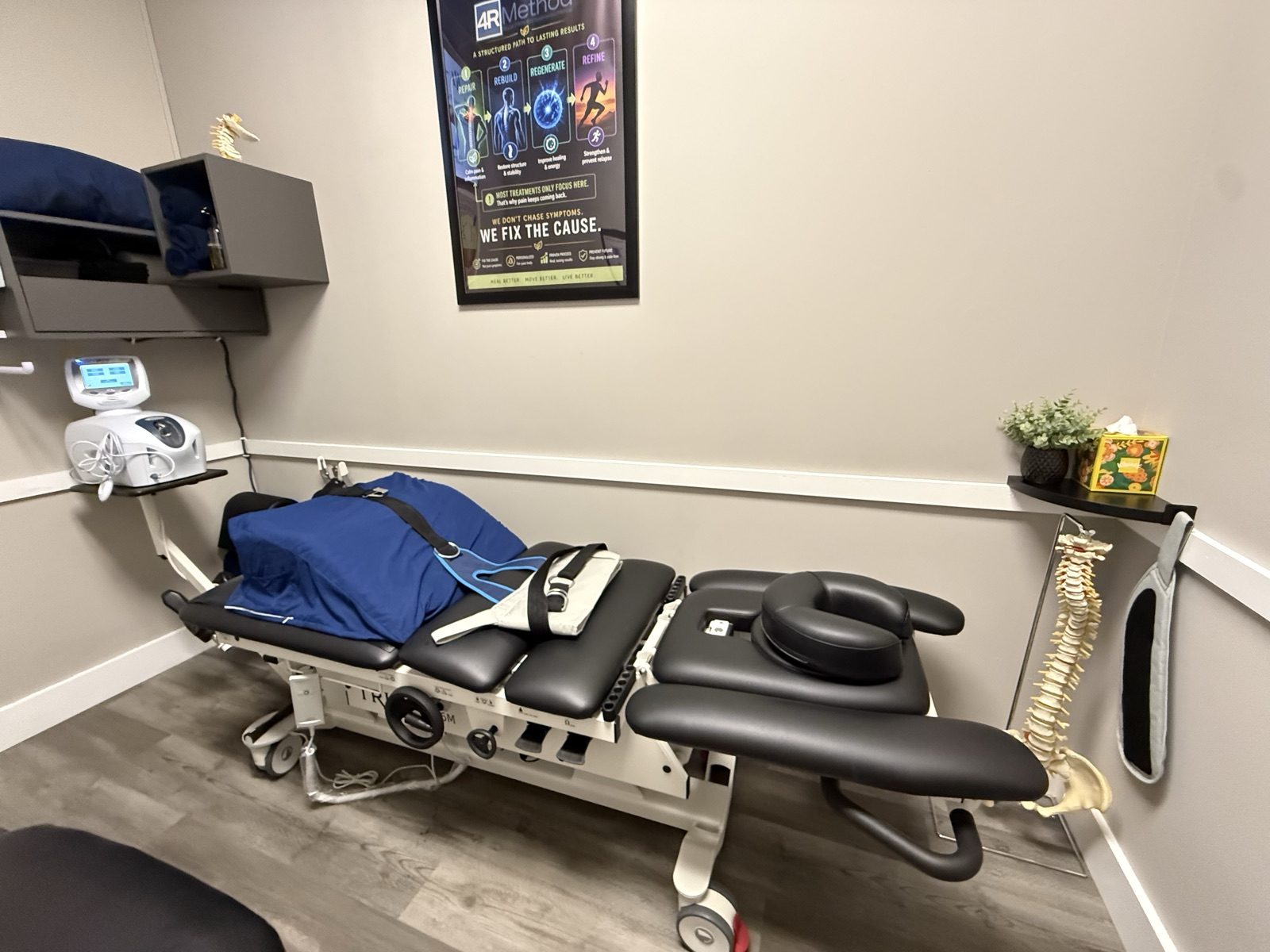
In practice, a Repair-phase visit in our Coral Springs clinic often looks like this: 30 minutes of targeted massage therapy on the guarded region, then a specific chiropractic adjustment, then cold laser or PEMF to settle inflammation. For disc cases, massage prepares the lumbar muscles so spinal decompression on the Triton DTS can separate the vertebrae without the paraspinals bracing against the pull.
It also pairs with Graston Technique: massage addresses broad tone and guarding, while Graston’s instruments break down the specific fibrotic adhesions that hands cannot reach.
The order matters
Soft tissue first, then the joint, then the therapy that calms inflammation. Reversing it — adjusting a guarded segment and then trying to relax it — is why relief from adjustment alone can wear off by the next morning.
Where does massage fit in the 4R Method?
Massage therapy shows up in two phases of the 4R Method, with a different job in each.
R1 · Repair — support (3–5 visits/week, 4–8 weeks)
In Repair, massage is a support tool. Its job is to release guarding so adjustments and decompression can do their work and so you sleep — many patients in acute pain have not slept through the night in weeks. Sessions are shorter and highly targeted.
R2 and R3 · Rebuild and Regenerate — as needed
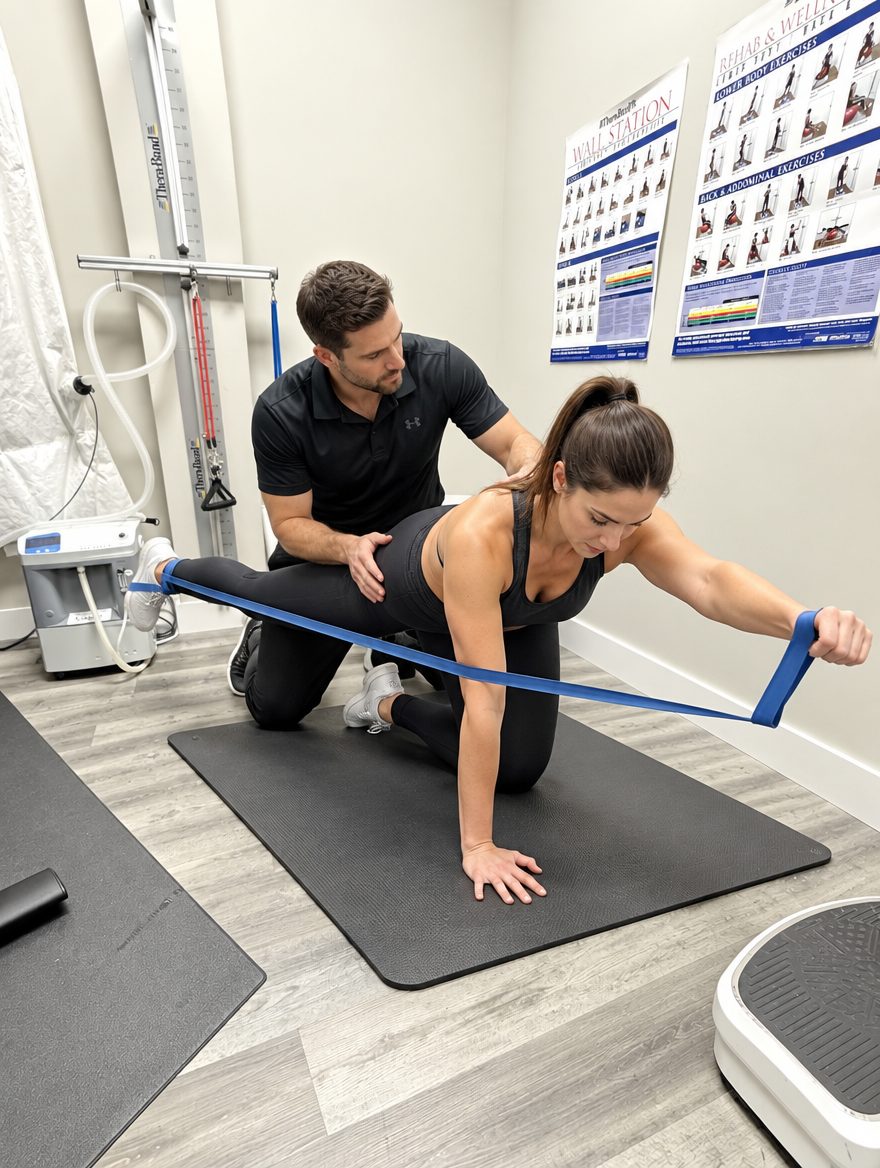
Once the pain has settled and rehab takes over, massage drops to as-needed: a session when physical therapy loading leaves the hips or mid-back tight, or when the sEMG re-scan shows a region guarding again.
R4 · Refine — recovery (monthly)
In Refine, massage becomes recovery. A monthly 60-minute session alongside your structural tune-up keeps the tissue supple, catches new trigger points early, and — for golfers, pickleball players and desk workers in Coral Springs and Parkland — is often the difference between a tight week and a flare-up.
What should I expect from a massage therapy session?
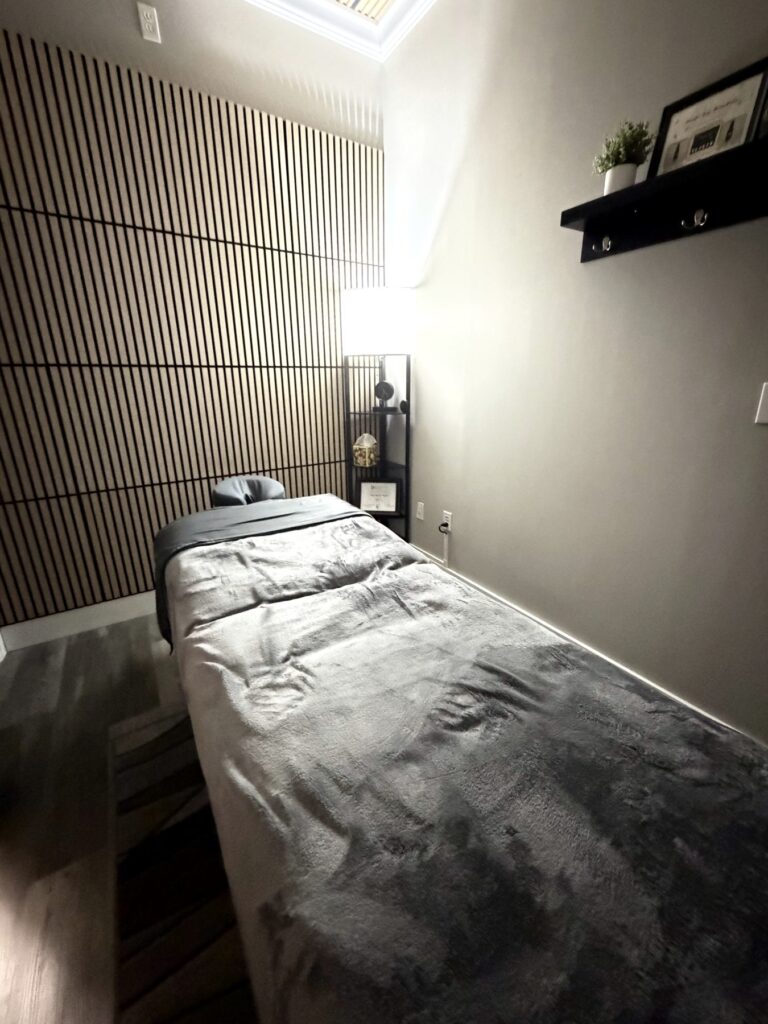
Sessions are 30 or 60 minutes depending on the plan, in a private room, and focused on the regions your findings call for rather than a full-body routine. Here is what a typical session involves:
- Check-in. The therapist reviews your current symptoms and the latest scan findings and asks about pressure tolerance.
- Targeted work. Guarding release and trigger point therapy on the regions driving your pain — commonly the lumbar paraspinals and glutes for low back patients, the upper traps, levator and suboccipitals for neck patients.
- Pressure you control. Clinical does not mean painful. Deep work should feel like a ‘good hurt’ you can breathe through; if you are bracing, it is too much and the therapist will adjust.
- Hand-off. Massage is usually scheduled right before your adjustment, so you walk from the massage room to the treatment room with the muscles ready.
Afterward, drink water, move gently and expect mild soreness for up to a day in areas that were very tight. Please tell us about any skin conditions, blood thinners, recent surgery, or pregnancy before your session so the approach can be adapted.
Who benefits most from clinical massage?
Massage therapy helps almost anyone in a treatment plan, but these are the patients for whom it changes the trajectory:
- Acute lower back pain with heavy guarding — the back so tight you cannot stand up straight.
- Neck pain and tension headaches from desk and phone posture, where trigger points in the upper traps and suboccipitals refer pain into the head.
- Hip and SI joint pain with tight hip flexors, piriformis or glutes holding the pelvis rotated.
- Athletes in sports injury rehab who need tissue recovery between training sessions.
- Stress-driven tension — the shoulders that live up by the ears after a long week.
Massage is prescribed after your first two visits, like everything else here: visit one is the exam, scans and — when appropriate — your first treatment; visit two is your report of findings and full plan. If you are not sure where to begin, take the 60-second spine assessment and we will map your likely pattern before you arrive.
Serving massage therapy patients across North Broward
Our clinic at 5675 Coral Ridge Drive, Coral Springs, FL 33076 serves Coral Springs, Parkland, Coconut Creek, Margate, Boca Raton, Tamarac, Pompano Beach and Deerfield Beach. Same-day appointments are usually available — call (954) 341-2256 or book online. Most patients from Parkland and Coral Springs are here in under 15 minutes.
Medically reviewed by Dr. Jared Cohen, DC — Co-Founder & Clinical Director, The Spine and Wellness Center. Last reviewed October 2026.
Frequently asked questions
Is this a relaxation massage or a deep tissue massage?
It is clinical massage, prescribed for a reason. Pressure ranges from moderate to deep depending on the tissue and your tolerance, and the work is focused on the regions your exam and scans identify rather than a full-body routine. It is still comfortable — you control the pressure — but the goal is tissue change, not just relaxation.
Should I get massage before or after my adjustment?
Usually before. Releasing the guarding muscles first lets the adjustment go in with less force and hold longer. In some Refine-phase visits it is scheduled after, as recovery. Your plan sets the order, and the two are typically booked back-to-back on the same visit.
How often should I get massage therapy?
In the Repair phase it is often weekly or more, as a support for adjustments and decompression. In Rebuild and Regenerate it drops to as needed. In Refine, a monthly session alongside your structural tune-up is the most common pattern for ongoing recovery.
Can I book massage therapy on its own?
Massage here is part of a treatment plan built from your exam on visit one and your report of findings on visit two, because the regions treated are chosen from your scans. Established patients in the Refine phase can book standalone recovery sessions.
Is massage safe during pregnancy or with a medical condition?
Often, with adaptations. Please tell us about pregnancy, blood thinners, recent surgery, skin conditions, blood clots or cancer history before your session. Some conditions change the technique; a few rule out deep work. When in doubt, we coordinate with your physician.
Does insurance cover massage therapy?
Coverage varies widely by plan, and massage is often not a covered benefit even when chiropractic care is. Our front desk will check your benefits before your plan starts so there are no surprises.
Same-day appointments
Let's fix the cause.
Measure first, then treat — a plan built on your actual structure.
- Same-day appointments are usually available
- Our team calls you back to confirm your visit
- Coral Springs, serving Parkland & North Broward since 2005
Prefer to talk now? Call or text (954) 341-2256