
Athletes & diagnostics · Coral Springs & Parkland
GaitScan foot & gait analysis in Coral Springs
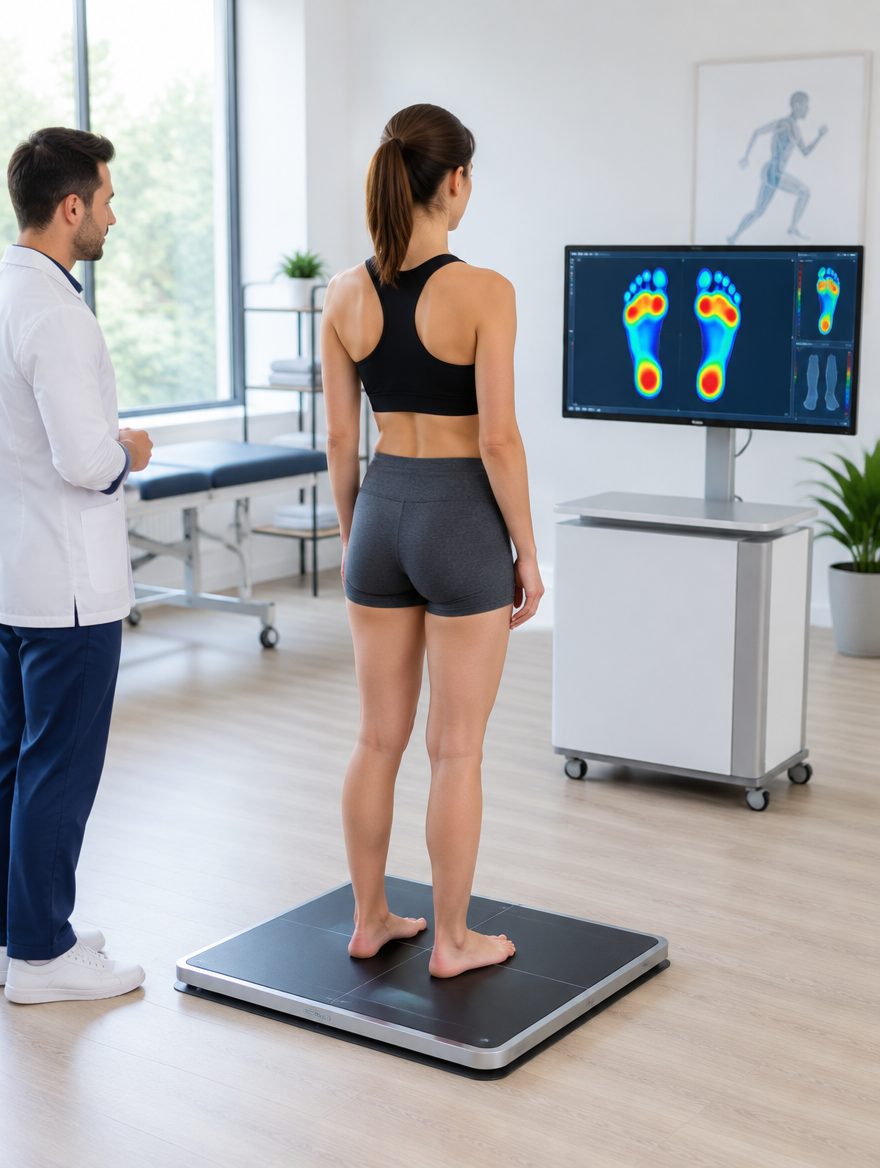
Your feet are the foundation of everything above them. A few steps across a digital pressure plate map how each foot loads and moves — so we can see the imbalance behind hip, SI joint, knee and back pain, and decide whether custom orthotics belong in your plan.
Quick answer
GaitScan analysis is a digital assessment in which you stand on and walk across a pressure-sensitive plate while the system records thousands of pressure points per step. The result is a dynamic map of your foot pressure and gait that reveals asymmetry, over-pronation and timing faults that load the knees, hips and spine. It takes a few minutes, is completely comfortable, and informs your plan — including whether custom orthotics would help.
What is GaitScan analysis and what does it measure?
GaitScan analysis is a digital assessment of how you stand, step and load each foot. You stand on, then walk across, a pressure-sensitive scanning plate while the system records thousands of pressure points across every phase of each step — heel strike, mid-stance, push-off — and builds a detailed map of your foot pressure and gait.
Small differences in how each foot loads the ground change the way force travels up through the ankles, knees, hips and spine. Over a day that is several thousand steps; over a year it is millions. A foot that rolls in a little too far, or a step that lands harder on one side, becomes a hip that rotates, a pelvis that tilts and a lumbar spine that takes the load unevenly.
The scan shows what the eye cannot. Static posture can look symmetrical while the dynamic map shows one foot spending far longer in pronation, or the arch collapsing only under load. It is an evaluation — and usually your first treatment: the map gives us data to decide, with you, what — if anything — your care should address.

What does GaitScan analysis reveal?
The report answers six questions we would otherwise be guessing at:
- Is the load symmetrical? Side-to-side differences in pressure and timing that show one leg doing more of the work.
- Does either foot over-pronate or over-supinate? Excess rolling in flattens the arch and rotates the shin and thigh inward; too little rolling in makes the foot a poor shock absorber.
- Where does the pressure peak? Hot spots under the heel, the ball of the foot or the big toe explain plantar fasciitis, metatarsal pain and some knee patterns.
- How is the step timed? A rushed or delayed push-off on one side is a common hidden driver of hip and SI joint pain.
- Is there a leg-length or pelvic effect? A consistent pressure and timing difference often reflects a tilted pelvis or a functional leg-length difference.
- Would orthotics help? The map tells us whether a custom orthotic would meaningfully change the load, or whether rehab and correction alone are the better route.
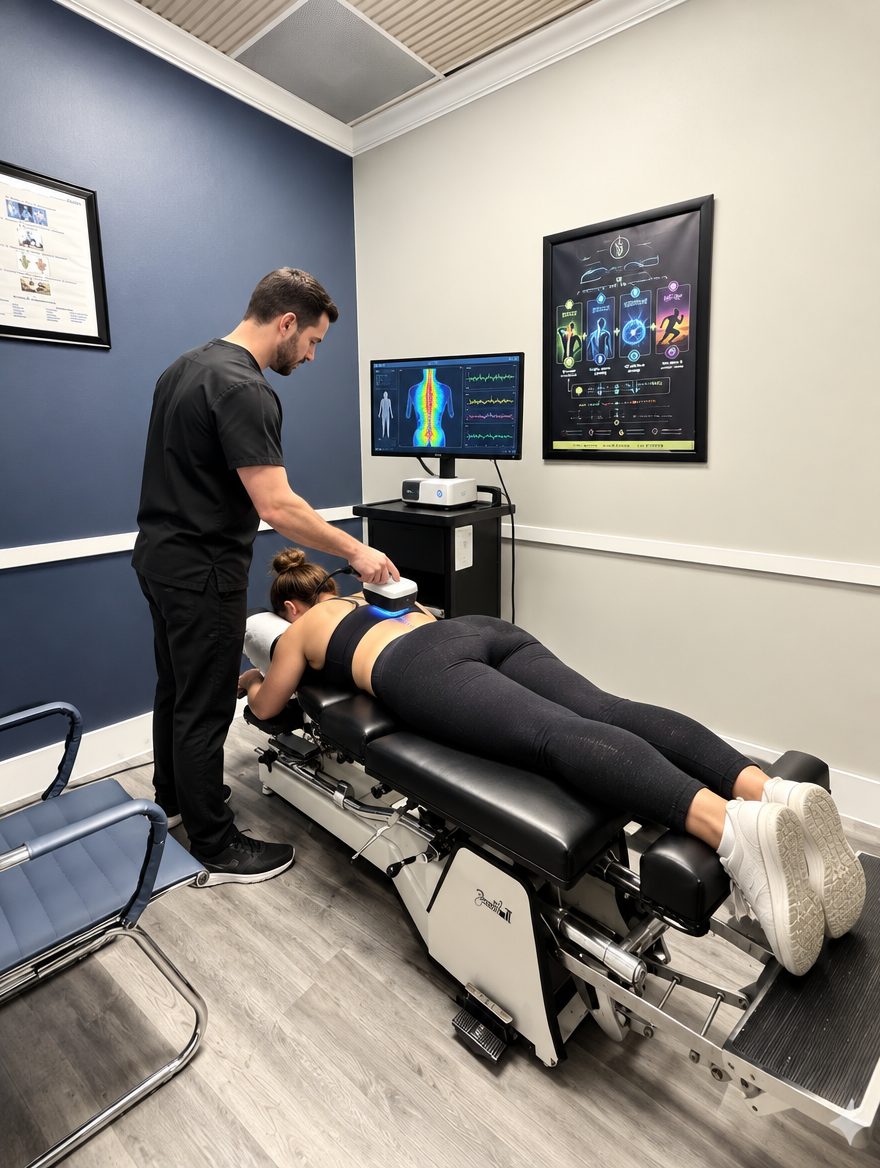
The scan pairs with the MyoVision sEMG scan: one measures the foundation, the other measures how the spine is coping with it. Together they explain many of the patterns we see in hip and SI joint pain and lower back pain that never quite resolved with spine-only care.
Feet, hips and the spine: why the foundation matters
The kinetic chain runs in both directions. A foot problem climbs; a pelvis problem descends. The scan helps us tell which is which, and that decides the plan.
Hip and sacroiliac pain
Over-pronation on one side drops that side of the pelvis a few millimeters with every step and rotates the hip inward. The sacroiliac joint absorbs that twist thousands of times a day. Correcting the SI joint without addressing the foot is why some one-sided low back and hip pain keeps coming back.
Knees and sports
Runners, golfers, tennis and pickleball players from Coral Springs and Parkland make up a large share of our GaitScan analysis patients. Inward knee collapse, patellar tracking pain, shin splints, Achilles and plantar fascia overuse almost always have a loading pattern underneath — see sports injury rehab.
Posture and the spine
A collapsed arch on one side tilts the pelvis, which bends the lumbar spine sideways and makes the shoulders compensate above. Patients in posture correction and spinal decompression programs are scanned so the foundation does not quietly undo the work being done above it.
Custom orthotics: when they help and when they do not
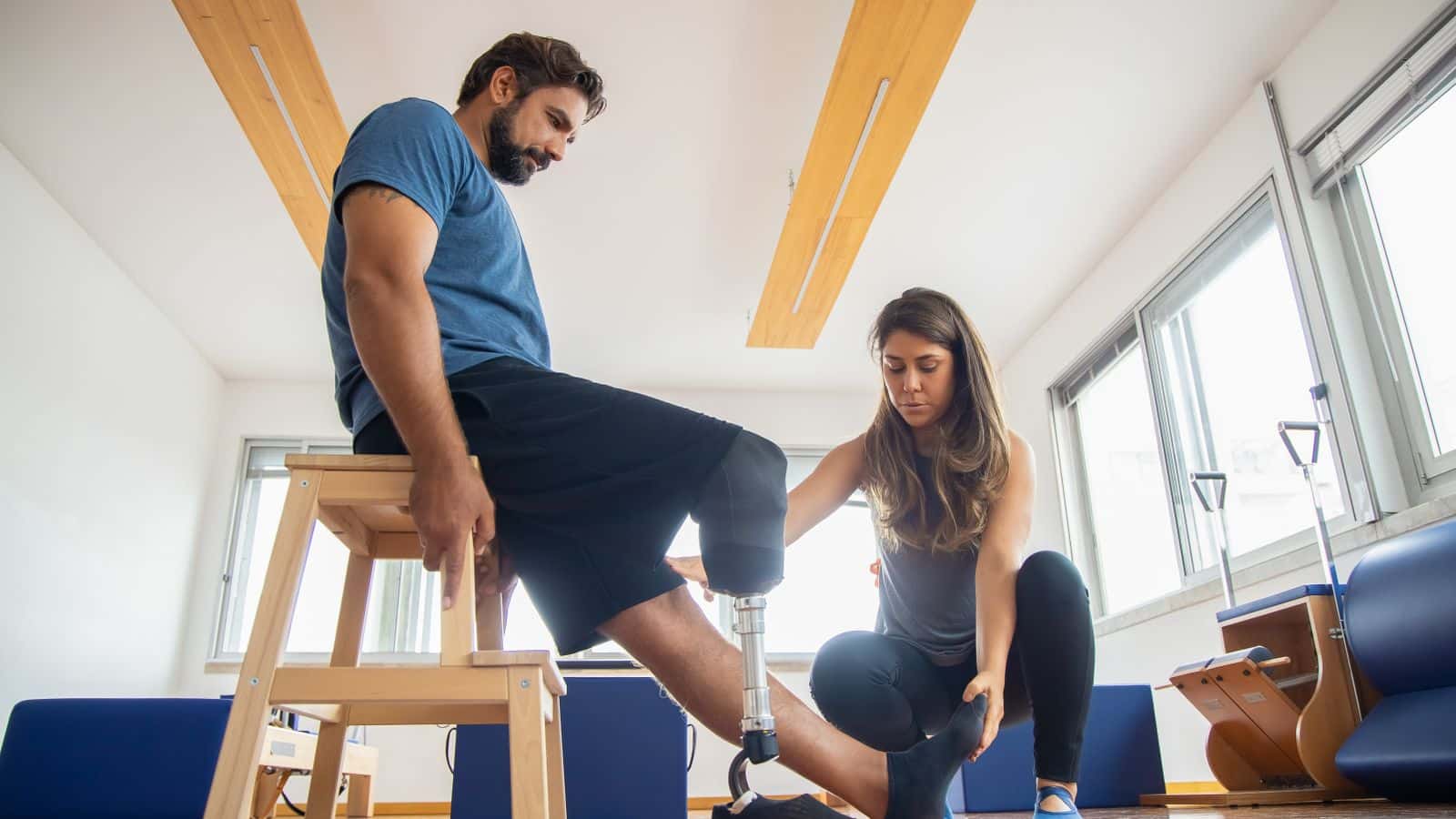
A scan does not commit you to orthotics. It tells us whether they would help. When the map shows a structural loading fault — a rigid high arch, a collapsing arch, a consistent asymmetry that rehab cannot fully correct — a custom orthotic built from the scan data changes how the foot meets the ground on every step, which takes the twist off the knee, hip and SI joint.
When the fault is functional — weak hip stabilizers, a stiff ankle, a habit of favoring one leg after an old injury — rehab and correction usually fix it without an insole. The American Academy of Orthopaedic Surgeons describes orthotics as one tool among several for foot-related problems, chosen based on the specific condition (AAOS OrthoInfo), and that is how we use them.
- Likely to help: flat or collapsing arches, over-pronation with knee or SI pain, plantar fasciitis with a clear pressure hot spot, a functional leg-length difference.
- Usually not needed: symmetrical loading with a strength or mobility deficit that physical therapy can correct.
- Re-scan either way: we repeat the scan after a Rebuild phase, with or without orthotics, to confirm the load has actually changed.
MyoVision sEMG scan
The spinal counterpart: muscle guarding and nerve stress, level by level.
Learn moreHip & SI joint pain
One-sided low back and hip pain that often starts at the foot.
Learn morePosture correction
Correct the pelvis and spine once the foundation is sorted.
Learn morePhysical therapy
Rebuild the hip and ankle stabilizers the scan shows are not doing their job.
Learn moreWhere GaitScan analysis sits in the 4R Method
The 4R Method — Repair, Rebuild, Regenerate, Refine — treats the spine in sequence, and the scan is how we make sure the foundation is part of that sequence.
- Visit one and Repair: the baseline scan is taken alongside the structural exam and sEMG when the history or exam points to the lower body — hip, SI, knee, foot or one-sided back pain. Repair-phase care (3–5 visits a week for 4–8 weeks) targets the painful structure.
- Rebuild (2–3 visits a week for 8–16 weeks): the scan guides hip and ankle rehab, pelvic and lumbar correction and, where indicated, custom orthotics; a re-scan confirms the load has changed.
- Regenerate and Refine: athletes re-scan before a season or a training block, and Refine-phase tune-ups catch a pattern creeping back before it becomes pain.
The scan takes only a few minutes, so it folds easily into a visit. There is nothing to prepare for — comfortable clothing and the shoes you usually wear are all we ask.
What to expect at your first two visits
We measure before we treat. The scan is one piece of a first visit designed to find the actual cause rather than treat the loudest symptom.
Visit one — we measure (and usually begin care)
- A real conversation about where it hurts, your activity, your footwear and any old ankle, knee or hip injuries.
- A hands-on structural exam — posture, pelvic alignment, hip and ankle range of motion, and orthopedic tests of the painful region.
- Surface EMG and thermal scanning along the spine, plus the GaitScan analysis when the lower body is part of the picture: stand on the plate, then walk across it a few times.
- Digital X-rays, when indicated, to see pelvic tilt, leg-length difference or joint wear.
Visit two — your findings and plan
Dr. Jared Cohen, DC reviews your gait and pressure map with you, explains what it shows and how it connects to your pain, and maps the plan across the 4R phases — including whether orthotics are worth it. Treatment begins on this visit. The 60-second spine assessment gives us a head start before you arrive.
Serving gait and foot assessment patients across North Broward
Our clinic at 5675 Coral Ridge Drive, Coral Springs, FL 33076 serves Coral Springs, Parkland, Coconut Creek, Margate, Boca Raton, Tamarac, Pompano Beach and Deerfield Beach. Same-day appointments are usually available — call (954) 341-2256 or book online. Most patients from Parkland and Coral Springs are here in under 15 minutes.
Medically reviewed by Dr. Jared Cohen, DC — Co-Founder & Clinical Director, The Spine and Wellness Center. Last reviewed October 2026.
Frequently asked questions
Is GaitScan analysis uncomfortable?
No. You simply stand on and walk across a sensor plate in comfortable clothing. There are no needles, no radiation and no recovery time, and the whole assessment takes only a few minutes. Children and pregnant patients can be scanned safely.
Will the scan mean I need custom orthotics?
Not necessarily. The scan gives us objective data so we can decide, with you, whether custom orthotics or rehab and correction alone would help. It informs the recommendation; it does not commit you to any product, and many patients do not need an insole at all.
How can my feet cause back pain?
Every step sends force up through the ankle, knee, hip and pelvis into the spine. A foot that rolls in too far or lands harder on one side tilts the pelvis and rotates the hip thousands of times a day, which loads the sacroiliac joint and lumbar spine unevenly. The scan shows whether that is happening.
Should I bring my shoes?
Yes — the shoes you wear most, plus any sport-specific shoes if you run or play. Worn soles tell us a lot, and if orthotics are recommended they are built to work inside the footwear you actually use.
How often is GaitScan analysis repeated?
Typically after the Rebuild phase, to confirm the loading pattern has changed, and before a new sports season or training block for athletes. Re-scans take only a few minutes and are compared directly against your baseline.
Is GaitScan available near Parkland and Boca Raton?
Yes. Our clinic on Coral Ridge Drive in Coral Springs is a short drive from Parkland, Coconut Creek, Margate, Tamarac and Boca Raton, and same-day appointments are usually available. Call (954) 341-2256 or book online.


Same-day appointments
Let's fix the cause.
Measure first, then treat — a plan built on your actual structure.
- Same-day appointments are usually available
- Our team calls you back to confirm your visit
- Coral Springs, serving Parkland & North Broward since 2005
Prefer to talk now? Call or text (954) 341-2256