
Stretches & Exercises · 6 min read
Plantar Fasciitis Stretches & Relief
Simple at-home stretches and self-care for that stabbing first-step heel pain — and the honest guidance on when stretching alone will not finish the job.

Quick answer
The most effective plantar fasciitis stretches target the whole chain: a wall calf stretch, a towel stretch before getting out of bed, a seated plantar fascia stretch pulling the toes back, a frozen-bottle arch roll, and toe curls for the small foot muscles. Done consistently for 6–8 weeks alongside supportive footwear, they resolve most mild cases.
What plantar fasciitis is (and why the first steps hurt most)
Consistent plantar fasciitis stretches are the single most effective home tool for that stabbing heel pain with the first steps in the morning — one of the most common foot complaints we see at The Spine and Wellness Center in Coral Springs. The plantar fascia is a thick band of tissue running along the sole from the heel to the toes; it supports the arch and acts as a spring with every step.
When it is overloaded — tight calves, unsupportive shoes, a sudden jump in walking or running, long hours standing on tile, extra body weight or a foot that over-pronates — the fascia develops small tears and degeneration where it attaches to the heel. Overnight it tightens and shortens; the first steps stretch it abruptly, which is why morning pain is the hallmark. It eases as you move, then returns after long standing or at the end of the day.
Because the fascia, the Achilles tendon and the calf muscles form one continuous chain, effective care targets all of it, not just the heel. The American Academy of Orthopaedic Surgeons notes that more than 90 percent of patients improve with stretching and other non-surgical care within about ten months — and most much sooner. Our overview, treating plantar fasciitis, covers the full picture.
Signs and symptoms of plantar fasciitis
- Sharp, stabbing heel pain with the first steps in the morning or after sitting
- Pain that eases with movement but returns after long standing or at day’s end
- Tenderness along the bottom of the heel, sometimes into the arch
- Discomfort that is worse after exercise rather than during it
- Tight calves and limited ankle flexibility (trouble squatting with heels down)
Numbness, tingling or burning in the sole suggests a nerve (tarsal tunnel) rather than the fascia. Pain in the back of the heel is more often Achilles tendinopathy. Heel pain in a growing child is usually the growth plate. Each needs a different plan, which is one reason a quick exam saves weeks.

5 proven plantar fasciitis stretches to do at home
These are the plantar fasciitis stretches we teach in the office. Do the first two before you get out of bed, and the whole set two or three times through the day. Stretches should feel like a mild pull, never sharp pain.
- Wall calf stretch. Face a wall, step one foot back with the heel down and the knee straight, and lean forward until the calf stretches. Hold 30 seconds per side. Repeat with the back knee slightly bent to reach the deeper calf muscle.
- Towel stretch before standing. Sitting with the leg straight, loop a towel around the ball of the foot and gently pull the toes toward you. Hold 30 seconds, three times, before the first steps of the day.
- Seated plantar fascia stretch. Cross the affected foot over the opposite knee and pull the toes back toward the shin until you feel the arch stretch. Hold 20–30 seconds, three times. Massage the arch with the thumb while you hold.
- Frozen bottle or ball roll. Roll the arch over a frozen water bottle or a firm ball for two to three minutes to ease tension and calm the tissue.
- Toe curls and towel scrunches. Sitting, scrunch a towel toward you with the toes or pick up marbles for two minutes. Strong small foot muscles take load off the fascia.
Stop any stretch if pain sharpens, radiates, or worsens over the next day. Sudden heel pain after a fall, an inability to bear weight, a heel that is hot, red and swollen, or numbness spreading up the leg — please see a doctor or urgent care today.
Footwear, habits and the rest of the routine
- Shoes with arch support and a firm heel counter, even at home. Barefoot on tile is the most common Coral Springs aggravator we hear.
- Replace worn running shoes every 300–500 miles; a collapsed midsole re-strains the fascia.
- A night splint holds the ankle gently flexed so the fascia does not shorten overnight; many patients find morning pain drops within a week.
- Build activity gradually. Increase walking or running volume by no more than about 10 percent a week.
- Ice after activity, gentle heat and stretching before.
- Keep the calves and hips mobile. A stiff ankle and weak hip change how the foot strikes — the same chain we describe in chiropractic approaches to knee pain.
Consistency is the whole game. Most people who do the plantar fasciitis stretches every day for six to eight weeks, wear supportive shoes and respect the volume rule get substantially better. Those who stretch for a week, feel improvement and stop are the ones we see in October with the same heel.
When stretching is not enough: what we add in the office
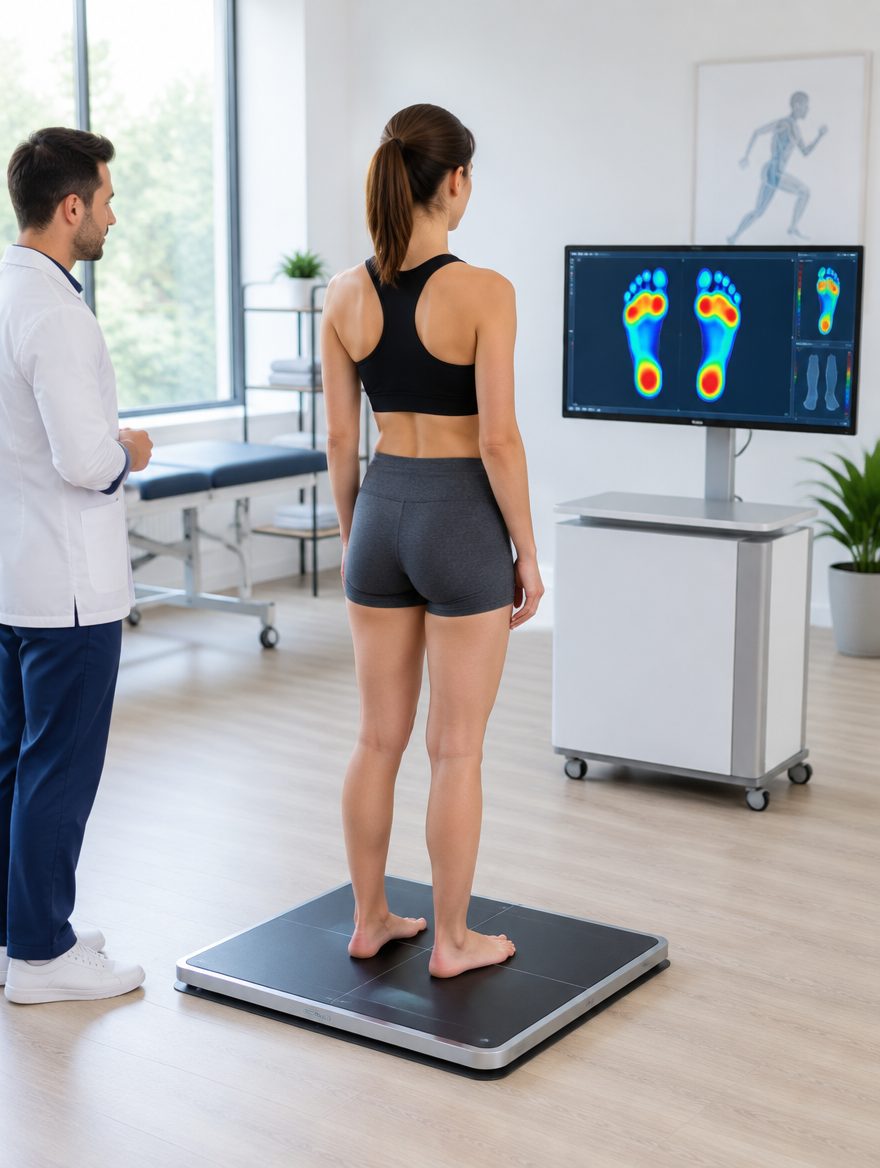
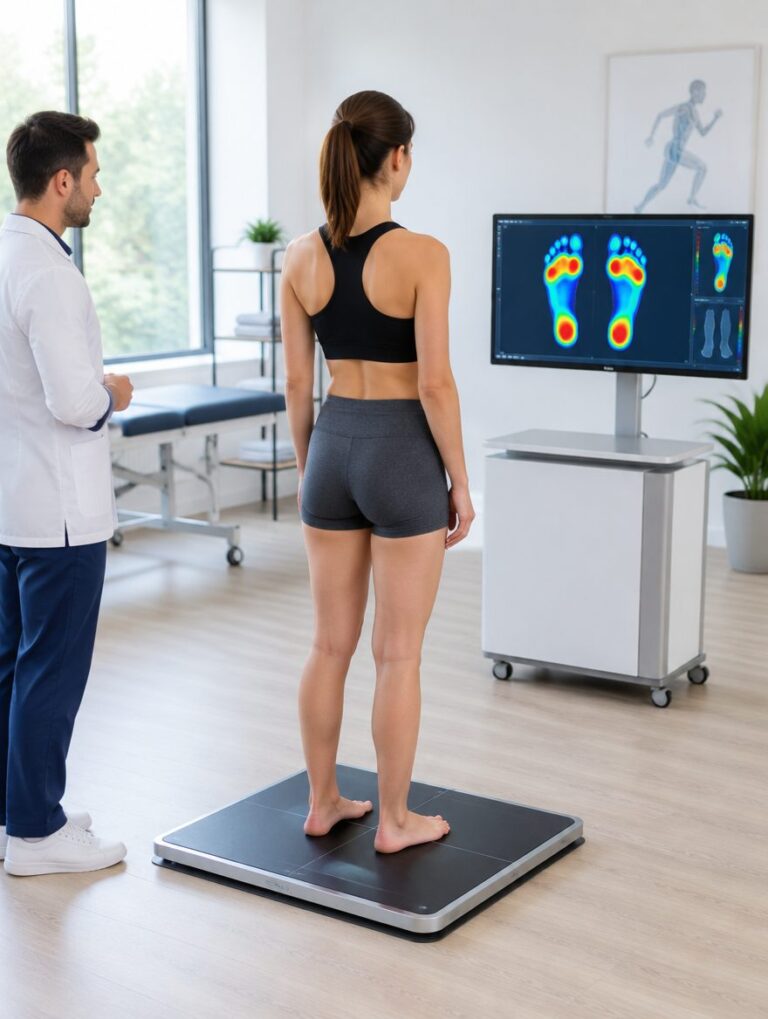
If six to eight weeks of consistent stretching has not changed the heel, the tissue has usually stopped healing on its own or the foot mechanics keep re-injuring it. Your first visit is measurement: a conversation, a hands-on exam of the foot, ankle, calf and hip, a GaitScan foot pressure analysis, and imaging only when indicated. Visit two is your full report of findings and plan.
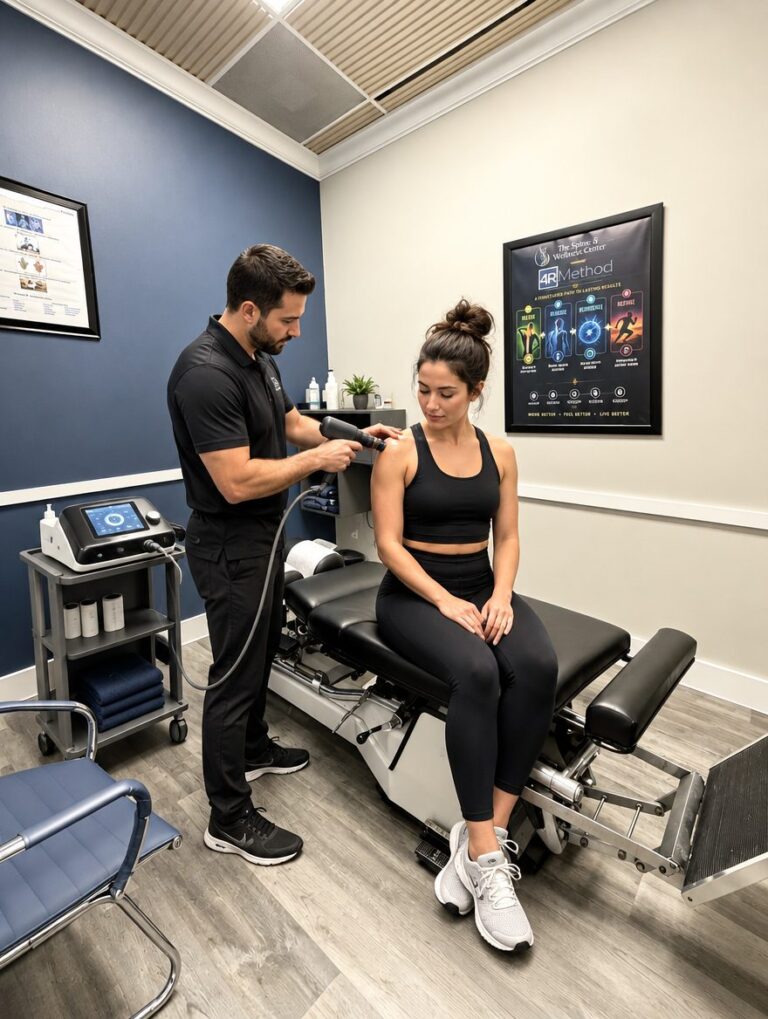
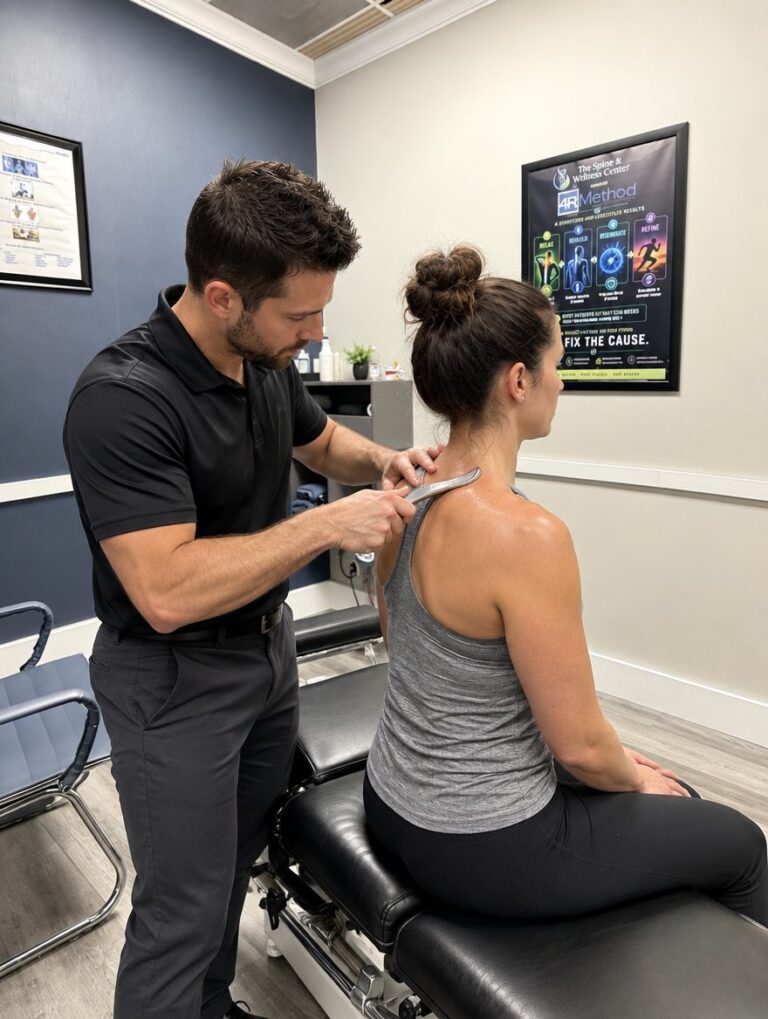
Care follows the 4R Method. Repair (2–3 visits a week for 4–6 weeks) calms the tissue and restarts healing with Graston Technique along the fascia and calf, cold laser, and for stubborn cases acoustic shockwave therapy, which has strong evidence for chronic plantar fasciitis. Rebuild (2 visits a week for 6–8 weeks) strengthens the foot, calf and hip and corrects the mechanics — custom orthotics when the GaitScan shows over-pronation. Regenerate and Refine keep it. Athletes fold this into a structured return to sport. The full program is on our plantar fasciitis treatment page.
Plantar fasciitis treatment
Graston, laser, shockwave, orthotics and strengthening for heel pain that has stalled.
Learn moreGaitScan analysis
Digital foot pressure mapping to find the mechanical cause.
Learn moreAcoustic shockwave therapy
For chronic plantar fasciitis that has stopped responding to stretching.
Learn moreGraston Technique
Instrument-assisted soft-tissue work along the fascia and calf.
Learn moreServing heel pain patients across North Broward
Our clinic at 5675 Coral Ridge Drive, Coral Springs, FL 33076 serves Coral Springs, Parkland, Coconut Creek, Margate, Boca Raton, Tamarac, Pompano Beach and Deerfield Beach. Same-day appointments are usually available — call (954) 341-2256 or book online. Most patients from Parkland and Coral Springs are here in under 15 minutes.
Medically reviewed by Dr. Jared Cohen, DC — Co-Founder & Clinical Director, The Spine and Wellness Center. Last reviewed October 2026.
Frequently asked questions
How long do plantar fasciitis stretches take to work?
Most people notice less morning pain within two to three weeks of daily stretching and feel substantially better by six to eight weeks, provided they also wear supportive shoes and do not spike their activity. Chronic cases that have lasted many months can take longer and often need in-office care such as Graston, laser or shockwave to restart healing.
Should I stretch plantar fasciitis every day?
Yes. The fascia shortens every night and with every long sit, so the towel stretch and calf stretch before the first steps of the day are the most important ones. Repeat the full set two or three times through the day. Daily consistency matters more than how hard you stretch.
Is walking good or bad for plantar fasciitis?
Moderate walking in supportive shoes is fine and keeps the tissue moving. What aggravates it is a sudden jump in volume, long hours standing on hard floors, and walking barefoot on tile. Build mileage gradually, and stop if the heel pain is sharper the next morning.
Do I need orthotics for plantar fasciitis?
Not everyone, but a foot that over-pronates or has a collapsed arch keeps re-straining the fascia no matter how well you stretch. A GaitScan shows how your foot loads through each step, and when it points to a mechanical cause, custom orthotics are often what makes the improvement last.
Same-day appointments
Reading about it is step one.
Step two is a measurement. Visit one we measure — and usually begin care; visit two you get your full findings and plan.
- Same-day appointments are usually available
- Our team calls you back to confirm your visit
- Coral Springs, serving Parkland & North Broward since 2005
Prefer to talk now? Call or text (954) 341-2256