
Conditions · Coral Springs & Parkland
Plantar fasciitis treatment in Coral Springs
That stabbing heel pain with your first steps in the morning has a cause — an overloaded band of tissue under your arch and the mechanics that keep overloading it. We treat both, so the heel heals and stays healed.
Quick answer
Plantar fasciitis treatment works best when it calms the inflamed fascia and corrects what overloaded it. We use acoustic shockwave and cold laser for the irritated tissue, Graston for the thickened fascia and tight calf, foot and ankle adjustments, and a GaitScan pressure-plate analysis to decide whether custom orthotics are needed — all inside the 4R Method. Most patients feel meaningful relief within several weeks; stubborn cases take longer.
What is plantar fasciitis, and why does the first step hurt most?
Plantar fasciitis treatment starts under the arch. The plantar fascia is a thick band of connective tissue that runs from the heel bone to the base of the toes and supports the arch with every step. When it is overworked — by tight calves, flat feet or high arches, long hours on hard floors, a sudden jump in running or walking, worn shoes or extra body weight — it develops tiny tears where it attaches to the heel, and that attachment becomes inflamed and thickened.
The first-step pain is the signature. Overnight, the fascia tightens and partially heals in a shortened position. Those first morning steps suddenly stretch it, re-tearing the healing tissue and producing the classic stabbing heel pain — which usually eases after a few minutes of walking and returns after you sit for a while.
Too often people are told to rest, take anti-inflammatories and wait it out, and the problem lingers for months. Our plantar fasciitis treatment in Coral Springs is more active: we pinpoint what is overloading your fascia and treat the inflammation and the mechanics together, without injections or surgery.

Is it plantar fasciitis or something else? How to tell
- Plantar fasciitis: sharp pain on the underside of the heel, toward the inside, worst with the first steps in the morning or after sitting; tender when you press the front edge of the heel bone. Learn more about the condition itself on our plantar fasciitis overview.
- Heel spur: a bony growth seen on X-ray in many people with — and without — plantar fasciitis. According to the American Academy of Orthopaedic Surgeons, the spur is usually not the cause of pain and does not need to be removed for the pain to resolve (AAOS OrthoInfo, Plantar Fasciitis and Bone Spurs).
- Achilles tendinopathy: pain at the back of the heel or above it, worse pushing off or climbing stairs.
- Fat pad atrophy: a deep, bruised ache in the center of the heel, worse on hard floors, more common after 50.
- Tarsal tunnel / nerve entrapment: burning, tingling or numbness in the sole, sometimes worse at night.
- Referred from the back: heel or sole pain with tingling that follows the S1 nerve — see sciatica treatment.
Good to know
Pain that is worst with the first step and eases with walking is plantar fasciitis until proven otherwise. Pain that gets worse the longer you walk points elsewhere — and the exam sorts it out.
Why GaitScan and orthotics are part of plantar fasciitis treatment
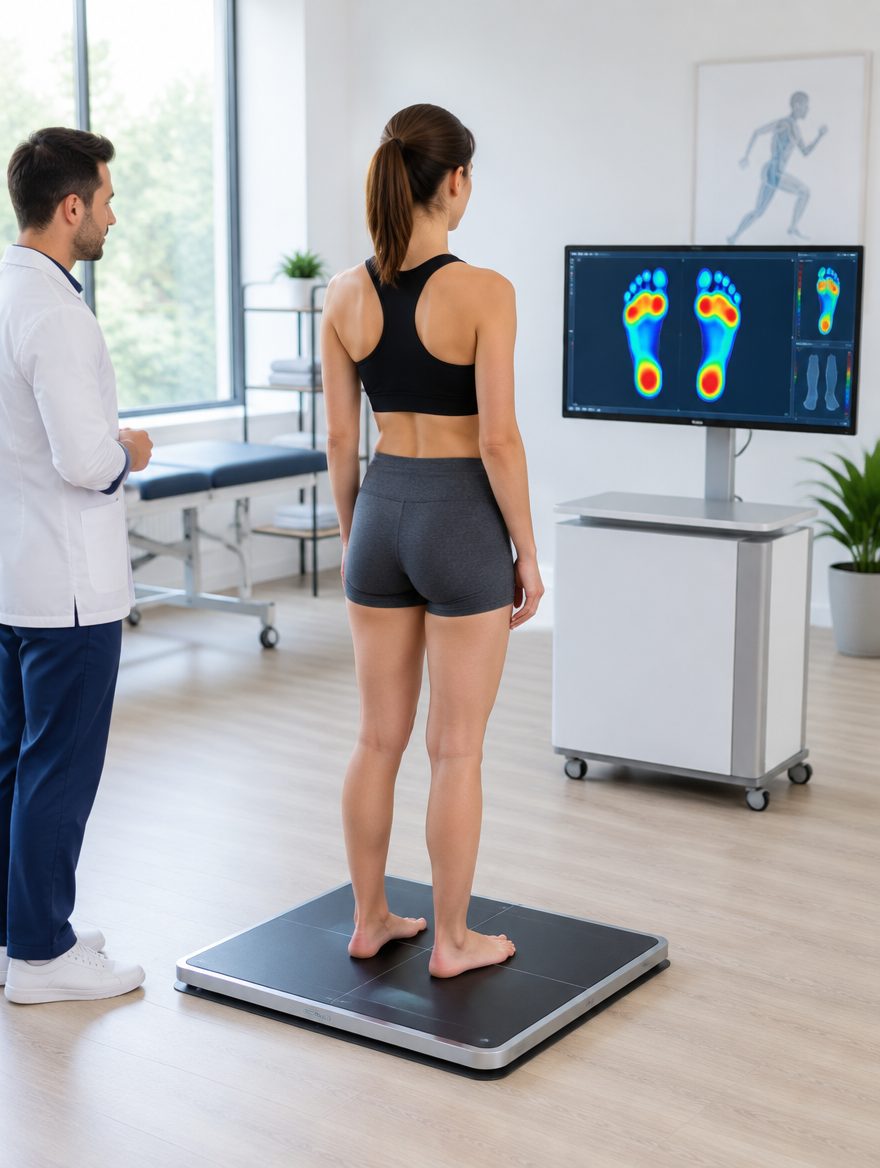
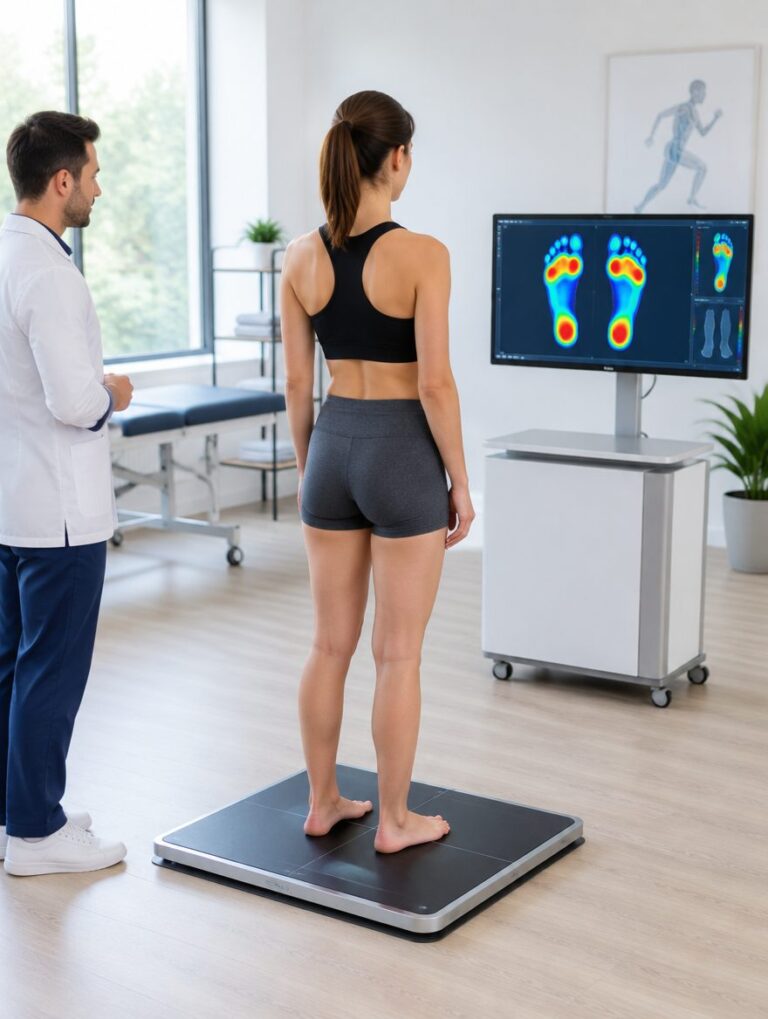
The fascia is overloaded for a mechanical reason, and until that reason changes, the heel keeps getting re-injured. GaitScan is a digital pressure-plate analysis that records how your foot loads through each step — arch collapse, how long the foot stays pronated, left-right asymmetry, and where the pressure peaks.
When the scan shows the arch collapsing or the foot staying pronated too long, custom orthotics built from that data unload the fascia with every step — thousands of times a day, which no treatment session can match. When the scan is normal, we skip orthotics and focus on the calf, the ankle and the training load. Either way, the decision is based on measurement rather than guesswork.
How we approach plantar fasciitis treatment with the 4R Method
Our plantar fasciitis treatment follows the 4R Method — Repair, Rebuild, Regenerate, Refine — because calming the heel without fixing the loading is temporary by design.
R1 · Repair — calm the fascia
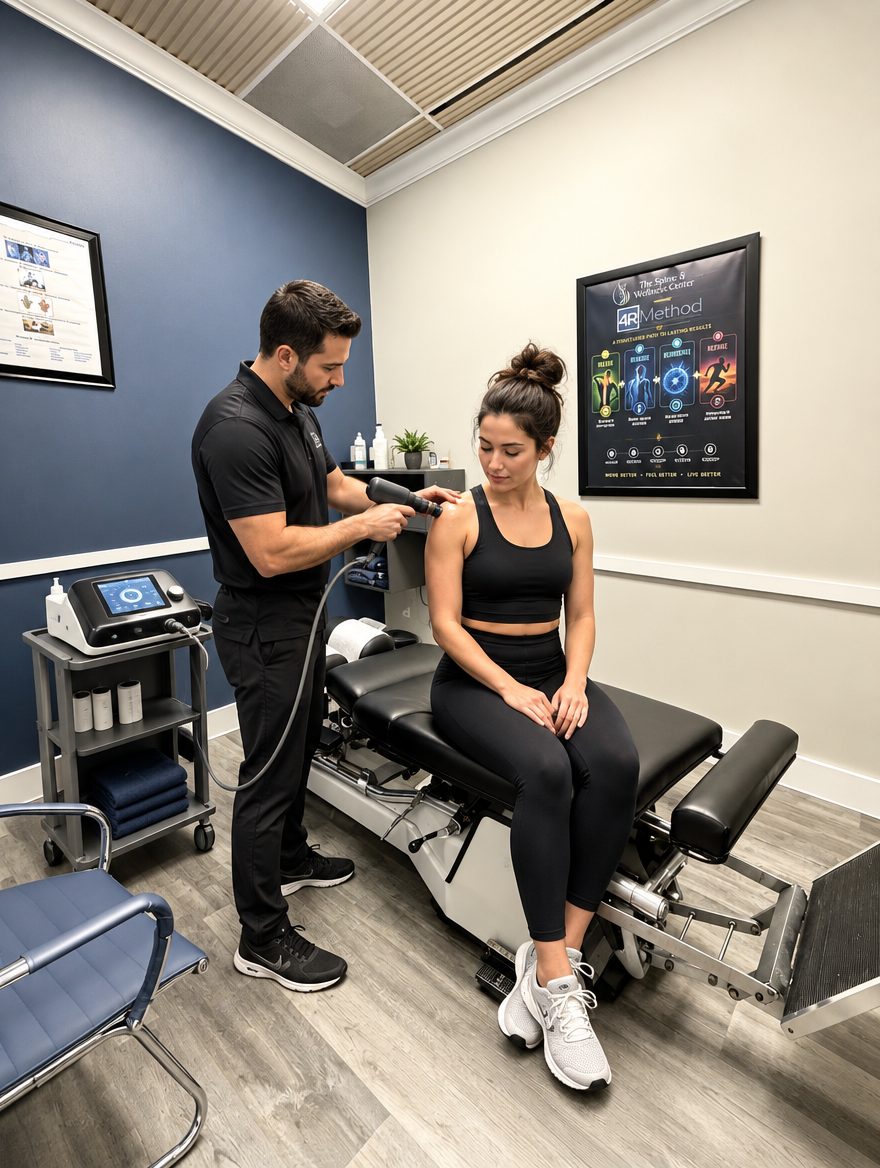
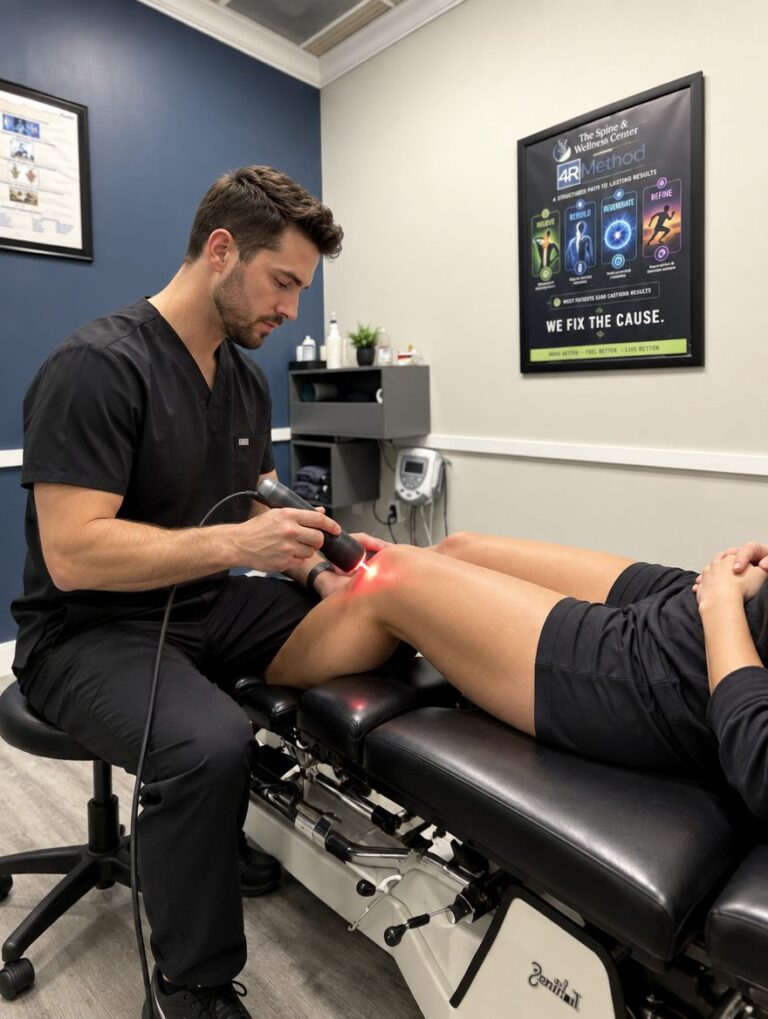
Acoustic shockwave therapy to restart healing in chronically inflamed heel tissue, cold laser for inflammation, Graston Technique to break down the thickened fascia and release the calf, and gentle foot and ankle adjustments to restore motion in the heel and midfoot. Typically 2–3 visits a week for 4–8 weeks; many patients feel the morning pain easing within several visits.
R2 · Rebuild — unload the arch for good
GaitScan-guided orthotics where the scan calls for them, physical therapy for calf flexibility and the small muscles that support the arch, strengthening up the chain into the hips, and footwear and training-load guidance. Usually 2 visits a week for 8–12 weeks.
R3 and R4 · Regenerate and Refine
Red light and PEMF support tissue repair in the slow-healing fascia, and a brief tune-up every month or two — plus a replacement orthotic when the old pair wears out — keeps the heel quiet.
Acoustic shockwave therapy
Focused sound waves that stimulate blood flow and healing in chronic heel tissue.
Learn moreGraston Technique
Instrument-assisted soft-tissue work for the thickened fascia and tight calf.
Learn moreGaitScan analysis
Pressure-plate gait analysis that decides whether custom orthotics are needed.
Learn moreCold laser therapy
Painless low-level laser that calms the inflamed heel attachment.
Learn moreWhat to expect at your first two visits
Visit one — we measure (and usually begin care)
- A real conversation. When the heel pain started, your shoes, your floors, your mileage, and what you have tried.
- A hands-on structural exam. Palpation of the heel and fascia, calf and ankle flexibility, foot and ankle joint motion, arch type, and a screen of the knees, hips and low back, because the foot is the bottom of a chain.
- GaitScan and surface EMG. A pressure-plate analysis of how you load each foot, plus a painless scan of the low back and pelvis to see whether the chain above is contributing.
- Digital X-rays when indicated. To rule out a stress fracture and document any spur.
Visit two — your findings and your plan
We show you the gait data, explain whether orthotics are warranted, and map the four phases of the 4R Method to a realistic timeline. Your full plan starts here — and in most cases care already began on visit one.
Plantar fasciitis care at home: what helps and what makes it worse
- Stretch the calf and the fascia before the first step. Pull the toes back toward the shin for 30 seconds before getting out of bed, then a wall calf stretch.
- Roll the arch on a frozen water bottle for five minutes after activity.
- Never go barefoot on tile while the heel is healing — supportive shoes or sandals from the first step, including at home.
- Replace worn shoes. Running shoes lose their support after roughly 300–500 miles.
- Build mileage slowly. No more than a 10% increase in walking or running volume per week.
- Skip the cortisone as a first step. Repeated injections can weaken the fascia; we reserve referral for cases that fail a full conservative program.
Please see a doctor or urgent care today if the heel pain followed a specific injury and you cannot bear weight, if there is redness, warmth and fever, or if there is numbness spreading through the foot. For the everyday plantar fasciitis pattern — the first-step stab, the limp after sitting — plantar fasciitis treatment without injections is what we do in Coral Springs and Parkland. Runners and court athletes can also read our sports injury rehab guide.
Serving plantar fasciitis patients across North Broward
Our clinic at 5675 Coral Ridge Drive, Coral Springs, FL 33076 serves Coral Springs, Parkland, Coconut Creek, Margate, Boca Raton, Tamarac, Pompano Beach and Deerfield Beach. Same-day appointments are usually available — call (954) 341-2256 or book online. Most patients from Parkland and Coral Springs are here in under 15 minutes.
Medically reviewed by Dr. Jared Cohen, DC — Co-Founder & Clinical Director, The Spine and Wellness Center. Last reviewed October 2026.
Frequently asked questions
What causes plantar fasciitis?
Plantar fasciitis develops when the fascia along the bottom of the foot is overloaded and develops small tears and inflammation at the heel. Common drivers are tight calves, flat feet or high arches, long hours on hard floors, sudden increases in running or walking, worn-out shoes and extra body weight. We identify your specific drivers before treating.
How do you treat plantar fasciitis without injections or surgery?
We combine acoustic shockwave, cold laser, Graston soft-tissue work, gentle foot and ankle adjustments and calf rehab into one plan, and use GaitScan to decide whether custom orthotics are needed. The goal is to calm the fascia and correct the mechanics that keep re-injuring it.
Why does my heel hurt most with my first steps in the morning?
Overnight, the plantar fascia tightens and partially heals in a shortened position. The first steps suddenly stretch it, re-irritating the tissue and producing the stabbing heel pain. The same thing happens after sitting for a long time, which is why stretching before you stand helps.
Does shockwave therapy work for plantar fasciitis?
Acoustic shockwave is one of the best-supported non-surgical treatments for chronic plantar fasciitis that has not responded to stretching and rest. Focused sound waves stimulate blood flow and restart the healing response in the fascia. Sessions are brief and most patients tolerate them well.
Do I need orthotics for plantar fasciitis?
Only if your gait calls for them. GaitScan shows whether your arch collapses or your foot stays pronated too long; when it does, custom orthotics unload the fascia with every step. When the scan is normal, we focus on the calf, ankle and training load instead.
How long does plantar fasciitis treatment take?
Many patients feel meaningful relief within the first several visits, though plantar fasciitis can be stubborn, and cases that have lasted months take longer. After the exam and GaitScan, we map out a realistic timeline rather than a guess.
Do you treat plantar fasciitis for patients from Parkland and Coconut Creek?
Yes. Our clinic on Coral Ridge Drive in Coral Springs is minutes from Parkland, Coconut Creek, Margate and Tamarac, and same-day appointments are usually available for new heel pain patients.
Same-day appointments
Let's build your plan.
Find out what's actually going on and get a clear path forward. Same-day appointments available.
- Same-day appointments are usually available
- Our team calls you back to confirm your visit
- Coral Springs, serving Parkland & North Broward since 2005
Prefer to talk now? Call or text (954) 341-2256