
Conditions · Coral Springs & Parkland
Plantar fasciitis: what it is and why your heel hurts
A short, plain-English guide to the most common cause of heel pain — what is happening under your arch, how to tell it apart from other heel problems, and where to start.
Quick answer
Plantar fasciitis is inflammation and micro-tearing of the plantar fascia, the thick band of tissue that runs from the heel to the toes and supports the arch. It causes sharp heel pain with the first steps in the morning that eases with walking. It is driven by tight calves, foot mechanics, footwear and training load, and most cases resolve with conservative care that treats both the inflammation and the cause.
What is plantar fasciitis?
Plantar fasciitis is the most common cause of heel pain in adults. The plantar fascia is a thick, rope-like band of connective tissue that runs along the sole of the foot from the heel bone to the base of the toes. It acts like a bowstring, holding up the arch and storing energy with each step.
When the fascia is loaded harder or more often than it can repair, tiny tears form where it attaches to the heel. The attachment becomes inflamed and thickened, and every step that stretches it hurts. The American Academy of Orthopaedic Surgeons notes that it affects roughly one in ten people at some point and that the heel spur often seen on X-ray is usually not the source of the pain (AAOS OrthoInfo).

What does it feel like?
- Sharp, stabbing pain under the heel, usually toward the inside edge, with the first steps in the morning.
- Eases after a few minutes of walking, then returns after you sit for a while or at the end of a long day on your feet.
- Tender to press at the front edge of the heel bone.
- Worse barefoot on tile, on hard floors, and after a sudden increase in walking or running.
- Usually one foot, though both can be affected.
Pain that gets worse the longer you walk, burning or tingling in the sole, or pain at the back of the heel point to other problems — Achilles tendinopathy, nerve entrapment, fat pad atrophy or a stress fracture — which is why a hands-on exam comes before any treatment.
What causes the heel pain?
This is an overload problem, and the overload usually has several sources at once:
- Tight calves and a short Achilles tendon, which pull on the heel and strain the fascia with every step.
- Foot mechanics — flat feet that let the arch collapse, or high rigid arches that do not absorb shock.
- Long hours standing on hard surfaces — nurses, teachers, retail and restaurant staff.
- Sudden jumps in activity — a new running program, a walking challenge, a week of theme parks.
- Worn-out or unsupportive footwear, including flip-flops and going barefoot at home.
- Extra body weight, which adds load to the arch with every step.
- Problems up the chain — hip weakness or an uneven stride that loads one foot more than the other.
Good to know
Because the condition is caused by loading, treating the heel alone rarely lasts. The calf, the gait and the shoes have to change too.
How is it treated?
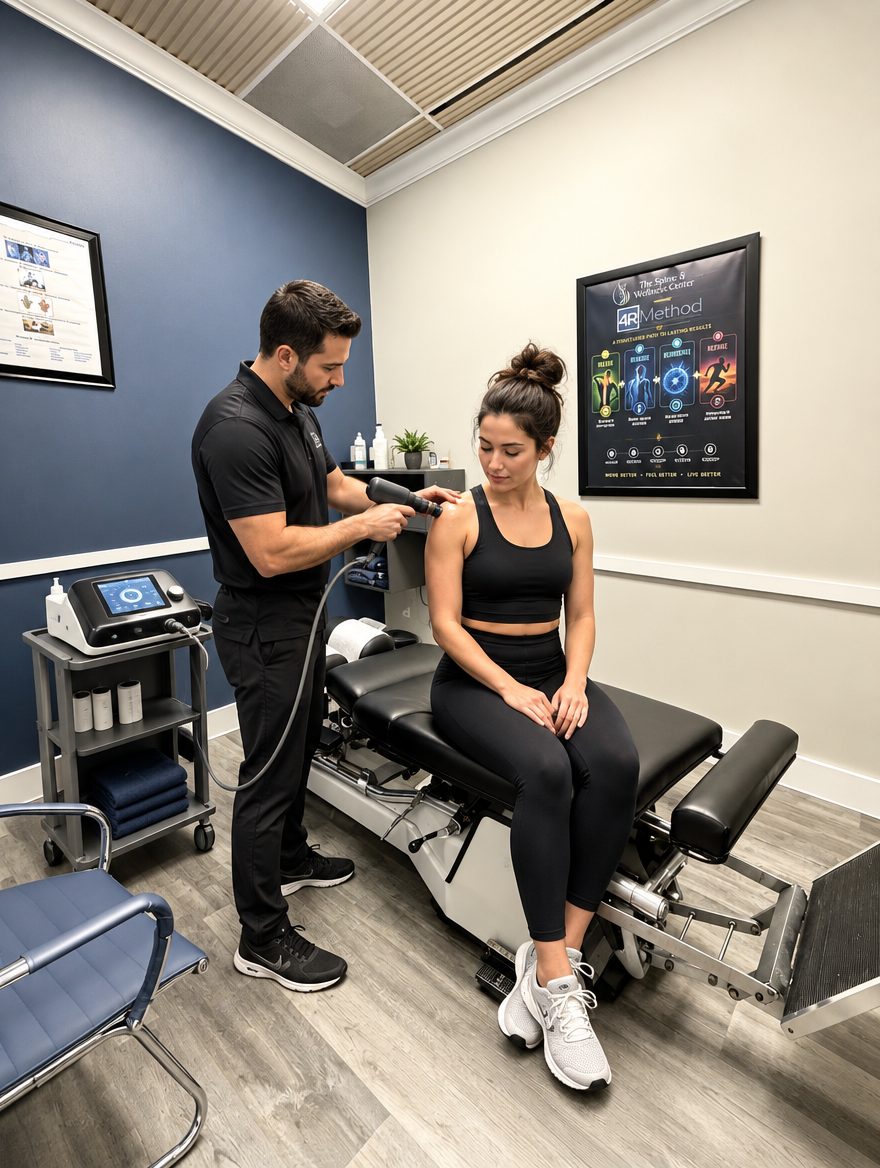
Most cases resolve with conservative care, and surgery is rarely needed. At The Spine and Wellness Center in Coral Springs we treat the inflamed fascia and the mechanics that overloaded it together, inside the 4R Method:
- Calm the tissue with acoustic shockwave and cold laser.
- Release the fascia and calf with Graston Technique and gentle foot and ankle adjustments.
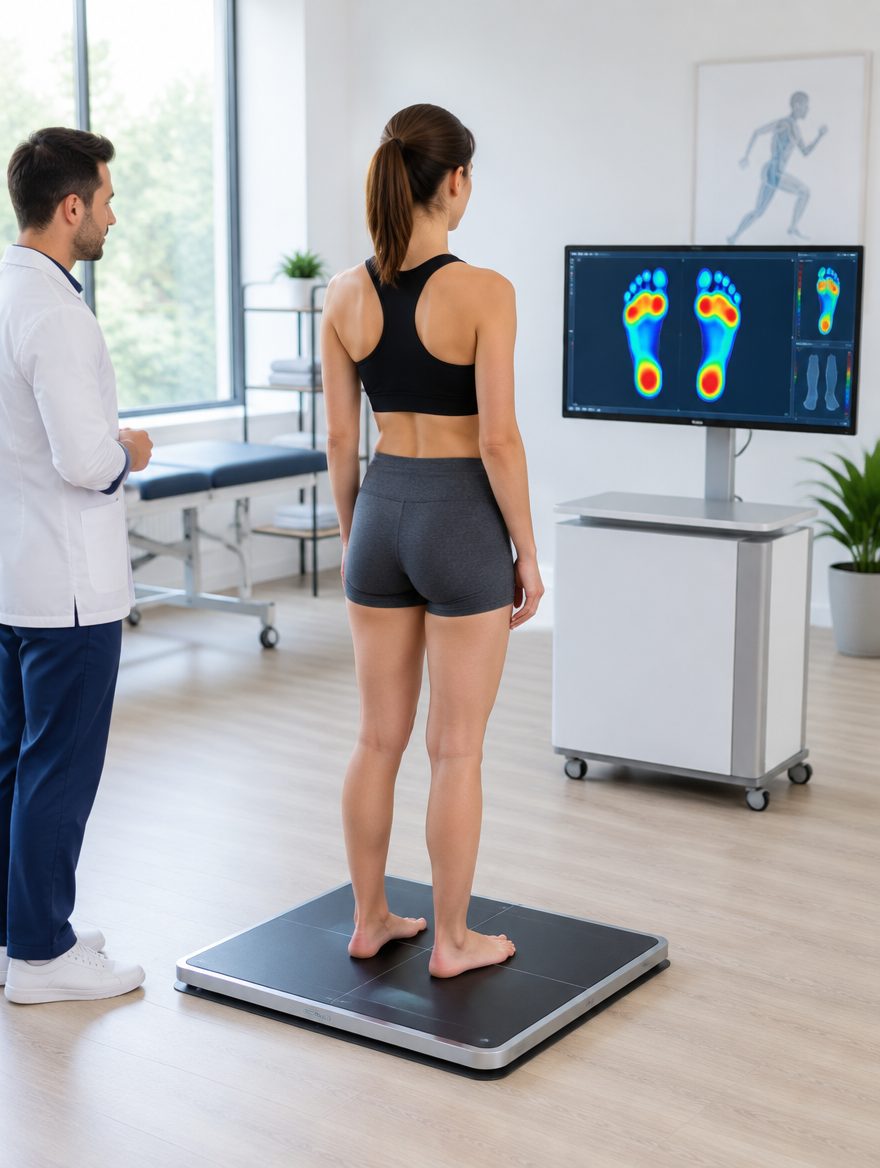
- Measure the gait with GaitScan and fit custom orthotics only when the data calls for them.
- Rebuild calf flexibility and arch and hip strength with physical therapy.
The full program, visit-by-visit expectations and home care are on our plantar fasciitis treatment page. Many patients feel meaningful relief within several weeks; cases that have lasted months take longer.
What can I do at home right now?
- Stretch before the first step. Pull the toes back toward the shin for 30 seconds before getting out of bed.
- Stretch the calf against a wall, knee straight and then bent, twice a day.
- Roll the arch on a frozen water bottle for five minutes after activity.
- Wear supportive shoes from the first step, including at home — no barefoot on tile.
- Cut activity back, not off: swap running for cycling or swimming while the heel calms.
Please see a doctor or urgent care today if the heel pain followed a specific injury and you cannot bear weight, or if there is redness, warmth and fever. For everyday plantar fasciitis in Coral Springs and Parkland, start with the treatment page or the 60-second assessment. Related reading: hip pain treatment and knee pain treatment.
Serving heel pain patients across North Broward
Our clinic at 5675 Coral Ridge Drive, Coral Springs, FL 33076 serves Coral Springs, Parkland, Coconut Creek, Margate, Boca Raton, Tamarac, Pompano Beach and Deerfield Beach. Same-day appointments are usually available — call (954) 341-2256 or book online. Most patients from Parkland and Coral Springs are here in under 15 minutes.
Medically reviewed by Dr. Jared Cohen, DC — Co-Founder & Clinical Director, The Spine and Wellness Center. Last reviewed October 2026.
Frequently asked questions
Is plantar fasciitis the same as a heel spur?
No. A heel spur is a bony growth seen on X-ray in many people with and without heel pain. The pain comes from the inflamed fascia attachment, not the spur, and the spur does not need to be removed for the pain to resolve.
How long does the heel pain last?
Untreated, it often lingers for many months. With care that addresses both the inflamed tissue and the mechanics overloading it, many people feel meaningful relief within several weeks, though long-standing cases take longer.
Can I keep running with heel pain?
Usually you should reduce rather than stop. Cutting mileage, avoiding hard surfaces and swapping some runs for cycling or swimming lets the fascia calm while you keep your fitness. We set a return-to-running plan once the heel is improving.
Do I need an X-ray or MRI for heel pain?
Usually not. The diagnosis is made from your history and a hands-on exam. X-rays are used when a stress fracture is possible, and MRI is reserved for cases that do not respond to a full conservative program.
Who treats plantar fasciitis in Coral Springs?
The Spine and Wellness Center on Coral Ridge Drive treats it with shockwave, cold laser, Graston, foot and ankle adjustments, GaitScan-guided orthotics and rehab, and is minutes from Parkland, Coconut Creek and Margate. Same-day appointments are usually available.
Same-day appointments
Let's build your plan.
Find out what's actually going on and get a clear path forward. Same-day appointments available.