
Treatments & Technology · 6 min read
Red Light Therapy Benefits, Explained
How red and near-infrared light work at the cellular level, and the evidence-based benefits for pain, inflammation, recovery and skin — offered in Coral Springs.

Quick answer
Red light therapy benefits come from photobiomodulation: red and near-infrared wavelengths are absorbed by the mitochondria, which respond by producing more cellular energy, lowering inflammation and improving circulation. The best-supported benefits are reduced joint and muscle pain, lower inflammation, faster recovery after exercise or injury, and improved skin healing — with no heat, drugs or downtime.
What red light therapy is
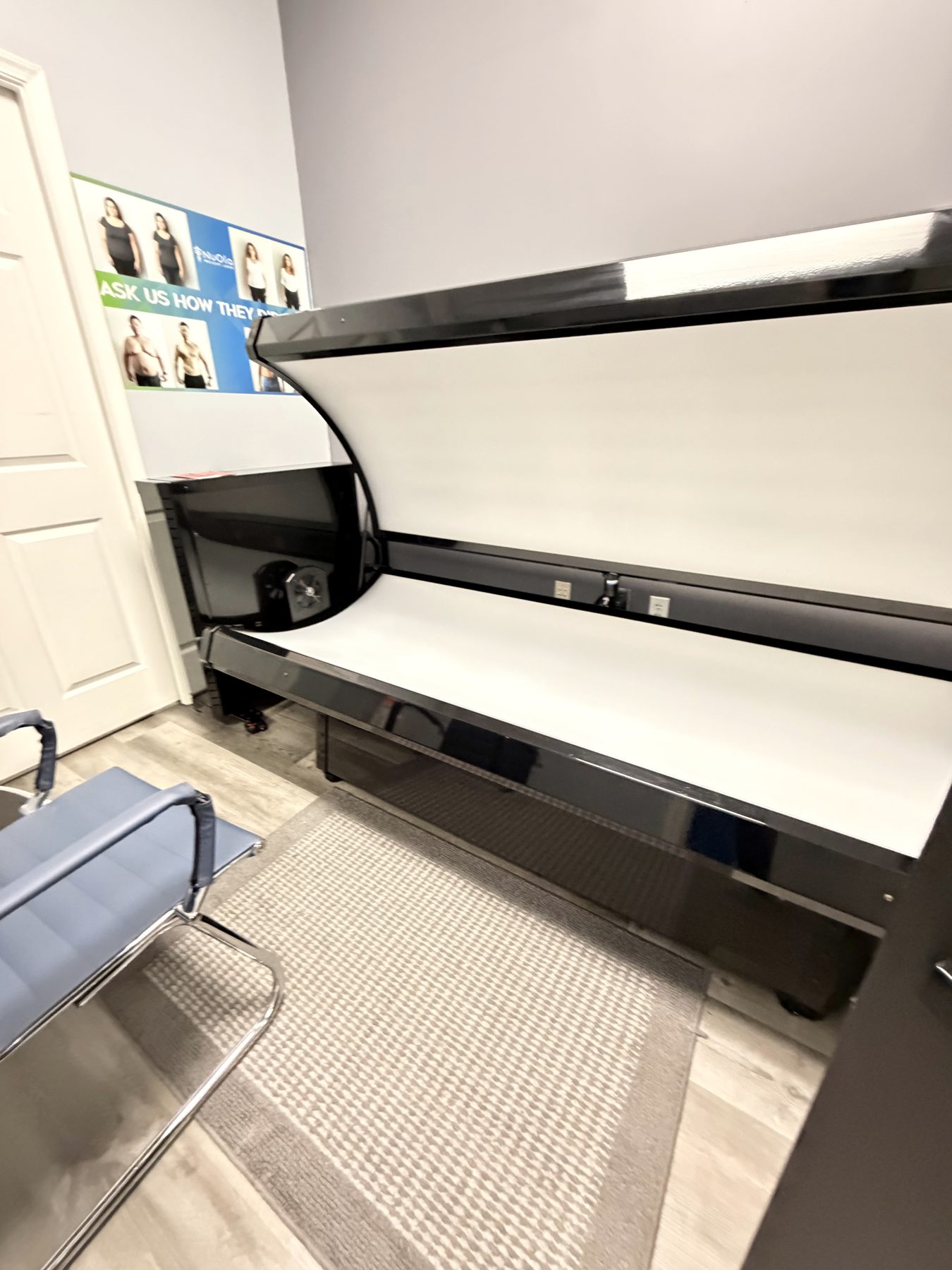
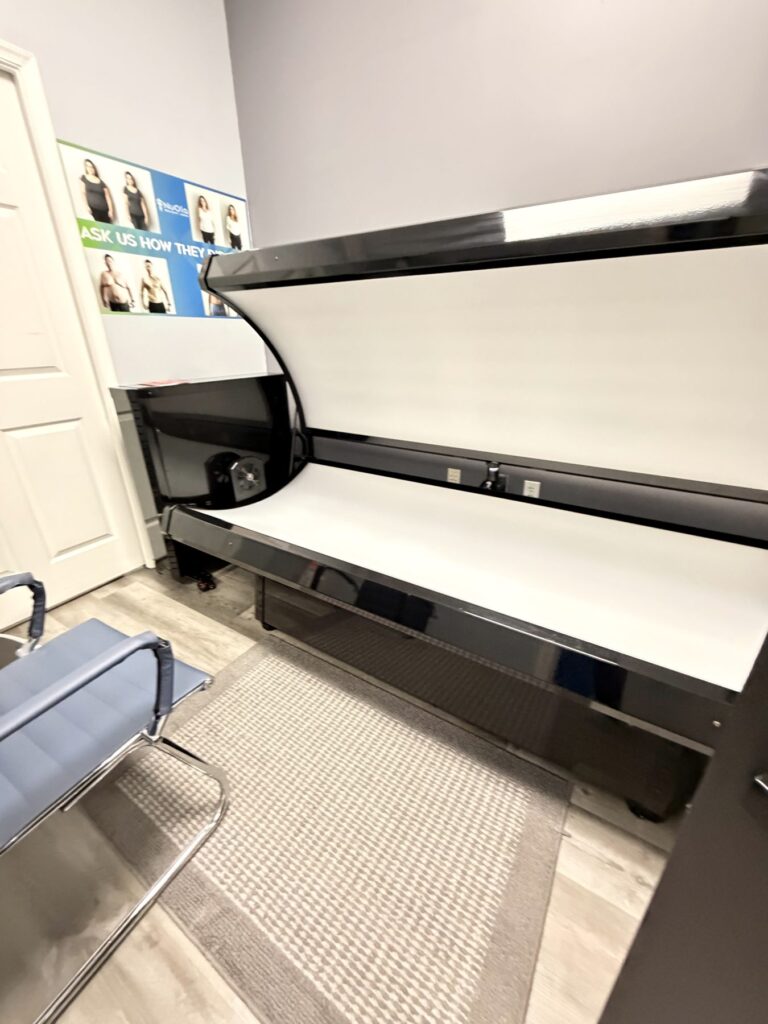
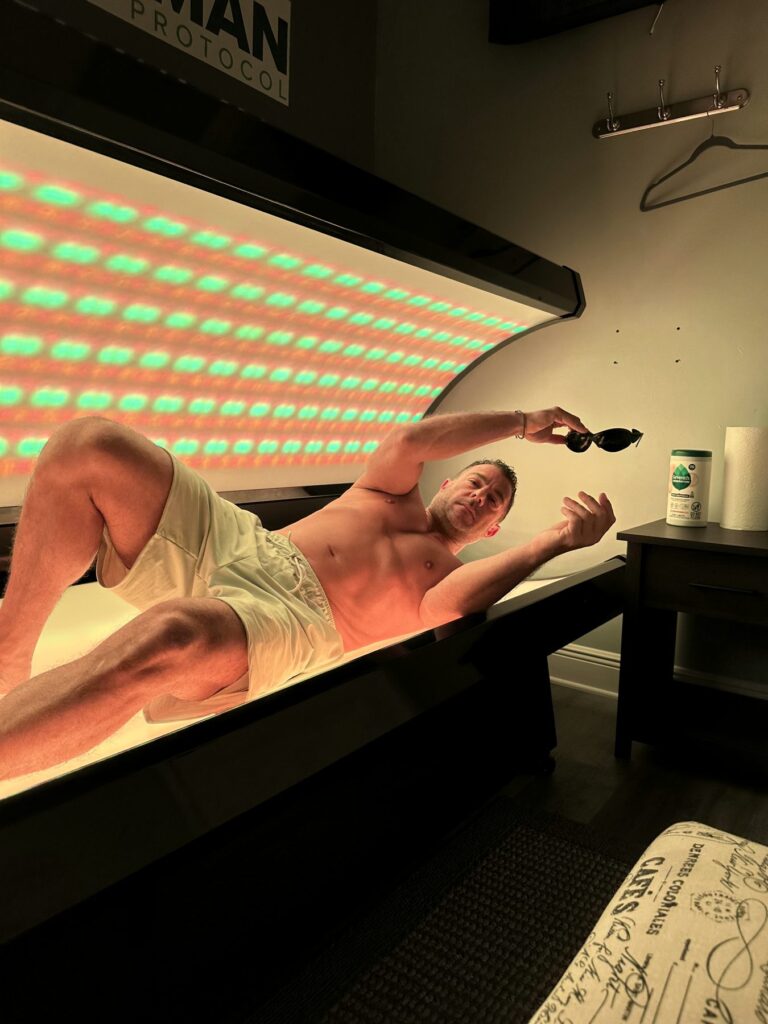
Red light therapy benefits have moved from elite recovery rooms into everyday wellness, and the science behind them is more solid than the hype suggests. Red light therapy, also called photobiomodulation, uses specific wavelengths of red (around 630–670 nm) and near-infrared (around 810–850 nm) light to stimulate the body’s own repair processes. The light is delivered by panels or a full-body bed during a comfortable, painless session.
Unlike a heat lamp or a sauna, it does not work by warming tissue. The light energy is absorbed directly by your cells, where it changes how they produce energy. That is the whole mechanism — and it is why the same treatment is studied for sore knees, slow-healing tendons and skin tone. You can see how we deliver it on our red light therapy page.
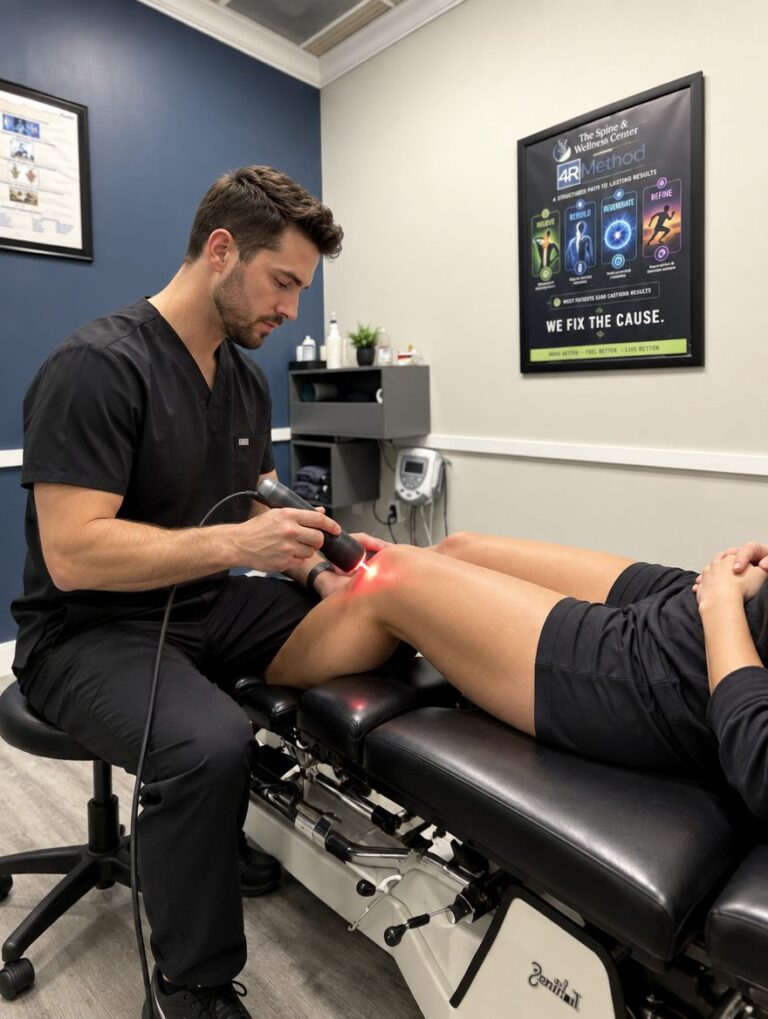
It is also closely related to the cold laser therapy we use on specific joints and tendons: same biology, delivered as a focused beam to a small area rather than broad panels to the whole body. We compare the two in cold laser therapy explained.
How it works at the cellular level
Inside nearly every cell are mitochondria, which produce energy in the form of ATP. An enzyme in the mitochondria called cytochrome c oxidase absorbs red and near-infrared light; when it does, the cell produces ATP more efficiently, releases nitric oxide that widens blood vessels, and dials down the signaling that drives chronic inflammation. More energy and better blood flow mean tissue can repair, inflammation can resolve, and cells can function closer to normal.
Different wavelengths reach different depths. Visible red light works closer to the skin’s surface, which makes it useful for skin healing and tone. Near-infrared light penetrates deeper, reaching muscles, tendons and joints. A full-body bed combines both so a session supports healing at several levels at once. Because the light works with your own biology rather than introducing a drug, it is very well tolerated.
A widely cited review by Michael Hamblin at Harvard, published through the National Library of Medicine, summarizes the anti-inflammatory mechanisms of photobiomodulation and the conditions where the evidence is strongest. That body of research is what we lean on when we tell patients what to expect.

6 proven red light therapy benefits
- Reduced muscle and joint pain. Trials in knee osteoarthritis, neck pain and tendinopathy show meaningful pain reduction, which is why it anchors our red light therapy for pain relief program.
- Lower inflammation and swelling. Photobiomodulation reduces the inflammatory signals that keep an injured joint or a sore back irritated — useful for arthritis flares and the days after an injury.
- Faster recovery after workouts or injury. Studies in athletes show less muscle soreness and quicker strength recovery when light is applied before or after training. Coral Springs and Parkland runners and pickleball players use it between hard sessions.
- Improved skin tone, texture and healing. Red wavelengths stimulate collagen production and speed wound healing — the most consistently demonstrated cosmetic benefit.
- Better circulation and tissue repair. Nitric oxide release widens small blood vessels, delivering oxygen and nutrients where repair is happening.
- Support for body composition goals. Some studies show modest fat-reduction effects when red light is paired with exercise and nutrition; we use it that way in red light therapy for weight loss, never as a standalone fix.
What it is not: a cure, a replacement for correcting the structural problem, or an instant result. Red light therapy benefits accumulate over a series of sessions, and they are most pronounced when the light is part of a plan rather than the plan.
What a session is like, and where it sits in the 4R Method
A full-body session is about 10–20 minutes lying in the bed in light clothing, with eye protection. It feels warm and relaxing; there is no downtime. Targeted sessions on a specific joint take 5–10 minutes. Most protocols run two to three sessions a week for several weeks, then taper to maintenance. Results build over the series rather than arriving after one visit.
In our 4R Method, red light appears in two places. In the Repair phase it is paired with decompression, adjustments or laser to reduce pain and inflammation so the structural work can proceed. In the Regenerate phase (typically 2 sessions a week for 2+ months) it becomes one of the cellular-recovery tools — alongside PEMF and IHHT oxygen therapy — that lift energy, sleep and resilience once the structure is corrected. Many patients keep a session or two a month in Refine.
Red light is well tolerated and safe for most adults. We review medications that increase light sensitivity, avoid treating over active cancers or during pregnancy without physician guidance, and protect the eyes. Your first visit — a conversation, a hands-on exam, surface EMG and thermal scanning, and imaging when indicated — tells us whether red light belongs in your plan and where. Visit two is your full report of findings and plan. For the broader menu of non-drug options, see drug-free pain relief options.
Red light therapy
Full-body photobiomodulation sessions in our Coral Springs office.
Learn moreRed light therapy for pain relief
Targeted protocols for joints, tendons and the spine.
Learn moreRed light therapy for weight loss
Paired with nutrition and exercise as part of a body-composition plan.
Learn moreCold laser therapy
Focused low-level laser for a specific joint or tendon.
Learn moreWho benefits most from red light therapy
- People with arthritis or chronic joint pain who want a drug-free way to lower inflammation
- Athletes and active adults recovering from training or an injury — it pairs well with cryotherapy for recovery
- Patients in the Repair phase of care for back, neck or disc problems, as a complement to decompression and adjustments
- Anyone with slow-healing soft-tissue injuries such as tendinopathy or plantar fasciitis
- People looking for skin healing and tone support without procedures
Key point
Red light therapy is a tool, not a plan. Its benefits are real and well documented, and they are largest when it is used alongside care that corrects the mechanical reason the tissue was hurting in the first place.
Serving red light therapy patients across North Broward
Our clinic at 5675 Coral Ridge Drive, Coral Springs, FL 33076 serves Coral Springs, Parkland, Coconut Creek, Margate, Boca Raton, Tamarac, Pompano Beach and Deerfield Beach. Same-day appointments are usually available — call (954) 341-2256 or book online. Most patients from Parkland and Coral Springs are here in under 15 minutes.
Medically reviewed by Dr. Jared Cohen, DC — Co-Founder & Clinical Director, The Spine and Wellness Center. Last reviewed October 2026.
Frequently asked questions
Does red light therapy actually work?
For the best-studied uses — joint and muscle pain, inflammation, exercise recovery and skin healing — yes, with a growing body of clinical trials behind it. Results depend on using the right wavelengths and doses consistently over a series of sessions. It is not a cure, and it works best as part of a plan that also corrects the underlying problem.
How many red light therapy sessions do I need?
Most protocols run two to three sessions a week for four to eight weeks, then taper to maintenance. Pain and inflammation benefits often appear within the first few weeks; skin and recovery benefits build over the series. Your plan depends on the goal and on what the rest of your care looks like.
Is red light therapy safe?
For most adults, yes. It is non-invasive, produces no significant heat and has no downtime. We protect the eyes, review medications that increase light sensitivity, and avoid treating over active cancers or during pregnancy without physician guidance. Mild, brief redness or warmth is the only common side effect.
What is the difference between red light therapy and cold laser?
Same biology, different delivery. Red light therapy uses panels or a full-body bed to treat large areas with lower intensity. Cold laser delivers a focused beam at higher intensity to a small target such as a tendon or a single joint. We often use both: laser on the specific problem, red light for the whole body.
Same-day appointments
Reading about it is step one.
Step two is a measurement. Visit one we measure — and usually begin care; visit two you get your full findings and plan.
- Same-day appointments are usually available
- Our team calls you back to confirm your visit
- Coral Springs, serving Parkland & North Broward since 2005
Prefer to talk now? Call or text (954) 341-2256