Treatments & Technology · 7 min read
Cold laser therapy explained: how low-level light speeds healing
No heat, no needles, no downtime. Here is what actually happens under the laser, which injuries respond best, and where it fits in a recovery plan.

Quick answer
Cold laser therapy, also called low-level laser therapy or photobiomodulation, delivers red and near-infrared light into injured tissue. The light is absorbed by mitochondria, which raises cell energy, calms inflammation and improves local circulation so tissue repairs faster. A session is painless, takes 5–15 minutes, and most injuries need a short series of visits.
What is cold laser therapy, and why is it called cold?
Cold laser therapy is a treatment that uses low-intensity red and near-infrared light to stimulate healing in injured or inflamed tissue. It is called “cold” because the light is too weak to generate heat, unlike the surgical lasers that cut or cauterize. Nothing is burned, nothing is pierced, and most patients feel nothing at all while the handpiece rests on the skin.
You will also see it written as low-level laser therapy (LLLT) or photobiomodulation. The names describe the same idea: light at specific wavelengths, usually in the 600–1,000 nanometer range, applied at a dose that nudges cells to work harder without damaging them. At The Spine and Wellness Center we have used cold laser therapy since the early years of the practice as part of our Repair-phase toolkit.
Because the light penetrates a few centimeters, it reaches the structures that cause most of the pain we see in Coral Springs and Parkland: tendons, ligaments, joint capsules, muscle and the superficial nerves running between them.
How does low-level laser light speed healing?
The mechanism is cellular. When red or near-infrared light reaches a cell, it is absorbed by an enzyme in the mitochondria called cytochrome c oxidase. That absorption increases production of ATP, the fuel every repair process in the body runs on. More fuel means fibroblasts lay down collagen faster, immune cells clear debris more efficiently, and the injured area moves through the inflammatory stage sooner.
Four things tend to happen at the treated site:
- Inflammation settles. Light exposure lowers the release of inflammatory messengers, which is why swelling and tenderness often ease first.
- Circulation improves. Small blood vessels dilate, bringing oxygen and nutrients in and carrying waste out.
- Pain signaling quiets. Irritated nerve endings become less excitable, so the area hurts less even before it has fully healed.
- Tissue repair accelerates. Collagen production and cell turnover increase, which matters most for tendons and ligaments that normally heal slowly.
A 2017 review of photobiomodulation mechanisms published in AIMS Biophysics describes these anti-inflammatory effects in detail. The honest summary is that the laser is a well-studied, modest-dose tool that supports repair; it does not replace the structural correction the injury may also need.

Which conditions respond best to the laser?
Cold laser therapy works best on soft-tissue injuries and inflamed joints, where the problem is close to the surface and the goal is to calm tissue and speed repair. In our clinic the most common uses are:
- Sprains, strains and sports injuries, including ankle sprains and hamstring pulls
- Tendon problems such as tennis elbow, rotator cuff tendinopathy and Achilles irritation
- Plantar fasciitis and other foot and heel pain
- Inflamed facet joints in the neck and low back
- Nerve irritation from a disc or a pinched nerve, where it eases the inflammation around the nerve root
- Arthritic knees, hands and shoulders during a flare
- Scar tissue and post-surgical healing support, when your surgeon agrees
It is a poor fit on its own for a structural problem. A herniated disc pressing on a nerve needs decompression to take the pressure off; the laser then helps the irritated nerve settle. That pairing, structure first and tissue support alongside, is how we use it most days.
What does a cold laser session feel like?
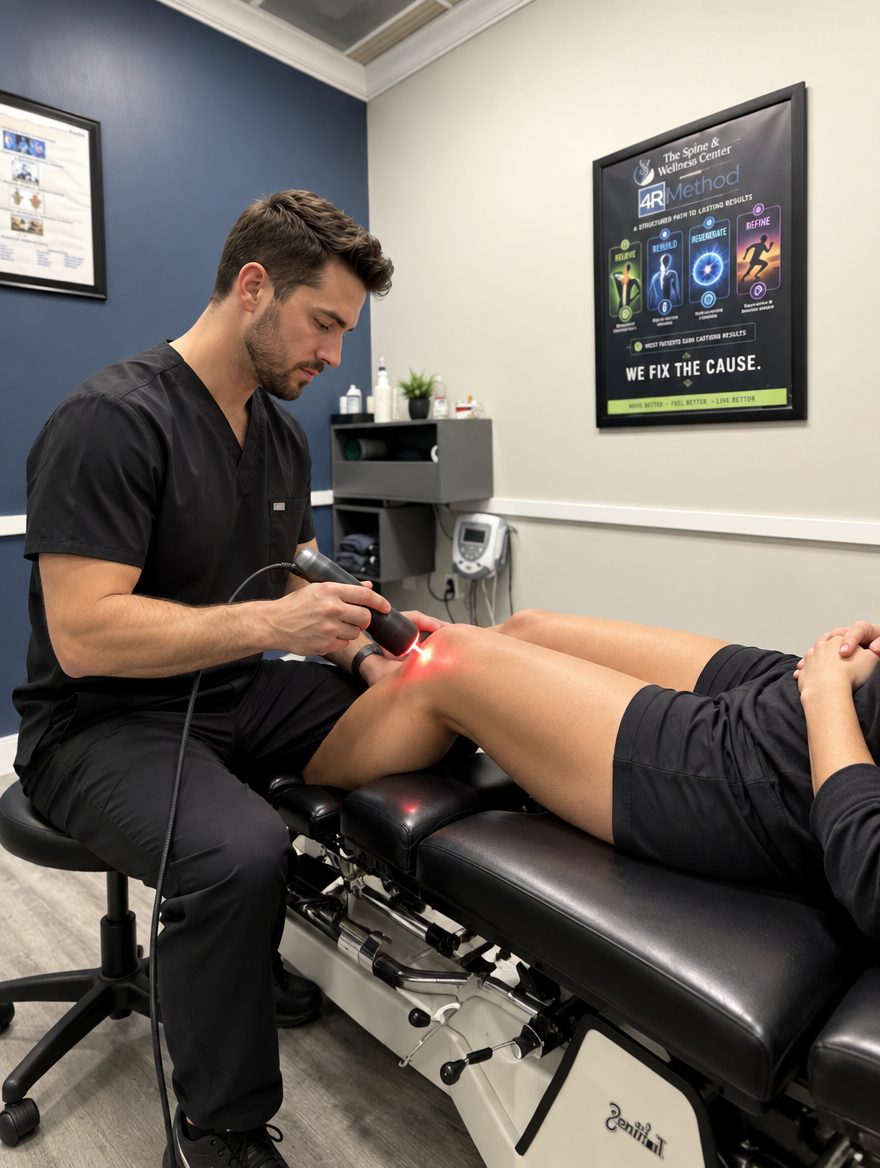
A session is quick and uneventful, which is exactly what patients like about it. You sit or lie comfortably, the area is exposed, and the handpiece is held against the skin or moved slowly over it for roughly 30 seconds to a few minutes per spot. A full session usually takes 5–15 minutes. Most people feel nothing; a few notice faint warmth or a mild tingle.
There are no needles, no medication and no downtime, so you can drive home, go back to work or train the same day. Both you and the clinician wear protective glasses because the beam is bright, not because it burns.
One session rarely finishes the job. Acute injuries typically need 6–12 visits over 2–4 weeks; chronic tendon problems can take longer. We set that number after measuring your injury on visit one and reviewing the findings with you on visit two.
Cold laser vs. red light therapy: what is the difference?
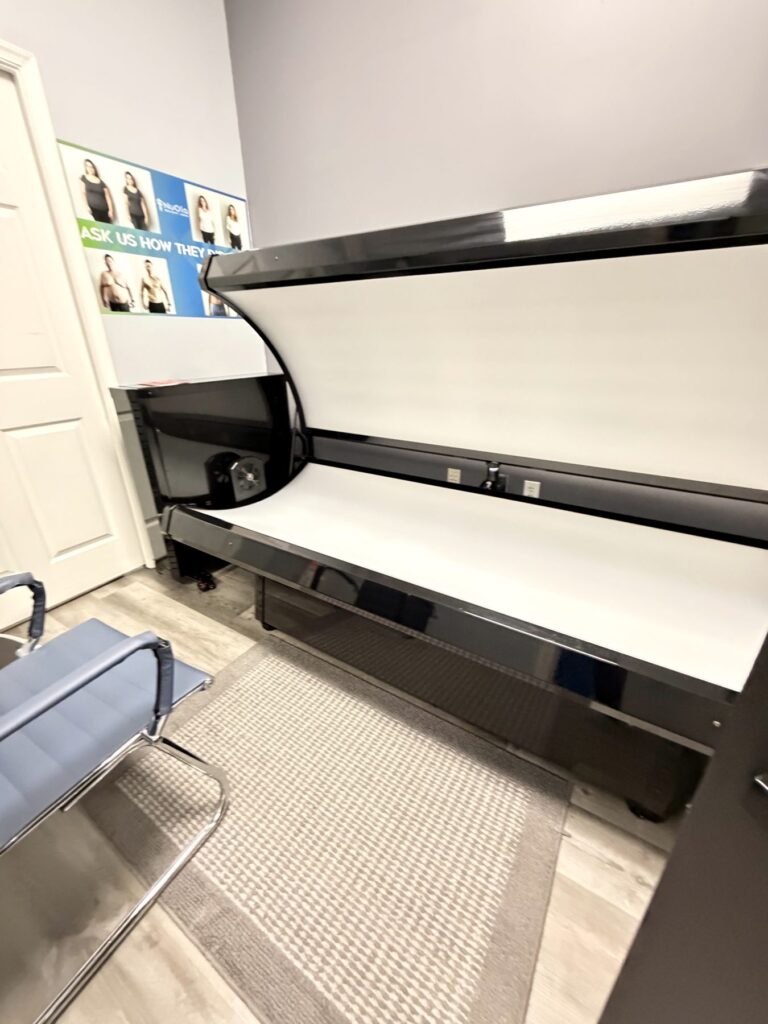
Both use light to energize cells, but they are different tools for different jobs. Cold laser therapy delivers a focused, coherent beam to one specific, often deeper target, which makes it the choice for a particular tendon, joint or nerve. Red light therapy uses broad LED panels over a larger area and suits whole-body recovery, skin and general soreness; we covered that in Red Light Therapy Benefits, Explained.
- Target: laser is pinpoint; red light is wide-area.
- Depth: laser reaches deeper structures; red light is more superficial.
- Best for: laser for a specific injury; red light for recovery, skin and general inflammation.
- Session: laser 5–15 minutes on one site; red light 10–20 minutes over the body.
Many patients in our performance program use both: laser on the injury, red light for the rest of the body. Dr. Cohen decides which fits your case after the exam.
Where cold laser fits in the 4R Method
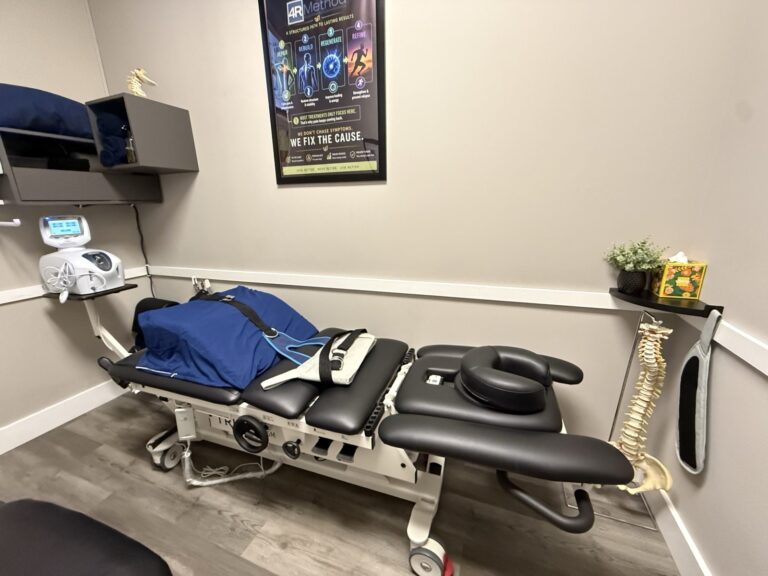
Cold laser therapy lives in the Repair phase of the 4R Method, the first 4–8 weeks when the goal is to calm the injured tissue and take pressure off the structure that caused it. We pair it with chiropractic care, and with decompression when a disc is involved, at 3–5 visits a week early on, tapering as the tissue settles.
Once the pain is under control, the plan moves to Rebuild: physical therapy and strength work so the repaired tissue can handle load again. Laser rarely carries over into that phase except after a flare-up. If you want to see where you are starting from, a spine assessment on visit one measures the injury so progress can be tracked instead of guessed.
For a broader view of medication-free options, read Drug-Free Pain Relief Options That Actually Work, and for athletes, Recovering From a Sports Injury the Right Way.
Is low-level laser safe?
The treatment has an excellent safety record. It is non-invasive, drug-free and does not heat or damage tissue, so side effects are rare and usually limited to brief, mild soreness as circulation increases. It is not used directly over the eyes, over a known cancer, over the abdomen in pregnancy, or on skin treated with photosensitizing medication. We review those points before your first session.
Good to know
Cold laser supports healing; it does not cure the condition underneath. If a joint or disc keeps re-irritating the tissue, the laser calms it only until the next flare. That is why we treat the cause and the tissue together.
Serving cold laser therapy patients across North Broward
Our clinic at 5675 Coral Ridge Drive, Coral Springs, FL 33076 serves Coral Springs, Parkland, Coconut Creek, Margate, Boca Raton, Tamarac, Pompano Beach and Deerfield Beach. Same-day appointments are usually available — call (954) 341-2256 or book online. Most patients from Parkland and Coral Springs are here in under 15 minutes.
Medically reviewed by Dr. Jared Cohen, DC — Co-Founder & Clinical Director, The Spine and Wellness Center. Last reviewed October 2026.
Frequently asked questions
Does cold laser therapy hurt?
No. The treatment is painless. The handpiece rests on the skin for a few minutes per site and most patients feel nothing, occasionally a faint warmth. There are no needles, no medication and no downtime, so you can return to work or training immediately afterward.
How many cold laser sessions will I need?
Most acute soft-tissue injuries respond over 6–12 sessions in 2–4 weeks; chronic tendon problems and nerve irritation can take longer. Dr. Cohen measures the injury on your first visit, reviews the findings and a specific schedule on visit two, and adjusts it as your tissue responds.
Can cold laser therapy help a pinched nerve or disc problem?
It helps the irritated nerve settle, but it does not move the disc. For nerve pain we pair cold laser with non-surgical spinal decompression to take the pressure off the nerve root, then use the laser to calm inflammation around it. Together they usually work better than either alone.
Is cold laser the same as red light therapy?
No. Cold laser uses a focused, coherent beam aimed at one deeper target, such as a tendon or joint. Red light therapy uses broad LED panels over a larger area for general recovery and skin. We often use the laser on the injury and red light for whole-body recovery.

Same-day appointments
Reading about it is step one.
Step two is a measurement. Visit one we measure — and usually begin care; visit two you get your full findings and plan.
- Same-day appointments are usually available
- Our team calls you back to confirm your visit
- Coral Springs, serving Parkland & North Broward since 2005
Prefer to talk now? Call or text (954) 341-2256