
Treatments & Technology · 6 min read
Drug-free pain relief options that actually work
A pill dulls the signal. These seven tools fix the thing sending it. Here is what each one is for, what it is not for, and how we combine them.

Quick answer
The most effective drug-free pain relief treats the cause of the pain rather than the signal. For disc and nerve pain that means non-surgical spinal decompression; for joint restriction, chiropractic adjustments; for inflamed soft tissue, cold laser and shockwave; for recurrence, physical therapy and strength. A plan usually layers two or three of these in sequence.
Why relief has to start with the cause
Drug-free pain relief begins with an honest observation: a pain reliever works by turning down the signal, not by repairing what is sending it. When the dose wears off, the restricted joint, compressed nerve or inflamed tendon is still there, so the pain comes back. Over months that can mean rising doses, side effects and a problem that has quietly progressed.
Medication has a place. A short course can get you through the worst days, and we never tell patients to stop something their physician prescribed. But at The Spine and Wellness Center in Coral Springs the plan is built so you need less over time, not more. That is only possible when the first step is a measurement, not a prescription.
Visit one is that measurement: a conversation, a hands-on structural exam, surface EMG and thermal scanning, and digital X-rays when they are indicated. Visit two is the report of findings and the plan. Everything below is chosen from that plan, not from a menu.
The 7 drug-free pain relief options we use most
No single tool handles every kind of pain. Each of these fixes a specific problem, and the order they are used in matters as much as the tools themselves.
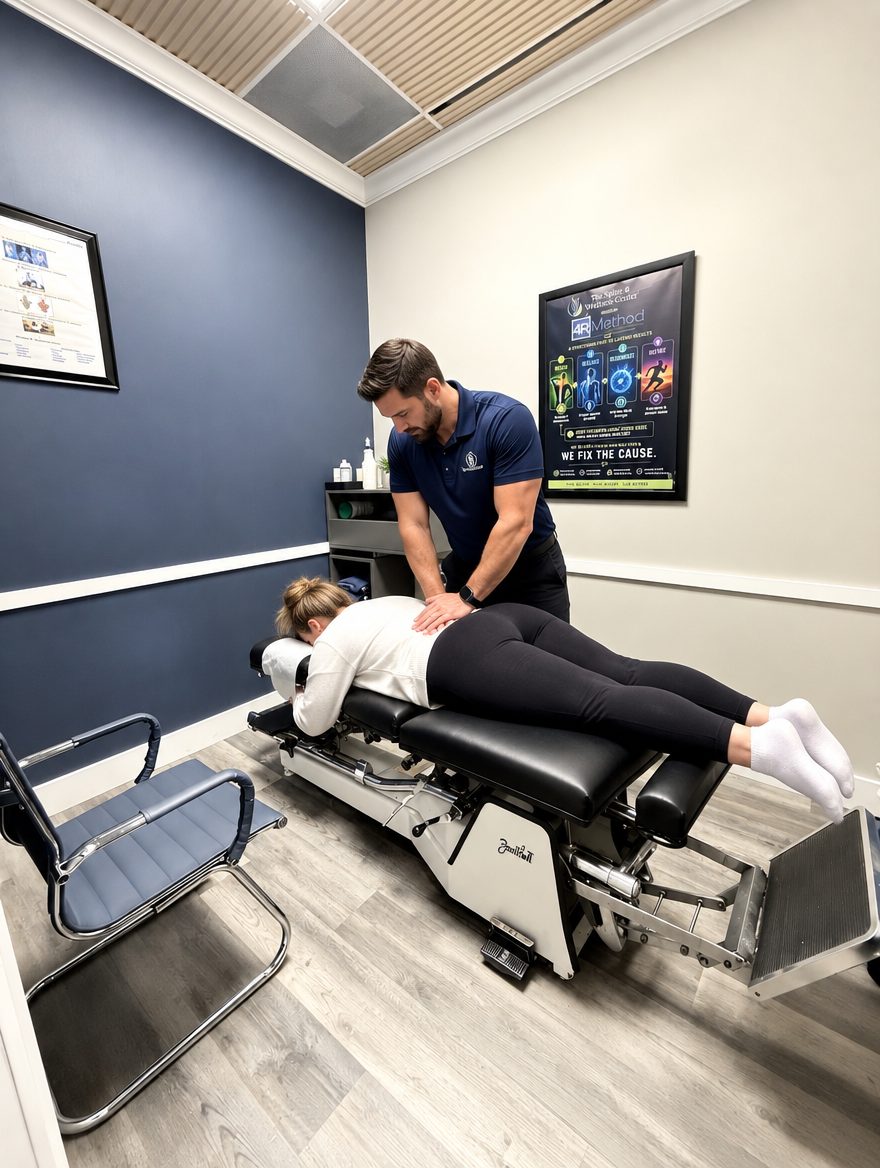
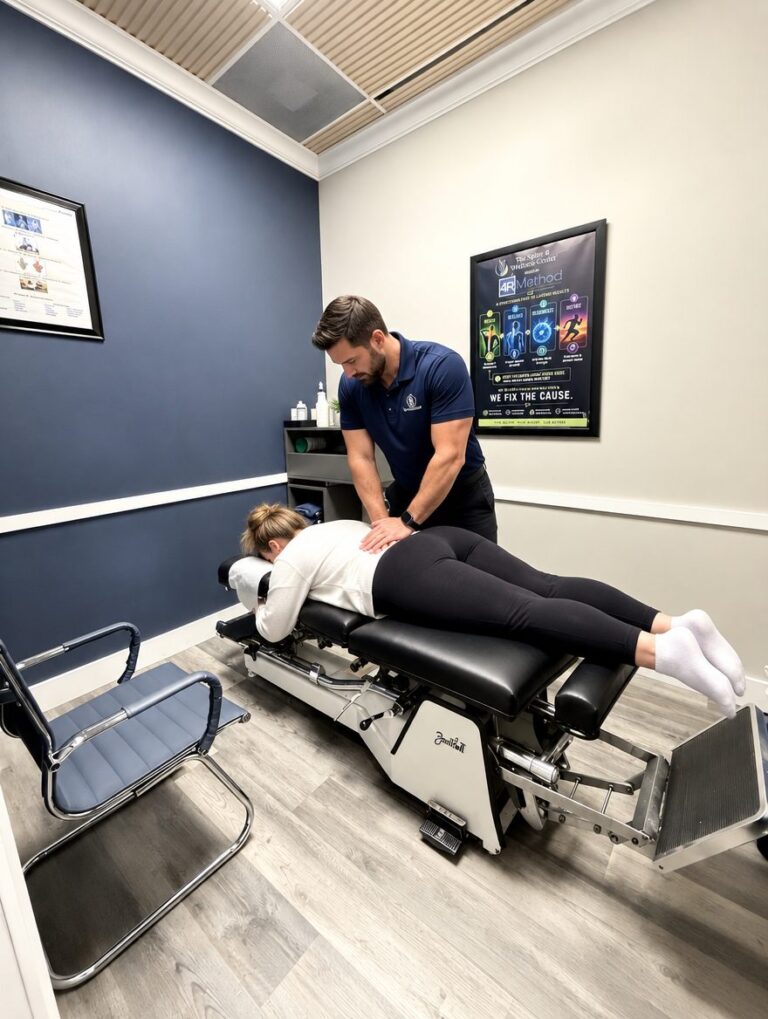
- Chiropractic adjustments restore motion to a joint that has locked up and is irritating the nerve beside it. Best for mechanical neck and back pain, facet joint pain and headaches that start in the neck.
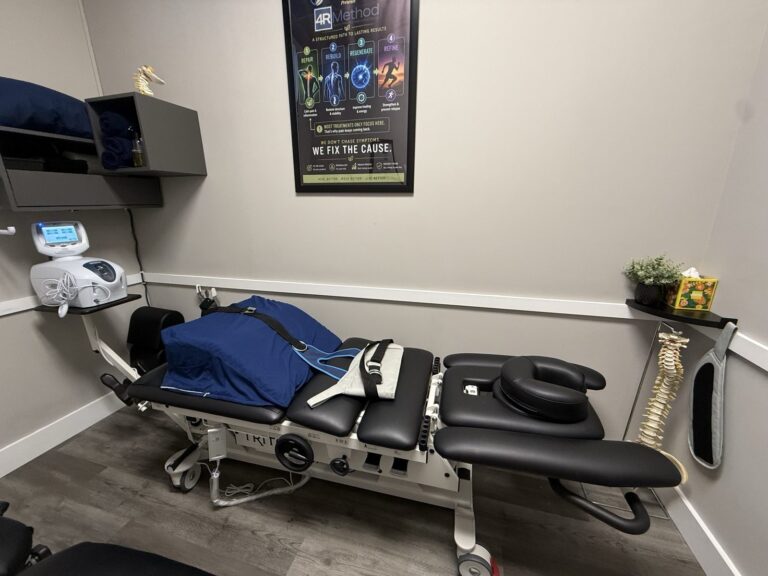
- Non-surgical spinal decompression on the Triton DTS table lowers the pressure inside an injured disc so a bulge can retract away from the nerve. Best for herniated and bulging discs, sciatica and a pinched nerve in the neck. We explained the mechanics in How Non-Surgical Spinal Decompression Works.
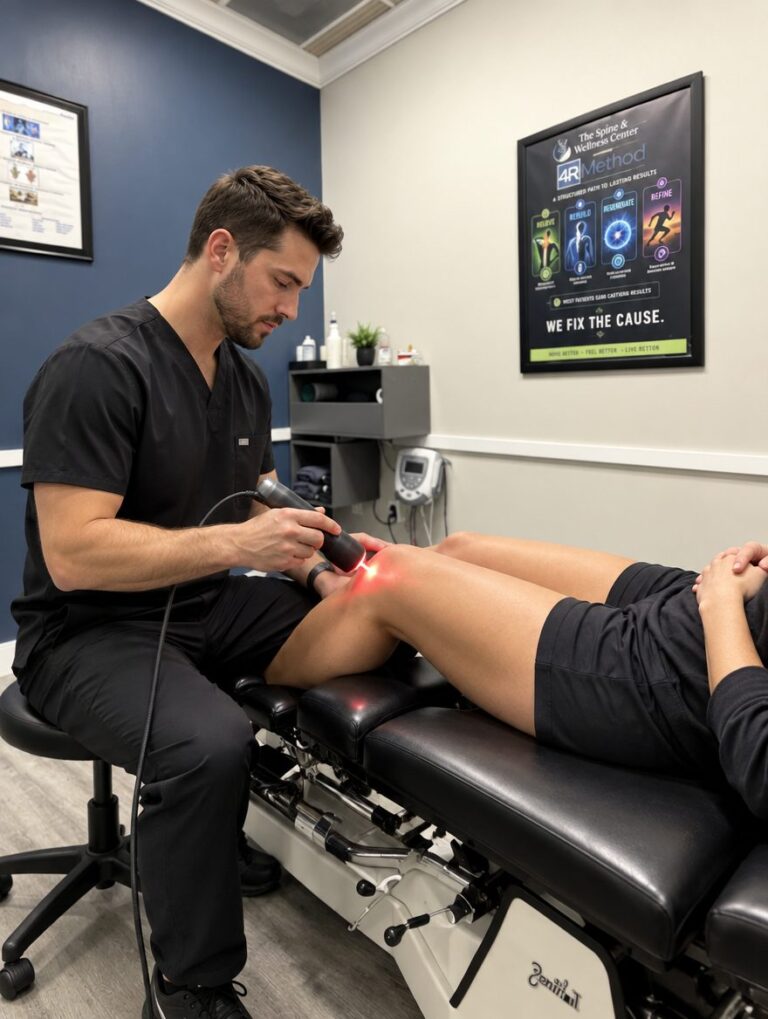
- Cold laser therapy raises cell energy in injured tissue and calms inflammation. Best for tendons, ligaments, plantar fasciitis and inflamed joints.
- Acoustic shockwave restarts healing in stubborn, chronic tendon problems such as tennis elbow and heel pain.
- Graston Technique and massage release thickened fascia and guarded muscle so the joints underneath can move.
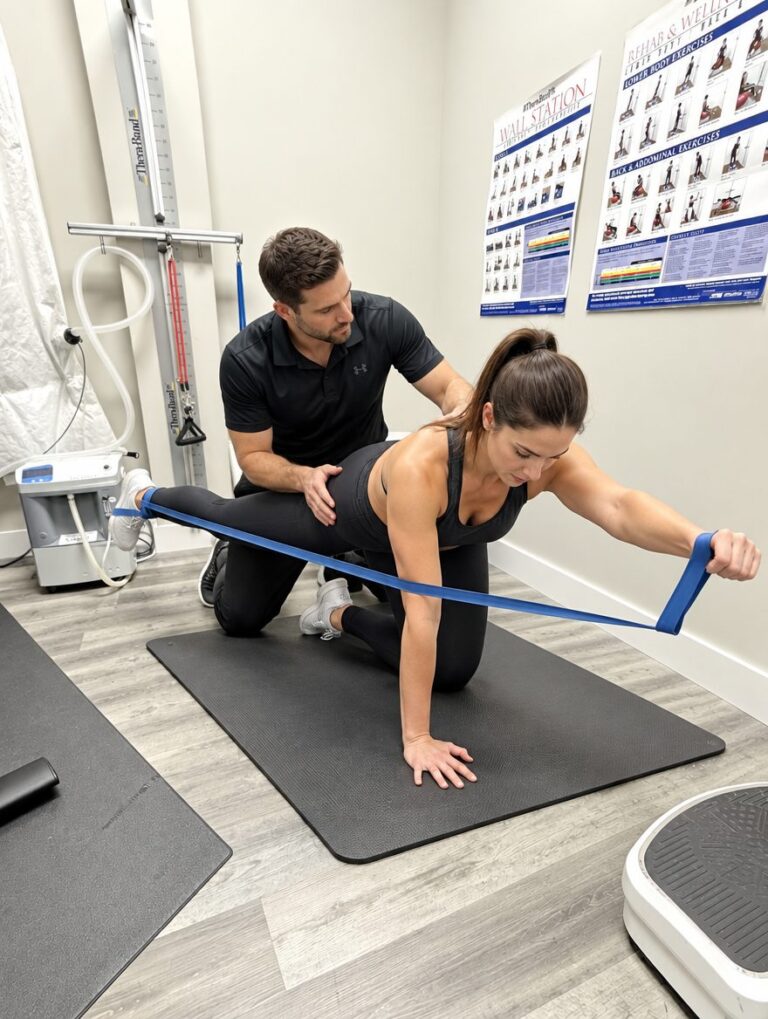
- Physical therapy and corrective exercise rebuild the strength and control that keep the problem from returning.
- Red light, PEMF and recovery tools support tissue repair and sleep between visits.

Matching the tool to the pain
The fastest way to waste a month is to apply the wrong tool. Here is how the pattern of your pain points to the right one:
- Pain that travels down an arm or leg, with tingling or numbness, usually means a nerve is compressed. Decompression first, then stabilization.
- Localized, sharp pain that is worse standing or arching back often means a facet joint. Adjustments and soft-tissue work.
- Pain at a tendon that hurts with a specific movement, such as gripping or the first steps in the morning, points to cold laser, shockwave and Graston.
- A broad, tight ache after sitting or driving is usually guarding muscle, but recurring strains mean a joint or disc underneath is the real driver.
- Headaches that start at the base of the skull are often cervicogenic and respond to upper neck care.
This is why two people with “back pain” can leave with completely different plans, and why a plan that only stretches, only adjusts or only medicates tends to give temporary relief.
What the evidence says about non-drug care
The direction of mainstream guidance has been clear for several years. The National Center for Complementary and Integrative Health summarizes the research on low back pain and non-drug approaches, and the American College of Physicians recommends that most patients with acute or chronic low back pain try non-pharmacologic care, including spinal manipulation, exercise and heat, before medication.
That does not mean every drug-free option works for every person. Decompression has good evidence for disc-related leg pain; shockwave for chronic tendinopathy; exercise for nearly everything long-term. We are candid about where the evidence is strong and where a treatment is supportive rather than proven.
Good to know
Drug-free is not the same as effort-free. The tools that work best long-term, decompression and rehab, need a short series of visits and a home routine. The payoff is pain that stays gone instead of returning when the dose wears off.
How we sequence these tools: the 4R Method
The 4R Method is the order we apply these tools in: Repair, Rebuild, Regenerate, Refine. Repair comes first, 3–5 visits a week for 4–8 weeks, when the goal is to calm the tissue and take pressure off the structure: decompression, adjustments, cold laser, shockwave. Rebuild follows at 2–3 visits a week for 8–16 weeks: physical therapy, Graston and strength work so the correction holds.
Regenerate adds recovery support, such as red light, PEMF and nutrition guidance, twice a week for two or more months. Refine is a monthly tune-up for people who want to stay ahead of the problem; we wrote about that rhythm in The Benefits of Regular Chiropractic Adjustments.
The sequence matters because structural correction on an inflamed, guarded spine does not hold, and pain relief without correction is temporary by design.
What to do at home between visits
What you do on the other six days of the week decides how fast the plan works. A few habits that cost nothing:
- Walk 10–20 minutes daily; gentle movement is the best natural anti-inflammatory most people are not using.
- Use ice for a fresh injury in the first 48 hours, heat for stiff, guarded muscle after that.
- Set a timer to stand and move every 30–60 minutes if you work at a desk or drive the Sawgrass daily.
- Do the two or three exercises we give you, not the fifteen you found online.
- Sleep seven to nine hours; pain sensitivity rises sharply on short sleep.
If you want the long version of the recovery side, Red Light Therapy Benefits, Explained and Why Physical Therapy + Chiropractic Work Better Together cover the tools we lean on most.
Pain that comes with fever, unexplained weight loss, loss of bowel or bladder control, or progressive weakness is not a candidate for conservative care first. Please see a doctor or urgent care today for those symptoms. For everything else, a spine assessment tells you which of these options applies to you.
Serving patients seeking drug-free pain relief across North Broward
Our clinic at 5675 Coral Ridge Drive, Coral Springs, FL 33076 serves Coral Springs, Parkland, Coconut Creek, Margate, Boca Raton, Tamarac, Pompano Beach and Deerfield Beach. Same-day appointments are usually available — call (954) 341-2256 or book online. Most patients from Parkland and Coral Springs are here in under 15 minutes.
Medically reviewed by Dr. Jared Cohen, DC — Co-Founder & Clinical Director, The Spine and Wellness Center. Last reviewed October 2026.
Frequently asked questions
What is the best drug-free pain relief for back pain?
It depends on the cause. Disc and nerve pain responds best to non-surgical spinal decompression; joint restriction to chiropractic adjustments; inflamed tendons to cold laser and shockwave; and recurring pain to physical therapy. The first visit measures which pattern you have so the plan matches it.
Is drug-free pain relief as effective as medication?
For many musculoskeletal conditions it is more effective long-term, because it treats the mechanical cause instead of dulling the signal. Medication can be useful short-term, and we never tell patients to stop a prescription, but current guidelines recommend non-drug care first for most low back pain.
How long does drug-free care take to work?
Many patients notice a change within the first two to three weeks of the Repair phase, which runs 4–8 weeks at 3–5 visits a week. Lasting results come from the Rebuild phase that follows, usually 8–16 weeks at 2–3 visits a week, when strength and control are restored.
Can I combine drug-free pain relief with my current treatment?
Usually yes. Chiropractic, decompression, cold laser and rehab are commonly used alongside care from your physician or orthopedist. Bring your imaging and medication list to the first visit so the plan is coordinated and nothing is duplicated.
Same-day appointments
Reading about it is step one.
Step two is a measurement. Visit one we measure — and usually begin care; visit two you get your full findings and plan.
- Same-day appointments are usually available
- Our team calls you back to confirm your visit
- Coral Springs, serving Parkland & North Broward since 2005
Prefer to talk now? Call or text (954) 341-2256