
Treatments & Technology · 6 min read
Why Physical Therapy and Chiropractic Work Better Together
Adjustments restore the motion. Rehab teaches the body to keep it. Combining the two is the fastest route we know to results that last — for patients across Coral Springs and Parkland.

Quick answer
Physical therapy and chiropractic solve two halves of the same problem. An adjustment restores motion to a stiff or misaligned joint and reduces nerve irritation, which brings fast relief; physical therapy rebuilds the strength, stability and movement patterns that let the joint drift in the first place. Together they produce faster relief and far fewer relapses than either alone.
Physical therapy and chiropractic: two different jobs
Pairing physical therapy and chiropractic is, in our experience, the fastest route to results that last — which is why at The Spine and Wellness Center we rarely treat a spine with just one tool. Dr. Jared Cohen, DC has refined this combined-care model in Coral Springs since 2005, because adjustments and rehab solve two different halves of the same problem.
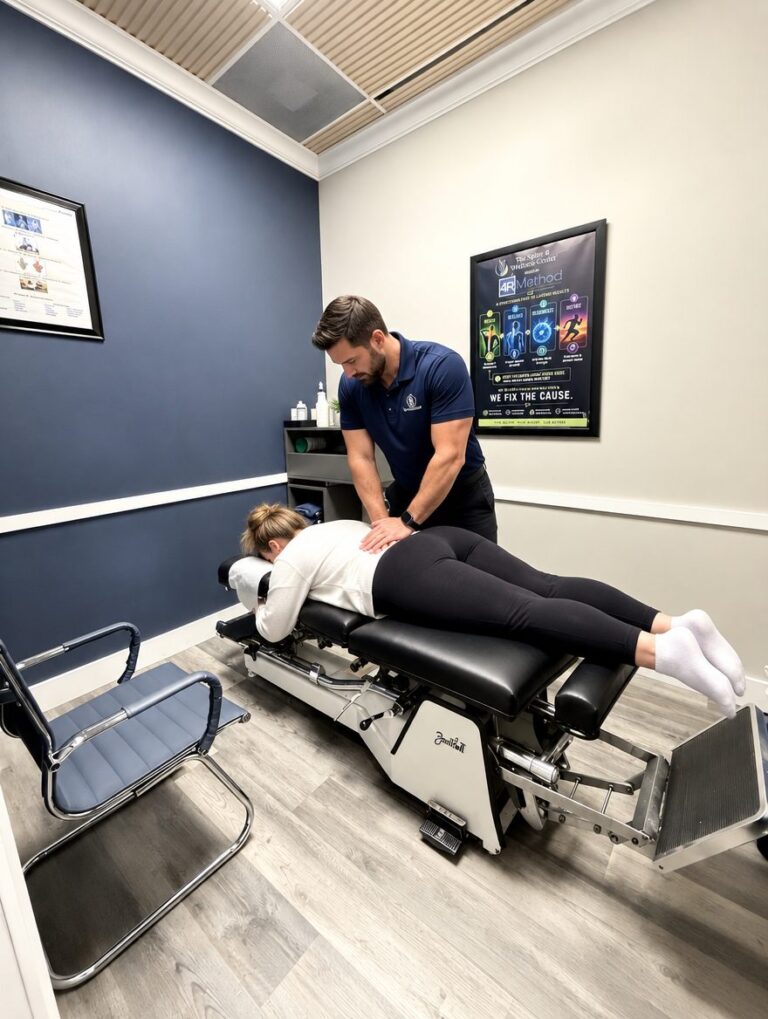
Chiropractic care restores motion and alignment to joints that have become restricted, stiff or misaligned. A precise adjustment reduces nerve irritation, improves mobility and often brings rapid relief. But an adjustment addresses the joint itself — not always the weak or imbalanced muscles and the movement habits that let it drift out of place to begin with.
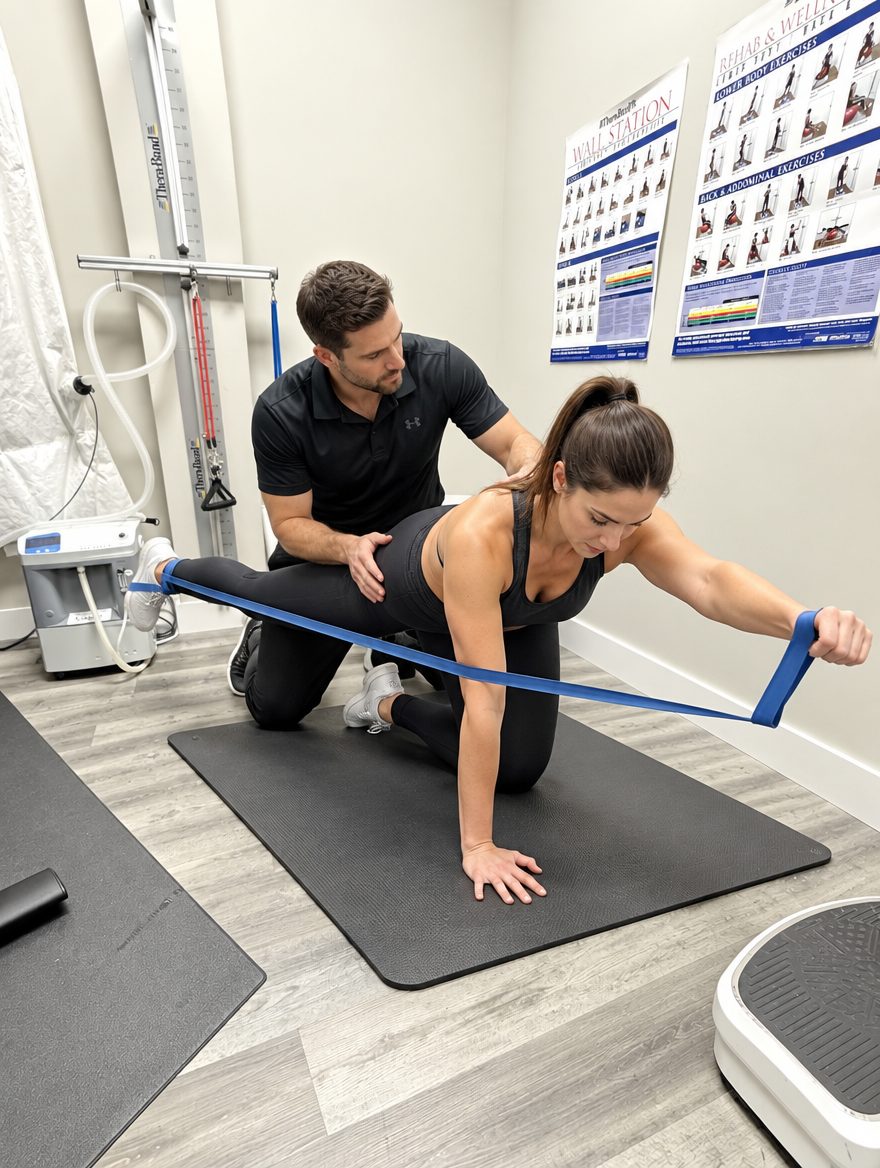
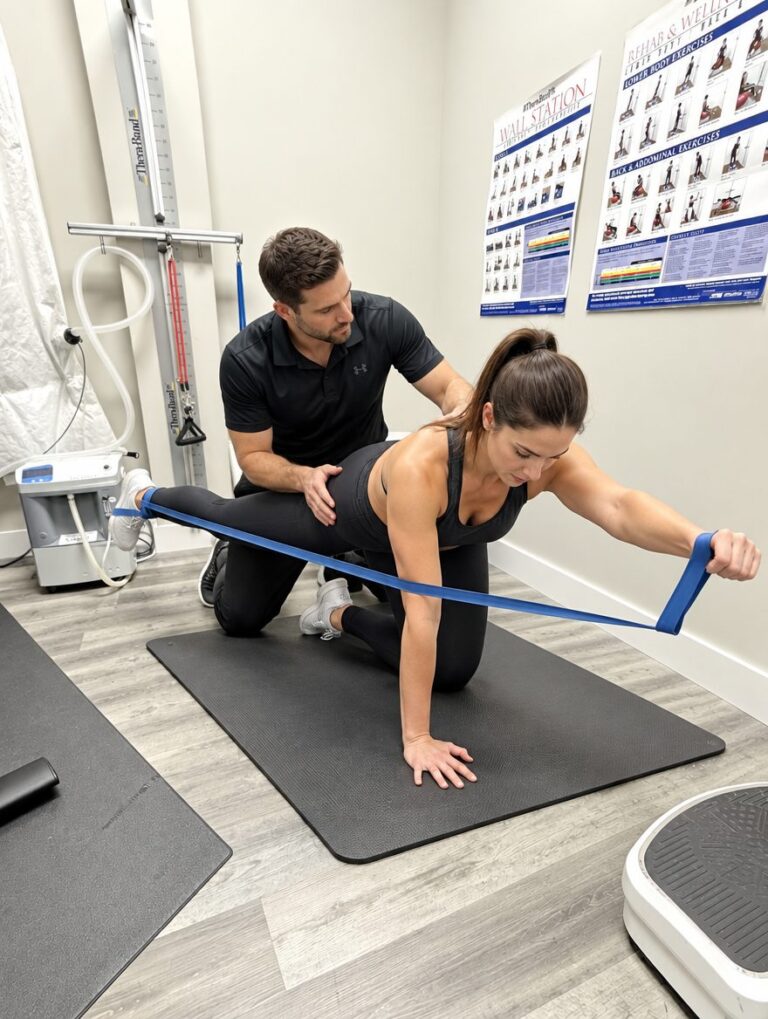
Physical therapy rebuilds the strength, stability and endurance of the muscles surrounding the spine and joints, and retrains how you move. When the supporting muscles are stronger and the patterns are better, the corrections from chiropractic care hold longer, and the risk of re-injury drops considerably. See how we run each on our chiropractic care and physical therapy pages.
Why the combination outperforms either alone
Think of an adjustment as unlocking a door and rehab as fixing the hinge so it stops sticking. Many patients find adjustments alone bring quick relief, but the pain creeps back as weak muscles pull the joint back into dysfunction. Rehab alone can be slow and frustrating when a restricted joint limits how well a patient can even perform the exercises.
Used together, each therapy amplifies the other. The adjustment creates the freedom of movement; the rehab teaches the body to use and protect it. The National Institute of Neurological Disorders and Stroke notes that for most low back pain, staying active and progressively resuming movement speeds recovery — and research on combined manual therapy plus exercise consistently shows better functional outcomes than passive care alone.

5 proven reasons physical therapy and chiropractic work better together
- Faster relief, then durability. The adjustment reduces pain quickly; the rehab makes sure the relief is still there in six months.
- Exercises actually work. A stiff segment or an irritated nerve makes rehab painful and ineffective. Restoring motion first lets the exercise do its job.
- The cause gets fixed, not just the symptom. A back that ‘goes out’ twice a year usually has a weak core and a stiff hip underneath. Combined care treats both.
- One team, one plan. When the chiropractor and the rehab team share the same exam findings and re-evaluations, nothing falls between the cracks and nobody has to coordinate two offices.
- Fewer visits overall. Patients who get both from the start tend to finish care sooner than patients who try one, plateau, and then add the other.
Conditions that respond especially well to combined care: chronic and recurring low back pain, neck pain and tech neck with headaches, sciatica and nerve-related arm or leg pain, disc problems after a course of spinal decompression, posture-related pain, shoulder and hip problems, and sports injuries where return to play is the goal.
How the two fit inside the 4R Method
Our 4R Method was built around this pairing. In Repair (3–5 visits a week for 4–8 weeks), chiropractic leads: decompression, specific adjustments, laser and soft-tissue work take the pressure off the disc, joint or nerve. Rehab in this phase is gentle — range of motion and activation, not load.
In Rebuild (2–3 visits a week for 8–16 weeks), physical therapy leads: progressive strengthening, stability and movement retraining, with adjustments continuing to keep the joints moving as the load goes up. Regenerate adds the cellular-recovery tools and keeps the home program going; Refine is a monthly check with a short exercise refresh. The hand-off between phases is based on re-measurement, not the calendar.
It starts with a first visit where we measure: a conversation, a hands-on structural exam, surface EMG and thermal scanning, and digital X-rays when indicated. Visit two is the report of findings and plan — including exactly how much of your care is adjusting and how much is rehab — building on the care that usually starts at visit one. For the bigger picture on consistency, see the benefits of regular chiropractic adjustments; for athletes, recovering from a sports injury the right way.
Physical therapy
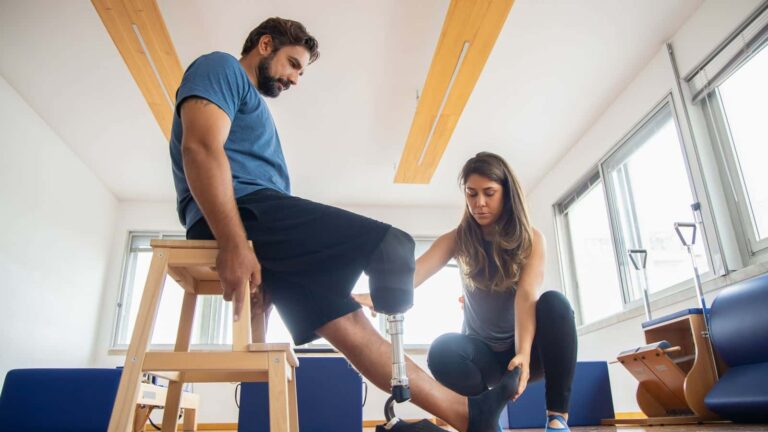
Progressive strengthening and movement retraining in our Coral Springs rehab room.
Learn moreChiropractic care
Specific adjustments to restore the joint motion rehab needs.
Learn moreSports injury rehab
Combined care with return-to-play criteria.
Learn moreSpinal decompression therapy
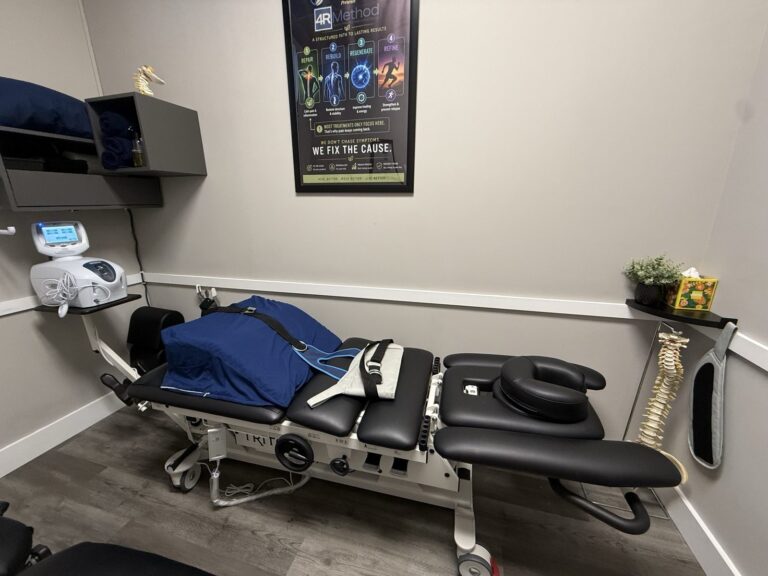
For disc problems — followed by rehab so the result holds.
Learn moreWhat a combined visit looks like
A typical Rebuild-phase visit runs about 45 minutes. You might start with 10 minutes of laser or soft-tissue work on the area that is still irritable, move to the adjusting room for a specific adjustment, then spend 20–30 minutes in the rehab room on your progressed program with a therapist coaching form and load. You leave with a short home program — 10–15 minutes on the days you are not here.
- Adjustments and rehab happen in the same visit, in the same building, on the same findings.
- Your exercise program is progressed at each re-evaluation, not left on a printout.
- Pain levels, range of motion and surface EMG are tracked against your own baseline.
- The goal is a spine that moves well enough that you stop thinking about it.
Stop any exercise if pain radiates, sharpens or worsens, and please see a doctor or urgent care today for red-flag symptoms such as new weakness, numbness in the groin, or bladder or bowel changes.
Serving combined-care patients across North Broward
Our clinic at 5675 Coral Ridge Drive, Coral Springs, FL 33076 serves Coral Springs, Parkland, Coconut Creek, Margate, Boca Raton, Tamarac, Pompano Beach and Deerfield Beach. Same-day appointments are usually available — call (954) 341-2256 or book online. Most patients from Parkland and Coral Springs are here in under 15 minutes.
Medically reviewed by Dr. Jared Cohen, DC — Co-Founder & Clinical Director, The Spine and Wellness Center. Last reviewed October 2026.
Frequently asked questions
Should I see a chiropractor or a physical therapist first?
For most spine and joint problems, both from the start. The adjustment restores motion so the exercises work; the rehab builds the strength that keeps the adjustment holding. When they are delivered by one team on one set of findings, you do not have to choose or coordinate two offices.
Can physical therapy and chiropractic be done on the same day?
Yes, and that is how we run it. A combined visit typically includes soft-tissue work or laser, a specific adjustment, and 20 to 30 minutes of coached rehab, all in about 45 minutes. Doing them together lets the rehab take advantage of the motion the adjustment just restored.
Is combined care covered by insurance?
Many plans cover chiropractic care and physical therapy, often with separate visit limits or copays. Our front desk verifies your benefits before your first visit and explains what is covered so there are no surprises. Bring your insurance card to your first appointment.
How long does combined care take to work?
Most patients feel meaningful relief in the first 2 to 4 weeks of the Repair phase. The Rebuild phase, where strength and movement patterns are retrained, usually runs 8 to 16 weeks. The timeline depends on the condition and on consistency with the home program, and it is adjusted at each re-evaluation.

Same-day appointments
Reading about it is step one.
Step two is a measurement. Visit one we measure — and usually begin care; visit two you get your full findings and plan.
- Same-day appointments are usually available
- Our team calls you back to confirm your visit
- Coral Springs, serving Parkland & North Broward since 2005
Prefer to talk now? Call or text (954) 341-2256