
Sports & Performance · 6 min read
Recovering From a Sports Injury the Right Way
Rest alone rarely gets athletes back to full strength. Here is how active, guided recovery works — for weekend warriors and competitive athletes alike.

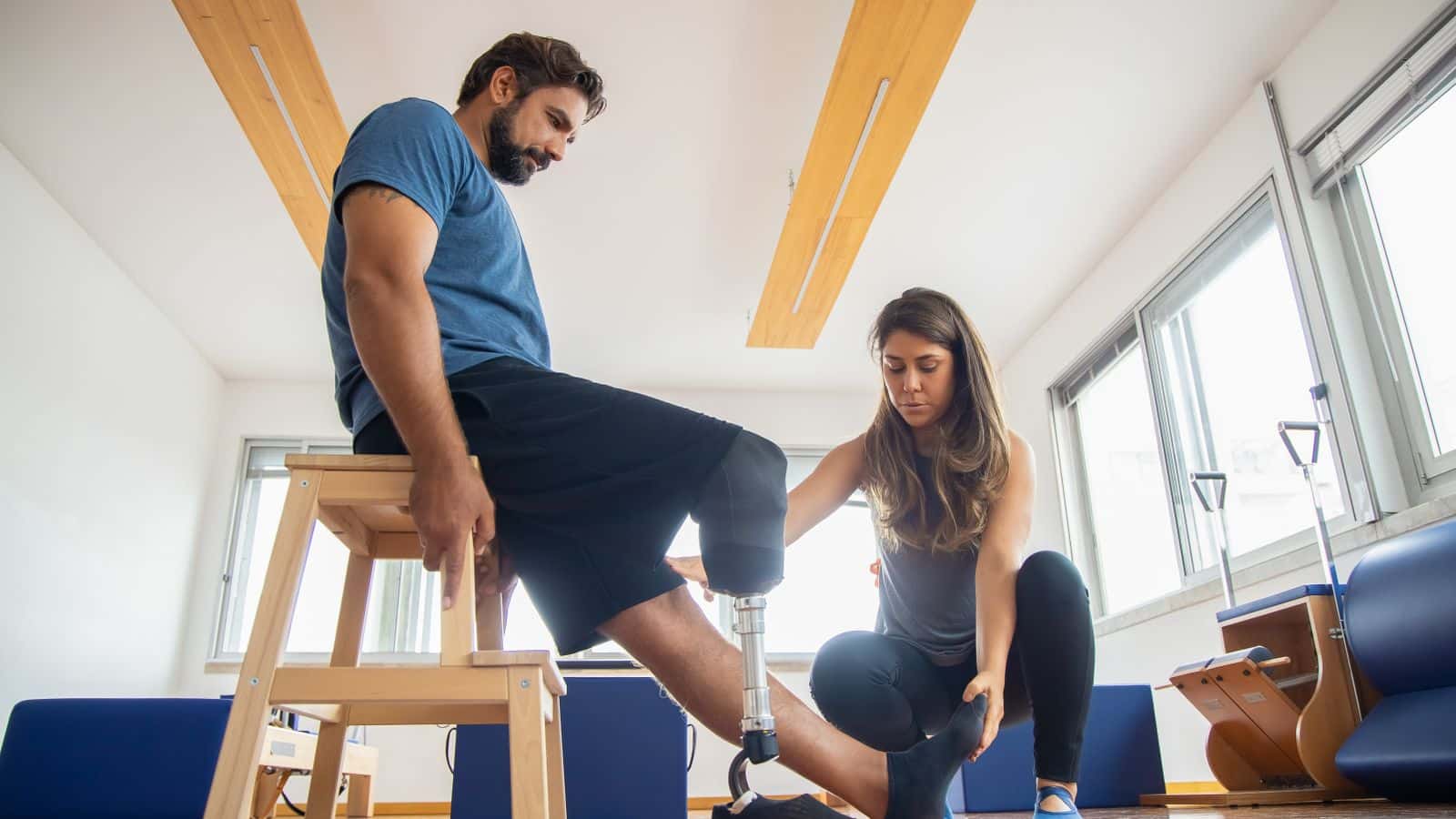
Quick answer
Recovering from a sports injury well means protecting the tissue for a few days, then reintroducing controlled movement and load so it heals strong and organized. Pain fading is not the finish line; strength, mobility and coordination have to return before game-day demands, or the injury tends to come back. A measured, staged plan gets you there faster and safer.
Acute vs. overuse: know which injury you are recovering from
Recovering from a sports injury starts with naming it properly, because the two big families heal differently. Acute injuries happen in one moment: the rolled ankle on the pickleball court, the hamstring that grabs at full sprint, the shoulder that gives on a serve. Overuse injuries build quietly: shin splints, patellar tendinitis, a low back that tightens every long ride on the Sawgrass. Both respond to a structured plan, but the plan is not the same.
The injuries we see most in Coral Springs and Parkland athletes:
- Ankle sprains and knee ligament strains
- Hamstring, calf and groin strains
- Rotator cuff and shoulder injuries from throwing and serving
- Patellar tendon irritation and runner’s knee
- Lower back strains from lifting, twisting or impact
- Repetitive-stress injuries such as shin splints, Achilles tendinopathy and tennis elbow
An acute injury needs protection first, then progressive load. An overuse injury needs the load that caused it adjusted, the tissue’s capacity rebuilt, and the mechanical reason it overloaded fixed. Get the category wrong and you either rest something that needs movement or push something that needs a break.
RICE vs. active recovery: why rest alone fails
Most athletes know RICE: rest, ice, compression, elevation. For the first 24–72 hours after an acute injury, calming swelling and protecting the area is sensible. But the old idea that you should rest until the pain is completely gone has been replaced by a more accurate understanding of how tissue heals.
Tissue rebuilds in response to gradual, controlled load. Collagen fibers organize along the lines of stress you give them; rest for too long and they knit down in a disorganized, weak scar. Muscles lose strength within days of disuse, joints stiffen, and the nervous system forgets the coordination the sport requires. The American Academy of Orthopaedic Surgeons now emphasizes early protected motion and progressive rehabilitation for most sprains and strains.
That is why athletes who simply wait for pain to fade and then jump back in so often re-injure, sometimes worse. Pain fading means the tissue is calmer; it does not mean strength, mobility and timing have returned. Active recovery fills that gap on purpose.

5 proven steps to recovering from a sports injury the right way
- Measure first (days 0–3). A hands-on exam identifies exactly what is injured and how badly, rules out fractures and complete tears that need imaging or referral, and sets a baseline for strength and range of motion. Protect, ice, compress and elevate in this window.
- Calm and restore motion (week 1–2). Gentle range-of-motion work, cold laser, therapeutic ultrasound and soft-tissue therapy reduce swelling and keep the joint from stiffening. Cryotherapy fits here for athletes who tolerate it well.
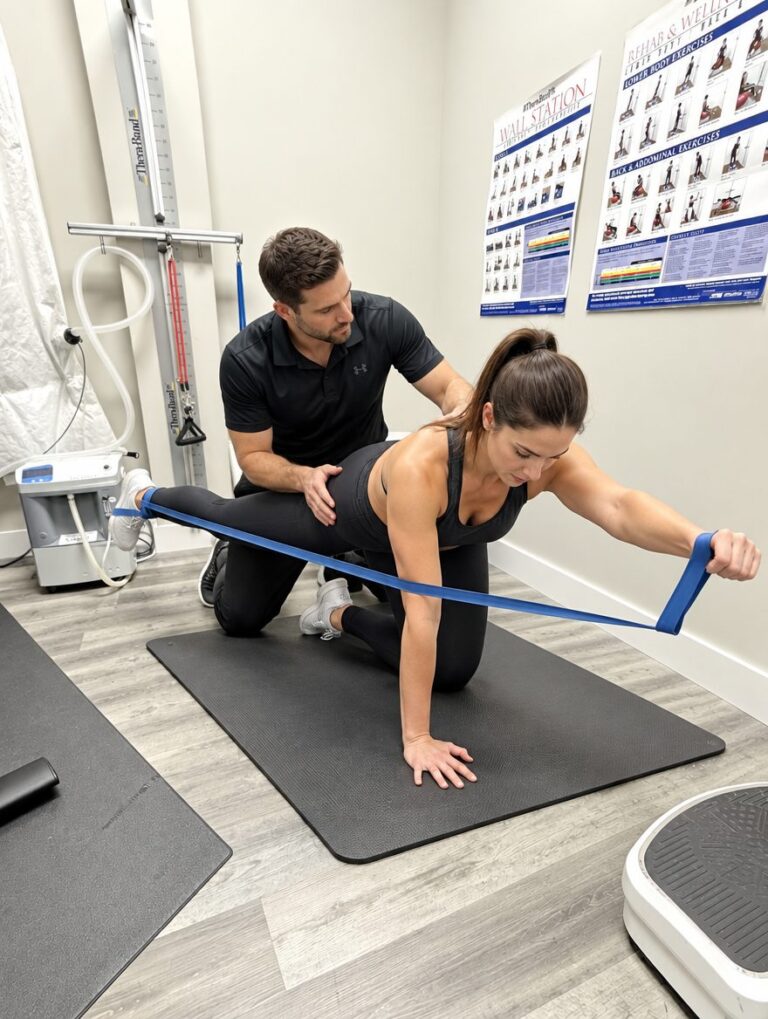
- Rebuild strength and control (weeks 2–8). Progressive loading of the injured tissue plus the kinetic chain around it — the hip for a knee, the shoulder blade for a rotator cuff, the core for a low back. This is where our physical therapy team earns its keep.
- Retrain the sport (weeks 6–12). Change of direction, deceleration, jumping and landing, throwing volume — the specific demands of your sport, rebuilt in stages with objective criteria before each step up.
- Return with a plan, then keep what you built. A graded return to practice, then competition, followed by maintenance work so the weak link does not become the weak link again.
Our sports injury rehab program is this sequence, run by the same team that handles athletic performance care — so recovery flows straight into getting faster and stronger instead of ending at ‘cleared’.
Where recovery sits in the 4R Method
The 4R Method maps onto injury recovery almost one to one. Repair (typically 3 visits a week for 2–6 weeks depending on severity) is steps one and two: calm the tissue and restore motion with adjustments, soft-tissue work and modalities. Rebuild (2–3 visits a week for 8–12 weeks) is steps three and four: strength, control and sport-specific retraining. Regenerate layers in red light, PEMF and IHHT for tissue quality and recovery between sessions. Refine is the in-season tune-up schedule.
Everything begins with a first visit where we measure: your injury story, a hands-on orthopedic and structural exam, surface EMG and thermal scanning, and digital X-rays when indicated. Visit two is your report of findings and your return-to-play plan with dates and criteria. We have run this model in Coral Springs since 2005 for everyone from youth travel teams to masters triathletes — read more in chiropractic for athletes and performance.
Sports injury rehab
Staged recovery from sprains, strains and overuse injuries with return-to-play criteria.
Learn moreAthletic performance
Where recovery ends and getting faster, stronger and more durable begins.
Learn morePhysical therapy
Progressive loading and sport-specific retraining in our rehab room.
Learn moreCryotherapy
Cold therapy for recovery between hard sessions.
Learn moreMistakes that turn a 4-week injury into a 4-month one
- Testing it too early. ‘It felt fine jogging, so I played a full match.’ Walking pain-free is a long way from cutting at full speed.
- Resting too long. Three weeks on the couch leaves a weaker athlete than the one who got injured.
- Treating only the sore spot. The hamstring tore because the hip and core were not doing their share; fix the cause or expect a repeat.
- Skipping the retraining step. Strength on a machine does not equal coordination on the field.
- Ignoring sleep and nutrition. Tissue is rebuilt overnight and from protein; see our note on nutrition and inflammation.
Stop any exercise if pain radiates, sharpens or worsens for more than a day afterward. Obvious deformity, inability to bear weight, a joint that gives way, numbness, or rapid swelling after an injury should be evaluated promptly — please see a doctor or urgent care today. For everything else, the fastest route back is a measured one.
Serving injured athletes across North Broward
Our clinic at 5675 Coral Ridge Drive, Coral Springs, FL 33076 serves Coral Springs, Parkland, Coconut Creek, Margate, Boca Raton, Tamarac, Pompano Beach and Deerfield Beach. Same-day appointments are usually available — call (954) 341-2256 or book online. Most patients from Parkland and Coral Springs are here in under 15 minutes.
Medically reviewed by Dr. Jared Cohen, DC — Co-Founder & Clinical Director, The Spine and Wellness Center. Last reviewed October 2026.
Frequently asked questions
How long does recovering from a sports injury take?
Mild sprains and strains often settle in 2 to 4 weeks, moderate injuries 6 to 12 weeks, and tendon and ligament injuries longer because those tissues remodel slowly. The timeline depends less on the calendar than on meeting criteria: full range of motion, strength close to the other side, and sport-specific movements performed without pain.
Should I ice or heat a sports injury?
Ice for the first 2 to 3 days after an acute injury to limit swelling, then switch to gentle movement and heat before activity to improve blood flow. For overuse injuries, heat and movement generally help more than ice. Neither replaces the progressive loading that actually rebuilds the tissue.
Can I keep training while I recover?
Usually yes, in a modified form. We keep the uninjured parts of the body working and reintroduce sport-specific load in stages. Staying active maintains fitness, speeds healing through better circulation, and keeps the nervous system sharp, as long as the injured tissue is protected and progressed deliberately.
When can I return to play?
When you meet objective criteria, not when a date arrives: pain-free full range of motion, strength and single-leg or single-arm control close to the uninjured side, and sport-specific movements such as cutting, jumping or throwing performed at full intensity without pain or swelling the next day.

Same-day appointments
Reading about it is step one.
Step two is a measurement. Visit one we measure — and usually begin care; visit two you get your full findings and plan.
- Same-day appointments are usually available
- Our team calls you back to confirm your visit
- Coral Springs, serving Parkland & North Broward since 2005
Prefer to talk now? Call or text (954) 341-2256