
Wellness & Lifestyle · 6 min read
Nutrition, inflammation and back pain: what your plate has to do with your spine
Food cannot realign a joint. But it sets the inflammatory baseline that decides how loud an irritated disc or joint feels. Here is the practical version.


Quick answer
Nutrition and inflammation are linked to back pain through the body's inflammatory baseline. Diets heavy in refined sugar, ultra-processed food and fried fat keep low-grade inflammation switched on, which amplifies pain from an irritated disc or joint and slows recovery. Fatty fish, vegetables, berries, olive oil, nuts, steady hydration and a healthy weight lower that baseline so structural care works better.
How nutrition and inflammation drive back pain
Nutrition and inflammation get overlooked when back pain lingers, because the obvious suspect is the spine. The spine usually is the source. But how much a bulging disc or an irritated facet joint hurts depends partly on the chemical environment around it, and that environment is shaped every day by what you eat.
Inflammation itself is not the enemy. In the first days after an injury it is how tissue heals. The problem is chronic, low-grade inflammation that never switches off. When the body’s inflammatory messengers sit at a high baseline, nerve endings become more sensitive, swelling resolves more slowly and the same mechanical problem produces more pain than it would in a calmer system.
At The Spine and Wellness Center in Coral Springs we see this most clearly in patients whose structural findings are modest but whose pain is loud. Correcting the structure is still the job; lowering the baseline is what lets the correction feel like it should.
Which foods raise the inflammatory baseline?
Research consistently associates certain dietary patterns with higher inflammatory markers. The usual offenders:
- Refined sugar and sweetened drinks, including the sports drinks and sweet teas that are everywhere in South Florida summers
- Ultra-processed foods: packaged snacks, fast food, most things with a long ingredient list
- Fried foods and industrial seed-oil-heavy items eaten frequently
- Refined carbohydrates such as white bread and pastries that spike blood sugar
- Excess alcohol, which also disrupts the sleep that pain recovery depends on
None of these cause back pain by themselves. Over months, though, they can make an already irritated joint, disc or muscle feel worse than the structure alone would explain, and slow the response to care. Harvard Health summarizes the pro- and anti-inflammatory food evidence well.
Anti-inflammatory foods that support your spine
The encouraging news is that food works in both directions. Patients who shift toward whole, colorful, minimally processed meals often report feeling better and recovering more comfortably alongside hands-on care. The staples:
- Fatty fish such as salmon, sardines and mackerel, two or three times a week, for omega-3 fats
- Leafy greens, broccoli and brightly colored vegetables at every main meal
- Berries, cherries and deeply pigmented fruit in place of sweets
- Olive oil, nuts, seeds and avocado as the main fat sources
- Turmeric, ginger, garlic and other spices used generously
- Whole grains and legumes instead of refined carbohydrates
No single food is a treatment and no diet replaces proper care. Think of nutrition as one supporting pillar, with movement and, when the mechanics call for it, back pain treatment that addresses the disc or joint directly.

Hydration, weight and the load on your spine
Two factors sit between nutrition and mechanics. The first is water. Spinal discs are roughly 80 percent water when healthy, and they rehydrate overnight and between loads. Chronic under-hydration, common through long warm days in Coral Springs and Parkland, leaves discs stiffer and less resilient. Steady water intake through the day supports both disc health and recovery.
The second is body weight. Every extra pound adds mechanical load through the lumbar discs and facet joints with each step, lift and twist, and adipose tissue itself produces inflammatory messengers. Even modest, sustainable weight loss lowers both the load and the baseline. That is why nutrition guidance and our physician-supervised NuOla medical weight loss program sit inside the same building as the decompression table.
If your pain is primarily low back, What’s Really Causing Your Lower Back Pain explains the structures involved and lower back pain relief covers how we treat them.
Where nutrition and inflammation fit in the 4R Method
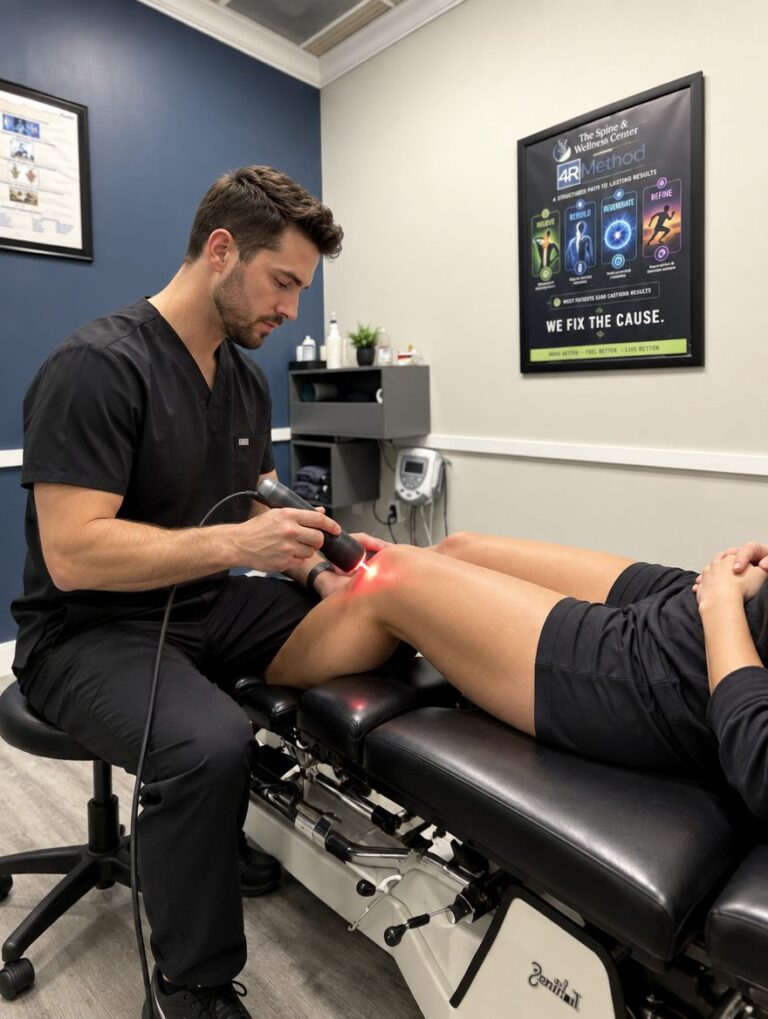
Food sets the environment; it cannot realign a joint or release a guarded muscle. So the sequence inside the 4R Method is: Repair the structure first (decompression, adjustments, cold laser, 4–8 weeks), Rebuild the strength that protects it (8–16 weeks), and then, in the Regenerate phase, layer in nutrition, hydration, red light therapy and recovery habits so the tissue stays calm and the result lasts.
In practice we start the conversation about food early, on visit two when we review the findings and the plan, because the habits take weeks to pay off and there is no reason to wait. For patients with arthritic joints, Chiropractic Care for Arthritis and Joint Pain covers how the same anti-inflammatory approach supports a worn joint.
Good to know
Supplements are a smaller lever than meals. Fish oil, turmeric and vitamin D have reasonable evidence for inflammation, but tell us and your physician what you take; some interact with blood thinners and other medications.
Six changes to start this week
You do not need an overhaul. Small, consistent steps stick best for busy people:
- Swap sweetened drinks for water and aim for steady intake across the day.
- Add one extra serving of vegetables to your largest meal.
- Eat fish or plant protein two or three times a week.
- Cut processed snacks and fried food gradually, not all at once.
- Keep meals balanced with protein, fiber and healthy fat to avoid blood-sugar swings.
- Walk 10–20 minutes a day; movement is the most under-used anti-inflammatory there is.
If back pain is persistent, worsening or interfering with daily life, nutrition alone is unlikely to be the whole answer. Pain with fever, unexplained weight loss, or loss of bowel or bladder control is a reason to please see a doctor or urgent care today. For the rest, a spine assessment identifies what is driving your symptoms so the structural plan and the plate can work together.
Serving back pain patients across North Broward
Our clinic at 5675 Coral Ridge Drive, Coral Springs, FL 33076 serves Coral Springs, Parkland, Coconut Creek, Margate, Boca Raton, Tamarac, Pompano Beach and Deerfield Beach. Same-day appointments are usually available — call (954) 341-2256 or book online. Most patients from Parkland and Coral Springs are here in under 15 minutes.
Medically reviewed by Dr. Jared Cohen, DC — Co-Founder & Clinical Director, The Spine and Wellness Center. Last reviewed October 2026.
Frequently asked questions
Can diet cause back pain?
Diet rarely causes back pain on its own, but an inflammatory eating pattern heavy in sugar, ultra-processed and fried food raises the body's inflammatory baseline. That makes an irritated disc or joint feel more painful and slows recovery. Shifting toward whole foods lowers the baseline so structural care works better.
What foods help reduce inflammation and back pain?
Fatty fish such as salmon and sardines, leafy greens and colorful vegetables, berries, olive oil, nuts, seeds, avocado, and spices like turmeric and ginger are consistently associated with lower inflammation. Whole grains and legumes in place of refined carbohydrates help too. Steady hydration supports the discs directly.
Does losing weight help back pain?
Usually, yes. Extra body weight adds mechanical load to the lumbar discs and facet joints with every step, and adipose tissue produces inflammatory messengers. Even modest, sustainable weight loss reduces both. Our NuOla medical weight loss program is designed to pair with spine care for exactly that reason.
Can nutrition replace chiropractic care for back pain?
No. Food can calm inflammation and support healing, but it cannot realign a joint, decompress a disc or release a guarded muscle. Nutrition works best as one pillar alongside structural care in the Repair and Rebuild phases and recovery habits in the Regenerate phase.


Same-day appointments
Reading about it is step one.
Step two is a measurement. Visit one we measure — and usually begin care; visit two you get your full findings and plan.
- Same-day appointments are usually available
- Our team calls you back to confirm your visit
- Coral Springs, serving Parkland & North Broward since 2005
Prefer to talk now? Call or text (954) 341-2256