

Conditions · Coral Springs & Parkland
Headache treatment in Coral Springs & Parkland
The headache that starts at the base of the skull, the one that arrives every afternoon at the desk, the 'migraine' that turns out to be a neck problem — most recurring headaches have a structural driver, and that driver can be measured and corrected. Drug-free, non-surgical, built to last.
Quick answer
Effective headache treatment starts by identifying the type. Cervicogenic headaches begin in the upper neck and respond to upper cervical adjustments, soft-tissue release and posture correction; tension-type headaches add stress and muscle guarding; migraines are neurological and often have neck and posture triggers that make them more frequent. Treating the neck reduces frequency and intensity in all three.
Why so many headaches start in the neck
Good headache treatment begins with an anatomical fact: the upper three cervical segments (C1–C3) share nerve pathways with the trigeminal nerve that supplies the head and face. When those joints are restricted or the small suboccipital muscles beneath the skull are guarding, the brain reads the signal as head pain — at the base of the skull, over the top, behind the eye or in the temple.
In our Coral Springs clinic, the most common driver is forward-head posture — tech neck. For every inch the head drifts forward of the shoulders, the load on the upper neck roughly doubles. Over a workday that keeps the suboccipital muscles contracted for hours and the C1–C2 joints compressed. The afternoon headache that arrives like clockwork is the result.
Other upper-cervical drivers include old whiplash injuries that were never fully corrected, a loss of the normal cervical curve, jaw (TMJ) clenching that feeds the same nerve pathways, and sleep positions that twist the neck for hours. None of these show up on a brain scan — which is why so many people are told their imaging is normal and sent home with medication.

Cervicogenic, tension or migraine? How to tell your headache apart
The three common headache types overlap, but each has a signature. Matching the pattern is the first step in choosing the right headache treatment:
- Cervicogenic headache: starts in the neck or base of the skull and spreads forward, usually on one side; worse with neck movement, certain positions or pressing on the upper neck; often with reduced neck range of motion. Comes from the cervical spine itself.
- Tension-type headache: a dull, band-like pressure on both sides, mild to moderate, building through the day; tender scalp and neck muscles; no nausea or light sensitivity. Stress, posture and muscle guarding are the usual drivers.
- Migraine: moderate to severe, often throbbing, usually one-sided; with nausea, sensitivity to light and sound, and sometimes a visual aura beforehand; made worse by routine activity. A neurological condition — but neck tension and posture are among its most common triggers.
- Mixed patterns: many patients have a neck-driven headache that escalates into a migraine when triggers stack up. Reducing the neck component often reduces how often that happens.
A practical test: if your headache changes when you move your neck, press at the base of your skull or hold a position for a while, the neck is involved. If it never changes with any of those, the driver is more likely elsewhere.
Good to know
The National Institute of Neurological Disorders and Stroke notes that most headaches are not caused by serious underlying conditions, and that tension-type headaches are the most common form. Learn more at NINDS, Headache.
How we approach headache treatment at TSAWC
Our approach to headache treatment follows the body’s own healing sequence — the 4R Method: Repair, Rebuild, Regenerate, Refine. The order matters. Releasing the suboccipital muscles gives relief for a day; restoring upper cervical motion and then correcting the posture that compressed it gives relief that lasts.
R1 · Repair — release the upper neck
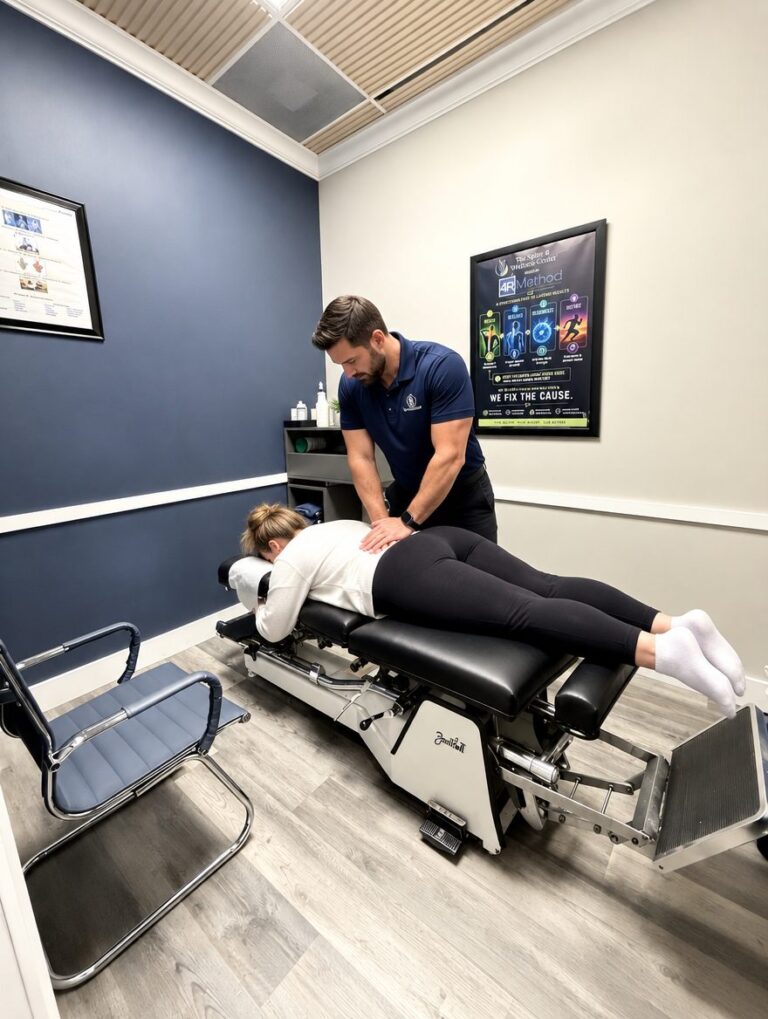
The Repair phase interrupts the headache at its source. Specific, gentle upper cervical adjustments restore motion to C1–C3; massage therapy releases the suboccipital, upper trapezius and jaw muscles; cold laser calms the inflamed joint capsules and nerve irritation without medication. Typical commitment is 3–5 visits a week for 4–8 weeks, and most patients notice fewer and milder headaches within the first two to three weeks.
R2 · Rebuild — correct the posture that caused it
Once the upper neck is moving and quiet, we correct the load that compressed it. Posture correction restores the cervical curve and the head position above the shoulders, and retrains the deep neck flexors that switch off under forward-head loading. Rebuild usually runs 2–3 visits a week for 8–16 weeks — and it is the phase that turns fewer headaches into no headaches.
R3 and R4 · Regenerate and Refine
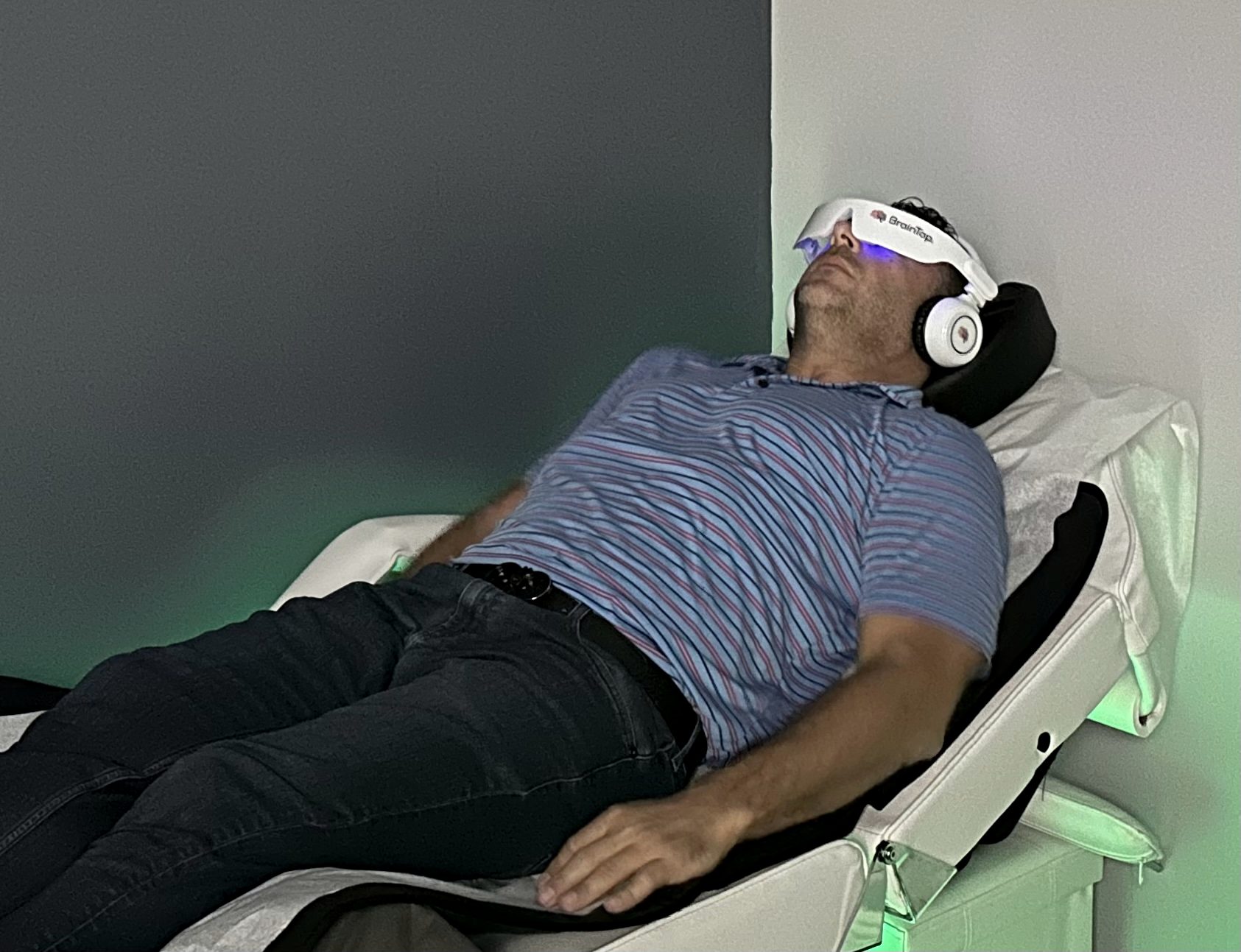
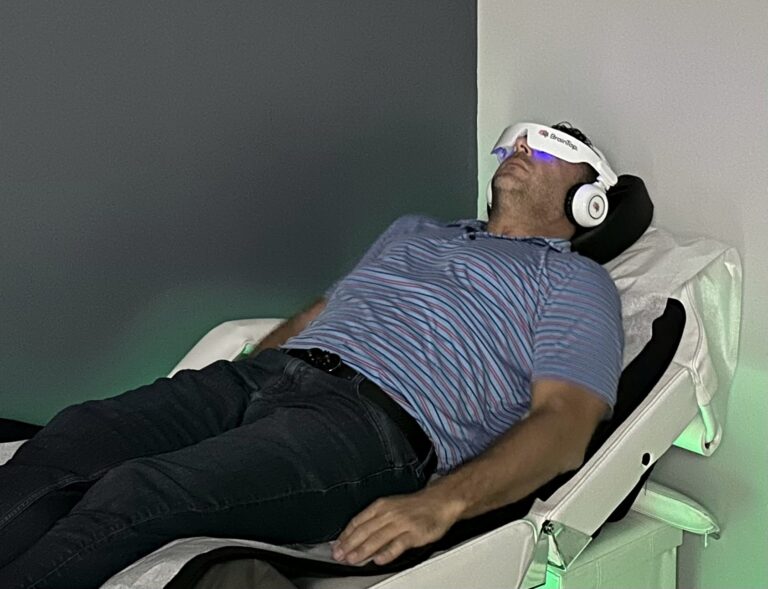
For stress-driven patterns, the Regenerate phase (about 2 visits a week for two months or more) adds BrainTap — guided light-and-sound sessions that shift the nervous system out of the fight-or-flight state that keeps neck muscles contracted — alongside red light and PEMF. Refine is the long game: a brief upper cervical tune-up every month or two so the correction holds.
Upper cervical adjustments
Restore motion to C1–C3, the segments that share nerve pathways with the head.
Learn moreMassage therapy
Release the suboccipital and upper trapezius muscles that refer pain into the skull and temple.
Learn morePosture correction
Reverse forward-head posture — the daily load behind most recurring headaches.
Learn moreBrainTap
Light-and-sound sessions that calm the stress response feeding tension-type patterns.
Learn more5 proven drug-free headache treatments (and when each one fits)
Not every headache needs every tool. These are the five headache treatment options we reach for most, matched to the pattern each works best on:
- Upper cervical adjustments. Best for cervicogenic headaches — the one-sided pattern that starts at the base of the skull. Specific, gentle adjustments restore motion to the restricted segment; low-force instrument techniques are available for patients who prefer them.
- Massage and soft-tissue release. Best for tension-type headaches and the muscular layer of every pattern. Suboccipital release, upper trapezius work and jaw-muscle release reduce the referred pain directly.
- Posture correction. Best for the afternoon desk headache and for anyone whose imaging shows a straightened cervical curve. This is the treatment that addresses the cause rather than the symptom.
- Cold laser therapy. Best for acute flare-ups and for nerve irritation at the upper neck — low-level laser reduces inflammation without heat, needles or medication.
- BrainTap. Best for stress-driven and sleep-related patterns. Twenty-minute sessions of guided light and sound lower the baseline tension that turns a tight neck into a headache.
What is not on the list: daily pain relievers. Taking over-the-counter or prescription headache medication more than two or three days a week can itself cause medication-overuse headache — a cycle we see often in Coral Springs and Parkland patients who have been managing symptoms for years. Correcting the structural driver is how we help people need less of it. Neck pain alongside the headaches? Start with our neck pain guide.
What to expect at your first two visits
Most clinics do a five-minute exam, adjust, and tell you to come back. We measure before we treat, so your headache treatment plan is built on your actual structure rather than a guess.
Visit one — we measure (and usually begin care)
- A real conversation. Where the headache starts and spreads, how often, what triggers it, what medication you take and how often, any accident history, and how you sit, sleep and work.
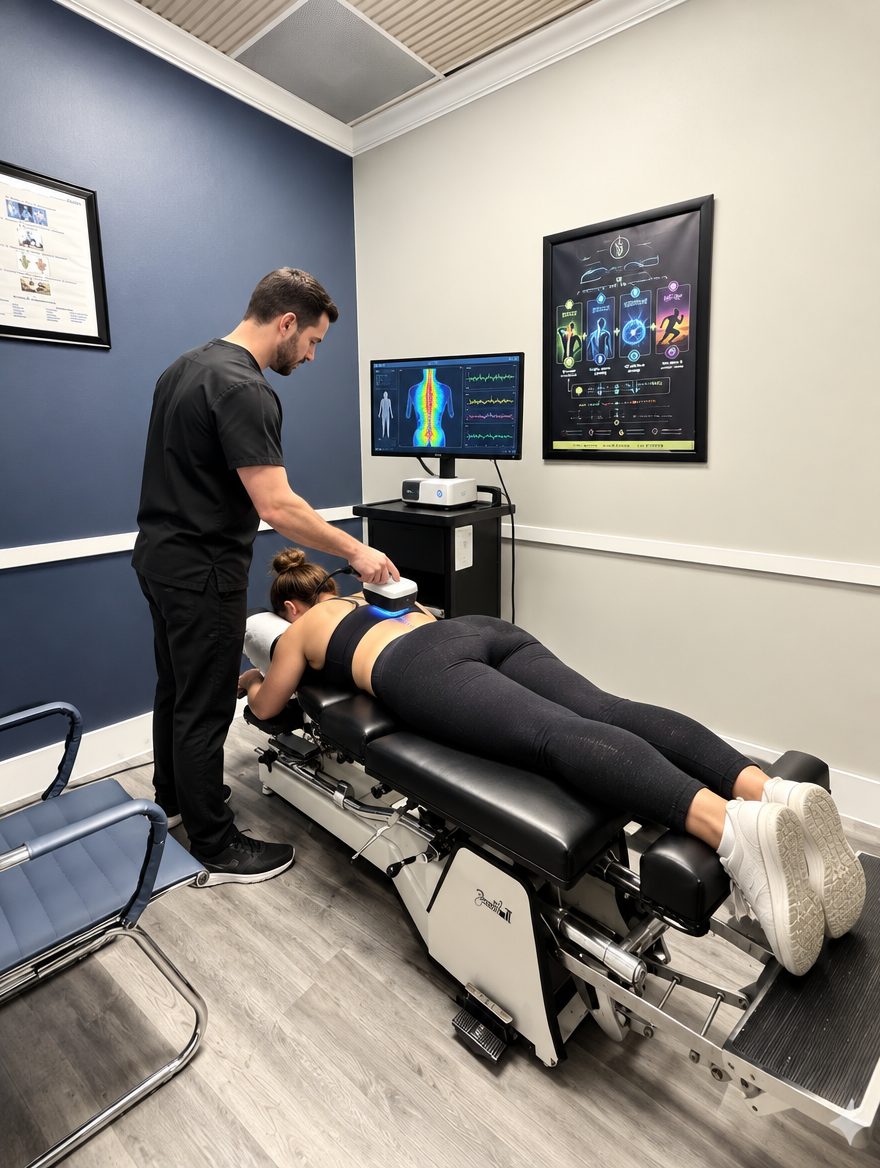
- A hands-on structural exam. Posture analysis, upper cervical motion testing, palpation of the suboccipital and jaw muscles, orthopedic tests that reproduce the headache from the neck, and a neurological and vascular screen.
- Surface scanning: sEMG + thermal. A painless scan along the spine. Surface EMG shows where the muscles beside each vertebra are guarding — upper cervical patterns typically light up at C1–C3; thermal scanning maps nerve irritation. Objective, measurable, re-scannable.
- Digital X-rays, when indicated. We look at the cervical curve and the alignment of the upper neck, and review any imaging you already have.
Visit two — your findings and your plan
Everything is explained in plain English with your scans and images in front of you, mapped to the four phases of the 4R Method: what we found, what we recommend, and how long it should take. Your full plan starts here — and in most cases care already began on visit one. For a head start, take the 60-second spine assessment and we will have your Spine Score and likely pattern before you walk in.
Headache treatment at home: triggers to track and habits that help
Between visits, the habits that support headache treatment are the same ones that reduce headache frequency:
- Keep a simple trigger log. Time of day, hours at the screen, sleep, caffeine, hydration, stress and where the pain started. Two weeks of notes usually reveals the pattern.
- Raise the screen, lower the shoulders. Monitor at eye level and the phone held up rather than looked down at. Every inch of forward head adds load to C1–C3.
- Move every 30–45 minutes. Stand, gently tuck the chin and look over each shoulder. Static posture is a bigger driver than any single bad position.
- Fix the pillow. One pillow that keeps the neck level with the spine; stomach sleeping twists the upper neck for hours and is a common overnight trigger.
- Hydrate and keep caffeine steady. Dehydration and caffeine withdrawal are two of the most common avoidable triggers.
- Heat the neck, not the head. Moist heat on the base of the skull and upper shoulders relaxes the suboccipital muscles; ice over the painful area if it is a sharp flare.
If headaches are becoming more frequent, or you are reaching for medication more than a couple of days a week, do not wait for the pattern to settle on its own — the earlier the neck component is addressed, the faster the frequency drops.
When a headache needs urgent care instead
A small number of headaches are not spine problems and need same-day medical evaluation: a sudden, severe ‘thunderclap’ headache that peaks within a minute; headache with fever and a stiff neck; headache after a head injury, fall or accident; headache with confusion, slurred speech, weakness, numbness or vision loss; a new headache that is the worst you have ever had; or a new headache pattern after age 50. If any of these apply, please see a doctor or urgent care today — we will be here for the recovery afterwards.
For everything else — the afternoon desk headache, the one that starts at the base of the skull, the migraines that have become more frequent since the neck got stiff — this is the headache treatment we provide all day in Coral Springs and Parkland, and we are usually able to see you the same day you call.
Serving headache patients across North Broward
Our clinic at 5675 Coral Ridge Drive, Coral Springs, FL 33076 serves Coral Springs, Parkland, Coconut Creek, Margate, Boca Raton, Tamarac, Pompano Beach and Deerfield Beach. Same-day appointments are usually available — call (954) 341-2256 or book online. Most patients from Parkland and Coral Springs are here in under 15 minutes.
Medically reviewed by Dr. Jared Cohen, DC — Co-Founder & Clinical Director, The Spine and Wellness Center. Last reviewed October 2026.
Frequently asked questions
How do I know if my headache is coming from my neck?
If the headache starts at the base of the skull and spreads forward, changes when you move your neck or hold a position, or can be reproduced by pressing on the upper neck, the cervical spine is involved. Reduced neck range of motion is another clue. The exam on your first visit tests this directly.
Can chiropractic headache treatment help migraines?
It can reduce how often they happen. Migraine is a neurological condition, but neck tension and forward-head posture are among its most common triggers. Restoring upper cervical motion and correcting posture lowers that trigger load, and many migraine patients report fewer and milder episodes. We coordinate with your physician for the neurological side.
How quickly does headache treatment work?
Many patients notice fewer and milder headaches within the first two to three weeks of the Repair phase, as the upper neck starts moving and the suboccipital muscles release. Lasting change comes in the Rebuild phase, when posture correction removes the daily load that was causing them.
Is it safe to adjust the upper neck for headaches?
Upper cervical adjustments are gentle, specific and well tolerated when they follow a proper exam. Your first visit includes neurological and vascular screening, and low-force instrument techniques are available. Any history of stroke, vascular disease or recent trauma is reviewed before Most patients have already begun care on visit one; this is where the full plan takes over.
Why do I get a headache every afternoon at work?
Hours of forward-head posture at a screen keep the suboccipital muscles contracted and compress the C1–C2 joints. By mid-afternoon the tissue has had enough and refers pain into the skull. Raising the screen, moving every 30–45 minutes and correcting the cervical curve is the headache treatment that typically resolves it.
Do you see headache patients from Parkland and Boca Raton?
Yes. Our clinic on Coral Ridge Drive in Coral Springs is a short drive from Parkland, Coconut Creek, Margate, Boca Raton and the surrounding communities, and same-day appointments are usually available.

Same-day appointments
Let's build your plan.
Find out what's actually going on and get a clear path forward. Same-day appointments available.
- Same-day appointments are usually available
- Our team calls you back to confirm your visit
- Coral Springs, serving Parkland & North Broward since 2005
Prefer to talk now? Call or text (954) 341-2256