
Headaches & Conditions · 6 min read
TMJ & jaw pain: causes and relief
A clicking jaw, morning soreness or pain when you chew usually has more than one cause — and the neck is in the mix more often than people expect. Here is how we sort it out.

Quick answer
TMJ disorder is a problem with the temporomandibular joint, the muscles that move it, or both. Jaw pain usually has several contributors — clenching and grinding, stress, bite issues, and forward head posture that changes how the jaw rests. Soft-tissue work on the jaw muscles combined with care for the upper neck relieves most cases without medication.
What is TMJ disorder?
Jaw pain that clicks, locks or aches when you chew usually points to the temporomandibular joint — the TMJ — the hinge that connects the lower jaw to the skull just in front of each ear. A TMJ disorder (sometimes called TMD) is any problem with that joint, the muscles that move it, or the disc inside it. It is common, affecting millions of adults according to the National Institute of Dental and Craniofacial Research, and it ranges from a minor annoyance to a daily source of pain.
Because the jaw, head and neck share so many muscles and nerves, TMJ problems rarely travel alone. They show up alongside headaches, neck stiffness and ear discomfort — which is exactly why treating the jaw in isolation so often disappoints, and why our Coral Springs clinic looks at the whole chain from the bite to the base of the skull.

Common symptoms of TMJ disorder
- Jaw soreness, fatigue or pain, often worst in the morning after a night of clenching
- Clicking, popping or grating when you open wide or chew
- Difficulty or discomfort chewing; a jaw that feels tired after a meal
- A jaw that catches, locks or will not open fully
- Headaches around the temples; pain behind or in front of the ear
- Ear fullness or ringing with no infection; facial muscle tightness and neck stiffness
Good to know
Clicking alone, without pain or locking, is common and usually does not need treatment. Pain, locking, or a bite that has started to feel different is the combination that deserves an evaluation.
6 proven causes of jaw pain
Jaw pain almost always has more than one contributor, and the contributors feed each other:
- Clenching and grinding (bruxism). Often during sleep or under stress, it overloads the joint and fatigues the chewing muscles — the masseter and temporalis — until they ache like any overworked muscle.
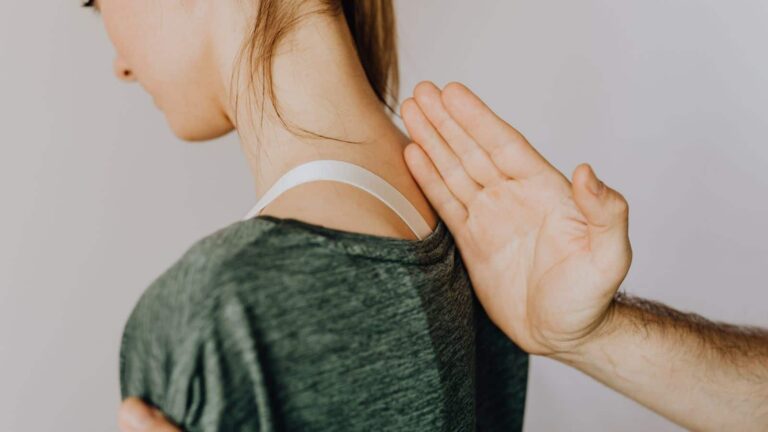
- Forward head posture. When the head sits ahead of the shoulders, the lower jaw is pulled back and down, changing how the joint rests and how the muscles around it work. Hours at a screen set this up; text neck explains the mechanics.
- Upper-neck tension and joint restriction. The top cervical joints and the jaw share nerve supply, so a stiff, irritated upper neck refers pain toward the jaw and face — and vice versa.
- Stress. It ties the others together by keeping you clenched through the day, tightening the neck, and worsening sleep.
- Bite misalignment or dental work. A high filling, missing teeth or orthodontic changes alter how the teeth meet and how the joint loads.
- Trauma and arthritis. A blow to the jaw, a whiplash injury, or arthritic wear inside the joint itself.
A typical story: a stressful stretch at work leads to more clenching, which fatigues the jaw muscles, which pull on an already tense neck, which refers pain back to the jaw. That loop is why lasting relief comes from treating the whole chain, and why the evaluation looks at your bite, your stress habits and your posture together.
How we help with TMJ at The Spine and Wellness Center
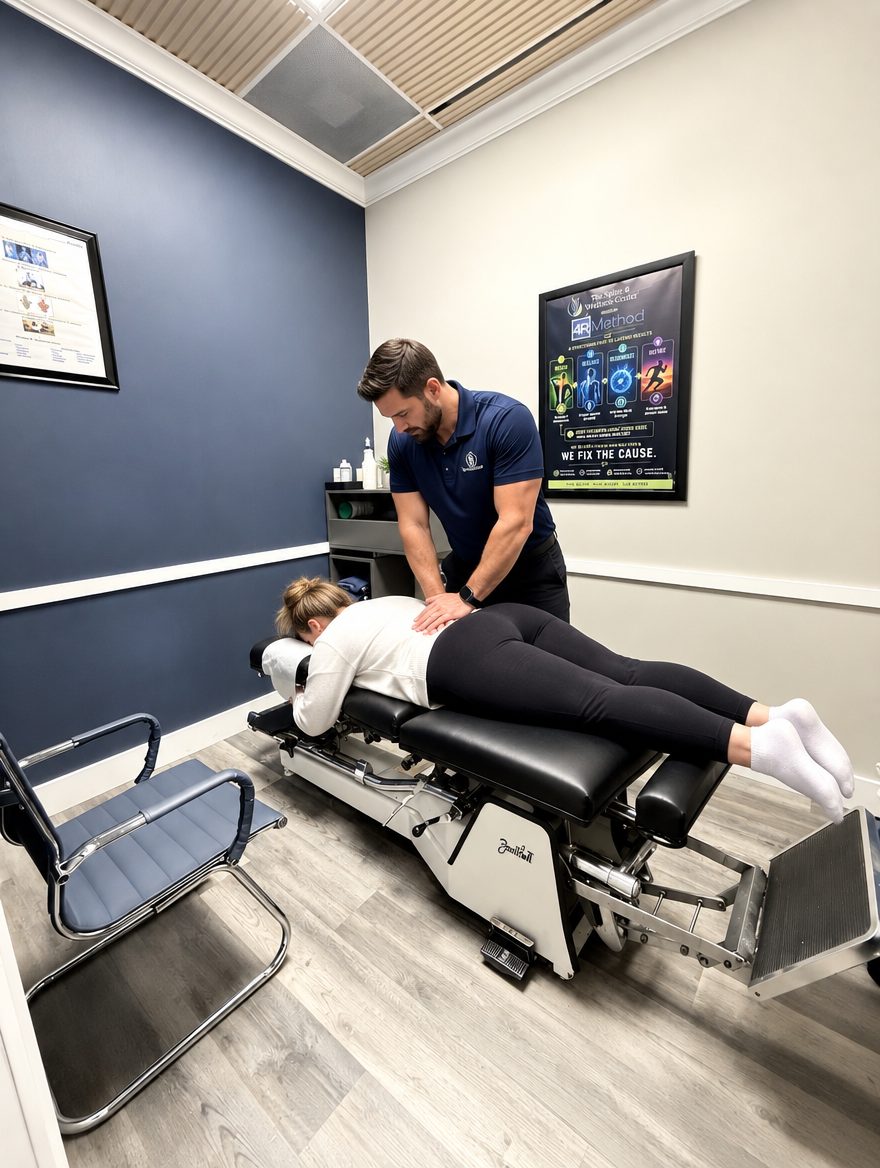
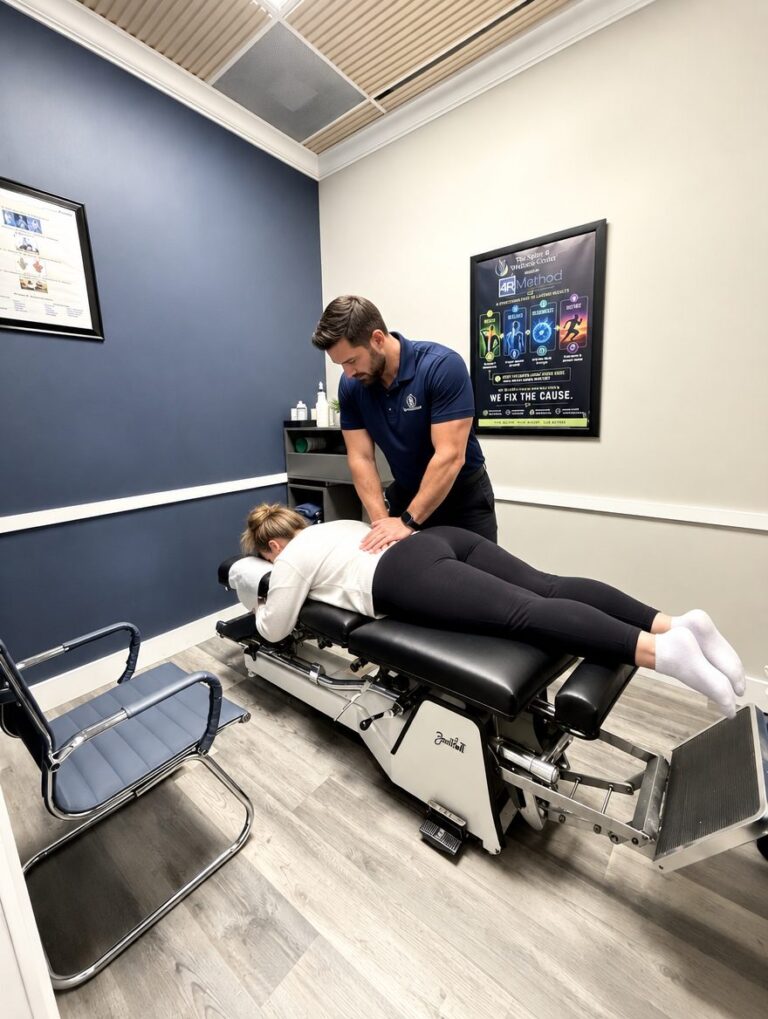
Our care is conservative, drug-free and focused on the relationship between the jaw, the neck and posture. Visit one is measurement: a conversation about when the jaw hurts and what you have noticed about clenching, a hands-on exam of jaw opening, joint tracking and the chewing muscles, a structural exam of the neck, surface EMG and thermal scanning to show where the muscles are guarding, and digital X-rays when indicated. Visit two is your full report of findings and plan, and Most patients have already begun care on visit one; this is where the full plan takes over. Our TMJ treatment follows the 4R Method:
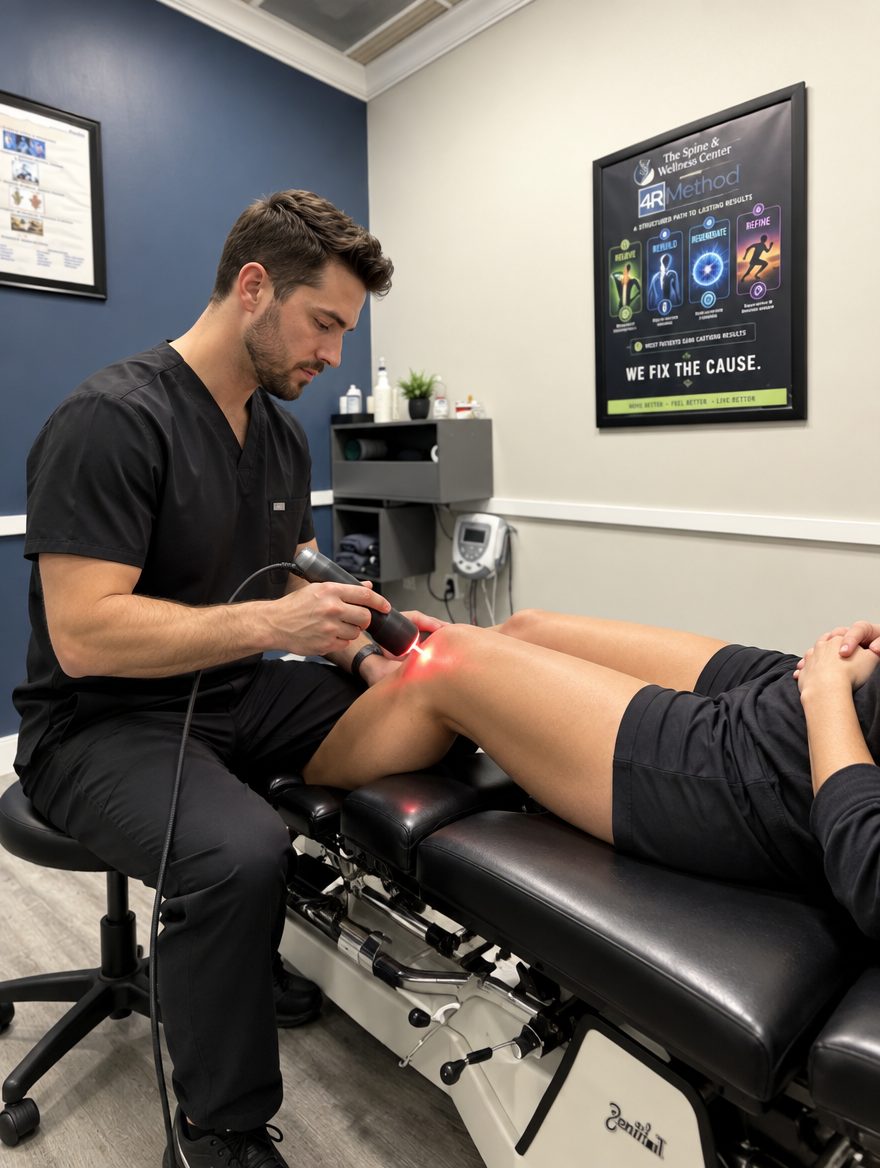
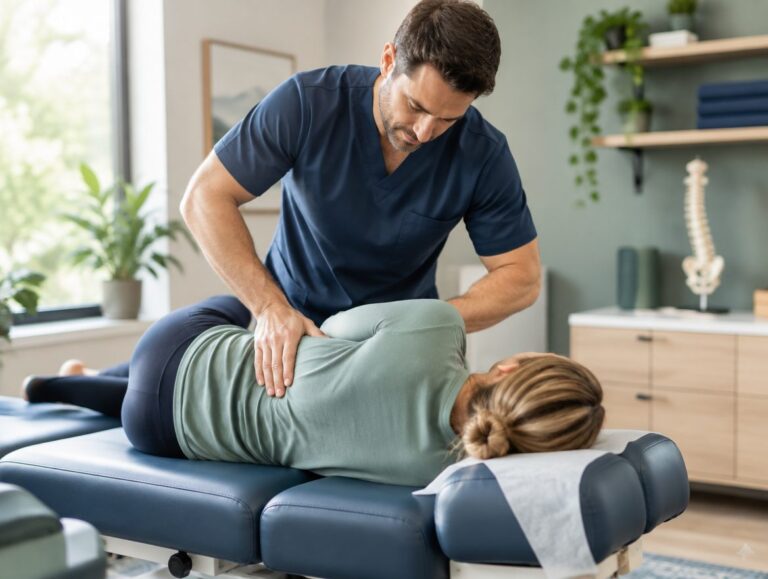
- Repair (3–5 visits a week, 4–8 weeks). Gentle soft-tissue release of the masseter, temporalis and pterygoid muscles, cold laser for the inflamed joint, and low-force chiropractic adjustments to the upper cervical joints — the core of our neck pain treatment — so the neck stops feeding the jaw.
- Rebuild (2–3 visits a week, 8–16 weeks). Jaw exercises to restore balanced opening, posture correction to bring the head back over the shoulders, and coordination with your dentist on a night guard when grinding is part of the picture.
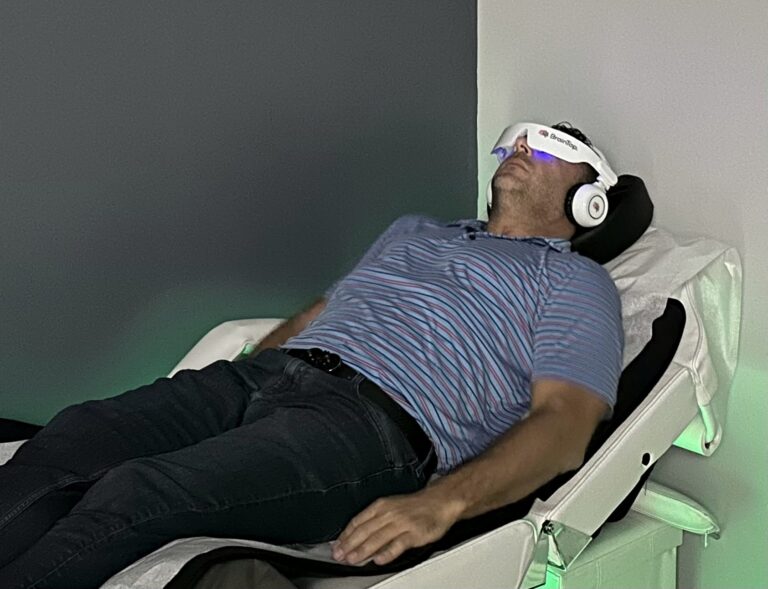
- Regenerate and Refine. Red light for the chronically tight tissue, stress-management tools such as BrainTap, then periodic tune-ups.
Patients from Coral Springs, Parkland, Margate and Coconut Creek tell us the difference is that the jaw and neck are treated together rather than chasing one symptom at a time. When headaches are the louder complaint, our headache treatment page covers how the two overlap, and natural tension headache relief explains the clenching-headache connection.
Self-care for jaw pain you can start today
- Eat softer foods and skip gum during flare-ups; cut apples and sandwiches into smaller bites
- Apply a warm compress to the jaw muscles for 10 minutes, or cool for a sharp, swollen flare
- Rest the tongue gently on the roof of the mouth with teeth slightly apart — ‘lips together, teeth apart’ — as your daytime default
- Notice daytime clenching: set a phone reminder every hour to check and release
- Keep screens at eye level and take posture breaks; a forward head loads the jaw
- Manage stress with slow breathing or a short walk; how stress affects your spine explains the posture link
If jaw pain is persistent, your jaw locks, or chewing and talking are becoming difficult, an evaluation is worthwhile — and please see a doctor or urgent care today for a jaw that will not close after an injury, or facial swelling with fever. A spine assessment includes the upper-neck exam that tells us how much of your jaw pain is really coming from above it.
Serving TMJ and jaw pain patients across North Broward
Our clinic at 5675 Coral Ridge Drive, Coral Springs, FL 33076 serves Coral Springs, Parkland, Coconut Creek, Margate, Boca Raton, Tamarac, Pompano Beach and Deerfield Beach. Same-day appointments are usually available — call (954) 341-2256 or book online. Most patients from Parkland and Coral Springs are here in under 15 minutes.
Medically reviewed by Dr. Jared Cohen, DC — Co-Founder & Clinical Director, The Spine and Wellness Center. Last reviewed October 2026.
Frequently asked questions
Can a chiropractor help with TMJ and jaw pain?
Yes, especially when the neck and posture are contributing — which is most of the time. We release the chewing muscles directly, calm the joint with cold laser, and restore motion to the upper cervical joints that refer pain to the jaw. We coordinate with your dentist when a night guard or bite issue is part of the picture.
Is jaw pain connected to neck pain?
Often. The jaw, head and upper neck share muscles and nerve supply, so upper-neck tension and forward head posture change how the jaw rests and refer pain toward the face — and a clenched jaw tightens the neck in return. Treating both areas together works better than treating either alone.
How can I relieve jaw pain at home?
Eat softer foods, avoid gum, use a warm compress on the jaw muscles, keep 'lips together, teeth apart' as your daytime default, and set hourly reminders to check for clenching. Improve screen posture and manage stress. If pain persists beyond two weeks or the jaw locks, get evaluated.
When should I see someone for TMJ pain?
See us if jaw pain is persistent, the jaw locks or clicks painfully, chewing and talking are difficult, or headaches and neck stiffness travel with it. Please see a doctor or urgent care today for a jaw that will not close after an injury or for facial swelling with fever.
Same-day appointments
Reading about it is step one.
Step two is a measurement. Visit one we measure — and usually begin care; visit two you get your full findings and plan.
- Same-day appointments are usually available
- Our team calls you back to confirm your visit
- Coral Springs, serving Parkland & North Broward since 2005
Prefer to talk now? Call or text (954) 341-2256