
Wellness & Lifestyle · 6 min read
How stress affects your spine and posture
Stress does not just live in your head. It shows up as a stiff neck, hard shoulders, a clenched jaw and an ache between the shoulder blades. Here is the loop, and how to break it.

Quick answer
Stress affects your spine by keeping the nervous system in a protective state: muscles brace, breathing goes shallow and posture collapses forward. Sustained tension pulls on the neck and upper back, restricts joint motion and irritates nerves, and the resulting pain adds more stress. Breaking the loop takes physical release of the tension, restored joint motion and daily habits that lower the baseline.
The stress-tension-pain loop
Understanding how stress affects your spine starts with the nervous system. Under threat, real or perceived, the body shifts into a protective state: muscles brace, breathing becomes shallow and fast, and posture tightens toward the center. That response is useful for a minute. When the stress is a deadline, a commute and a phone that never stops, it runs all day, and the muscles never get the signal to let go.
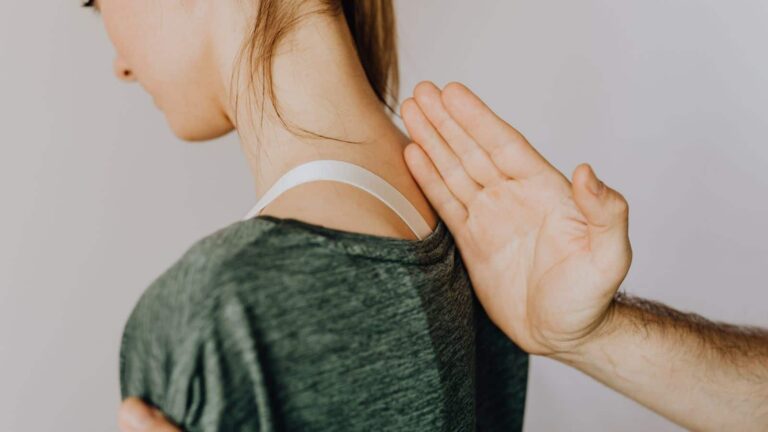
Sustained tension pulls on the spine. The upper trapezius hoists the shoulders, the suboccipital muscles clamp the base of the skull, the jaw clenches, and the joints of the neck and mid-back lose motion under the guarding. Restricted joints irritate the nerves beside them. The pain that follows adds more stress, which deepens the tension, and the loop tightens. The American Psychological Association describes exactly this musculoskeletal pathway in its summary of stress effects on the body.
At The Spine and Wellness Center in Coral Springs, Dr. Jared Cohen, DC sees the loop every day, usually in someone who has been told the problem is “just stress” and has been given no physical way out of it.
Where stress lodges in the body
Where stress affects your spine is predictable. It does not distribute itself evenly. It concentrates in predictable places, which is why so many people describe the same symptoms:
- The base of the skull and neck, producing tension headaches that wrap from the back of the head forward; see Natural Tension Headache Relief
- The upper traps and shoulders, which feel hard and sit higher than they should
- The jaw, from clenching and grinding, often at night; TMJ and Jaw Pain covers it
- The mid and lower back, especially with long desk hours, where the guarding muscles ache by evening
- The breath: shallow, chest-dominant breathing that keeps the neck muscles switched on and limits rib and spine mobility
If neck tension is your main complaint, Neck Tension Might Be Telling You Something explains what it may mean, and our neck pain treatment focuses on releasing the structures where stress settles first.

How stress affects your spine and posture
Stress and posture reinforce each other in both directions. A stressed body collapses forward: rounded shoulders, forward head, a sunken chest. That slumped position restricts breathing and signals more stress back to the brain. Over months of screen time and worry it becomes your default, and the muscles that should hold you upright weaken while the ones pulling you forward grow tight and overworked.
The forward-head position is the expensive part. The head weighs ten to twelve pounds balanced over the shoulders; every inch it drifts forward adds several times that load to the neck. Nobody decides to slump. They adapt to long days at a desk, in traffic on the Sawgrass or scrolling in bed, and by the time the discomfort arrives the posture has been practiced thousands of hours.
That is why posture advice alone rarely holds. The pattern has to be unwound physically and then retrained; How to Fix Your Posture covers the habits, and posture correction is the structured version.
5 ways we break the loop
Breaking the loop usually needs more than willpower, because the tension is physical. Visit one measures it: a conversation, a hands-on structural exam, and surface EMG and thermal scanning, which show stress-driven muscle bracing unusually clearly. Visit two is the report of findings and the plan. Inside the 4R Method, the plan draws on:
- Gentle chiropractic care to restore motion at the neck and mid-back segments that guarding has locked, which eases the mechanical strain and lets the nervous system settle.
- Massage therapy to directly release the chronically guarded upper traps, suboccipitals and jaw muscles; patients often describe a noticeable drop in overall tension after combining it with adjustments. The Benefits of Massage Therapy explains why.
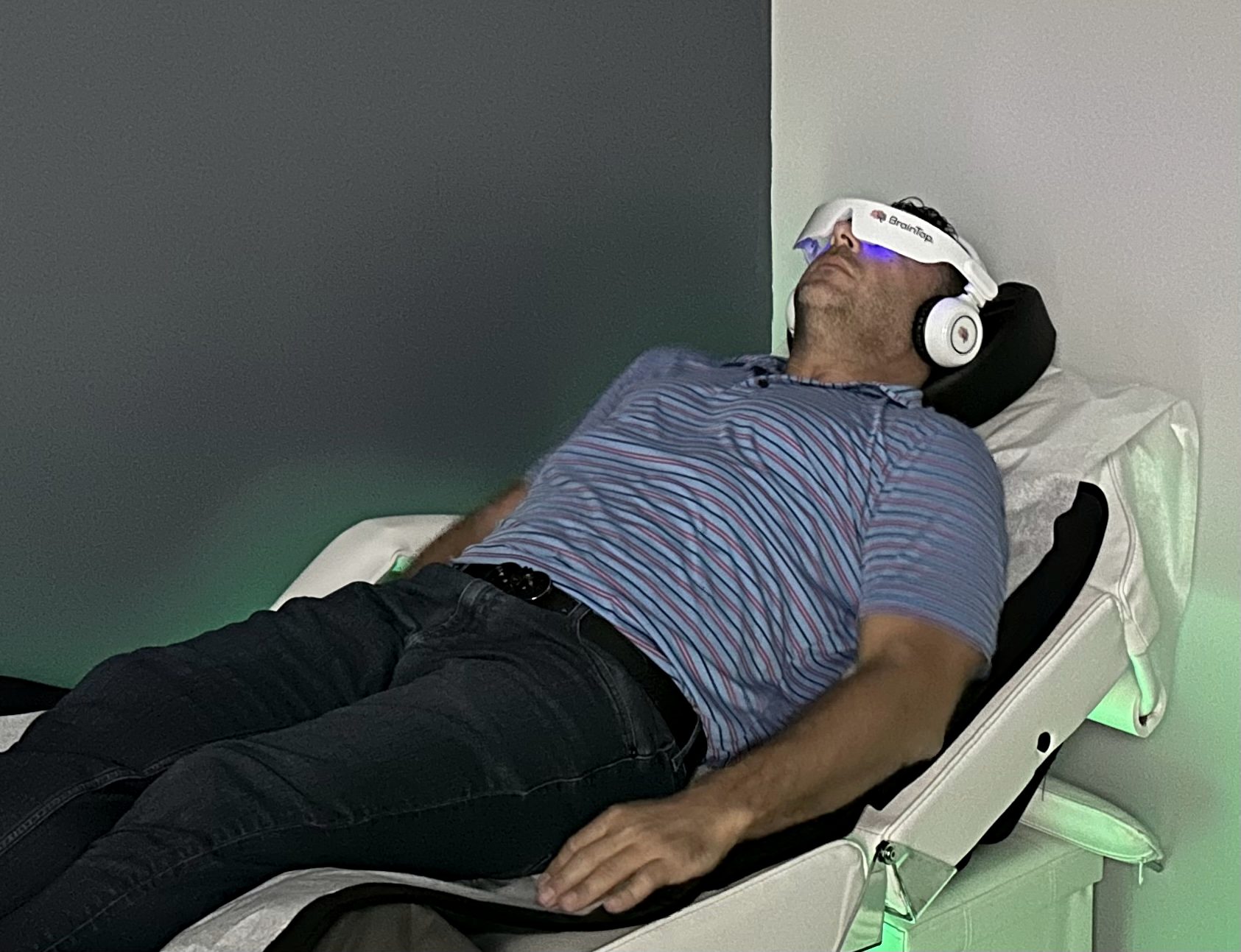
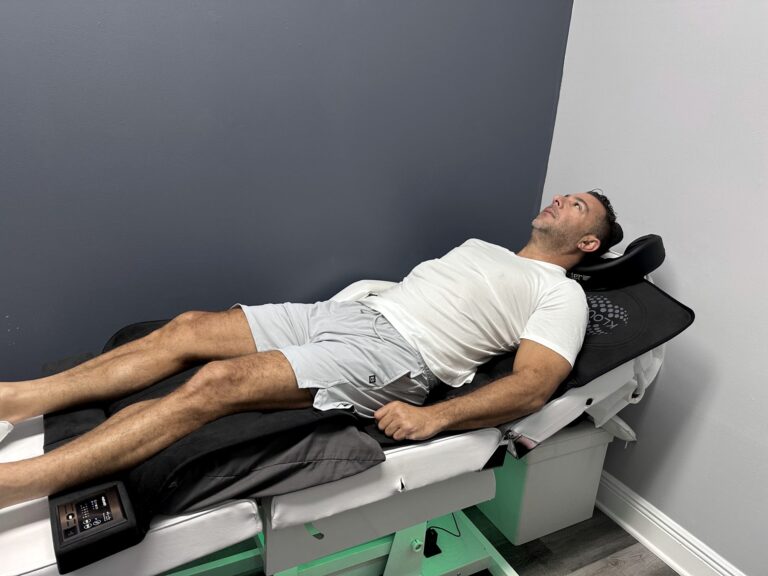
- BrainTap, a twenty-minute guided light-and-sound session in the Regenerate phase that helps the nervous system shift out of the protective state; it is a wellness tool, not a medical treatment.
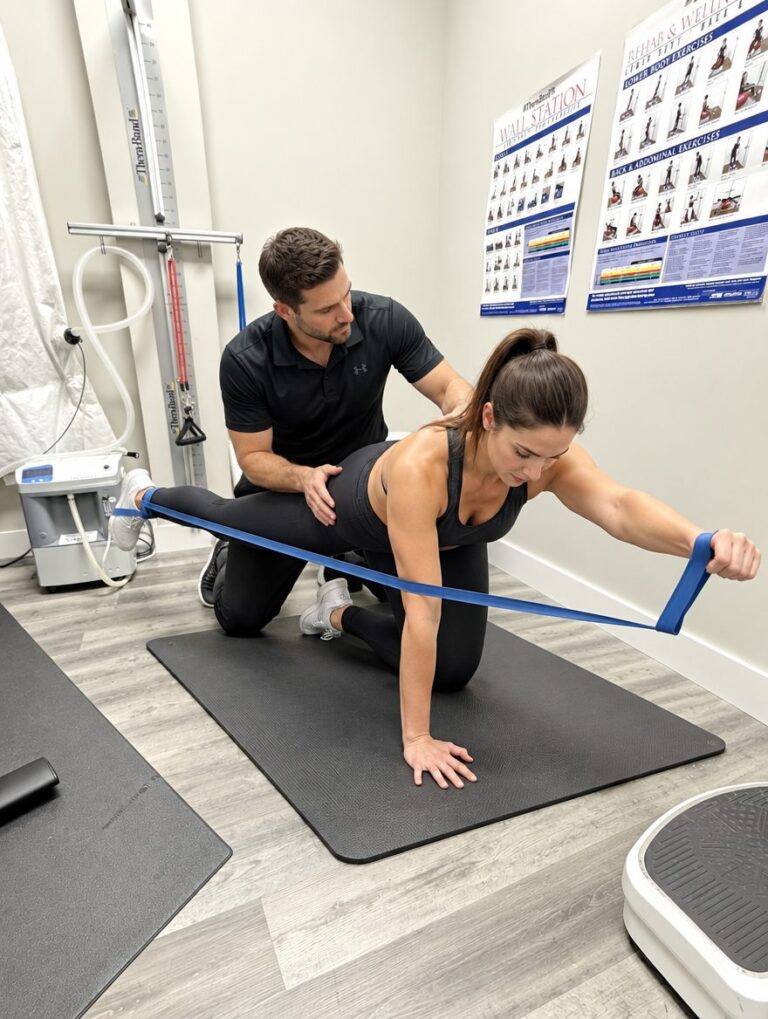
- Breathing and posture retraining in the Rebuild phase so the shoulders stop living next to the ears.
- A short daily routine you can actually keep, because in-office care opens the door and habits keep it open.
Good to know
Stress-related tension is real tension. The muscles are measurably contracted and the joints measurably restricted. Treating it physically is not a workaround for the stress; it is how the body gets permission to stand down.
Daily habits that keep tension from rebuilding
- Slow belly breathing for two to three minutes, two or three times a day, through the nose.
- A posture and movement break every 30–60 minutes: stand, roll the shoulders, look over each shoulder.
- Stretch the chest and upper traps; the 30-second stretch is the one to start with.
- A daily walk or gentle exercise to discharge the tension the day stored.
- Seven to nine hours of sleep, which lowers baseline muscle guarding more than anything else on this list.
If stress-related tension has become recurring headaches, a neck that is stiff every morning or back pain that will not ease, hands-on care can interrupt the cycle. Chest pain, shortness of breath, or a sudden severe headache are not tension; please see a doctor or urgent care today. For the rest, a spine assessment at our Coral Springs clinic, minutes from Parkland, is where we measure how stress affects your spine and start to unwind it.
Serving stress and tension patients across North Broward
Our clinic at 5675 Coral Ridge Drive, Coral Springs, FL 33076 serves Coral Springs, Parkland, Coconut Creek, Margate, Boca Raton, Tamarac, Pompano Beach and Deerfield Beach. Same-day appointments are usually available — call (954) 341-2256 or book online. Most patients from Parkland and Coral Springs are here in under 15 minutes.
Medically reviewed by Dr. Jared Cohen, DC — Co-Founder & Clinical Director, The Spine and Wellness Center. Last reviewed October 2026.
Frequently asked questions
Can stress really cause back and neck pain?
Yes. Stress keeps the nervous system in a protective state in which muscles brace continuously. Sustained tension in the neck, shoulders and back pulls on the spine, restricts joint motion and can irritate nerves. It commonly shows up as a stiff neck, hard shoulders, tension headaches and an ache between the shoulder blades.
How does stress affect posture?
Stress collapses the body forward into rounded shoulders, a forward head and a sunken chest. That position restricts breathing and signals more stress to the brain, creating a loop. Over months it becomes the default posture, the upright muscles weaken, and the forward-pulling muscles grow tight and overworked.
Can a chiropractor help with stress-related tension?
Chiropractic care restores motion to the neck and mid-back joints that stress-driven guarding has locked, which eases mechanical strain and helps the nervous system settle. Combined with massage for the guarded muscles, breathing and posture retraining, and BrainTap in the Regenerate phase, many patients report a clear drop in overall tension.
What can I do at home for stress tension in my neck?
Slow belly breathing for a few minutes several times a day, a movement break every 30–60 minutes, the 30-second upper trapezius stretch, a daily walk, and seven to nine hours of sleep. These lower baseline muscle guarding. If tension returns daily despite them, the joints underneath usually need to be addressed.
Same-day appointments
Reading about it is step one.
Step two is a measurement. Visit one we measure — and usually begin care; visit two you get your full findings and plan.
- Same-day appointments are usually available
- Our team calls you back to confirm your visit
- Coral Springs, serving Parkland & North Broward since 2005
Prefer to talk now? Call or text (954) 341-2256