
Wellness & Lifestyle · 6 min read
The best sleeping position for neck pain
Eight hours a night is either restoring your neck or straining it. Here is how to set up your position, pillow and mattress so you stop waking up with the same stiff, aching neck.

Quick answer
The best sleeping position for neck pain is on your back or your side, with a pillow that keeps the neck level with the spine — thinner for back sleepers, thicker for side sleepers. Stomach sleeping is the worst because it twists the neck for hours. If stiffness persists despite a good setup, the problem is usually the neck itself.
Why your sleeping position matters so much for your neck
Finding the right sleeping position for neck pain can be the difference between waking up refreshed and waking up with the same stiff, aching neck day after day. During sleep the neck muscles relax completely, which leaves your pillow and mattress to support the cervical spine for seven or eight hours at a stretch. If that support holds the neck bent, propped or twisted, the facet joints and soft tissues stay strained all night — and by morning you have stiffness, soreness and a head that will not turn.
The goal is simple: keep the neck in a neutral line with the rest of the spine, neither pushed up toward the ceiling nor dropped toward the mattress. When head, neck and spine stay aligned, the muscles can actually rest and the discs can rehydrate. At our Coral Springs clinic we trace a surprising share of persistent morning neck pain back to this one variable.

The best sleeping position for neck pain: back or side
On your back is the most neck-friendly position for most people. The spine rests in its natural alignment and weight is distributed evenly. Use a pillow that supports the curve of the neck without pushing the head forward — if your chin tips toward your chest, the pillow is too thick. A small pillow under the knees takes pressure off the low back and makes the position easier to hold.
On your side works well when done right. The key is a pillow thick enough to fill the gap between the shoulder and the ear so the neck stays level — not tilted down toward the mattress or kinked up toward the ceiling. Side sleepers generally need a firmer, taller pillow than back sleepers. A pillow between the knees keeps the pelvis and lower spine square too.
Quick test
Have someone photograph you lying in your usual position. If the line from the bridge of your nose down the breastbone is straight and level with the spine, your setup is working. If the head is tipped or turned, start with the pillow.
The 1 position to avoid: stomach sleeping
Stomach sleeping is the hardest sleeping position for neck pain. To breathe you must turn your head sharply to one side and hold it there for hours, rotating the cervical spine well out of neutral and loading the facet joints on one side. It also flattens the natural low-back curve and compresses the jaw.
- Forces the neck into prolonged rotation — the same strain as sleeping with your head turned to check a blind spot
- Overloads the joints and muscles on one side, which is why the stiffness is usually one-sided
- Aggravates existing disc and nerve problems; arm tingling on waking is a common clue
- If you cannot break the habit overnight, hug a body pillow to coax yourself onto your side — most people convert within two weeks
Choosing the right pillow and mattress
The pillow is the most important variable. It should keep the neck level with the spine in your chosen position, so back sleepers generally need a thinner pillow and side sleepers a firmer, thicker one. Contoured cervical pillows and memory foam help many patients because they support the curve rather than just the head, but the best pillow is whichever one keeps your neck neutral for your body — not the most expensive one. Replace a pillow that has gone flat; most last one to two years.
The mattress matters too. Too soft and the body sags out of alignment; too firm and pressure points form at the shoulder and hip, which pushes side sleepers into a twist. A medium-firm surface that supports the spine’s natural curves suits most people. The Cleveland Clinic lists sleep position and pillow choice among the common, correctable causes of neck pain — and a sagging, decade-old mattress is often part of the problem.
When the pillow isn’t the problem
If you have dialed in your position, pillow and mattress and still wake up sore, the issue is usually in the neck itself rather than the bedroom. Locked facet joints, a flattened neck curve from daytime screen posture, or muscle tension that never switches off will keep the neck from settling no matter how it is propped. Neck tension might be telling you something covers the signals, and text neck explains how daytime posture follows you to bed.
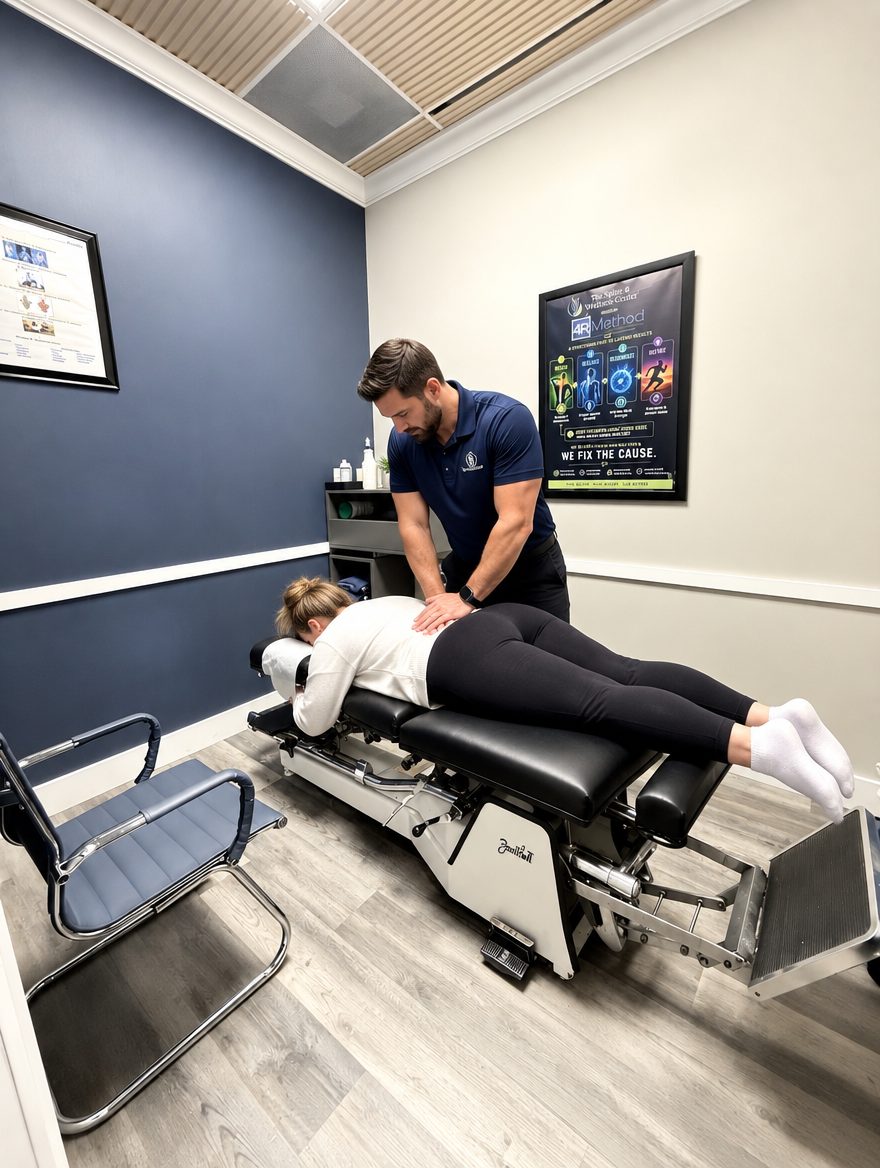
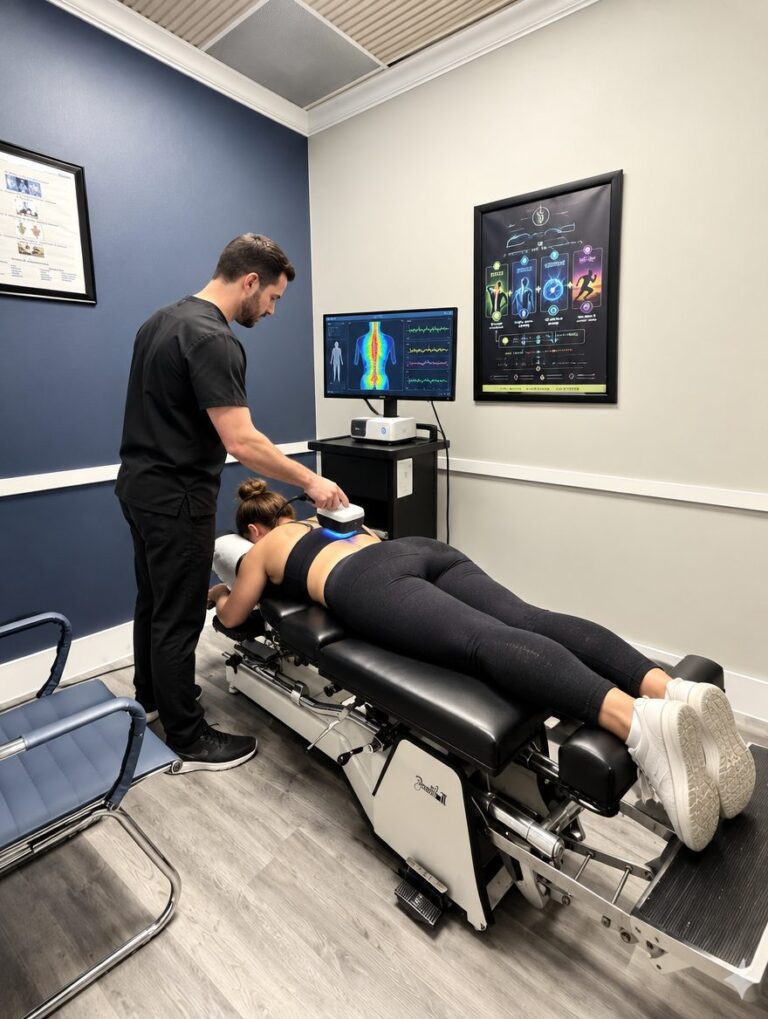
Visit one is measurement: a conversation about your sleep setup and your workday, a hands-on structural exam, surface EMG and thermal scanning to show where the muscles are guarding, and digital X-rays when indicated to measure the neck curve. Visit two is your full report of findings and plan, and Most patients have already begun care on visit one; this is where the full plan takes over. Our neck pain treatment follows the 4R Method: Repair (3–5 visits a week, 4–8 weeks) restores motion with gentle chiropractic adjustments, soft-tissue work and cold laser; Rebuild (2–3 visits a week, 8–16 weeks) adds posture correction so the daytime habits stop carrying over into the night.
When to see us about morning neck pain
Try the better sleeping position for neck pain first for two weeks. If neck pain still wakes you, lingers well into the day, or comes with headaches, tingling or arm symptoms, it is time for an evaluation — those signs point to something more than a bad pillow. Morning headaches in particular often come from the upper neck; natural tension headache relief explains why. Please see a doctor or urgent care today for sudden severe neck pain with fever, or weakness or numbness in the arms or legs.
A spine assessment is the fastest way to find out whether your neck — or your bedroom — is the problem, and our neck pain relief in Coral Springs page covers the full range of care.
Serving neck pain patients across North Broward
Our clinic at 5675 Coral Ridge Drive, Coral Springs, FL 33076 serves Coral Springs, Parkland, Coconut Creek, Margate, Boca Raton, Tamarac, Pompano Beach and Deerfield Beach. Same-day appointments are usually available — call (954) 341-2256 or book online. Most patients from Parkland and Coral Springs are here in under 15 minutes.
Medically reviewed by Dr. Jared Cohen, DC — Co-Founder & Clinical Director, The Spine and Wellness Center. Last reviewed October 2026.
Frequently asked questions
Is it bad to sleep on your stomach with neck pain?
Yes. Stomach sleeping forces the head into prolonged rotation to breathe, twisting the cervical spine and loading the joints and muscles on one side for hours. It is the position most likely to cause or worsen morning neck pain. Hugging a body pillow helps most people transition to their side within a couple of weeks.
What kind of pillow is best for neck pain?
One that keeps the neck level with the spine in your position: thinner for back sleepers, thicker and firmer for side sleepers. Contoured or memory-foam cervical pillows help many people hold a neutral neck. The right pillow is the one that passes the photo test — a straight line from nose to breastbone to spine.
Why does my neck hurt every morning when I wake up?
Morning neck pain usually comes from a position, pillow or mattress that holds the neck out of alignment all night. If you have corrected those and still wake up stiff, locked cervical joints, muscle tension or a flattened neck curve from daytime posture are the likely causes — and those respond well to care.
What mattress firmness is best for neck pain?
Medium-firm suits most people: it supports the spine's natural curves without creating pressure points at the shoulder and hip that twist side sleepers out of alignment. A sagging or very old mattress lets the body fall out of line and should be replaced, and a thick topper can rescue a too-firm one.

Same-day appointments
Reading about it is step one.
Step two is a measurement. Visit one we measure — and usually begin care; visit two you get your full findings and plan.
- Same-day appointments are usually available
- Our team calls you back to confirm your visit
- Coral Springs, serving Parkland & North Broward since 2005
Prefer to talk now? Call or text (954) 341-2256