
Back & Neck · 6 min read
Neck tension might be telling you something
That nagging tightness at the base of the skull is easy to blame on a bad pillow. When it comes back every day, it is usually your body's early-warning system.

Quick answer
Persistent neck tension is usually a signal, not a fluke. The five most common messages behind it are forward-head posture overloading the neck muscles, stress that has become physical bracing, a stiff or misaligned segment in the cervical spine, early nerve irritation from a disc, and strain from sleep or screen habits. Tension with headaches, dizziness or arm tingling deserves an evaluation.
Why neck tension happens so often now
Neck tension is practically a feature of modern life. Between the laptop, the phone, the commute and the day’s stress, the muscles at the back and sides of the neck are rarely allowed to rest. The head weighs ten to twelve pounds when it sits over the shoulders; tilt it forward to read a screen and the load on the neck climbs several times over. Hold that for eight hours and the muscles stay contracted long after you look up.
Stress adds a second layer. Under pressure, people unconsciously raise and brace the shoulders and clench the jaw, and the upper trapezius and suboccipital muscles never fully release. The result is the tightness at the base of the skull, the soreness when turning, the dull ache that is there when you wake up and still there at lunch.
At The Spine and Wellness Center in Coral Springs we treat that pattern as information. Tension that keeps returning is the body’s way of saying a specific structure needs attention, and finding which one is the whole job.
5 things persistent neck tension may be telling you
Pain is rarely random. Here is what recurring tightness most often means, roughly in order of how often we find it:
- Your posture has become the problem. Forward-head posture, sometimes called tech neck, loads the lower cervical spine and asks the muscles to hold the head up all day. We covered the fix in How to Fix Your Posture.
- Your stress has gone physical. Shoulder-raising and jaw-clenching store tension in the neck and feed a loop: tension creates pain, pain creates more tension. How Stress Affects Your Spine explains that loop.
- A segment in your neck is stiff or misaligned. When one cervical joint stops moving well, the muscles around it guard, and the neighbors work overtime. The muscle tightness is the symptom; the joint is the cause.
- A nerve is starting to get irritated. Tight muscles and a bulging disc can both narrow the space a nerve root passes through. Tingling or aching into the shoulder or arm is the tell.
- Your habits are working against you. A pillow that props the head forward, a monitor below eye level, a phone held at the chest; each one restarts the tension every day.

When tension is a sign of something more
Most tension is muscular and mechanical and responds well to conservative care. Some accompanying symptoms change the picture and mean the cause is deeper than the muscle:
- Headaches that start at the base of the skull and wrap forward; these are often cervicogenic, and Natural Tension Headache Relief covers them
- Dizziness or a feeling of being off-balance when you turn your head
- Numbness, tingling or weakness into the shoulder, arm or hand
- Tension that limits how far you can turn, especially when checking a blind spot
- Fatigue, poor sleep and jaw pain that travel with the neck tightness
The Cleveland Clinic notes that neck pain with fever, a severe sudden headache, numbness or weakness, or following a fall or collision warrants prompt medical attention. Please see a doctor or urgent care today for any of those. For everything else, persistent tightness is a reason to measure, not to wait.
How we find the cause of neck tension
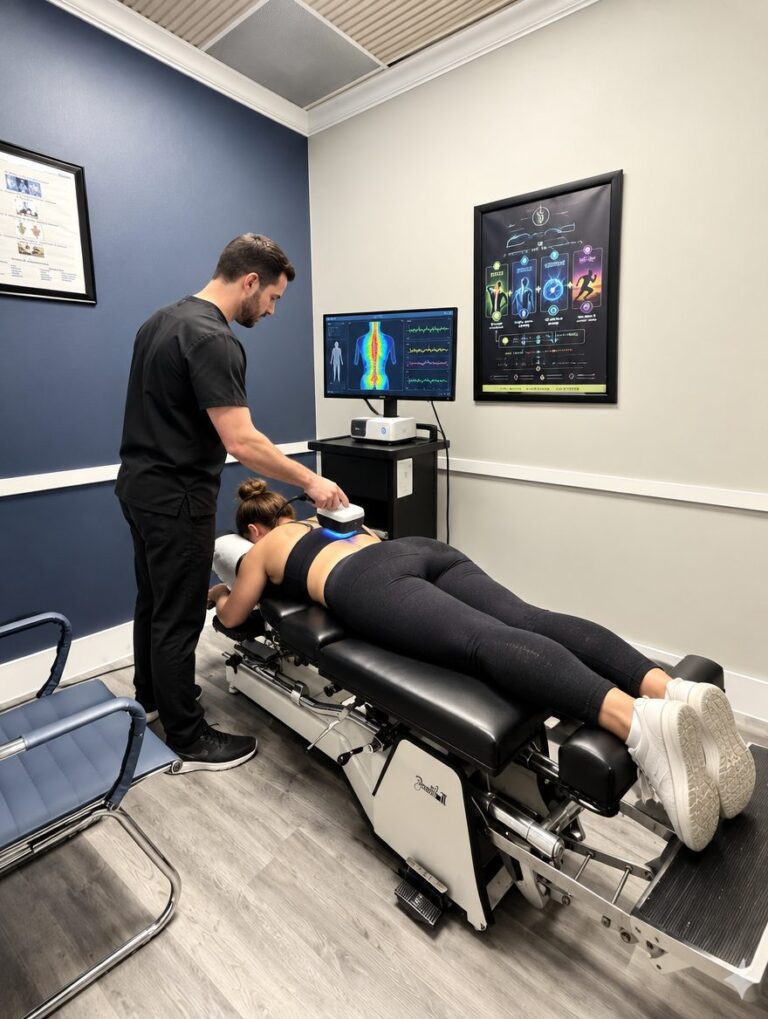
We do not guess at the cause; we measure it. Visit one is a conversation about when the tension started and what changes it, a hands-on structural exam of the cervical spine, surface EMG and thermal scanning that show which muscles are overworking and where the nervous system is irritated, and digital X-rays when indicated. Visit two is the report of findings and the plan, and Most patients have already begun care on visit one; this is where the full plan takes over.
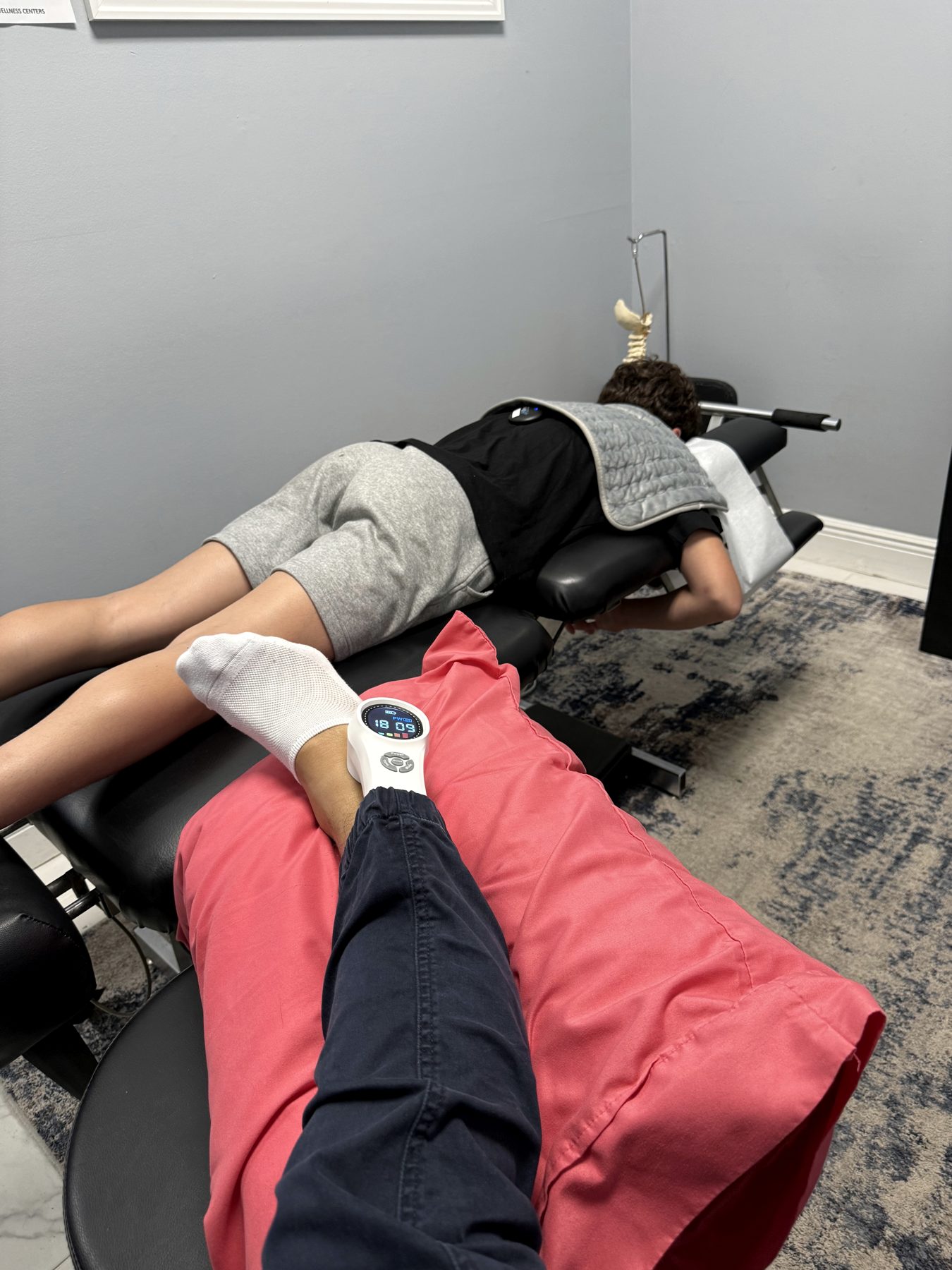
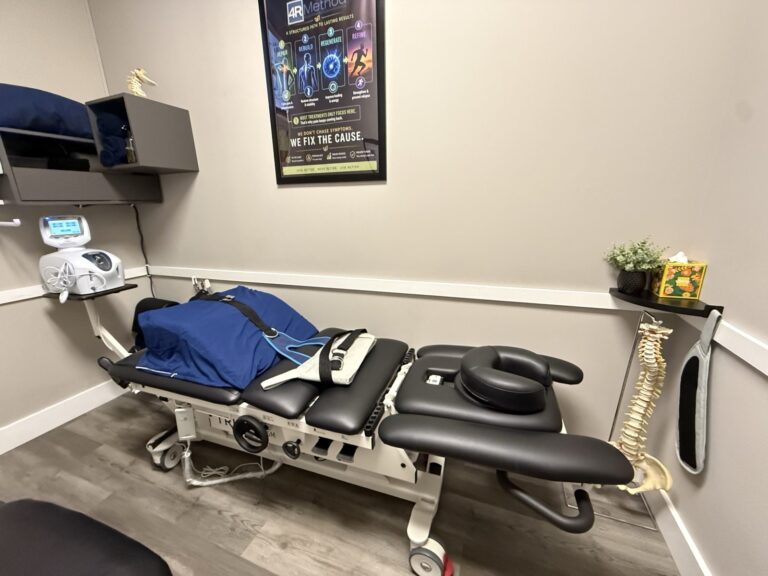
The plan depends on what the measurements show. Inside the 4R Method, the Repair phase typically pairs gentle cervical adjustments to restore motion at the stiff segment with soft-tissue release of the upper traps and suboccipitals, and cold laser if a nerve root is inflamed. That is our neck pain treatment approach; when a nerve is involved, pinched nerve treatment and cervical decompression are added.
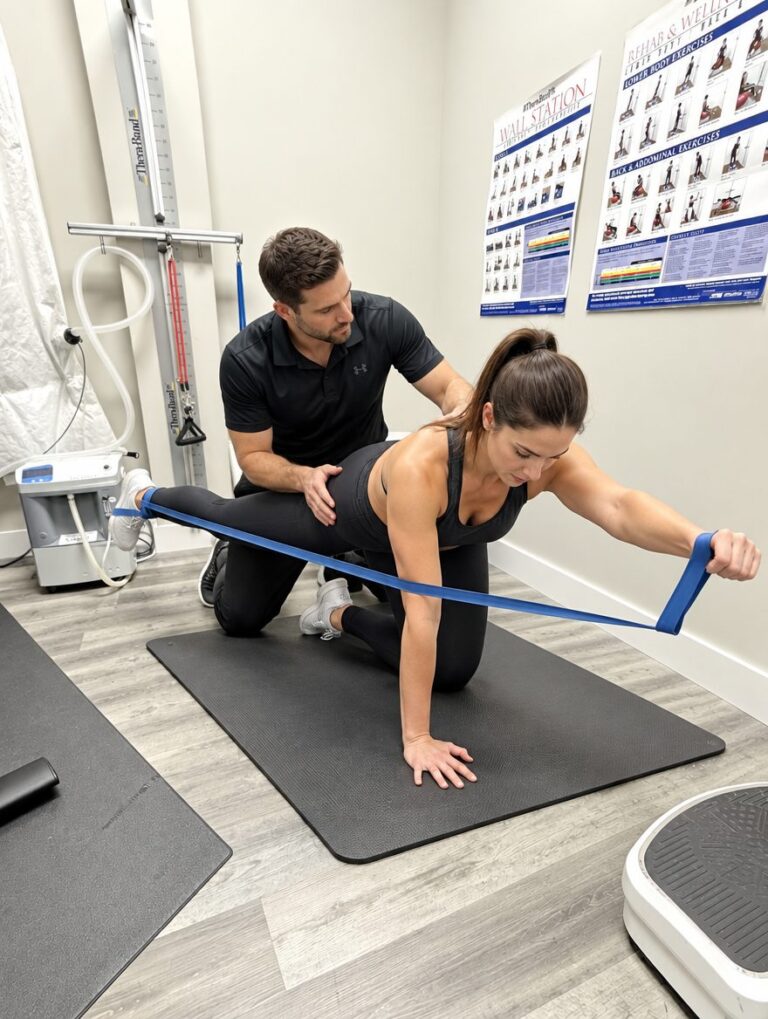
The Rebuild phase, at 2–3 visits a week for 8–16 weeks, is where the tension stops coming back: posture correction, deep neck flexor and mid-back strengthening, and a short daily routine. If headaches are part of the picture, headache treatment runs alongside.
Good to know
Massage and stretching feel wonderful and are part of the plan, but if the tension returns within a day, a joint or posture problem underneath is restarting it. Treat that and the massage finally holds.
What to do about neck tension this week
While you arrange an evaluation, a few changes take load off the neck immediately:
- Raise the monitor to eye level and bring the phone up to your face instead of your face down to it.
- Do the upper trapezius release from Neck Feeling Tight? Try This 30-Second Stretch two or three times a day.
- Set a timer to stand, roll the shoulders and look to each side every 30–60 minutes.
- Breathe slowly through the nose for two minutes when you notice the shoulders creeping up.
- Use a pillow that keeps the neck level with the spine, not propped forward.
If the tightness has been there most days for more than a few weeks, it has been telling you something for a while. A spine assessment at our Coral Springs clinic, minutes from Parkland and Coconut Creek, is how we read it.
Serving neck tension patients across North Broward
Our clinic at 5675 Coral Ridge Drive, Coral Springs, FL 33076 serves Coral Springs, Parkland, Coconut Creek, Margate, Boca Raton, Tamarac, Pompano Beach and Deerfield Beach. Same-day appointments are usually available — call (954) 341-2256 or book online. Most patients from Parkland and Coral Springs are here in under 15 minutes.
Medically reviewed by Dr. Jared Cohen, DC — Co-Founder & Clinical Director, The Spine and Wellness Center. Last reviewed October 2026.
Frequently asked questions
What does constant neck tension mean?
Constant tension usually points to one of five things: forward-head posture overloading the neck muscles, stress that has become physical bracing, a stiff or misaligned cervical segment the muscles are guarding, early nerve irritation from a disc, or daily habits such as a bad pillow or low monitor. Tension with headaches, dizziness or arm tingling needs an evaluation.
Can stress alone cause neck tension?
Yes. Under stress people raise and brace the shoulders and clench the jaw without noticing, and the upper trapezius and suboccipital muscles stay contracted. Over time that creates stiffness, pain and a feedback loop. Stress-driven tension responds to soft-tissue work and breathing, but it holds best when posture and joint motion are corrected too.
When is neck tension serious?
Seek prompt care if tension comes with fever, a severe sudden headache, numbness or weakness in the arms, or follows a fall or collision; please see a doctor or urgent care today for those. Tension with headaches at the base of the skull, dizziness or arm tingling is not an emergency but does mean the cause is a joint, disc or nerve rather than muscle alone.
How does a chiropractor treat neck tension?
First by measuring it: a hands-on exam, surface EMG and thermal scanning, and X-rays when indicated. Then, inside the 4R Method, gentle cervical adjustments restore motion at the stiff segment, soft-tissue release calms the overworked muscles, and posture correction and strengthening in the Rebuild phase keep the tension from returning.

Same-day appointments
Reading about it is step one.
Step two is a measurement. Visit one we measure — and usually begin care; visit two you get your full findings and plan.
- Same-day appointments are usually available
- Our team calls you back to confirm your visit
- Coral Springs, serving Parkland & North Broward since 2005
Prefer to talk now? Call or text (954) 341-2256