
Discs & Nerves · 6 min read
Pinched nerve in the neck causing arm pain
When a nerve root in the neck is compressed, the pain, tingling and weakness show up downstream — in the shoulder, arm or hand. Here is how to recognize it, and how we take the pressure off.

Quick answer
A pinched nerve in the neck (cervical radiculopathy) is a nerve root compressed by a herniated disc, bone spur or thickened joint. Because each root serves a pathway into the arm, symptoms travel: shooting pain, tingling in specific fingers, weak grip, worse when you turn your head. Most cases respond to decompression, adjustments and rehab without surgery.
What is a pinched nerve in the neck?
A pinched nerve in the neck is a nerve root — one of the eight pairs that leave the cervical spine — being compressed or irritated where it exits between two vertebrae. The medical name is cervical radiculopathy. Because each root serves a specific pathway into the shoulder, arm and hand, the symptoms usually travel along the arm rather than staying in the neck. Patients in Coral Springs and Parkland are often surprised to learn their hand numbness traces back to the spine.
The squeeze comes from one of three things: a herniated or bulging disc pressing on the root, bone spurs and thickened facet joints narrowing the opening it passes through, or inflammation in the surrounding tissue. The result is the same — the nerve sends faulty signals that you feel as pain, tingling or weakness somewhere downstream.

5 proven signs the arm pain is coming from your neck
Cervical radiculopathy rarely feels like ordinary muscle soreness. The American Academy of Orthopaedic Surgeons describes the hallmark as pain that radiates from the neck into the arm along a specific path. These are the five signs we look for:
- Pain that travels. Sharp, burning or electric pain from the neck into the shoulder blade, down the arm, sometimes into specific fingers — rather than a general ache in the whole arm.
- Tingling or numbness in a pattern. C6 tends to involve the thumb and index finger; C7 the middle finger; C8 the ring and little fingers. The map tells us which root.
- Weakness. A weaker grip, trouble lifting the arm, dropping things — the symptom that moves the evaluation up the priority list.
- Worse when you turn or tilt your head toward the painful side, or look up — positions that close the nerve opening.
- Relief with the hand on top of your head. Raising the arm takes tension off the root; if that eases the pain, the neck is the likely source.
Neck or wrist?
Carpal tunnel causes hand numbness too, but it spares the neck, worsens at night and involves the thumb side only. Carpal tunnel or a neck problem? walks through the full comparison, and signs your arm pain might be coming from your neck adds the quick self-checks.
What causes the nerve to get pinched?
Age-related wear is the most common driver. Over time, discs lose height and the small facet joints thicken, narrowing the openings where the roots exit. Poor posture — especially prolonged forward head positioning at a desk or phone — adds mechanical stress that speeds this process. The neck of a 45-year-old who has spent 20 years at a laptop can look a decade older on X-ray.
Acute causes happen too. A sudden disc herniation from lifting, a sports collision, or whiplash from a car accident can compress a root quickly. Most often we see a combination: a spine already under strain that finally gets tipped over the edge by one wrong movement. If your symptoms include numbness in the feet as well, numbness and tingling in hands and feet explains the other patterns to rule out.
How we treat a pinched nerve without surgery
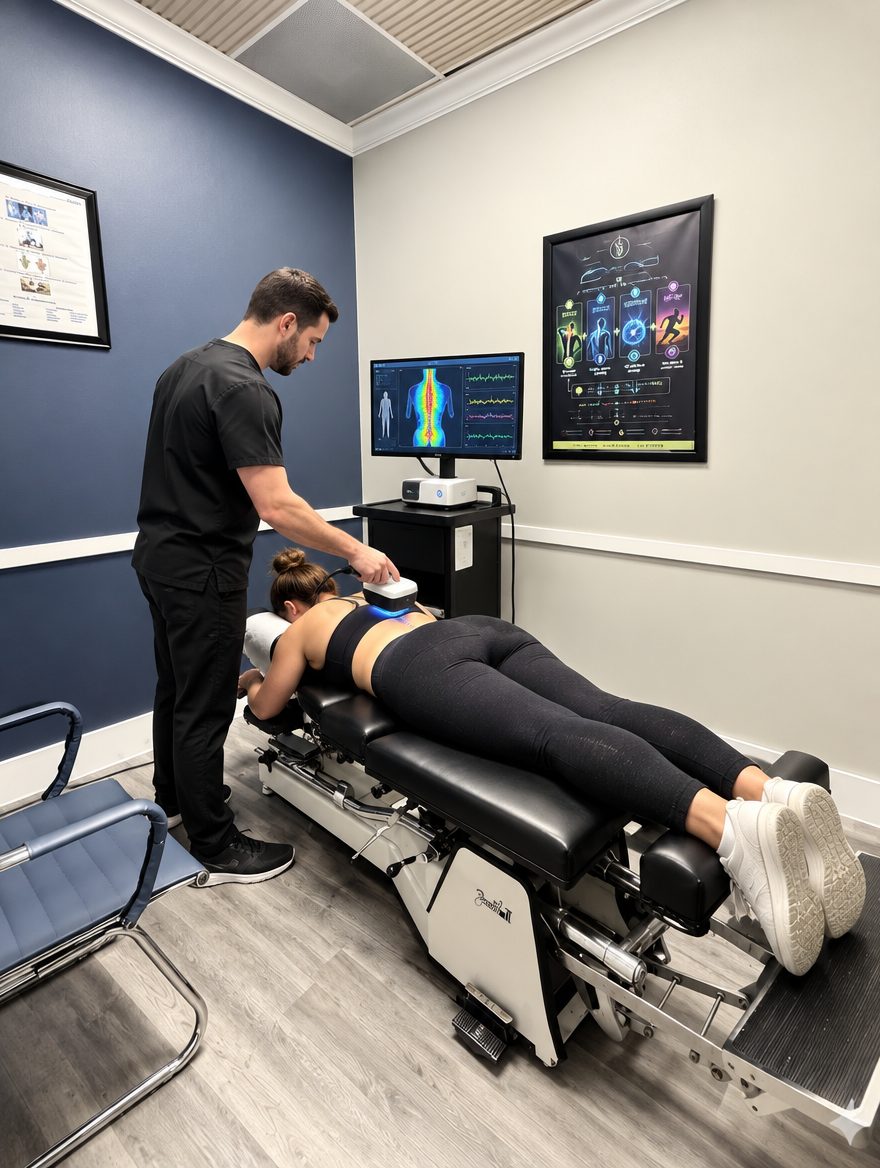
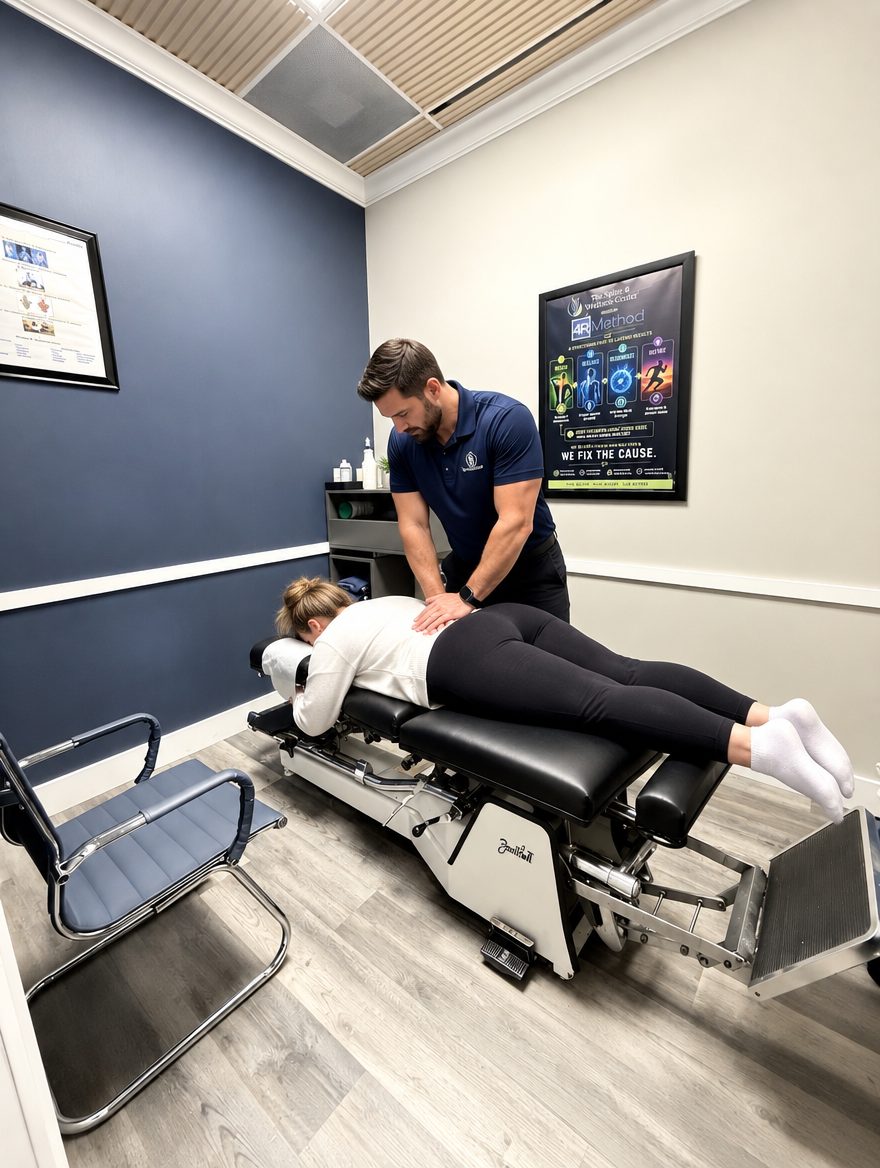
Most cervical radiculopathy responds well to conservative care, and surgery is rarely the first step. Our pinched nerve treatment follows the 4R Method. Visit one is measurement: a conversation about where exactly the symptoms go, a hands-on structural exam with the positional tests above, surface EMG and thermal scanning, and digital X-rays when indicated to show disc height and spurs. Visit two is your full report of findings and plan, and Most patients have already begun care on visit one; this is where the full plan takes over.
- Repair (3–5 visits a week, 4–8 weeks). When a disc is the culprit, cervical spinal decompression gently opens the space between the vertebrae for about 20 minutes per session so the root is no longer crowded. Precise, low-force adjustments restore motion to the segments around it, and cold laser calms the inflamed root. This is the core of our neck pain treatment.
- Rebuild (2–3 visits a week, 8–16 weeks). Posture correction and rehab for the deep neck flexors and shoulder blade muscles, so the head sits back over the shoulders and the nerve opening stays open.
- Regenerate and Refine. Red light and PEMF for the irritated tissue, then monthly tune-ups to protect the gains.
Most patients notice the arm symptoms begin to retreat toward the neck within the first two to three weeks — a good sign called centralization. Weakness takes longer to recover than pain, so we track grip strength and reflexes as we go.
Self-care that supports recovery
- Set your screen at eye level so your head stays balanced over your shoulders
- Take a posture break every 30 minutes — chin tucks and gentle neck rotations
- Avoid sleeping on your stomach, which twists the cervical spine for hours
- Use a pillow that keeps the neck neutral; side-sleepers need a thicker one
- Ice the base of the neck for sharp flare-ups, gentle heat for stiffness
- Stop any stretch that increases arm tingling or weakness
Mild tingling that resolves in a day or two may settle on its own. Arm symptoms that persist beyond a week, keep returning or come with weakness deserve an evaluation — the sooner an irritated root is decompressed, the better it tends to respond. Please see a doctor or urgent care today for progressive weakness, loss of coordination in the hands or legs, or any change in bladder or bowel control. A spine assessment is the fastest way to confirm which root is involved. If the problem turns out to be at the wrist, our carpal tunnel treatment covers that side.
Serving pinched nerve patients across North Broward
Our clinic at 5675 Coral Ridge Drive, Coral Springs, FL 33076 serves Coral Springs, Parkland, Coconut Creek, Margate, Boca Raton, Tamarac, Pompano Beach and Deerfield Beach. Same-day appointments are usually available — call (954) 341-2256 or book online. Most patients from Parkland and Coral Springs are here in under 15 minutes.
Medically reviewed by Dr. Jared Cohen, DC — Co-Founder & Clinical Director, The Spine and Wellness Center. Last reviewed October 2026.
Frequently asked questions
Why does a pinched nerve in my neck cause pain in my arm?
Each cervical nerve root branches into a specific pathway through the shoulder, arm and hand. When a root is compressed at the spine, it misfires along that whole pathway, so you feel pain, tingling or numbness in the arm — sometimes with little or no neck pain at all. Which fingers are involved tells us which root.
How long does a pinched nerve in the neck take to heal?
Many cases improve within a few weeks of consistent conservative care, with arm pain typically retreating toward the neck first. Numbness and weakness recover more slowly than pain. Severe or long-standing compression can take two to three months. Starting early shortens the course.
Will a pinched nerve in the neck go away on its own?
Mild irritation sometimes settles with rest and posture changes. Symptoms that persist beyond a week, keep returning, or come with weakness usually need treatment, because an irritated root that stays compressed tends to become chronic. Decompression and adjustments address the cause rather than waiting it out.
Should I see a chiropractor or a doctor for a pinched nerve?
We evaluate and conservatively treat most pinched nerves and refer out immediately when red flags appear. Please see a doctor or urgent care today for rapidly progressive weakness, loss of coordination, or any change in bladder or bowel control — those need urgent medical assessment.


Same-day appointments
Reading about it is step one.
Step two is a measurement. Visit one we measure — and usually begin care; visit two you get your full findings and plan.
- Same-day appointments are usually available
- Our team calls you back to confirm your visit
- Coral Springs, serving Parkland & North Broward since 2005
Prefer to talk now? Call or text (954) 341-2256