
Discs & Nerves · 6 min read
Signs your arm pain might be coming from your neck
Numb fingers, a burning line down the arm, a grip that is not what it was. The wrist and shoulder get the blame; the neck is often the cause.


Quick answer
Arm pain that burns or tingles along a line from the neck or shoulder into specific fingers, worsens when you turn or tilt your head, and comes with grip weakness is usually cervical radiculopathy: a nerve root pinched in the neck by a disc or a narrowed joint. Treating the arm alone will not fix it; taking pressure off the nerve in the neck does.
Why arm pain so often starts in the neck
Arm pain that comes with numbness, tingling or weakness is frequently not an arm problem at all. Eight pairs of nerve roots leave the cervical spine between the vertebrae, join into the brachial plexus and run down the arm to the fingertips. When one of those roots is compressed or inflamed in the neck, the brain reads the signal where the nerve ends, in the shoulder, forearm or hand. The medical name is cervical radiculopathy.
The usual culprits are a bulging or herniated disc pressing on the root, bone spurs and narrowing from degenerative changes, and the forward-head posture that years of desk work and phone use build into the lower neck. Whiplash and sports impacts can trigger it acutely. At The Spine and Wellness Center in Coral Springs it is one of the most common nerve problems we measure, and one of the most rewarding to treat because the source is usually clear.
The companion piece Pinched Nerve in the Neck Causing Arm Pain goes deeper on the anatomy; this article is about recognizing the pattern.
6 signs your arm pain is coming from your neck
No single sign is proof, but three or more of these together make the neck the prime suspect:
- The pain follows a line. Nerve pain runs a track, such as the thumb side of the forearm (C6), the middle finger (C7) or the pinky side (C8), rather than aching everywhere.
- It burns, zings or tingles rather than throbbing. Pins and needles and an electric quality point to a nerve, not a muscle.
- Turning or tilting your head changes it. Looking up, or tilting toward the painful side, narrows the opening the nerve passes through and often reproduces the symptom.
- Your grip or arm strength is off. Dropping cups, a weak handshake or trouble with a jar lid suggests the motor fibers of the root are involved.
- Raising the arm over your head eases it. Resting a hand on top of the head takes tension off the root; relief in that position is a classic neck sign.
- The neck itself is stiff or sore, especially at the base, and the arm symptoms arrived with or after the neck stiffness.

Neck, carpal tunnel or shoulder? How to tell them apart
Three problems share the same symptom and need different treatment. The pattern separates them more reliably than the intensity.
- Pinched nerve in the neck: symptoms start at or above the shoulder, track down the arm in a line, and change with head position. Numbness can involve the thumb, middle or pinky side depending on the level.
- Carpal tunnel: numbness limited to the thumb, index and middle fingers, worse at night and with wrist bending, and the neck is quiet. We compared the two in Carpal Tunnel or a Neck Problem? How to Tell.
- Shoulder (rotator cuff): a deep ache in the outer upper arm that worsens when lifting the arm out to the side or reaching behind, with no tingling and no change from head movement.
- Both at once: an irritated root in the neck can make a mild wrist problem symptomatic; that overlap is called double crush and is why we examine the whole chain.
Tingling in both hands and both feet is a different conversation. See Numbness and Tingling in Hands and Feet, and please see a doctor or urgent care today for sudden weakness, numbness on one side of the body, trouble speaking, or chest pain spreading into the left arm.
How we treat the source instead of the symptom
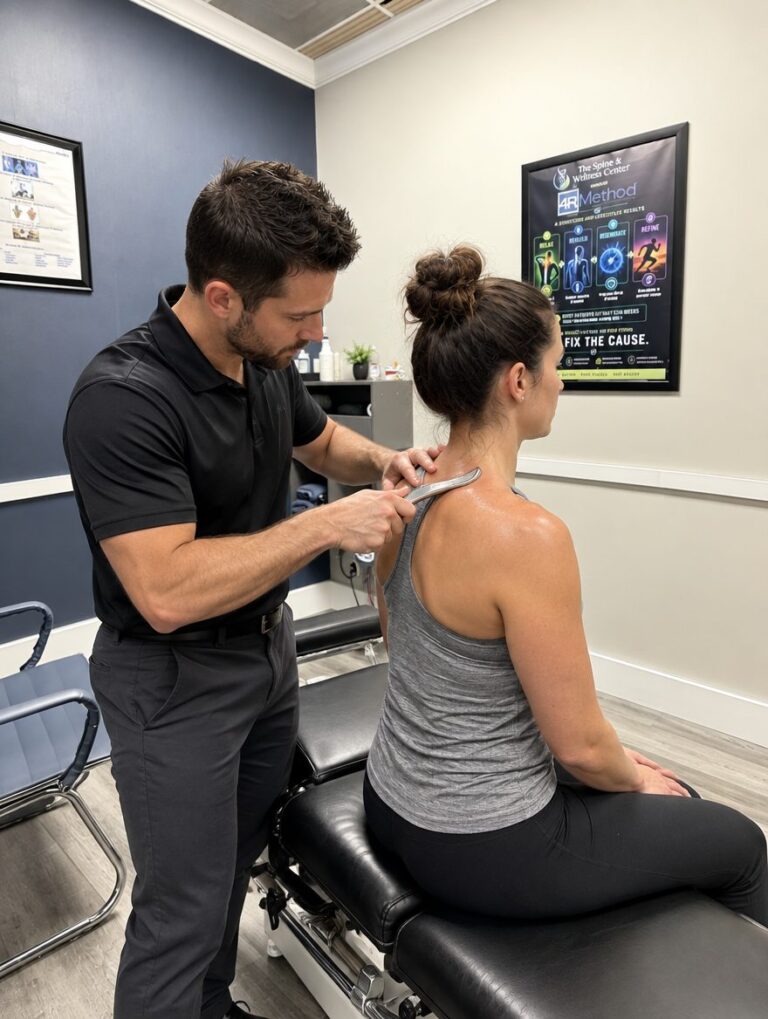
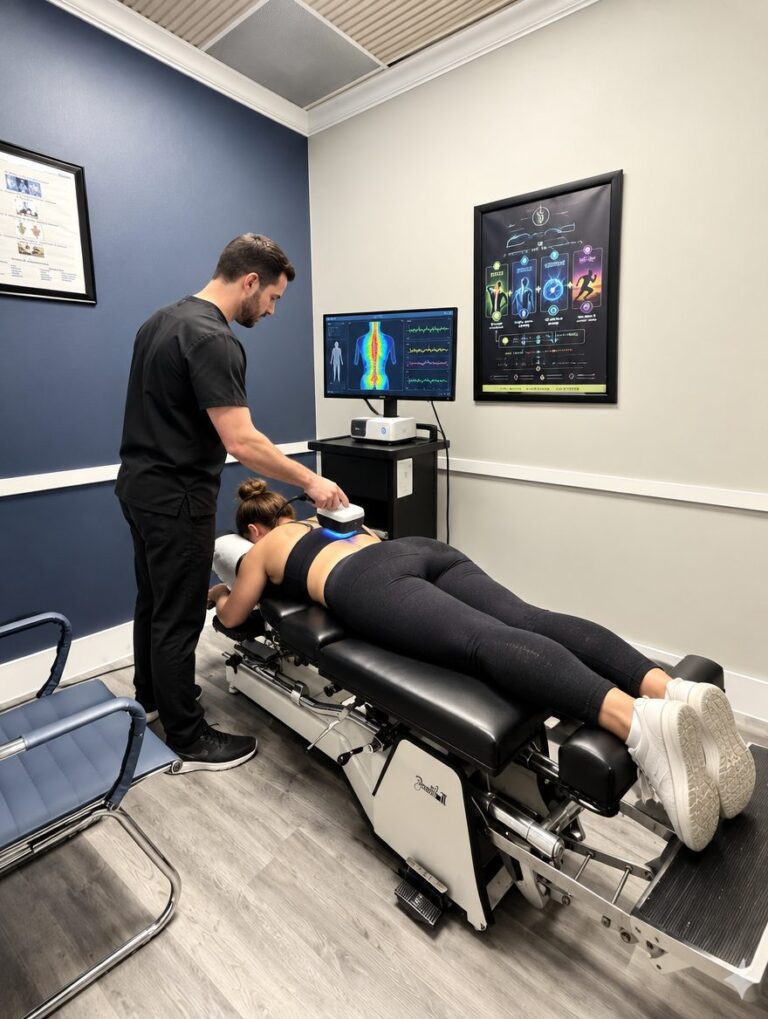
Treating a neck-driven nerve problem means taking the pressure off the root, then keeping it off. Visit one measures: a conversation about the pattern, a hands-on structural exam with the head-position tests above, surface EMG and thermal scanning to map the irritated level, and digital X-rays when indicated. Visit two is the report of findings and the plan, and Most patients have already begun care on visit one; this is where the full plan takes over.
Inside the Repair phase of the 4R Method, that plan usually combines:
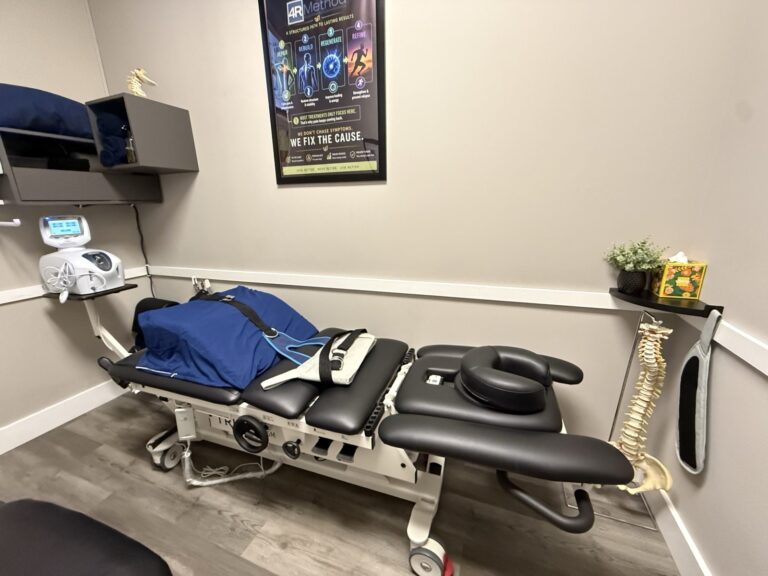
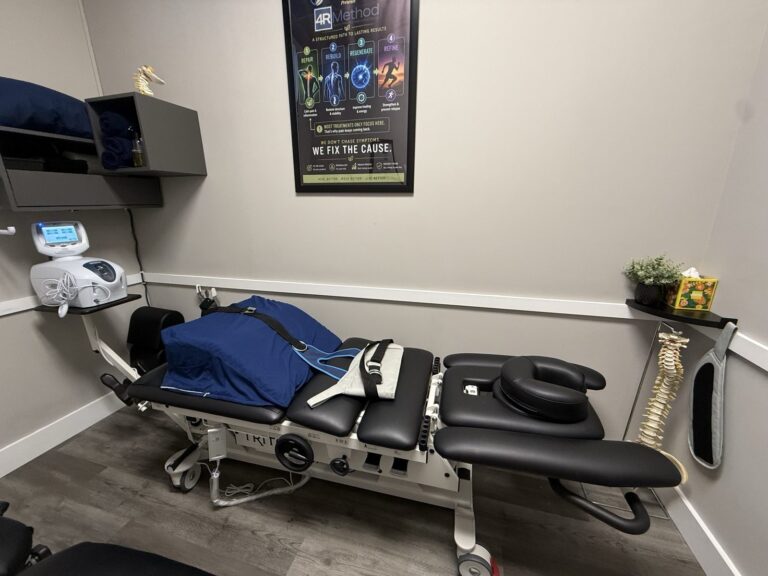
- Cervical spinal decompression on the Triton DTS table, at a fraction of the force used for the low back, to open the space the root passes through
- Precise pinched nerve treatment with gentle adjustments to restore motion at the irritated segment
- Cold laser over the root to calm inflammation, and soft-tissue work on the scalenes and upper traps that squeeze the plexus
- Neck pain treatment that includes posture retraining, because forward-head posture is the reason the disc is leaning on the nerve in the first place
The Rebuild phase that follows adds deep neck flexor and mid-back strengthening at 2–3 visits a week for 8–16 weeks so the correction holds. The American Academy of Orthopaedic Surgeons notes that most cervical radiculopathy improves with non-surgical care, which matches what we see; surgery is reserved for progressive weakness or symptoms that fail to respond.
Good to know
Wrist braces, elbow straps and shoulder injections cannot reach a nerve pinched in the neck. If you have treated the arm for weeks without change, that in itself is a sign to look higher.
What you can do today
A few things help while you arrange an evaluation, and a few make it worse.
- Raise your screen to eye level and bring the phone up instead of your head down; the forward-head position is the daily aggravator.
- Avoid looking up and tilting toward the painful side; those positions close the nerve’s exit.
- Sleep on your back or side with a pillow that keeps the neck level, not propped forward; see The Best Sleeping Position for Neck Pain.
- Skip aggressive self-stretching of the neck and any traction gadget until the level has been identified.
Arm pain that has lasted more than a week or two, or that comes with any weakness, deserves a measurement rather than another month of guessing. A spine assessment at our Coral Springs clinic is the first step, and most patients from Parkland and Coconut Creek are here in under fifteen minutes.
Serving neck and arm pain patients across North Broward
Our clinic at 5675 Coral Ridge Drive, Coral Springs, FL 33076 serves Coral Springs, Parkland, Coconut Creek, Margate, Boca Raton, Tamarac, Pompano Beach and Deerfield Beach. Same-day appointments are usually available — call (954) 341-2256 or book online. Most patients from Parkland and Coral Springs are here in under 15 minutes.
Medically reviewed by Dr. Jared Cohen, DC — Co-Founder & Clinical Director, The Spine and Wellness Center. Last reviewed October 2026.
Frequently asked questions
Can a neck problem really cause pain in my hand?
Yes. The nerves that supply the hand leave the spine in the neck. When a disc or a narrowed joint pinches one of those roots, the brain reads the signal where the nerve ends, so numbness, tingling or burning appears in specific fingers even though the hand itself is fine. That is cervical radiculopathy.
How do I know if it is carpal tunnel or my neck?
Carpal tunnel stays in the thumb, index and middle fingers, is worse at night and with wrist bending, and the neck feels normal. A pinched nerve in the neck tracks down the arm from the shoulder, changes when you turn or tilt your head, and often comes with neck stiffness. An exam with head-position tests separates the two.
Will a pinched nerve in the neck heal on its own?
Many mild cases settle over weeks with posture changes and activity modification. Symptoms that last more than a few weeks, keep returning, or include weakness or worsening numbness usually mean the pressure on the root needs to be addressed directly, with cervical decompression, gentle adjustments and posture correction.
Is cervical decompression safe for the neck?
Yes, when the level has been identified and contraindications ruled out. The Triton DTS table uses a fraction of the force applied to the low back, with a head cradle rather than a harness, and the pull builds and releases slowly. Most patients find it relieving. We do not use it with fracture, instability, tumor or certain surgical hardware.

Same-day appointments
Reading about it is step one.
Step two is a measurement. Visit one we measure — and usually begin care; visit two you get your full findings and plan.
- Same-day appointments are usually available
- Our team calls you back to confirm your visit
- Coral Springs, serving Parkland & North Broward since 2005
Prefer to talk now? Call or text (954) 341-2256