
Wellness & Lifestyle · 6 min read
How to Fix Your Posture (and Why It Matters)
Forward head, rounded shoulders and a slumped low back add up over time. Posture is a habit — and habits can be retrained.

Quick answer
To fix your posture, retrain the pattern rather than forcing yourself to sit up straight: loosen the tight chest and hip muscles, strengthen the deep neck, mid-back and core muscles that hold alignment, set up your screens and chair so good posture is easy, and move every 30 minutes. Stiff spinal joints often need hands-on care first.
Why posture matters more than you think
If you want to fix your posture, start with what good posture actually is. It is not standing stiff like a soldier. It is keeping the body in a balanced, efficient position so muscles and joints share the load the way they were designed to. When posture drifts, some muscles work overtime while others switch off, and over months and years that imbalance produces pain, stiffness, headaches and fatigue.
The spine is the central column everything hangs on, so posture and spinal health are the same conversation. Hours of slumped sitting, looking down at a phone and skipping movement gradually pull the body out of its natural alignment. The head drifts forward (every inch adds about ten pounds of load on the neck), the shoulders round, the upper back hunches, and the low back either flattens or over-arches. By evening you feel tight and achy and cannot say why.
Posture also affects breathing, digestion and energy; a compressed, slumped trunk simply has less room to work. The National Institutes of Health notes that poor posture over time can contribute to back and neck pain, reduced flexibility and balance problems — and that it is modifiable at any age.
The common posture faults (most people have more than one)
- Forward head posture: the ears sit ahead of the shoulders; the base of the skull and the upper traps do the holding. The classic driver of tension headaches and text neck (see our text neck treatment program).
- Rounded shoulders: the shoulders roll forward and inward as the chest muscles shorten and the mid-back muscles lengthen and weaken.
- Upper-back hunching (kyphotic slouch): the thoracic spine stiffens into a rounded shape; checking the blind spot gets harder.
- Anterior pelvic tilt: the pelvis tips forward, the low back over-arches and the abdomen pushes out — common in people who sit a lot and have tight hip flexors.
- Flattened low back: the opposite pattern from slumping into a soft chair; the lumbar curve disappears and discs take more load.
- Uneven shoulders or hips: from one-sided habits — a bag on the same shoulder, a leg always crossed the same way, a child always carried on one hip.
Posture faults usually come from repeated habits rather than a single event. Long desk hours, constant phone use, weak core and back muscles, tight chest and hip muscles, and stress (which pulls the shoulders up and the head down) all nudge the body into the same shapes. The longer a position is held, the more the body adapts to it, until the slouch feels normal. We wrote about the stress piece in how stress affects your spine.

6 proven steps to fix your posture for good
Telling yourself to sit up straight lasts about ninety seconds. To fix your posture durably you have to change the inputs. This is the sequence we use with Coral Springs and Parkland patients:
- Measure the pattern. Postural photos, a surface EMG scan and a hands-on exam show which faults you actually have. You cannot fix what you have not named.
- Loosen what is tight. Daily doorway chest stretch (20–30 seconds), half-kneeling hip flexor stretch (30 seconds per side), and thoracic extension over a foam roller. Tight tissue drags you back into the slouch no matter how hard you try.
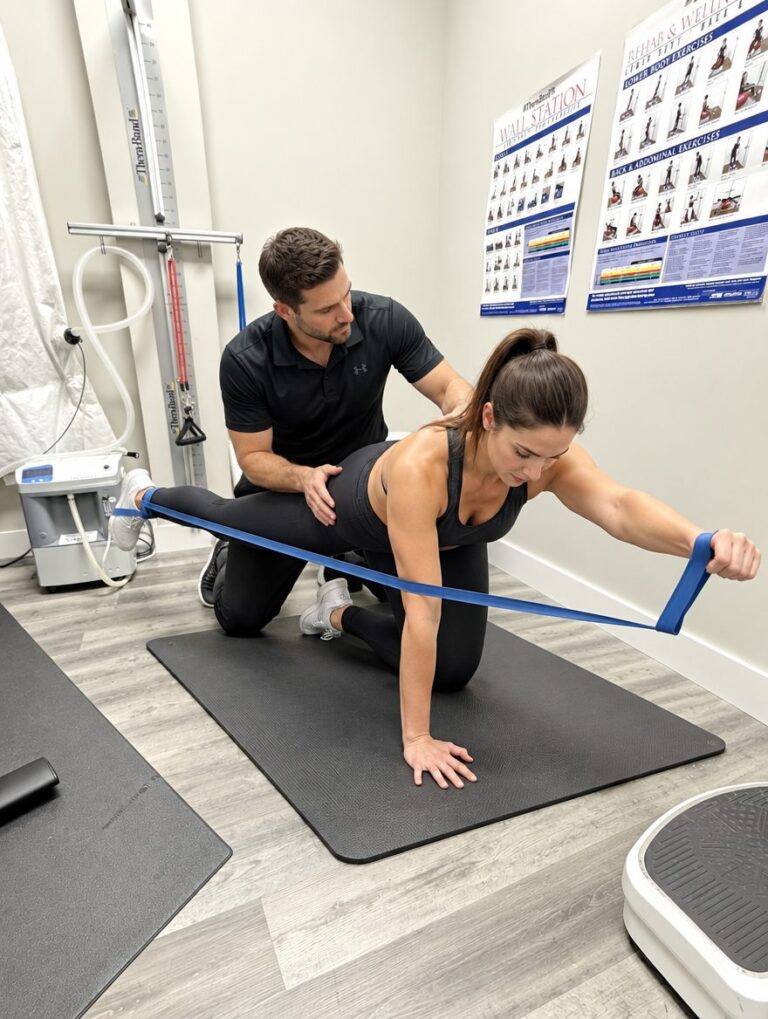
- Strengthen what is weak. Chin tucks (5-second holds, 10 reps), wall angels or band pull-aparts (2 sets of 15) for the mid-back, dead bugs and glute bridges for the core and hips. Ten minutes a day is enough.
- Fix the environment. Screen at eye level, elbows at 90 degrees, low back supported, phone raised to your face rather than your face dropped to the phone. Our work-from-home ergonomics guide covers the setup step by step.
- Move every 30 minutes. The best posture is the next one. Two-minute breaks reset the pattern before it sets.
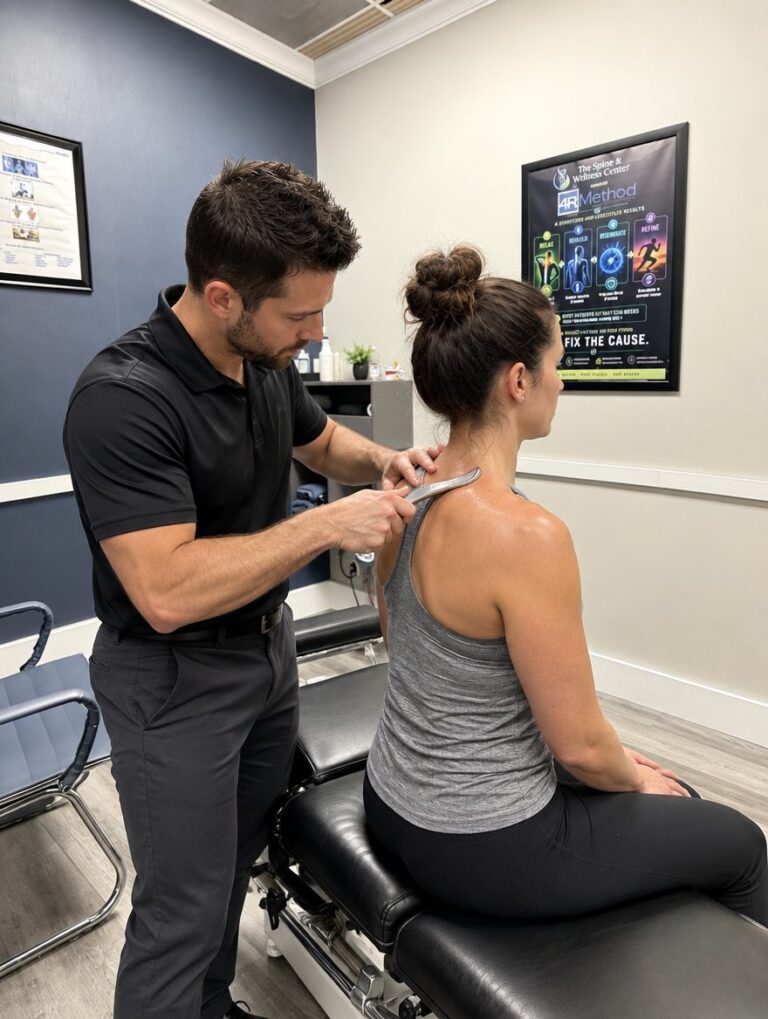
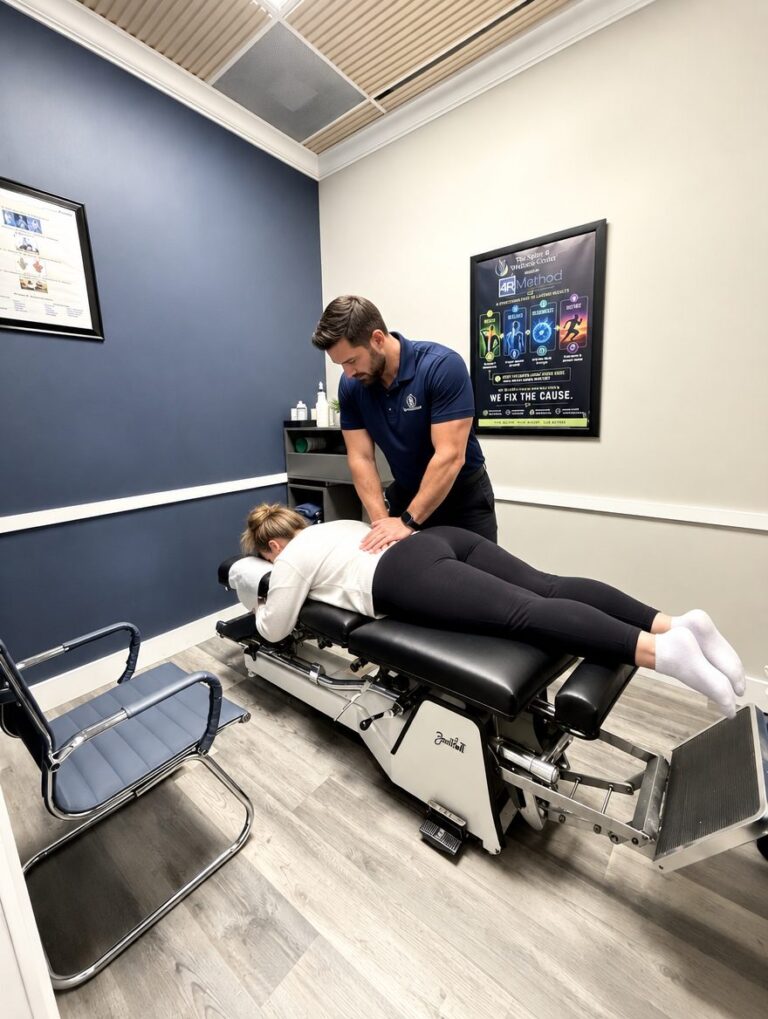
- Restore joint motion if it is stuck. A stiff thoracic spine or upper neck will not extend no matter how strong you get. That is where specific chiropractic adjustments and posture correction care make the exercises finally work.
Stop any stretch if pain radiates, sharpens or worsens, and please see a doctor or urgent care today for red-flag symptoms such as numbness with weakness, a sudden severe headache, or pain following an injury.
How we help you fix your posture in Coral Springs
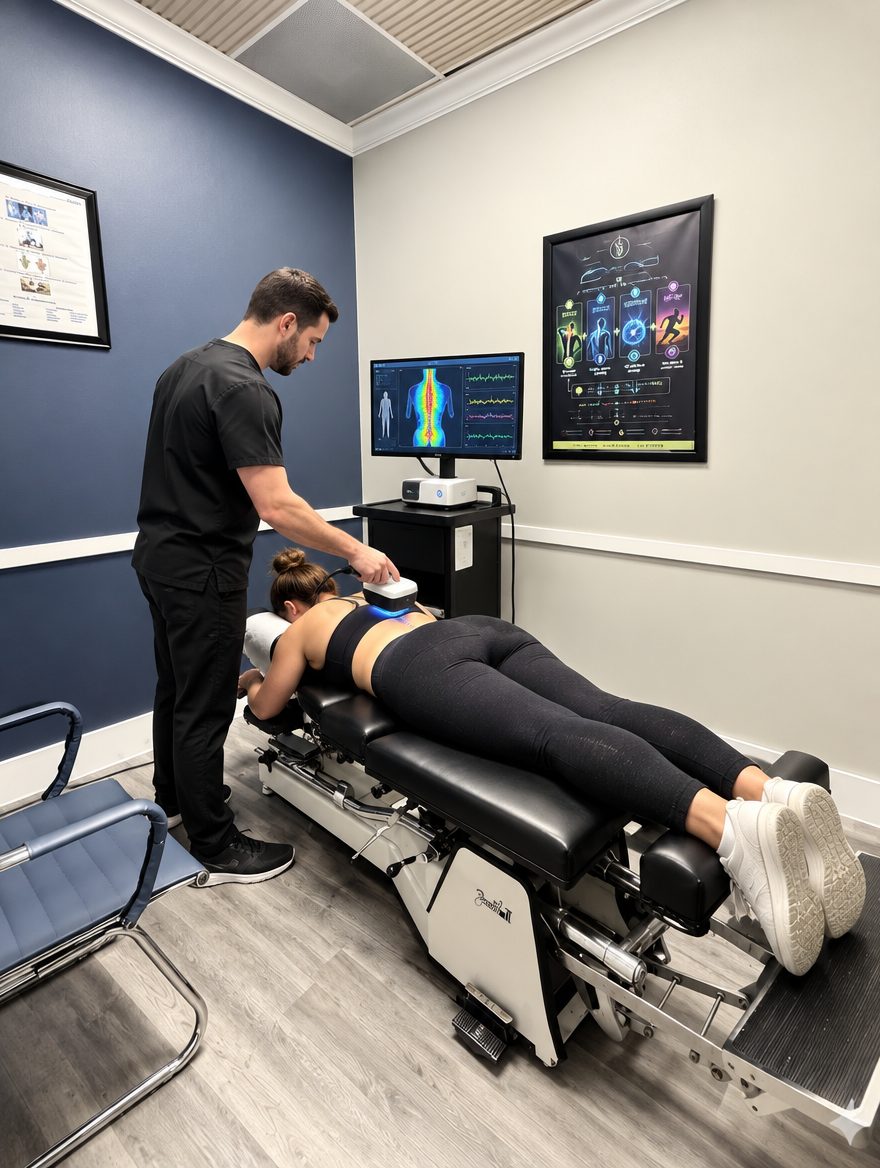
Your first visit is measurement: a conversation about your day and your goals, postural analysis, a hands-on structural exam, surface EMG and thermal scanning, and digital X-rays when indicated to see the actual curves. Visit two is your full report of findings and plan, with before-and-after photos as the yardstick.
Care follows the 4R Method. Repair (2–3 visits a week for 4–6 weeks) restores motion to the stiff segments and calms irritated joints with specific adjustments and soft-tissue work. Rebuild (2–3 visits a week for 8–16 weeks) is the corrective exercise and retraining phase, with our physical therapy team coaching the program until it is automatic. Regenerate adds recovery tools; Refine is a monthly check so the old shape does not creep back. Upper-back ache from years of hunching usually improves alongside — see upper back pain relief.
Posture correction treatment
Measured, staged posture retraining for forward head, rounded shoulders and pelvic tilt.
Learn moreText neck treatment
For the neck that lives looking down at a screen.
Learn moreUpper back pain relief
For the ache between the shoulder blades that slouching built.
Learn moreChiropractic care
Specific adjustments to restore the joint motion good posture needs.
Learn moreHow long it takes, and how to know it is working
Most people feel less neck and upper-back tension within two to three weeks of daily exercises and a fixed workstation. Visible change in posture photos usually shows at six to twelve weeks, and the new pattern becomes automatic somewhere around three months. Tissue and habit both change slowly; consistency is what moves the needle.
- Headaches and end-of-day neck tension fade first.
- Checking the blind spot and reaching overhead get easier.
- Photos from the side show the ear moving back over the shoulder.
- You catch yourself slouching — and correcting — without being told. That awareness is the real win.
Serving posture patients across North Broward
Our clinic at 5675 Coral Ridge Drive, Coral Springs, FL 33076 serves Coral Springs, Parkland, Coconut Creek, Margate, Boca Raton, Tamarac, Pompano Beach and Deerfield Beach. Same-day appointments are usually available — call (954) 341-2256 or book online. Most patients from Parkland and Coral Springs are here in under 15 minutes.
Medically reviewed by Dr. Jared Cohen, DC — Co-Founder & Clinical Director, The Spine and Wellness Center. Last reviewed October 2026.
Frequently asked questions
Can you really fix your posture as an adult?
Yes. Posture is a pattern of muscle balance, joint motion and habit, and all three are modifiable at any age. Adults who stretch what is tight, strengthen what is weak, fix their workstation and move regularly see measurable change in six to twelve weeks. Long-standing stiffness in the upper back or neck may need hands-on care to restore motion first.
What are the best exercises to fix your posture?
Chin tucks for the deep neck muscles, wall angels or band pull-aparts for the mid-back, a doorway chest stretch, a half-kneeling hip flexor stretch, and dead bugs or glute bridges for the core and hips. Ten minutes a day, every day, beats an hour once a week.
Do posture correctors or braces work?
Briefly, as a reminder, but not as a fix. A brace holds the shoulders back so the muscles that should do that job switch off, and the slouch returns as soon as it comes off. Use one for short periods as a cue if you like, but the exercises and workstation changes are what create lasting change.
Can a chiropractor help fix posture?
Yes, particularly when stiff spinal joints are blocking the correction. Specific adjustments restore motion to the thoracic spine and upper neck so the strengthening exercises can actually change your alignment. We measure posture at the start, build the exercise and ergonomic plan around it, and track the change with photos and surface EMG.

Same-day appointments
Reading about it is step one.
Step two is a measurement. Visit one we measure — and usually begin care; visit two you get your full findings and plan.
- Same-day appointments are usually available
- Our team calls you back to confirm your visit
- Coral Springs, serving Parkland & North Broward since 2005
Prefer to talk now? Call or text (954) 341-2256