
Conditions · Coral Springs & Parkland
Upper & mid back pain relief in Coral Springs
The knot between the shoulder blades, the rib that catches when you breathe, the burning ache after a day at the desk — the thoracic spine is built for stability, and it complains when posture takes that away. We find the joint or muscle driving it and correct it.
Quick answer
Lasting upper back pain relief means restoring motion to the thoracic and rib joints that have locked up, releasing the muscles guarding them, and correcting the posture that overloaded them. Most upper and mid back pain comes from postural strain, a restricted thoracic facet or rib joint, or scapular muscles working overtime — and all three respond well to conservative care.
What’s actually causing your upper back pain
Real upper back pain relief starts with knowing which structure is hurt. The thoracic spine is the twelve vertebrae between the neck and the low back. Each one connects to a pair of ribs, which makes this region far stiffer and more stable than the neck or lumbar spine — and also means a small loss of motion is felt more sharply.
In our Coral Springs clinic, three patterns account for most upper and mid back pain. Postural strain: hours of rounded shoulders and a forward head stretch the muscles between the shoulder blades until they fatigue, burn and knot. A restricted thoracic facet or rib (costovertebral) joint: a segment that stops gliding and produces a sharp, localized catch, often with a deep breath or a twist. And scapular pain: the rhomboids, levator scapulae and middle trapezius working overtime to hold the shoulder blade in place because the deeper stabilizers have switched off.
Thoracic discs can herniate, but it is uncommon; the thoracic spine is much more often a victim of posture and the stiffness it creates. That is why a plan that only massages the knot gives temporary relief. Durable upper back pain relief restores joint motion, releases the muscle, and corrects the posture — in that order.

Is it a rib, a joint, or a muscle? How to tell
The pattern of your pain says a lot before any scan does. Here is how the common sources of upper and mid back pain tend to show up:
- Rib joint (costovertebral) dysfunction: a sharp, pinpoint pain just beside the spine that catches on a deep breath, a cough or a twist; sometimes it wraps around the side of the chest along the rib.
- Thoracic facet restriction: a deep, localized ache in the middle of the back that is worse extending or rotating, often after sleeping awkwardly or a long flight.
- Postural strain / scapular pain: a burning, spreading ache between the shoulder blades that builds through the workday and eases when you lie down; often with a tender knot you can press on.
- Referred from the neck: pain into the shoulder blade that moves with the neck, not the back — a lower cervical disc or nerve is the likely driver. See our neck pain guide.
- Muscle strain: a broad tightness after lifting, a new workout or a heavy golf weekend that eases over days.
Chest-wall pain that wraps around the ribs is almost always mechanical, but upper back pain that comes with chest pressure, shortness of breath or sweating is not a spine problem until a physician says it is. Making that distinction is part of the exam on your first visit.
Good to know
The thoracic spine and the shoulder are a team. When the mid back is stiff, the shoulder blade cannot glide properly, and the shoulder and neck absorb the difference. Many ‘shoulder’ and ‘neck’ problems improve dramatically once thoracic motion is restored.
How we approach upper back pain relief at TSAWC
Our approach to upper back pain relief follows the body’s own healing sequence — the 4R Method: Repair, Rebuild, Regenerate, Refine. The order matters. Releasing a muscle that is guarding a locked joint gives relief for an afternoon; restoring the joint and then correcting the posture gives relief that lasts.
R1 · Repair — restore motion, calm the tissue
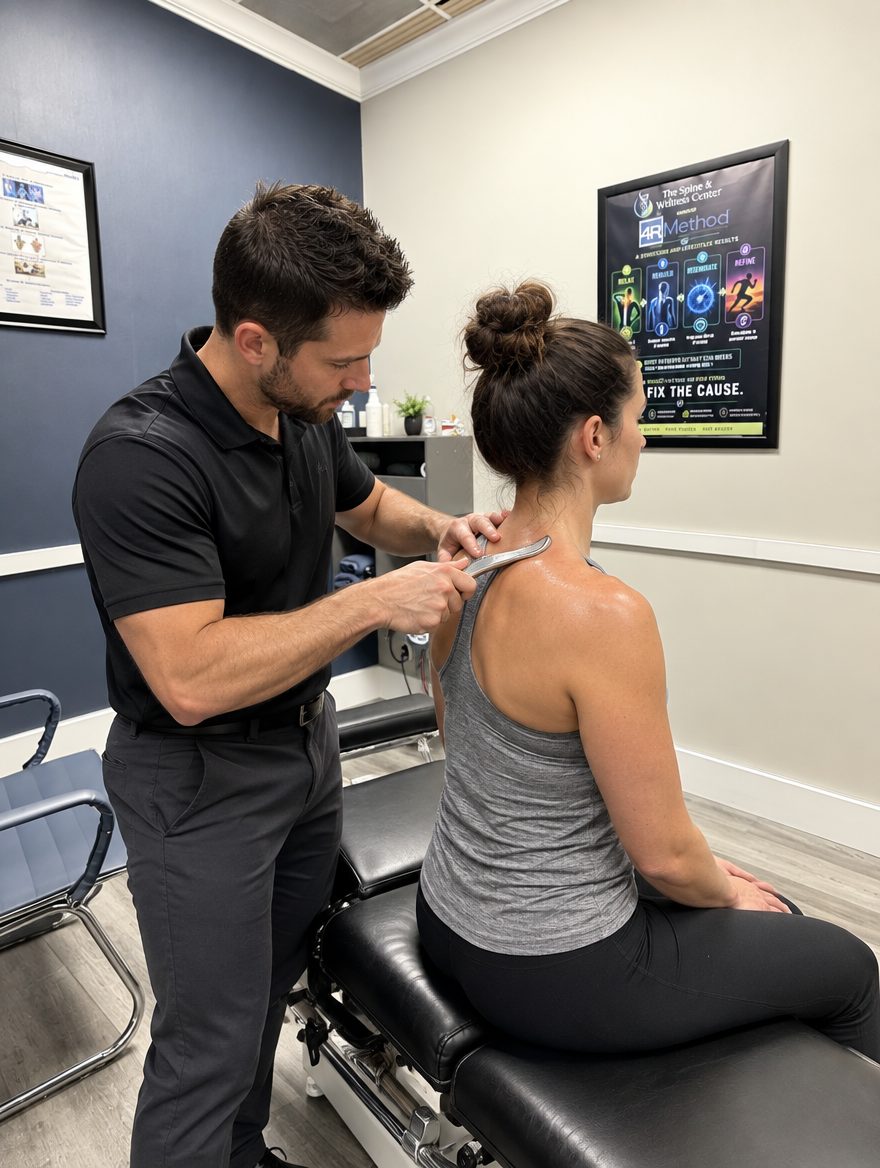
The Repair phase interrupts the pain at its source. Specific thoracic adjustments restore glide to the restricted facet and rib joints; Graston Technique and massage therapy release the knotted rhomboids and trapezius; acoustic shockwave targets stubborn trigger points and tendon attachments around the shoulder blade. Typical commitment is 3–5 visits a week for 4–8 weeks, and most patients notice the catch and the burning ease within the first two to three weeks.
R2 · Rebuild — correct what caused it
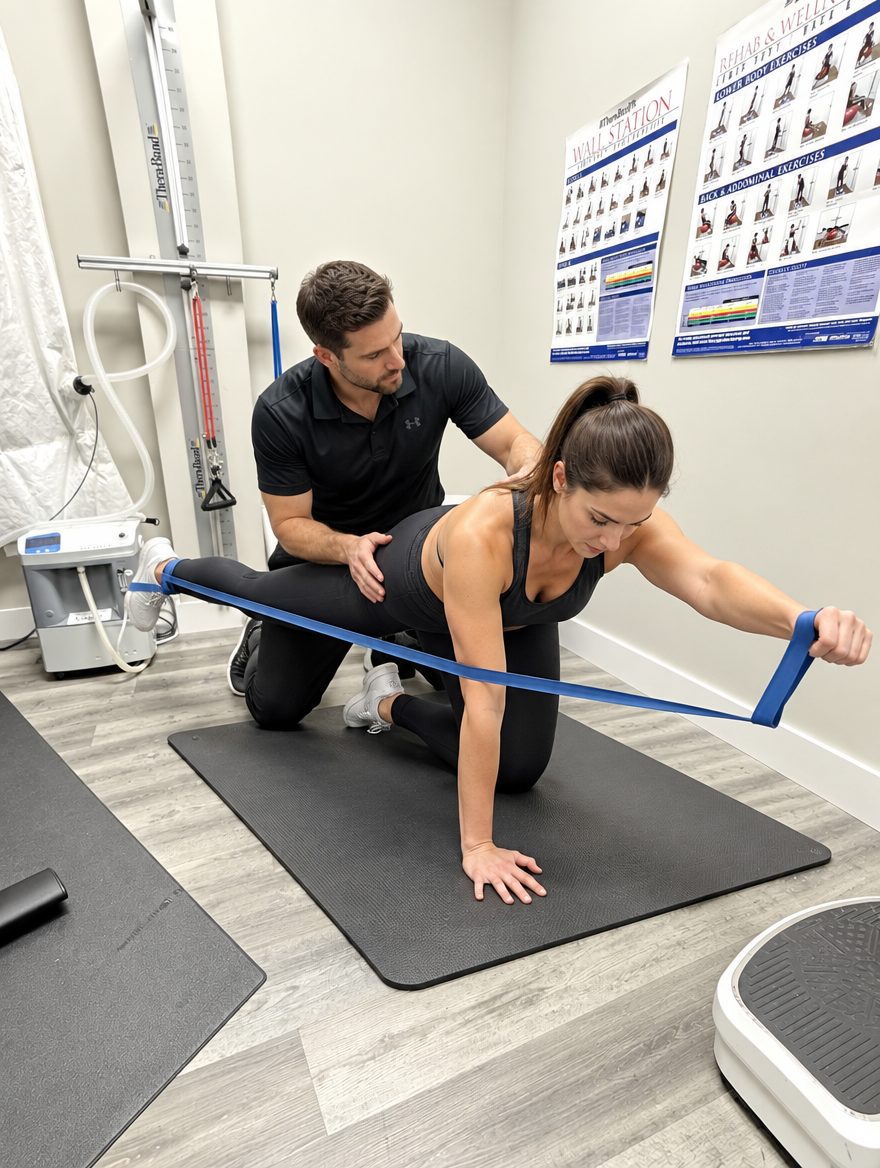
Once the joints move and the tissue is quiet, we correct the architecture that produced the problem. Posture correction restores the thoracic curve and the head position above it; physical therapy retrains the lower trapezius and serratus anterior — the scapular stabilizers that let the overworked muscles finally rest. Rebuild usually runs 2–3 visits a week for 8–16 weeks. This is the phase most clinics skip, and it is why their patients come back.
R3 and R4 · Regenerate and Refine
With the structure restored, the Regenerate phase (about 2 visits a week for two months or more) supports the cellular side of recovery — red light, PEMF and breathing-focused work that keeps the ribs moving. Refine is the long game: a brief structural tune-up every month or two so the upper back pain relief you earned stays earned.
Thoracic adjustments
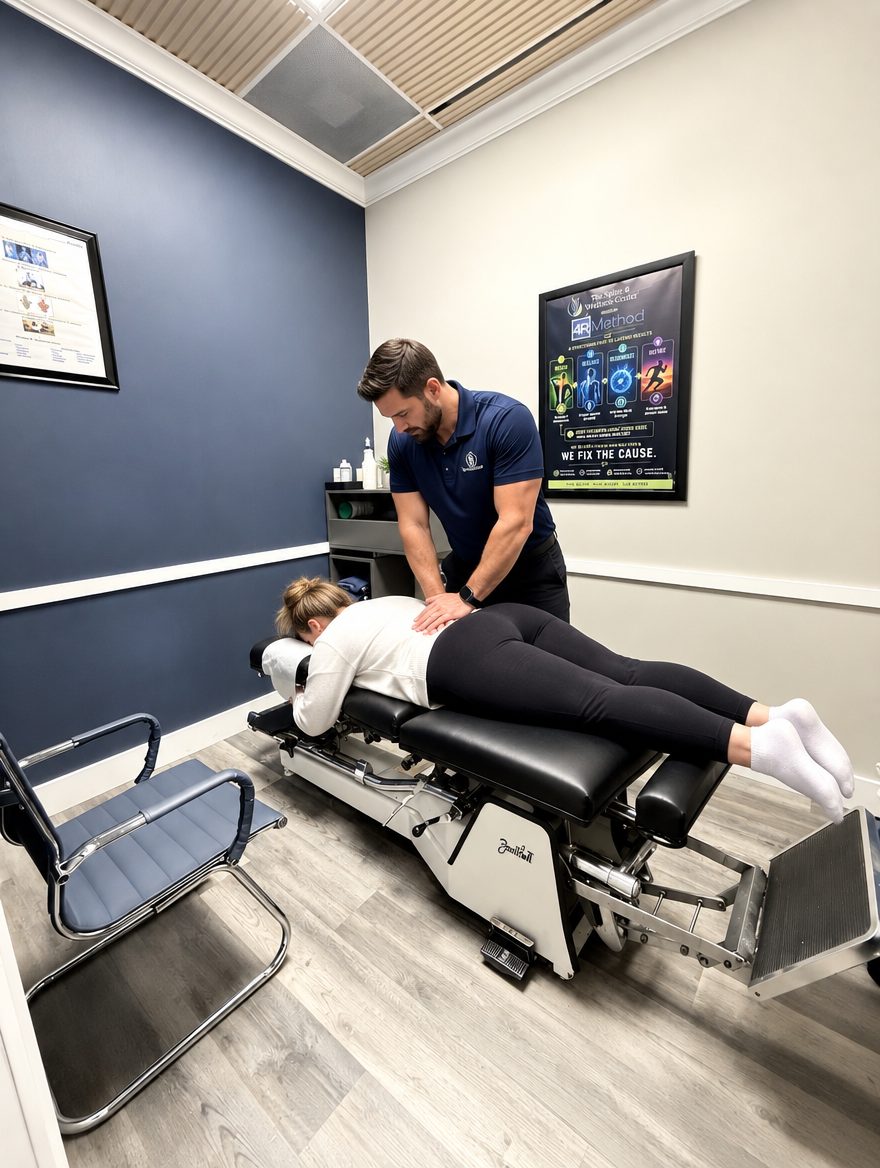
Restore glide to locked thoracic facet and rib joints and switch off the muscle guarding around them.
Learn moreGraston Technique
Instrument-assisted soft-tissue work for the fibrotic knots between the shoulder blades.
Learn morePhysical therapy
Retrain the scapular stabilizers so the overworked upper-back muscles can finally rest.
Learn moreAcoustic shockwave therapy
Acoustic pulses that break up stubborn trigger points and stimulate healing in chronic tissue.
Learn more5 proven treatments for upper and mid back pain (and when each one fits)
Not every treatment fits every back. These are the five tools we reach for most in the thoracic spine, matched to the pattern each works best on:
- Thoracic and rib adjustments. Best for the sharp catch with a breath or a twist. A specific, gentle adjustment restores motion to the restricted segment and relief is often immediate.
- Graston Technique. Best for chronic knots and scar tissue between the shoulder blades. Instrument-assisted work re-initiates healing in fibrotic tissue that massage alone cannot reach.
- Physical therapy and scapular retraining. Best for recurring pain and desk-related strain. Strengthening the lower trapezius, serratus and deep neck flexors is what keeps a corrected posture corrected.
- Acoustic shockwave therapy. Best for stubborn trigger points and tendon irritation that has not responded to hands-on work.
- Posture correction. Best for tech neck, rounded shoulders and the mid-back hump that develops with years of sitting. Curve restoration addresses the daily load that created the problem.
What is not on the list: long-term pain medication or repeated injections. Cleveland Clinic notes that most upper back pain is caused by muscle strain, poor posture or joint problems and typically improves with conservative measures such as movement, posture changes and physical therapy (Cleveland Clinic, Upper Back Pain). Our job is to be the care that works first — and to find the structural reason when it does not.
What to expect at your first two visits
Most clinics do a five-minute exam, adjust, and tell you to come back. We measure before we treat, so your plan is built on your actual structure rather than a guess.
Visit one — we measure (and usually begin care)
- A real conversation. Where it hurts, what it does with breathing and twisting, how you sit and work, and what you want to get back to.
- A hands-on structural exam. Posture analysis, thoracic and rib motion testing, shoulder-blade mechanics, and orthopedic tests that isolate the joint or muscle generating the pain; a neck screen to rule out referred pain.
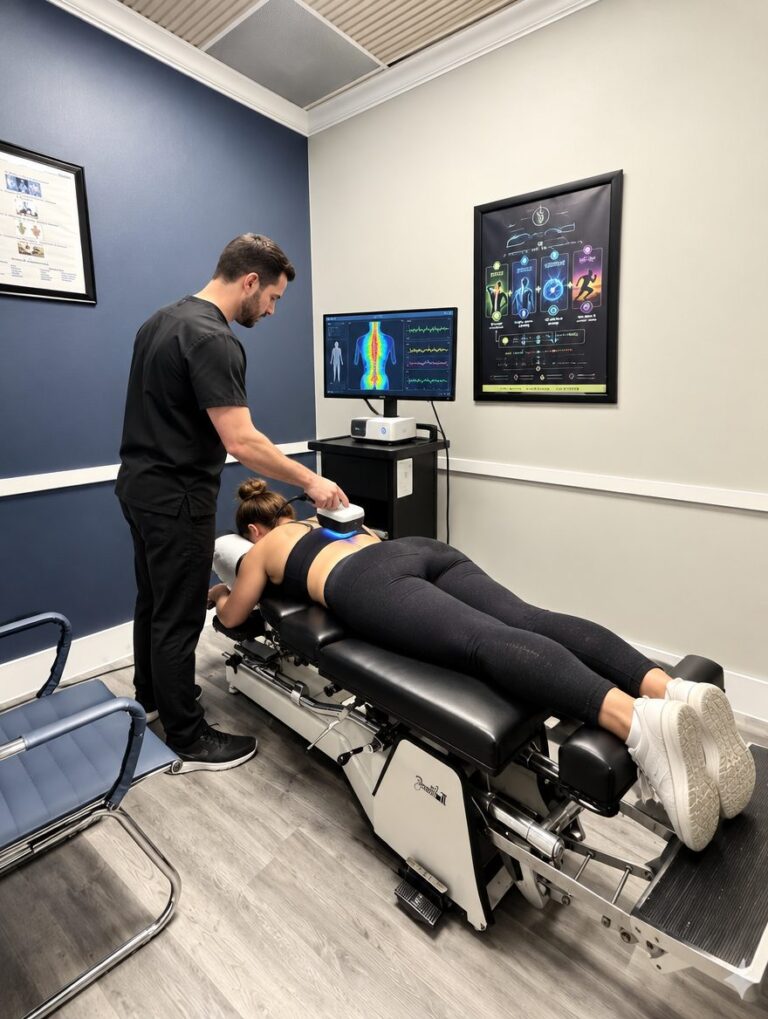
- Surface scanning: sEMG + thermal. A painless scan along the spine. Surface EMG shows where the muscles beside each vertebra are guarding — the thoracic spine often lights up asymmetrically in postural cases; thermal scanning maps nerve irritation.
- Digital X-rays, when indicated. We look at the thoracic curve, alignment and wear, and review any imaging you already have.
Visit two — your findings and your plan
Everything is explained in plain English with your scans and images in front of you, mapped to the four phases of the 4R Method: what we found, what we recommend, and how long it should take. Your full plan starts here — and in most cases care already began on visit one. For a head start, take the 60-second spine assessment and we will have your Spine Score and likely pattern before you walk in.
Upper back pain relief at home: what helps and what makes it worse
Between visits, small choices speed recovery or stall it. These are the ones that matter most for the thoracic spine:
- Set up the desk. Screen at eye level, elbows supported at 90 degrees, and the chair close enough that you are not reaching for the keyboard. Reaching is what fatigues the muscles between the shoulder blades.
- Move every 30–45 minutes. Stand, squeeze the shoulder blades together for five seconds, and take three slow, full breaths. Rib joints stiffen fastest when breathing is shallow.
- Open the mid back. A foam roller across the upper back (not the low back) or a doorway chest stretch counteracts the rounded position — slow and pain-free, never forced.
- Check the bag and the phone. A heavy bag on one shoulder and a phone held at chest height both load the upper back asymmetrically for hours a day.
- Heat for stiffness, ice for a sharp flare. Moist heat before movement helps the thoracic joints glide; ice after a rib catch or an acute strain.
A sharp rib catch that does not ease within a few days, or pain that is clearly spreading, is worth an exam rather than another week of stretching — it usually means a joint is locked, and that is quick to correct.
When upper back pain needs urgent care instead
A small number of symptoms are not chiropractic problems and need same-day medical evaluation: upper back or chest pain with pressure, shortness of breath, sweating or nausea; pain with fever or unexplained weight loss; numbness or weakness in the legs; loss of bladder or bowel control; or pain following a serious fall or accident. If any of these apply, please see a doctor or urgent care today — we will be here for the recovery afterwards.
For everything else — the knot between the shoulder blades, the rib that catches, the burning ache from the desk — this is what we do all day in Coral Springs and Parkland, and we are usually able to see you the same day you call. If your pain is lower, start with our lower back pain guide.
Serving upper back pain patients across North Broward
Our clinic at 5675 Coral Ridge Drive, Coral Springs, FL 33076 serves Coral Springs, Parkland, Coconut Creek, Margate, Boca Raton, Tamarac, Pompano Beach and Deerfield Beach. Same-day appointments are usually available — call (954) 341-2256 or book online. Most patients from Parkland and Coral Springs are here in under 15 minutes.
Medically reviewed by Dr. Jared Cohen, DC — Co-Founder & Clinical Director, The Spine and Wellness Center. Last reviewed October 2026.
Frequently asked questions
What is the fastest way to get upper back pain relief?
Restore motion to the joint that has locked. For a rib or thoracic facet catch, a specific adjustment often brings relief in the first visit or two; for postural strain, releasing the guarded muscles with Graston or massage and then retraining posture is what makes the relief last. Most patients notice change within two to three weeks.
Why does it hurt between my shoulder blades when I sit?
Sitting with rounded shoulders and a forward head stretches the rhomboids and middle trapezius for hours. They fatigue, burn and knot, and the thoracic joints underneath stiffen. Correcting the posture and strengthening the scapular stabilizers resolves it; massage alone usually does not.
Can a rib be 'out of place'?
A rib does not dislocate in daily life, but the small joint where the rib meets the spine can lose its normal glide. That produces the sharp, pinpoint pain that catches with a breath or twist. A specific rib adjustment restores the motion and the sharp pain typically settles quickly.
Is upper back pain a sign of a heart problem?
Usually not — most upper back pain is muscular or joint-related and changes with movement, pressing and breathing. Pain that comes with chest pressure, shortness of breath, sweating or nausea is different and should be evaluated by a doctor or urgent care today before any spine care.
How many visits will I need for upper back pain?
It depends on how long the pattern has been there. A rib or facet catch may resolve in a handful of visits; a postural pattern that took years to build typically runs through a Repair phase of 3–5 visits a week for 4–8 weeks, then a Rebuild phase of 2–3 visits a week to retrain posture so it holds.
Do you see upper back pain patients from Parkland and Boca Raton?
Yes. Our clinic on Coral Ridge Drive in Coral Springs is a short drive from Parkland, Coconut Creek, Margate, Boca Raton and the surrounding communities, and same-day appointments are usually available.
Same-day appointments
Let's build your plan.
Find out what's actually going on and get a clear path forward. Same-day appointments available.