
Headaches & Conditions · 6 min read
Natural tension headache relief
A tight band of pressure around the head by mid-afternoon almost always starts in the neck and shoulders. Here is how to tell it from a migraine, and how to ease it without reaching for a pill.

Quick answer
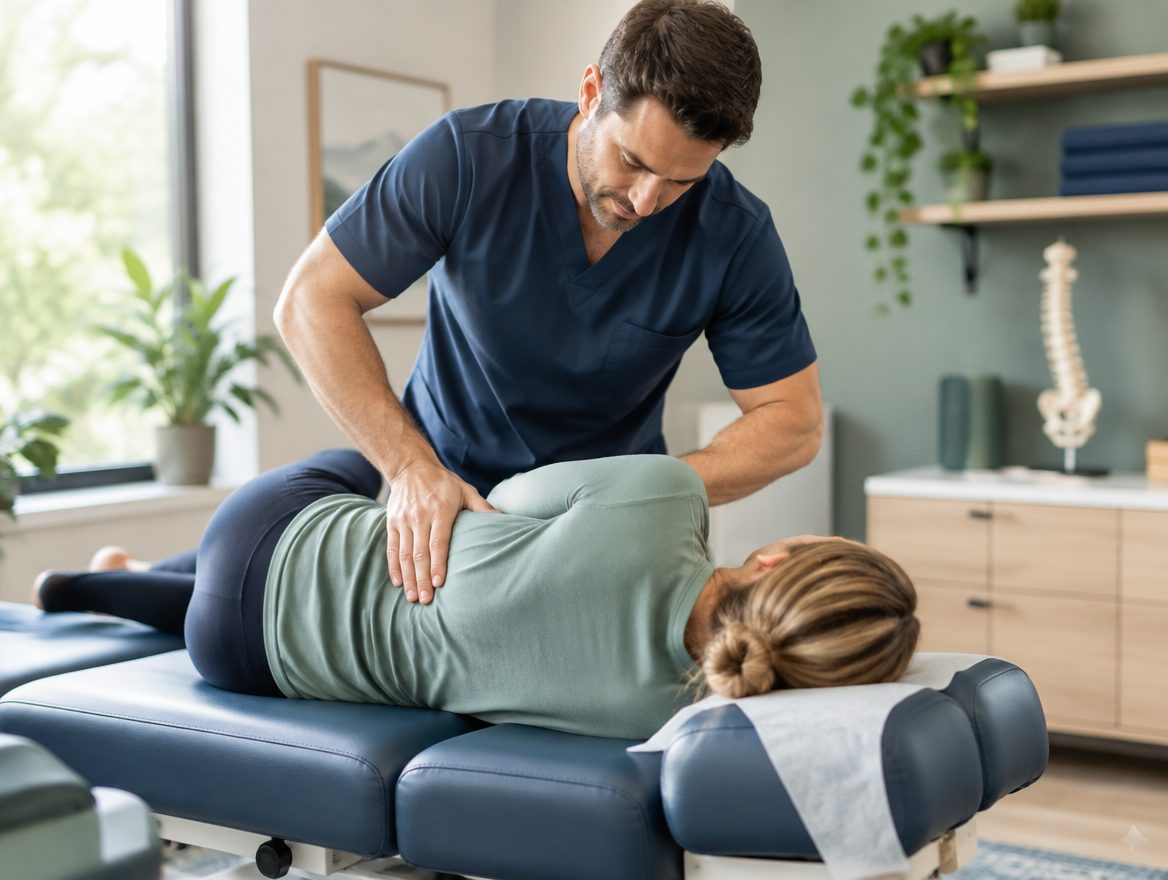
Tension-type headaches feel like dull, band-like pressure on both sides of the head and usually come from tight muscles and stiff joints in the neck and upper back. Natural tension headache relief means posture breaks, chin tucks, hydration, stress management and a neutral pillow — and for recurring headaches, restoring motion to the upper neck with chiropractic and soft-tissue care.
What a tension headache actually is
Natural tension headache relief starts with knowing what you are treating. A tension-type headache is the most common headache there is. It feels like dull, steady pressure or a tightening band across the forehead, the temples or the back of the head — rather than the sharp, throbbing pain of a migraine. The discomfort is mild to moderate, affects both sides at once, and builds gradually over the day rather than arriving in a wave.
Unlike migraines, tension headaches rarely bring nausea, vomiting or strong sensitivity to light and sound. Patients in our Coral Springs clinic describe a tight, fatigued feeling in the head and neck that creeps in by mid-afternoon, peaks at the end of the workday and eases with rest. The Mayo Clinic notes that the exact cause is not fully understood, but muscle tension and stress are the most consistent contributors — which matches what we find in the neck on the exam.

Tension headache vs. migraine: how to tell
- Tension: dull, pressing or tightening; both sides; mild to moderate; not made much worse by walking or climbing stairs
- Tension: little or no nausea, light or sound sensitivity; tender neck and shoulder muscles; worse with stress and screen time
- Migraine: throbbing or pulsating; often one-sided; moderate to severe; worse with routine activity
- Migraine: nausea, aura, light and sound sensitivity, and a need to lie down in a dark room — see common migraine triggers
The two overlap, and many people have both. Sorting out which you are dealing with is the first step of our headache treatment, because the plan is different — and because a third type, the cervicogenic headache that comes directly from the upper neck joints, mimics both and responds best of all to hands-on care.
What causes tension headaches
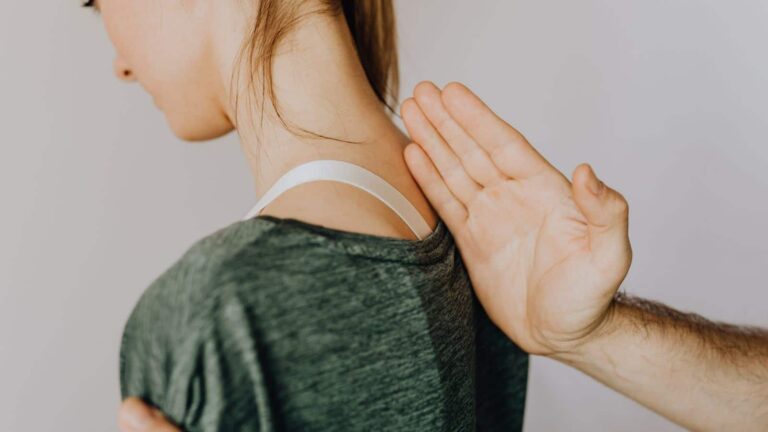
Most tension headaches trace back to the muscles and joints of the neck and upper back. Sustained poor posture, long hours at a computer or phone, jaw clenching and emotional stress all keep those muscles contracted. Over time the constant tightness in the suboccipitals — the small muscles at the base of the skull — refers pain up over the head and into the temples and behind the eyes.
Forward head posture is the usual culprit. When the head drifts ahead of the shoulders, those muscles work overtime to hold it up, and the upper cervical joints compress. Poor sleep, dehydration, eye strain and skipped meals lower the threshold and turn an ordinary day into a headache day. Jaw clenching is a frequent hidden contributor — TMJ and jaw pain relief explains the link — and text neck covers how screen posture sets the whole thing up.
7 proven ways to get natural tension headache relief
- Take a posture break every 30–45 minutes. Stand, roll the shoulders back, look at the horizon for 20 seconds. Most headaches start accumulating in hour two of unbroken sitting.
- Do chin tucks. Draw the head straight back, hold 5 seconds, 10 reps, three times a day — it unloads the suboccipitals directly.
- Set the screen at eye level and keep the shoulders relaxed; a laptop on a stand with an external keyboard solves half the problem.
- Hydrate and don’t skip meals. Both lower the threshold; a water bottle on the desk is the cheapest headache tool there is.
- Use a pillow that keeps the neck neutral. Morning headaches usually mean the neck spent the night bent — see the best sleeping position for neck pain.
- Release the base of the skull. Lie on your back with a rolled towel under the neck for 5 minutes, or gently press two fingers into the hollows at the base of the skull and breathe slowly.
- Manage the stress load. Slow breathing, a short walk, a brief stretch when tension builds; how stress affects your spine explains why it matters for the neck.
These seven habits deliver real tension headache relief for most people within a couple of weeks. Stop any stretch if pain radiates into an arm or worsens, and please see a doctor or urgent care today for the worst headache of your life, a headache with fever and a stiff neck, confusion, weakness or trouble speaking, or a new headache after a head injury.
How we treat tension headaches at The Spine and Wellness Center
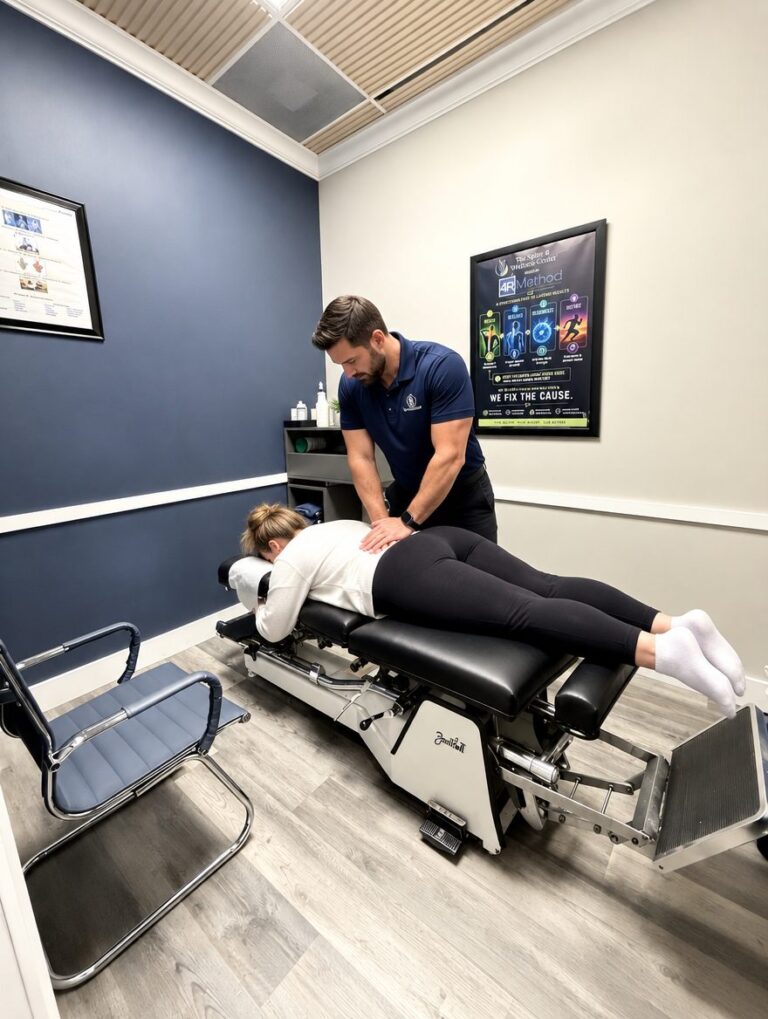
When self-care is not enough, lasting tension headache relief usually means restoring motion to joints that have stopped moving. Visit one is measurement: a conversation about your headache pattern, a hands-on structural exam of the neck and upper back, surface EMG and thermal scanning to show which muscles are guarding, and digital X-rays when indicated to measure the neck curve. Visit two is your full report of findings and plan, and Most patients have already begun care on visit one; this is where the full plan takes over. The plan follows the 4R Method:
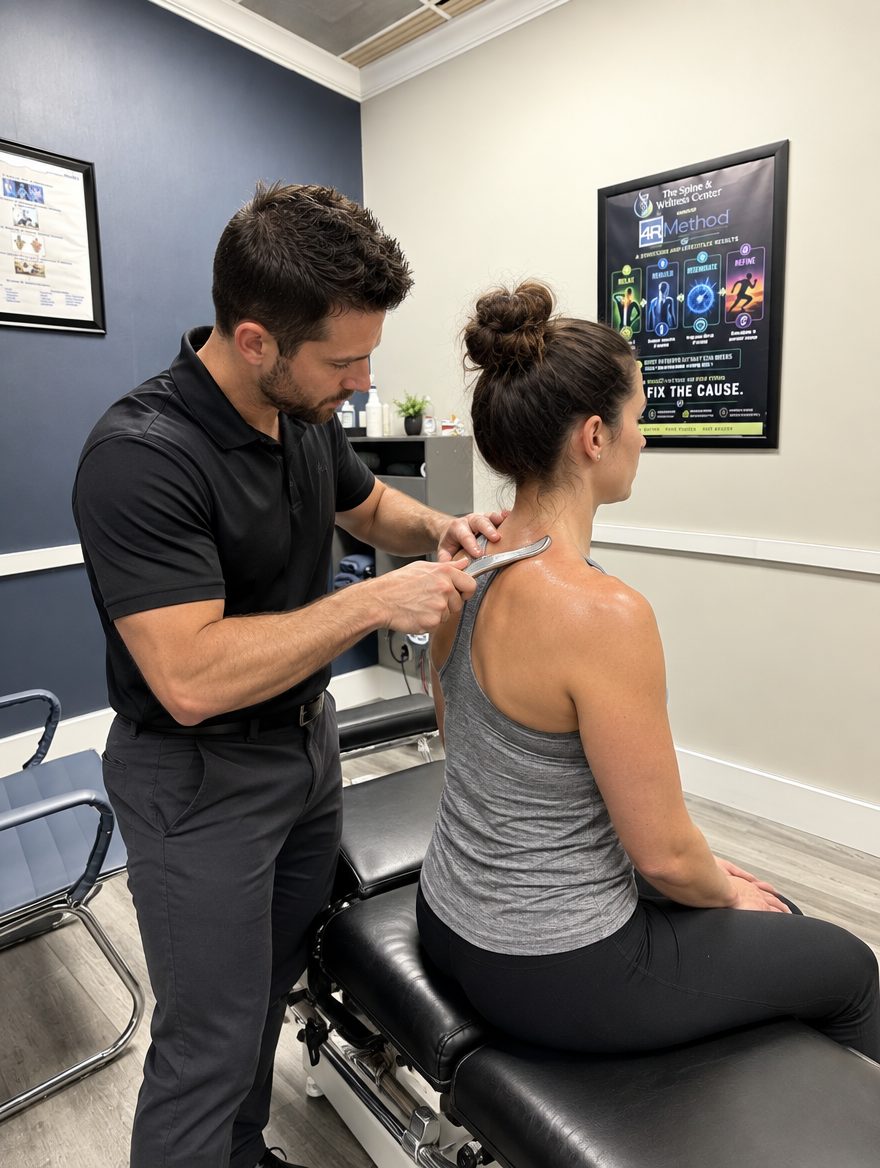
- Repair (3–5 visits a week, 4–8 weeks). Gentle chiropractic adjustments restore motion to the upper cervical joints, soft-tissue work and Graston release the suboccipitals and upper traps, and cold laser calms the irritated tissue — the core of our neck pain treatment.
- Rebuild (2–3 visits a week, 8–16 weeks). Posture correction and strengthening of the deep neck flexors so the head sits back over the shoulders and the muscles at the base of the skull can finally stand down.
- Regenerate and Refine. Massage, BrainTap and red light for the stress and tissue side, then monthly tune-ups to keep headache days rare.
For the research behind this approach, see get relief from headaches with chiropractic care. If your headaches are throbbing and one-sided, our migraine treatment page is the better starting point. If they are becoming more frequent, lasting longer or interfering with work and sleep, a spine assessment will show how much of the pattern is coming from the neck.
Serving headache patients across North Broward
Our clinic at 5675 Coral Ridge Drive, Coral Springs, FL 33076 serves Coral Springs, Parkland, Coconut Creek, Margate, Boca Raton, Tamarac, Pompano Beach and Deerfield Beach. Same-day appointments are usually available — call (954) 341-2256 or book online. Most patients from Parkland and Coral Springs are here in under 15 minutes.
Medically reviewed by Dr. Jared Cohen, DC — Co-Founder & Clinical Director, The Spine and Wellness Center. Last reviewed October 2026.
Frequently asked questions
How do I know if my headache is coming from my neck?
Headaches that worsen with neck movement, screen time or stress, start at the base of the skull and come with tender, tight neck and shoulder muscles usually have a cervical origin. If pressing the muscles at the base of the skull reproduces the head pain, the neck is almost certainly involved. The exam confirms it.
Can a chiropractor help with tension headaches?
Yes. Restoring motion to the upper cervical joints and releasing the muscles that refer pain into the head addresses the source rather than masking it. Combined with posture correction and the home habits above, most patients see headache days drop significantly over the first several weeks of care.
How can I get rid of a tension headache without medication?
For quick tension headache relief, take a posture break, do a set of chin tucks, drink a glass of water, and release the base of the skull with a rolled towel or gentle finger pressure for five minutes. For recurring headaches, address the cause — the neck and posture — rather than only the symptom.
When should I see a doctor for headaches?
See us if headaches are becoming more frequent or severe, disrupting sleep or work, or not responding to self-care. Please see a doctor or urgent care today for a sudden, severe headache, one with fever and stiff neck, confusion, weakness, trouble speaking, or a new headache after a head injury.
Same-day appointments
Reading about it is step one.
Step two is a measurement. Visit one we measure — and usually begin care; visit two you get your full findings and plan.
- Same-day appointments are usually available
- Our team calls you back to confirm your visit
- Coral Springs, serving Parkland & North Broward since 2005
Prefer to talk now? Call or text (954) 341-2256