
Headaches & Conditions · 6 min read
Chiropractic Approaches to Knee Pain
Knee pain rarely starts and ends at the knee. How you walk, how your hips and ankles move, and how your pelvis sits all decide what your knees absorb with every step.

Quick answer
Chiropractic for knee pain treats the whole chain, not just the sore joint: restoring motion at the hip, pelvis, ankle and spine, correcting gait and foot mechanics, releasing the tight quads, hamstrings and IT band that pull on the knee, and strengthening the hip so the knee stops absorbing forces it was never built for. Conservative and drug-free.
Common causes of knee pain
Chiropractic for knee pain begins the same way any good knee care does: by naming the cause. The knee is a hinge caught between a ball-and-socket above and a shock absorber below, and it gets blamed for problems that start in both. These are the sources we see most in Coral Springs and Parkland:
- Osteoarthritis: gradual cartilage wear that brings stiffness, aching and swelling, especially after activity or first thing in the morning.
- Patellofemoral pain (runner’s knee): pain around or behind the kneecap from how it tracks in its groove — usually a hip-strength and alignment problem, not a kneecap problem.
- Tendinitis: patellar or quadriceps tendon irritation from jumping, running or a sudden training increase.
- Ligament or meniscus injuries: from twisting, impact or a pivot on a planted foot.
- IT band syndrome: tightness along the outer thigh that produces pain on the outside of the knee, common in runners and cyclists.
- Referred or compensatory pain: a hip, low-back or SI joint problem that changes how you walk and overloads the knee.
The American Academy of Orthopaedic Surgeons notes that patellofemoral pain, one of the most common knee complaints, is strongly linked to muscle imbalance and alignment problems in the hip and thigh — which is exactly why treating only the knee so often fails.
Why alignment, gait and biomechanics decide what your knee feels
Picture the knee as the middle link in a chain. If the hip is weak, the thigh rotates inward with every step and the kneecap is dragged off its track. If the foot over-pronates, the shin rotates inward and the inside of the knee takes more load. If the pelvis sits unevenly, one leg functions longer than the other and that knee absorbs more impact. None of those are knee problems, but the knee is where they hurt.
Over thousands of steps a day, that uneven loading wears cartilage faster on one side, irritates tendons and tightens the muscles that cross the joint. It is the reason a knee can hurt with no injury you can remember, and the reason a knee that was treated in isolation hurts again six months later. We cover the hip side of the chain in what causes hip pain and the foot side in treating plantar fasciitis — the three travel together.

5 proven ways chiropractic for knee pain helps
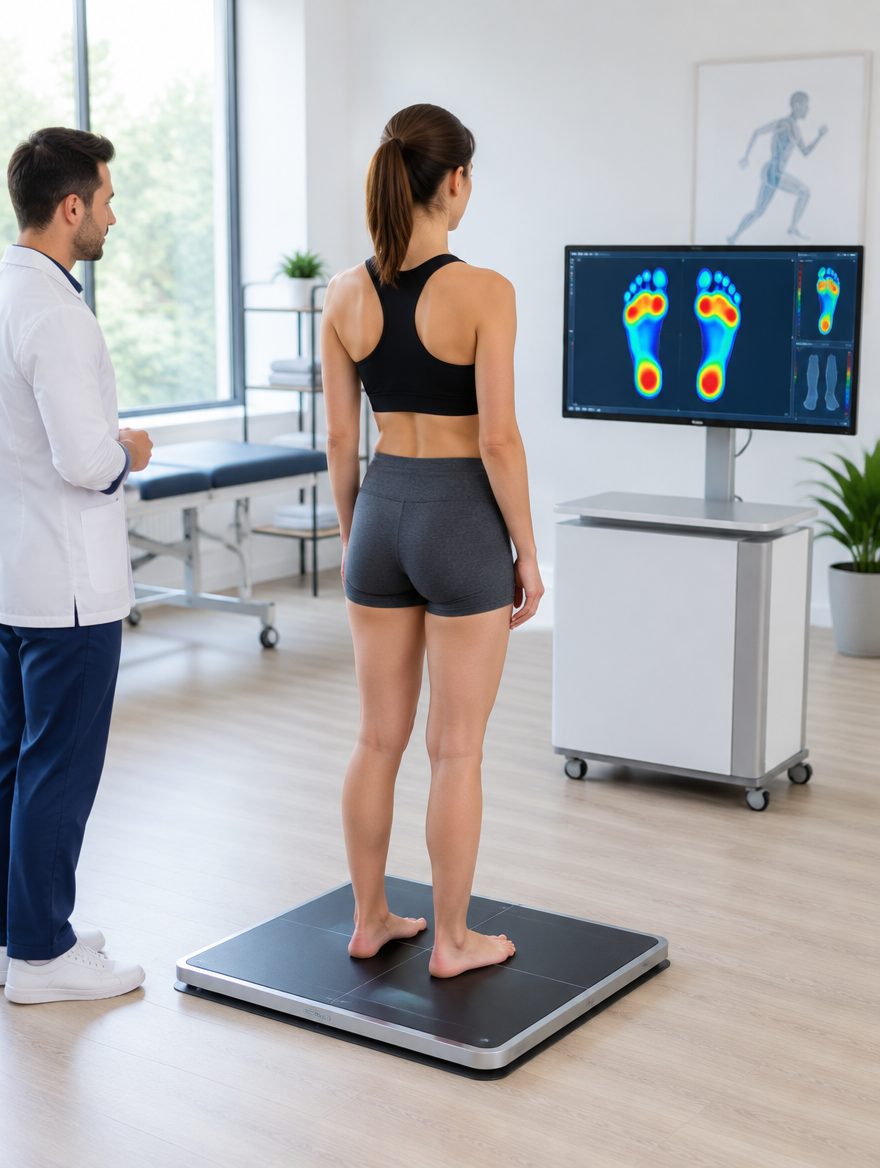
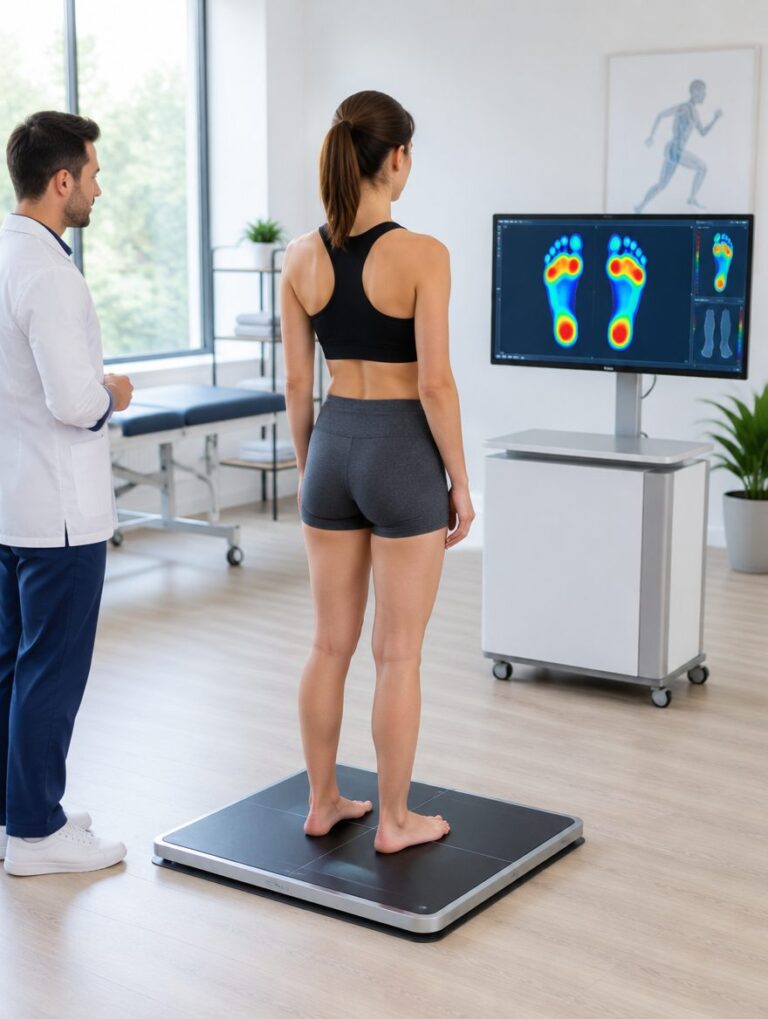
- Measuring the chain. A GaitScan digital foot pressure analysis, hip and ankle range-of-motion testing, and a pelvic and lumbar exam show where the load is coming from. This is the step that separates whole-chain care from ‘rest and ice’.
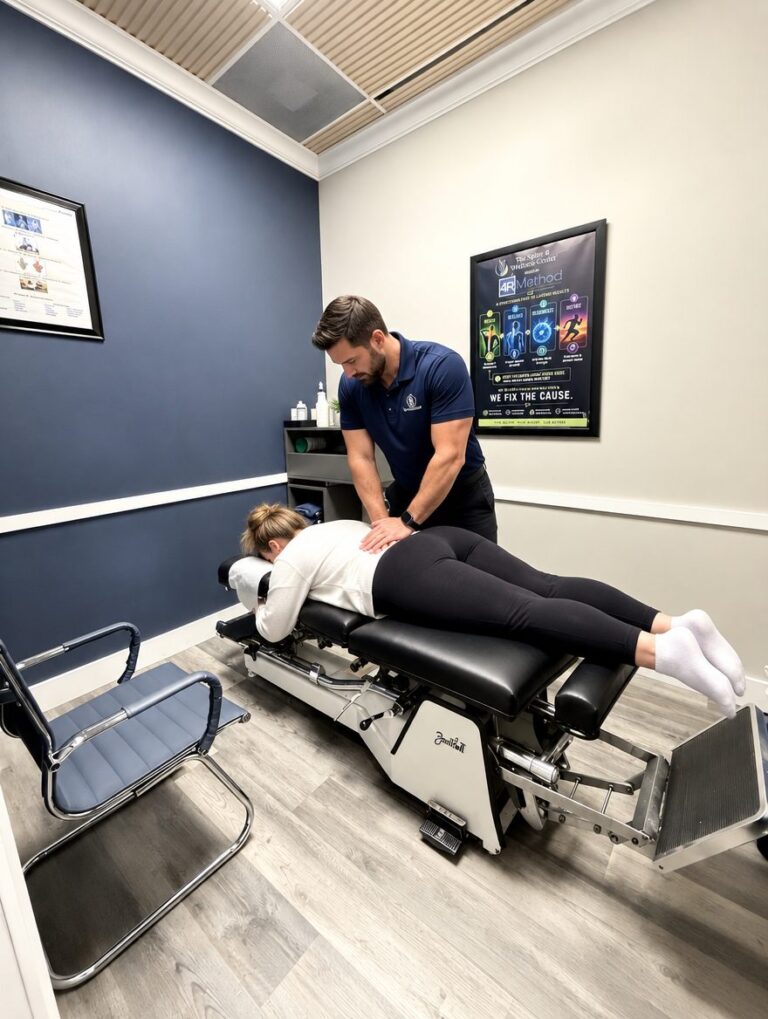
- Restoring joint motion above and below. Specific adjustments to the hip, pelvis, ankle and lumbar spine — and gentle mobilization of the knee itself — let the joints share load evenly again. See our knee pain treatment page.
- Releasing what pulls on the knee. Graston, massage and cupping release the quadriceps, hamstrings, calves and IT band that tug the kneecap and compress the joint.
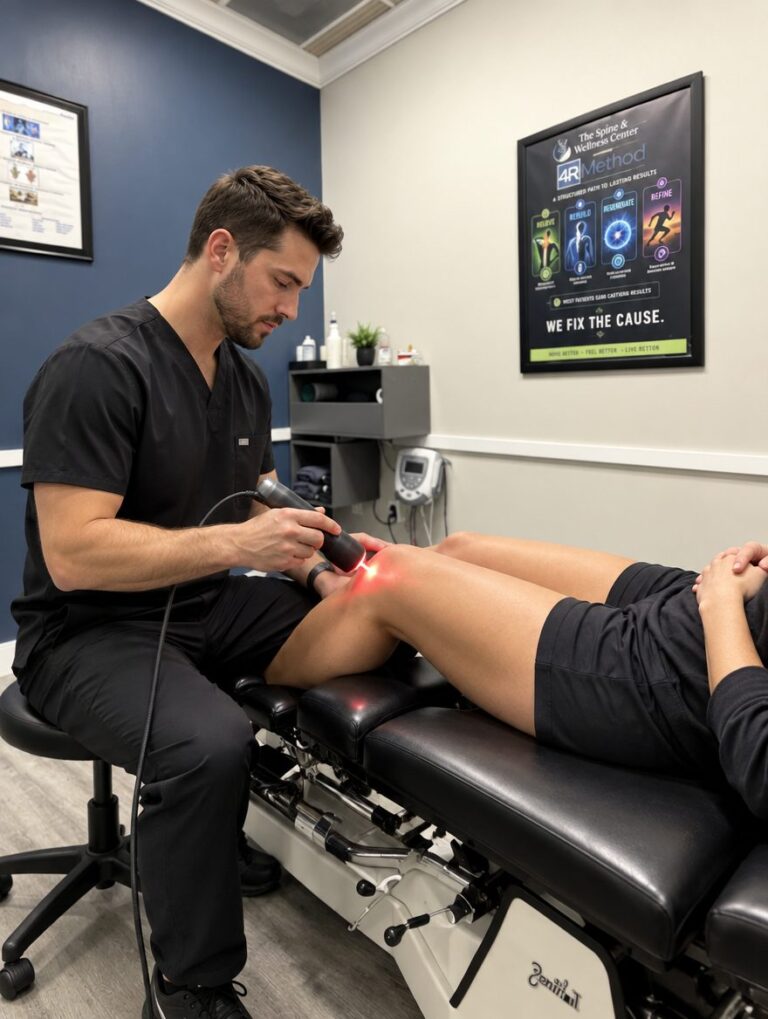
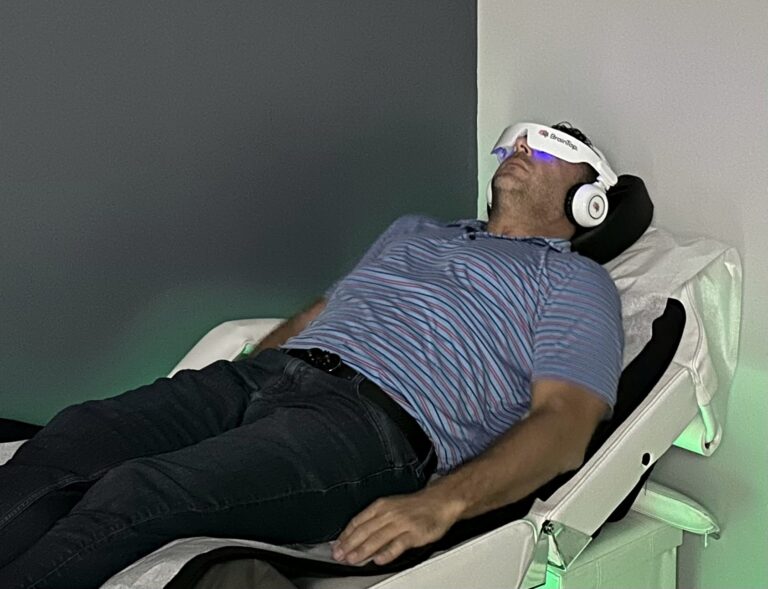
- Calming the joint without drugs. Cold laser therapy, therapeutic ultrasound and red light reduce pain and inflammation so the strengthening phase can start sooner.
- Strengthening the hip and correcting the foot. Glute and hip-rotator strength, single-leg control and, when the GaitScan shows it, custom orthotics change how the knee loads for good. This is the part that keeps the knee pain from returning.
For knees with arthritis, this same approach keeps the joint moving and the surrounding muscles strong, which is the most evidence-backed way to stay active with a worn knee — we go deeper in chiropractic care for arthritis and joint pain.
Where knee care sits in the 4R Method
Our 4R Method structures the plan. Repair (2–3 visits a week for 4–6 weeks) calms the irritated knee and restores motion at the hip, pelvis and ankle. Rebuild (2 visits a week for 8–12 weeks) is the strengthening and gait-correction phase with our physical therapy team. Regenerate adds red light, PEMF and nutrition for tissue quality. Refine is a monthly check so the mechanics stay corrected — particularly for runners, golfers and pickleball players who put the chain under load every week.
It starts with a first visit where we measure: a conversation, a hands-on exam of the knee and the whole lower chain, a GaitScan, surface EMG and thermal scanning, and digital X-rays when indicated. Visit two is your full report of findings and plan. If the knee shows a locked joint, a significant ligament or meniscus tear, or needs imaging beyond what we do, we coordinate with an orthopedist — knowing when to refer is part of good care.
Knee pain treatment
Whole-chain conservative care for arthritic, overuse and alignment-driven knee pain.
Learn moreGaitScan analysis
Digital foot pressure mapping to see how your step loads the knee.
Learn moreHip pain treatment
Because a weak or stiff hip is the most common reason a knee hurts.
Learn moreCold laser therapy
Low-level laser to reduce knee pain and inflammation.
Learn moreWhat you can do at home for knee pain
- Strengthen the hips: glute bridges, side-lying leg raises and clamshells, 2 sets of 15, most days.
- Keep the knee moving: gentle cycling or pool walking beats resting on the couch for most knee pain.
- Stretch the quads, hamstrings and calves daily; foam-roll the outer thigh if the IT band is tight.
- Check your shoes. Worn-out or unsupportive shoes change how the foot loads the knee.
- Build training volume gradually — no more than about 10 percent more per week.
- Use ice after a flare and heat before activity on a stiff, arthritic knee.
Stop any exercise if pain sharpens or radiates, or if the knee swells afterward. A knee that locks, gives way, cannot bear weight, or swells rapidly after an injury should be evaluated promptly — please see a doctor or urgent care today. For the everyday, mechanical kind, fixing the chain is usually what fixes the knee.
Serving knee pain patients across North Broward
Our clinic at 5675 Coral Ridge Drive, Coral Springs, FL 33076 serves Coral Springs, Parkland, Coconut Creek, Margate, Boca Raton, Tamarac, Pompano Beach and Deerfield Beach. Same-day appointments are usually available — call (954) 341-2256 or book online. Most patients from Parkland and Coral Springs are here in under 15 minutes.
Medically reviewed by Dr. Jared Cohen, DC — Co-Founder & Clinical Director, The Spine and Wellness Center. Last reviewed October 2026.
Frequently asked questions
Can a chiropractor help with knee pain?
Yes, especially when the knee pain comes from alignment, gait or muscle imbalance rather than a structural tear. Chiropractic for knee pain restores motion at the hip, pelvis and ankle, releases the tight tissue pulling on the knee, calms inflammation with laser and red light, and corrects the mechanics with hip strengthening and, when indicated, orthotics.
Does chiropractic for knee pain involve adjusting the knee itself?
Sometimes, gently. The knee joint and the kneecap can be mobilized to improve tracking and motion, but most of the adjusting happens at the hip, pelvis, lumbar spine and ankle, because those are the joints that decide how the knee is loaded. Treating only the knee is the approach that usually fails.
Is chiropractic care safe for knee osteoarthritis?
Yes, when matched to the joint. For arthritic knees we favor gentle mobilization, soft-tissue therapy, laser and red light, and a strengthening program for the hips and thighs. Keeping an arthritic knee moving and well-supported is the most evidence-backed way to stay active, and it often reduces pain substantially.
When should I see an orthopedist instead?
If the knee locks, gives way, cannot bear weight, swelled rapidly after an injury, or shows signs of a significant ligament or meniscus tear on exam, we coordinate with an orthopedist for imaging and an opinion. Most other knee pain responds to conservative, whole-chain care.
Same-day appointments
Reading about it is step one.
Step two is a measurement. Visit one we measure — and usually begin care; visit two you get your full findings and plan.
- Same-day appointments are usually available
- Our team calls you back to confirm your visit
- Coral Springs, serving Parkland & North Broward since 2005
Prefer to talk now? Call or text (954) 341-2256