
Headaches & Conditions · 6 min read
What Causes Hip Pain (and How to Treat It)
Groin, outer hip or buttock? Where it hurts tells us a lot about where it starts. The common sources of hip pain and the conservative options that help.

Quick answer
Hip pain comes from the joint itself (arthritis, labral tears), the tissues around it (bursitis, tendinitis, strains), or is referred from the low back and sacroiliac joint. Groin pain usually means the joint; outer-hip pain means bursa or tendon; buttock pain traveling down the leg usually means the spine. Most cases respond to conservative care.
The 5 common causes of hip pain
Hip pain can come from the joint itself, from the muscles and tendons around it, or from the low back and pelvis sending pain into the hip. The hip is the largest weight-bearing ball-and-socket joint in the body, and several different structures can be the source. Identifying which one is involved is what guides the right treatment — and what we spend the first visit on in Coral Springs.
- Bursitis. Inflammation of the fluid-filled sacs that cushion the outer hip. Pain on the side of the hip that is worse lying on that side at night, climbing stairs or rising from a chair. Often paired with gluteal tendon irritation — the American Academy of Orthopaedic Surgeons describes this as one of the most common causes of lateral hip pain.
- Labral tears. Damage to the cartilage rim of the socket, from a twisting injury or years of repetitive motion. Deep groin pain with catching, clicking or a sense the hip might give.
- Osteoarthritis. Gradual wear of the joint cartilage. Groin or front-of-thigh ache, morning stiffness, and trouble putting on socks or getting out of the car. Common after 50.
- Tendinitis and muscle strains. Overuse of the hip flexors, glutes, adductors or IT band — common in runners, golfers and pickleball players who ramped up fast.
- Referred pain from the spine or SI joint. A lumbar disc, facet joint or sacroiliac joint problem that sends pain into the buttock and hip. The hip is where you feel it; the spine is where it starts.
How to tell where the pain is coming from
Location offers the biggest clue. Here is how we read it before any test:
- Groin or front of the thigh: usually the joint itself — arthritis, a labral tear or a hip flexor strain. Rotating the hip in and out reproduces it.
- Outer hip (the bony point): usually bursitis or gluteal tendon trouble. Tender to press, worse lying on it.
- Buttock, especially with pain down the leg: usually the low back or SI joint. Sitting, bending and rising from a chair change it; the hip joint itself moves freely.
- One-sided pain just off-center in the low back over the dimple: the sacroiliac joint. Flares rolling over in bed and on stairs.
Because these overlap, a careful exam matters. Treating the hip when the real problem is the spine, or treating the spine when the hip joint is worn, leads to months of frustration. Sciatica is the classic mimic — our guide to sciatica relief without surgery explains the pattern, and what causes lower back pain covers the disc and facet patterns that refer to the hip.

Symptoms to watch for
- Aching or sharp pain in the groin, outer hip or buttock
- Stiffness that is worse in the morning or after sitting
- Reduced range of motion — trouble with shoes and socks, crossing the legs, getting out of a low chair
- Pain with walking, stairs or standing from a seated position
- Clicking, catching or a sense of instability
- Pain that travels down the leg, or numbness and tingling (points toward the spine)
When to be seen promptly
Pain after a fall with an inability to bear weight, a hip that looks deformed or shortened, fever with a painful hip, or new numbness in the groin with bladder or bowel changes — please see a doctor or urgent care today. Those are not patterns we treat in the office.
6 proven ways we treat hip pain conservatively
Most cases respond well to non-invasive care, especially when the source is correctly identified. The tools we use most:
- Specific adjustments and mobilization of the hip, pelvis, SI joint and lumbar spine to restore motion and even out how the two sides load. See hip pain treatment and, when the SI joint is the driver, SI joint pain relief.
- Soft-tissue therapy — Graston, massage and cupping — for the tight hip flexors, glutes, piriformis and IT band that compress and tug on the joint.
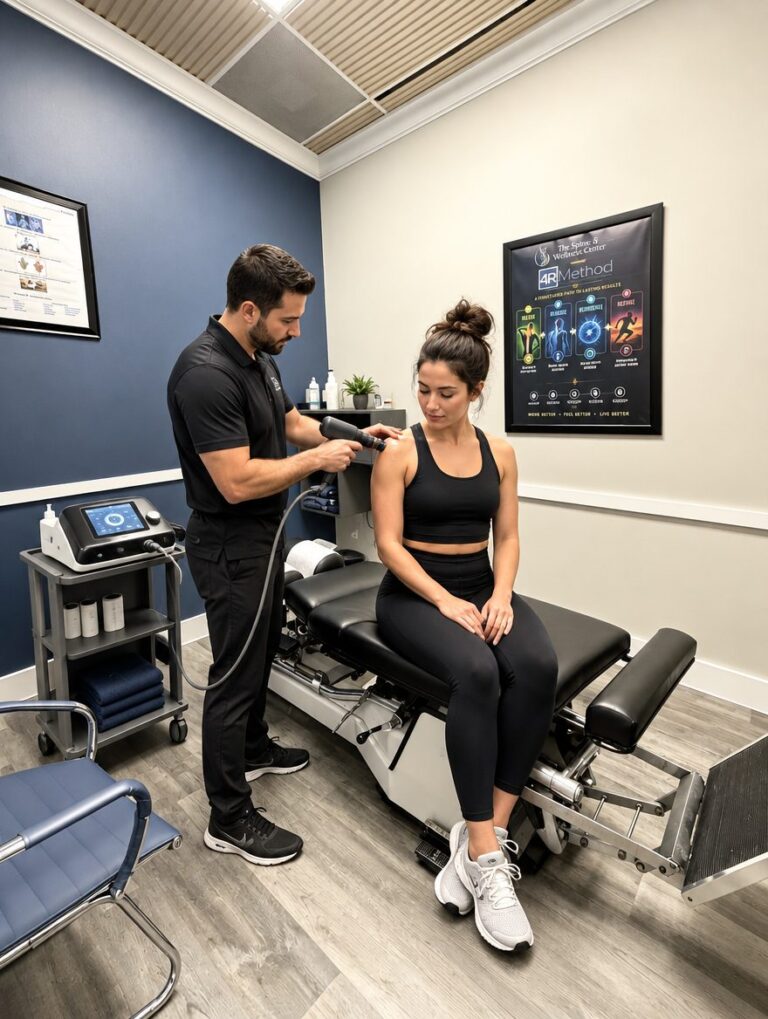
- Cold laser and red light therapy to calm bursitis and tendon inflammation without medication.
- Non-surgical spinal decompression when a lumbar disc is the real source of the buttock and hip pain.
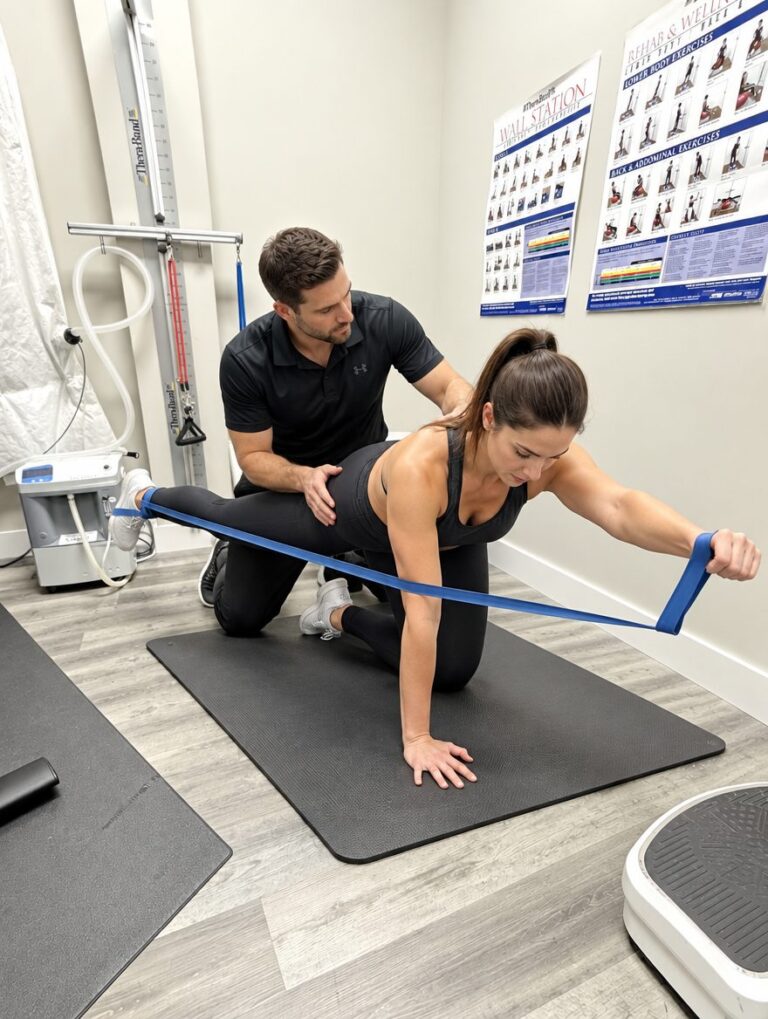
- Targeted strengthening of the glutes, deep hip rotators and core with our physical therapy team. This is the step that keeps it from returning.
- Gait and foot correction — a GaitScan and, when needed, orthotics — because over-pronation and a leg-length difference overload one hip with every step.
For arthritic hips, this same approach keeps the joint moving and supported, which is the best evidence-backed way to delay or avoid a replacement — our osteoarthritis treatment page goes deeper. And because the hip and knee share the chain, many patients with knee complaints find their answer here; see chiropractic approaches to knee pain.
Where hip care sits in the 4R Method
Care follows the 4R Method. Repair (2–3 visits a week for 4–6 weeks) calms the irritated bursa, tendon or joint and restores motion at the hip, pelvis and spine. Rebuild (2 visits a week for 8–12 weeks) strengthens the glutes and core and corrects gait. Regenerate adds red light and PEMF for tissue quality; Refine is monthly maintenance, particularly valuable for arthritic hips and for active Parkland and Coral Springs golfers and runners.
It begins with measurement. Your first visit is a conversation, a hands-on exam of the hip, pelvis and low back, surface EMG and thermal scanning, and digital X-rays when indicated to see the joint. Visit two is your full report of findings and plan. When the exam points to a significant labral tear or advanced arthritis that needs an orthopedic opinion, we coordinate that referral.
Hip pain treatment
Conservative care for bursitis, tendinitis, arthritis and referred pain.
Learn moreSI joint pain relief
When the sacroiliac joint is the real source of one-sided hip and low-back pain.
Learn moreOsteoarthritis treatment
Keeping a worn hip moving, strong and comfortable.
Learn morePhysical therapy
Glute and core strengthening that keeps the pain from coming back.
Learn moreServing hip and SI joint patients across North Broward
Our clinic at 5675 Coral Ridge Drive, Coral Springs, FL 33076 serves Coral Springs, Parkland, Coconut Creek, Margate, Boca Raton, Tamarac, Pompano Beach and Deerfield Beach. Same-day appointments are usually available — call (954) 341-2256 or book online. Most patients from Parkland and Coral Springs are here in under 15 minutes.
Medically reviewed by Dr. Jared Cohen, DC — Co-Founder & Clinical Director, The Spine and Wellness Center. Last reviewed October 2026.
Frequently asked questions
Why does my hip hurt when I lie on my side?
Pain on the outer hip when lying on it is the classic sign of trochanteric bursitis or gluteal tendon irritation. The weight of the body compresses the inflamed bursa against the bone. A pillow between the knees, sleeping on the other side, and treating the tendon and the hip mechanics that caused it usually settle it.
Is my hip pain actually coming from my back?
Often, yes. Pain in the buttock that travels down the leg, changes with sitting or bending, and comes with a hip joint that moves freely on exam usually starts at a lumbar disc, facet joint or the SI joint. Groin pain with restricted hip rotation points to the hip itself. The exam sorts the two apart.
Can chiropractic care help hip arthritis?
Yes, within limits. It cannot regrow cartilage, but restoring motion to the hip and pelvis, strengthening the glutes and core, releasing tight surrounding muscles, and calming inflammation with laser and red light reduce pain and keep the joint functional, which can delay or avoid surgery for many people.
When is hip pain serious?
Pain after a fall with an inability to bear weight, a leg that looks shortened or turned out, fever with a painful hip, or numbness in the groin with bladder or bowel changes should be seen by a doctor or urgent care today. Gradual, activity-related pain is usually mechanical and responds to conservative care.
Same-day appointments
Reading about it is step one.
Step two is a measurement. Visit one we measure — and usually begin care; visit two you get your full findings and plan.
- Same-day appointments are usually available
- Our team calls you back to confirm your visit
- Coral Springs, serving Parkland & North Broward since 2005
Prefer to talk now? Call or text (954) 341-2256