
Stretches & Exercises · 6 min read
7 sciatica stretches you can do at home
Gentle, safe stretches that ease pressure on the sciatic nerve — plus how to do them without making things worse, and the signs that it is time to let us look at the disc.

Quick answer
The best sciatica stretches are gentle, held 20–30 seconds and repeated two or three times once or twice a day: knee-to-chest, figure-4, seated piriformis, reclining hamstring, cat-cow, child's pose and standing extension. They ease muscle tension and nerve pressure. Stop any stretch that sends pain shooting down the leg.
Why sciatica stretches help — and what they can’t do
The right sciatica stretches can ease the deep, shooting pain that runs from the lower back through the buttock and down one leg — the kind that makes sitting, standing and sleeping miserable. Sciatica is not a diagnosis; it is a set of symptoms from irritation of the sciatic nerve, most often by a herniated disc, a tight piriformis muscle clamping the nerve, or narrowing in the spine.
Gentle stretching reduces muscle tension around the nerve, improves hip and lumbar mobility and, in the piriformis pattern, can take real pressure off. What it cannot do is pull a herniated disc back off a nerve root. I show these seven to patients in Coral Springs and Parkland every week with that caveat: they are the home half of a plan, not the whole plan. If your symptoms are new, read sciatica relief without surgery first to understand what is likely pressing on the nerve.
Safety first
Move slowly, breathe, and never force a stretch into sharp pain. Mild discomfort is fine; shooting or worsening pain down the leg means stop. Please see a doctor or urgent care today for new leg weakness, numbness in the groin, or any change in bladder or bowel control.

7 proven sciatica stretches to try
- Knee-to-chest. Lie on your back with knees bent. Pull one knee gently toward your chest with both hands, keeping the other foot flat. Hold 20–30 seconds, switch. Eases the low back and the top of the glute.
- Figure-4 (supine piriformis). On your back, cross the painful-side ankle over the opposite knee, then draw the bottom thigh toward you until the hip opens. This is the key stretch when the piriformis is the squeeze.
- Seated piriformis. Sit tall in a chair, cross one ankle over the other knee, and hinge forward with a flat back until you feel the back of the hip. Good for the office.
- Reclining hamstring. Lying down, loop a towel or strap around one foot and slowly straighten the leg toward the ceiling, keeping the other leg bent. Stop short of nerve pain — a hamstring stretch and a nerve stretch feel different.
- Cat-cow. On hands and knees, alternate gently arching and rounding the spine for 8–10 slow cycles to mobilize the lumbar segments.
- Child’s pose. Sit the hips back toward the heels with arms reaching forward, breathing into the low back. Skip it if bending forward worsens the leg pain — that points to a disc.
- Standing back extension. Stand, hands on hips, and gently arch backward 5–10 times. The one stretch that counters a day of sitting; for many disc patients it is the one that helps most.
How to stretch safely for sciatica
Form matters more than effort. Keep movements smooth and controlled, hold each position 20–30 seconds and repeat two or three times rather than bouncing. Warm tissue responds better, so a short walk or a warm shower first helps. Once or twice daily is plenty. Consistency beats intensity: a few gentle minutes every day does more than an occasional aggressive session.
Pay attention to direction. If bending forward (child’s pose, hamstring) makes the leg worse and arching backward makes it better, you are likely dealing with a disc, and your routine should favor extension. If the reverse is true — arching hurts, bending forward relieves — think stenosis and favor flexion. The Mayo Clinic recommends staying active and avoiding bed rest for most sciatica, and that matches what we see: movement, done right, is medicine.
- Avoid deep forward folds with locked knees, aggressive twisting and any bouncing
- Stop immediately if a stretch increases shooting pain, tingling or numbness down the leg
- Pair the stretches with short walks and a break from sitting every 30–45 minutes
- For a fuller low-back routine once the sharp phase settles, see 8 stretches for lower back pain
When stretching isn’t enough
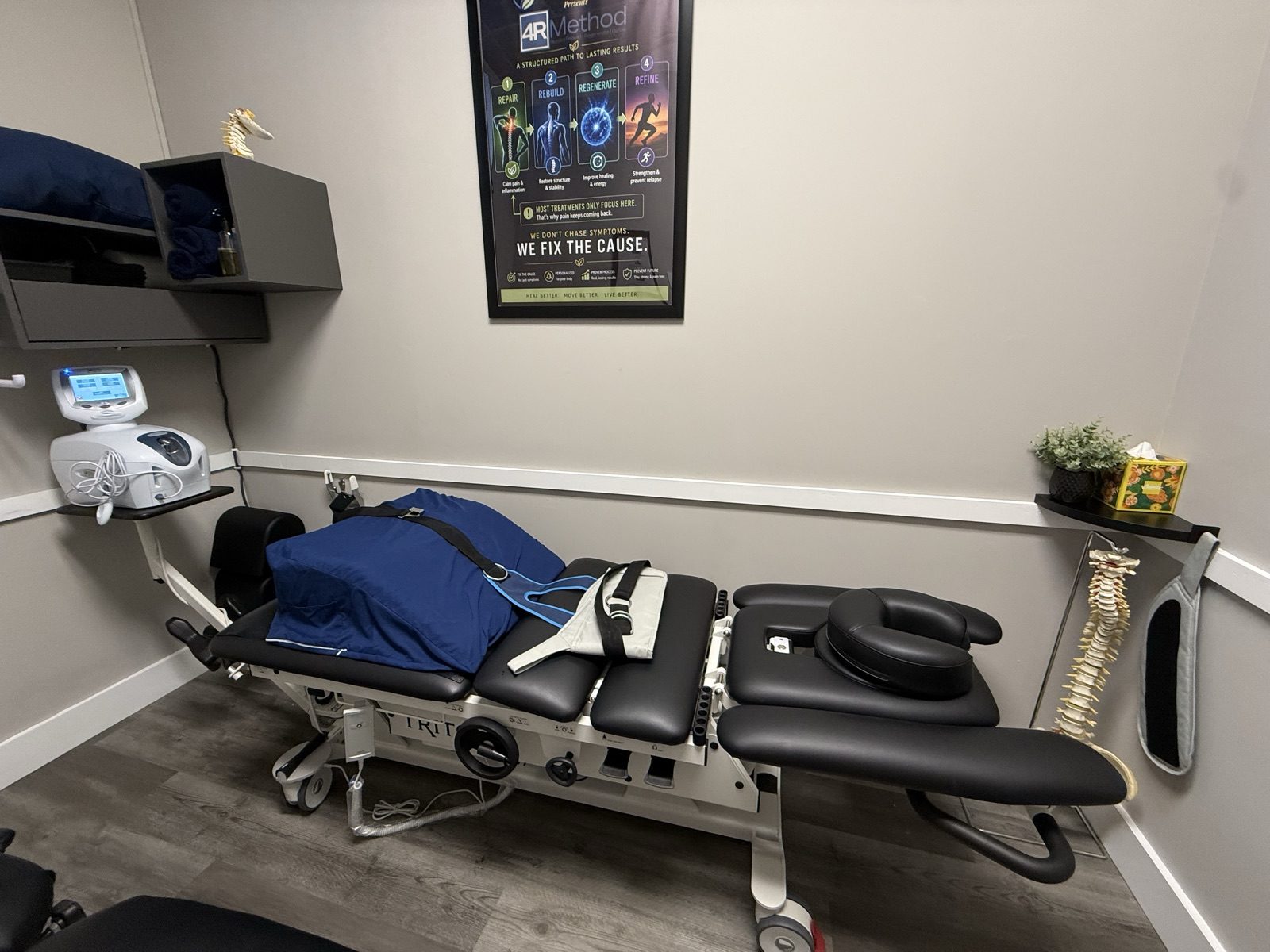
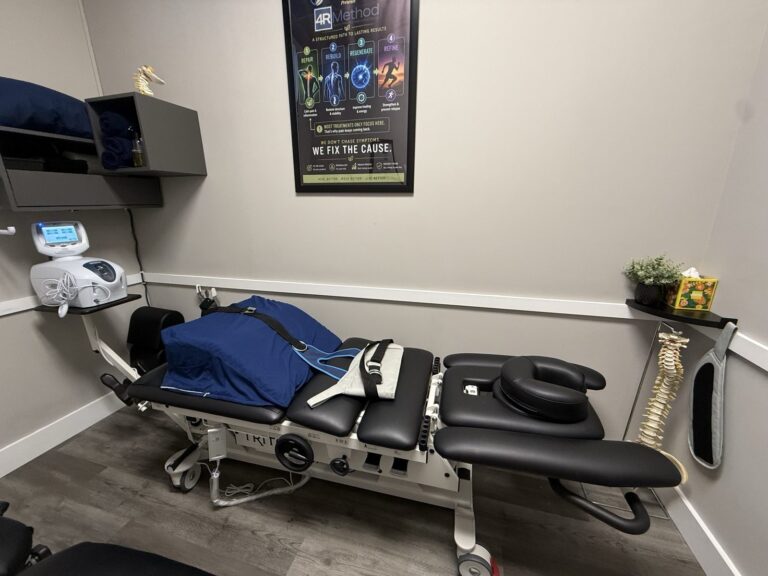
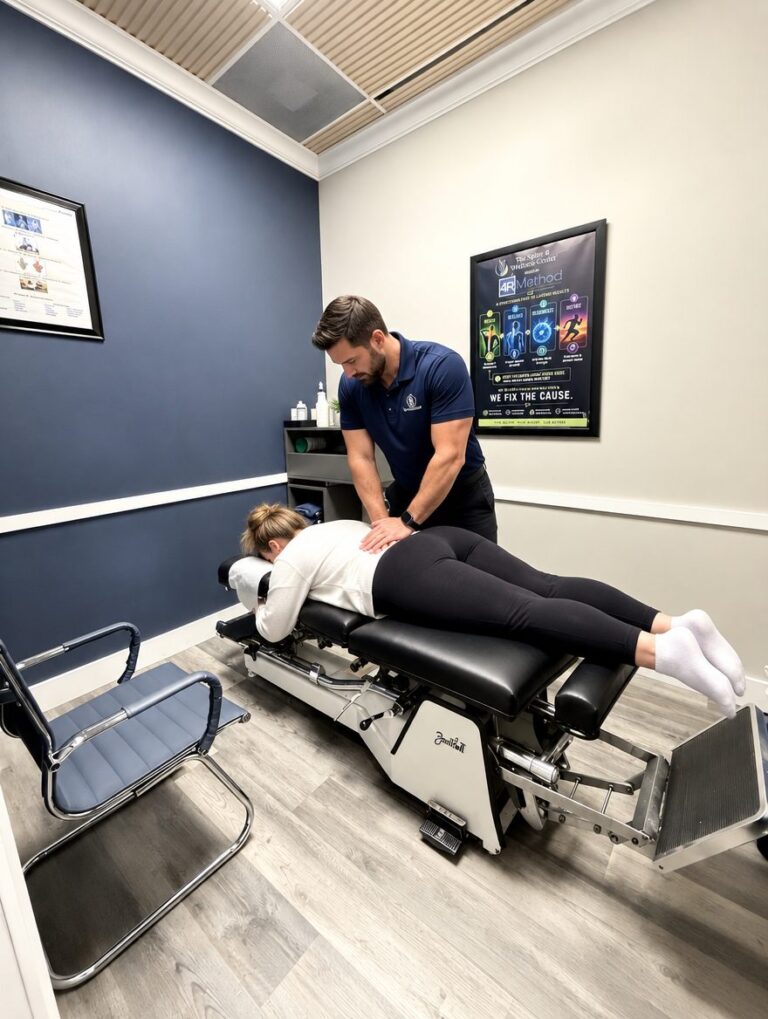
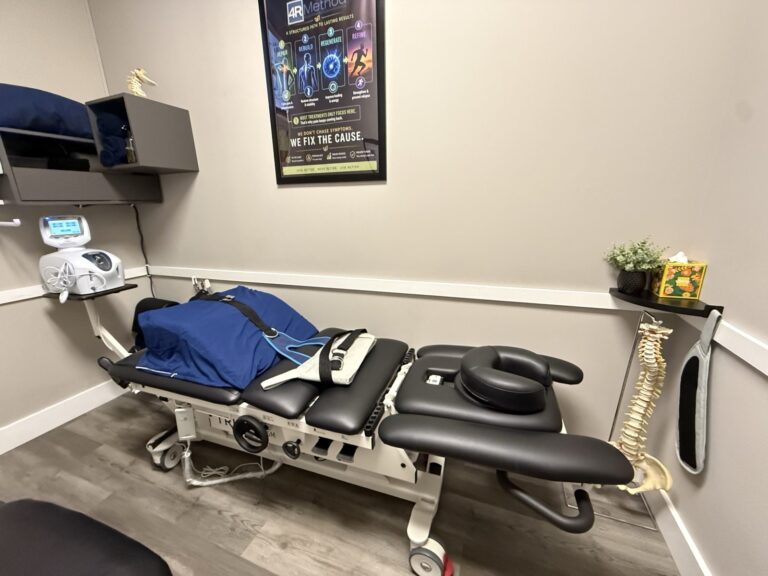
Stretching treats tension more than it treats the cause. If your sciatica comes from a herniated or bulging disc, stretching alone usually will not relieve the nerve compression — that is where non-surgical spinal decompression comes in. About 20 minutes of gentle, cyclical traction on the Triton DTS table lowers pressure inside the disc so it can draw back from the nerve root. Herniated disc: symptoms, causes and treatment explains that pattern.
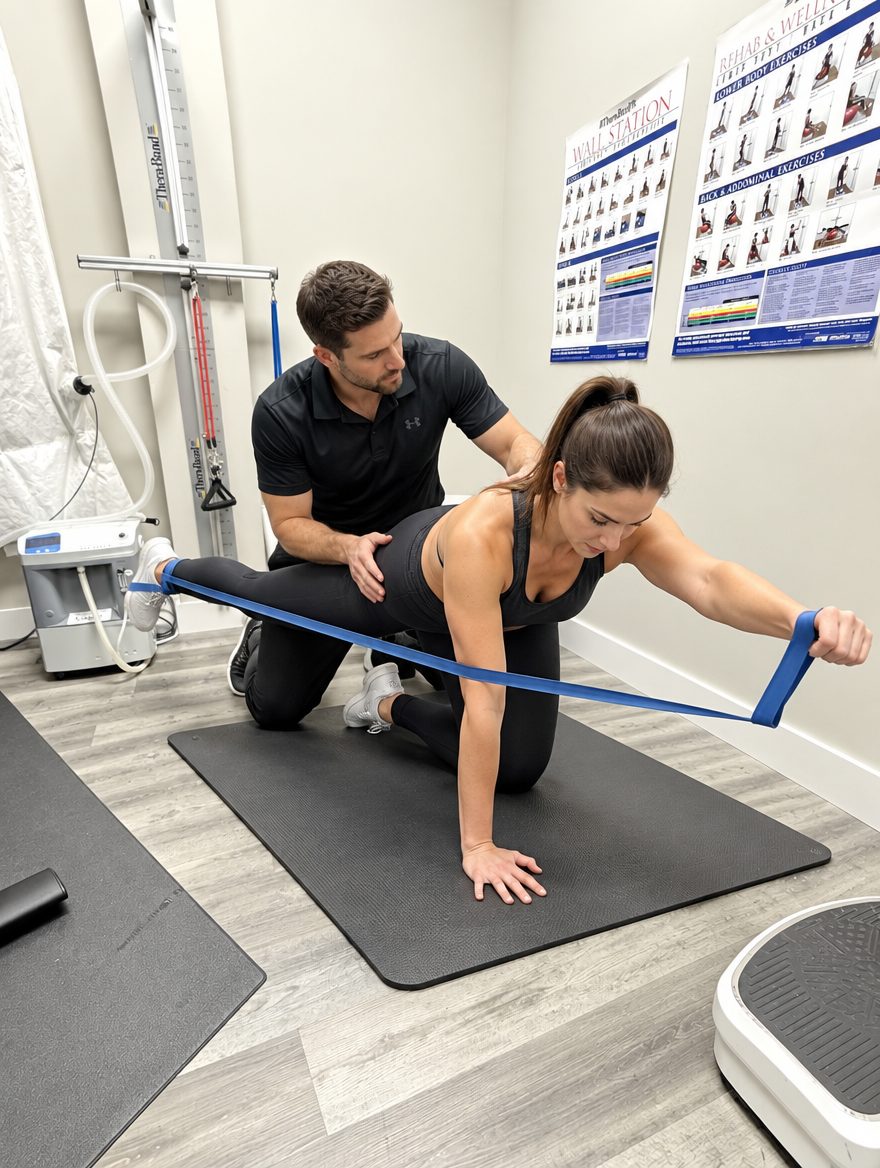
Our sciatica treatment follows the 4R Method. Repair (3–5 visits a week, 4–8 weeks) decompresses the nerve and restores motion with chiropractic adjustments, cold laser and soft-tissue work on the piriformis. Rebuild (2–3 visits a week, 8–16 weeks) is where these stretches graduate into a physical therapy program for the core and hips — the step that keeps sciatica from coming back.
Visit one is measurement: a conversation about how the pain behaves, a hands-on exam that tests the nerve directly, surface EMG and thermal scanning, and digital X-rays when indicated. Visit two is your full report of findings and plan, and Most patients have already begun care on visit one; this is where the full plan takes over.
Warning signs you should not stretch through
- Pain that worsens despite a week or two of rest and gentle stretching
- Numbness, tingling or weakness that spreads or intensifies
- Numbness in the groin or inner thighs, or any change in bladder or bowel control — please see a doctor or urgent care today
- Leg pain after a fall, collision or other trauma
- Symptoms lasting more than two weeks without clear improvement
Sciatica rarely resolves by accident. The most reliable recoveries combine smart self-care with treatment that addresses why the nerve is irritated in the first place. If home care has plateaued, a spine assessment will tell you which structure is the squeeze — and which of these seven stretches you should be doing more of, and which to drop.
Serving sciatica patients across North Broward
Our clinic at 5675 Coral Ridge Drive, Coral Springs, FL 33076 serves Coral Springs, Parkland, Coconut Creek, Margate, Boca Raton, Tamarac, Pompano Beach and Deerfield Beach. Same-day appointments are usually available — call (954) 341-2256 or book online. Most patients from Parkland and Coral Springs are here in under 15 minutes.
Medically reviewed by Dr. Jared Cohen, DC — Co-Founder & Clinical Director, The Spine and Wellness Center. Last reviewed October 2026.
Frequently asked questions
How often should I do sciatica stretches?
Once or twice a day is plenty. Hold each position 20–30 seconds, repeat two or three times, and move slowly without bouncing. A few gentle minutes daily beats an occasional hard session. Warm up with a short walk first, and skip any stretch that sends pain down the leg that day.
Can stretching make sciatica worse?
Yes, if it is too aggressive, done with poor form, or in the wrong direction for your cause. Forward bends can aggravate a disc; backward arching can aggravate stenosis. Mild discomfort is fine; sharp or shooting leg pain means stop. If stretching consistently worsens symptoms, get evaluated before continuing.
Which sciatica stretches should I avoid?
Avoid deep forward folds with locked knees, aggressive twisting, and any bouncing or ballistic stretching, which can inflame an irritated nerve. If bending forward makes the leg worse, drop child's pose and hamstring stretches for now and favor gentle standing extensions instead.
Does sciatica go away on its own?
Many muscle-driven cases improve over a few weeks with gentle movement and self-care. Sciatica from a herniated or bulging disc often needs targeted treatment — decompression, adjustments and rehab — to fully resolve and to keep it from returning. If it has not improved in two weeks, let us look at the cause.
Same-day appointments
Reading about it is step one.
Step two is a measurement. Visit one we measure — and usually begin care; visit two you get your full findings and plan.
- Same-day appointments are usually available
- Our team calls you back to confirm your visit
- Coral Springs, serving Parkland & North Broward since 2005
Prefer to talk now? Call or text (954) 341-2256