
Advanced therapies · Coral Springs & Parkland
PEMF therapy in Coral Springs (pulsed electromagnetic field)
Low-frequency electromagnetic pulses that give every cell in the field a gentle nudge toward repair. A whole-body chair session that supports disc healing in Rebuild and daily cellular maintenance in Regenerate.
Quick answer
PEMF therapy (pulsed electromagnetic field therapy) applies low-frequency magnetic pulses through a chair, mat or applicator. The pulses pass painlessly through the body and influence cell signalling, supporting circulation, reducing inflammation and encouraging repair in bone, disc and soft tissue. Sessions take 15–30 minutes, feel like nothing or a faint tapping, and are used in the Rebuild and Regenerate phases of the 4R Method.
What is PEMF therapy and how does it work?
PEMF therapy stands for pulsed electromagnetic field therapy. A coil inside a chair, mat or small applicator generates a low-frequency magnetic field that switches on and off in pulses. Because magnetic fields pass through skin, muscle and bone without resistance, the pulses reach every cell in the area without heat, pressure or any sensation of current.
The effect is at the level of cell signalling. Cells carry a small electrical charge across their membranes, and a pulsing magnetic field induces tiny electrical currents in the tissue that interact with that charge. In laboratory studies this has been shown to influence calcium signalling, increase production of nitric oxide (which widens small blood vessels), and support the activity of the cells that build bone and cartilage.
What that looks like in practice
- Circulation: small blood vessels dilate, bringing more oxygen and nutrients to tissue that heals slowly, such as discs and tendons.
- Inflammation: the chemical signals that drive chronic inflammation decrease, which can reduce pain and stiffness.
- Bone and disc support: PEMF has its longest clinical track record in bone healing — FDA-cleared devices have been used for decades to help slow-healing fractures — and we use the same principle to support disc and joint recovery.
- Cellular energy and recovery: many patients report better sleep and less overall soreness during a course, consistent with the effect on cell metabolism.

Who is PEMF therapy for?
PEMF therapy is a supportive treatment rather than a first-line one: it does not replace an adjustment or decompression, but it helps the tissue those treatments are working on heal faster and stay healthy. In our Coral Springs clinic we use it most for:
- Disc patients — people in a spinal decompression program for a bulging or herniated disc, where improved circulation to the disc supports rehydration between sessions.
- Chronic lower back and neck pain — ongoing inflammation around facet joints and discs; see our guides to lower back pain relief and neck pain relief.
- Osteoarthritis of the knees, hips and spine, where the goal is less stiffness and better joint nutrition.
- Slow-healing injuries — stress reactions, ligament sprains and tendon problems that have plateaued, often alongside sports injury rehab.
- Post-surgical recovery, once the surgeon has cleared it.
- Wellness and recovery — active adults, golfers and pickleball players in Coral Springs and Parkland who use the chair as part of a weekly maintenance routine.
Good to know
PEMF does not move a joint or decompress a disc. It makes the tissue more receptive to healing. That is why it sits beside chiropractic care and decompression in a plan rather than replacing them.
What is a whole-body PEMF session like?
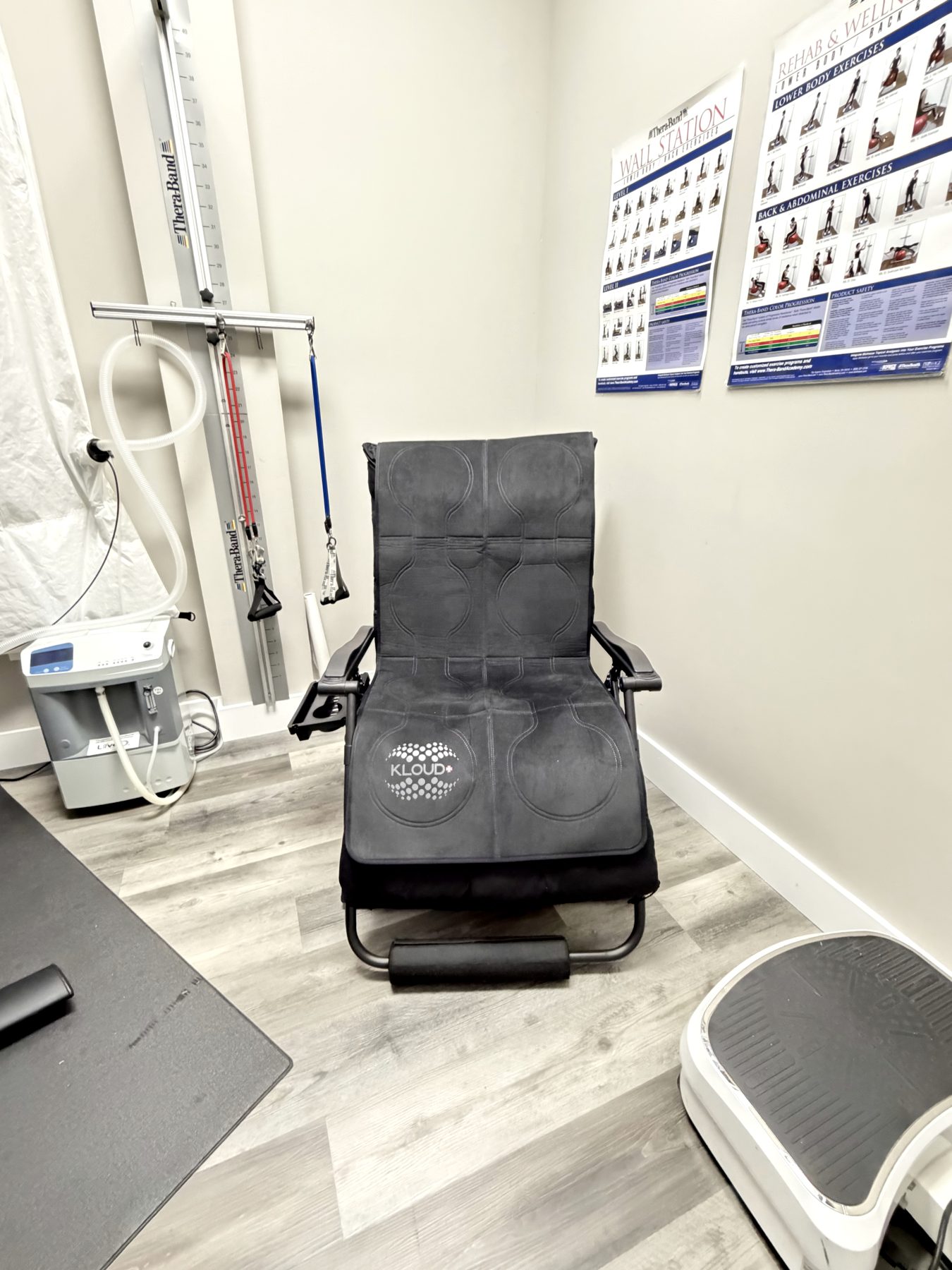
A PEMF therapy session is the easiest appointment of the week. You sit or recline fully clothed and the field does the work.
- Settle in. You sit in the PEMF chair or lie on the mat, shoes off, with the applicator positioned for a whole-body or targeted session.
- Program selection. The provider selects the frequency and intensity program for your goal — recovery, inflammation, bone and disc support, or relaxation.
- Fifteen to thirty minutes. The field pulses quietly. Most people feel nothing; some notice a faint tapping, gentle warmth or a sense of relaxation. Many read or close their eyes.
- Carry on. There is no downtime. The session is often scheduled right after decompression or an adjustment, or on its own as a maintenance visit.
The whole-body chair applies the field to the spine, hips and legs at once; a smaller applicator can be placed over a single knee, shoulder or disc level when the goal is local. Both are painless and need no preparation.
Where does PEMF therapy fit in the 4R Method?
Every plan at The Spine and Wellness Center follows the 4R Method — Repair, Rebuild, Regenerate, Refine. PEMF enters in Rebuild and becomes a mainstay in Regenerate.
R2 · Rebuild — support the tissue that is being corrected
In the Repair phase (3–5 visits a week for 4–8 weeks) the priority is taking pressure off the disc or joint, so PEMF is used sparingly. In the Rebuild phase (2–3 visits a week for 8–16 weeks) it becomes a regular part of visits: a 20-minute session after decompression or an adjustment to improve circulation to the disc, calm lingering inflammation and support the ligaments and bone that are adapting to corrected alignment. It pairs naturally with physical therapy in this phase.
R3 · Regenerate — daily cellular maintenance
The Regenerate phase (about 2 visits a week for 2 or more months) is where PEMF therapy comes into its own, alongside red light therapy, IHHT oxygen therapy and BrainTap. With the structure corrected, the goal becomes cellular health — energy, sleep, recovery and resilience — and whole-body PEMF sessions are a cornerstone of that work. In the Refine phase many patients keep a PEMF session as part of their monthly tune-up.
Spinal decompression
The Triton DTS table opens the disc space; PEMF supports the disc between sessions.
Learn moreRed light therapy
Whole-body photobiomodulation that pairs with PEMF in the Regenerate phase.
Learn moreCold laser therapy
Targeted light therapy for acute inflammation in the Repair phase.
Learn moreChiropractic care
Structural correction that PEMF helps the body hold.
Learn moreWhat does the evidence say about PEMF?
We describe the evidence for PEMF carefully, because it is strong in some areas and still developing in others. Its best-established use is bone healing, where pulsed electromagnetic devices have been used clinically for decades. For low back pain, a systematic review of randomized controlled trials published in the Porto Biomedical Journal concluded that PEMF appears to reduce pain and improve function, while noting that the studies were small and used varied protocols, so firm conclusions await larger trials (Andrade et al., PubMed).
There is also encouraging research on knee osteoarthritis and on post-surgical pain and swelling. There is less evidence for the broad wellness claims sometimes made for PEMF, and we do not make them. In our clinic it is positioned as a supportive therapy that helps corrected tissue heal and stay healthy, and we track your pain, function and re-scans to confirm it is contributing.
Safety and contraindications
PEMF is non-invasive, painless and has very few side effects; occasionally someone feels briefly lightheaded or more tired after an early session. The main precautions concern implanted devices and a few medical conditions.
- Pacemakers, implantable defibrillators, insulin pumps and other implanted electronic devices — magnetic fields can interfere with them, so we do not use PEMF in these patients.
- Pregnancy — not used, as a precaution.
- Active cancer, active bleeding, or a known blood clot — not used without the treating physician’s clearance.
- Uncontrolled epilepsy, severe heart arrhythmia, or recent organ transplant — physician clearance required.
- Metal implants such as joint replacements and spinal hardware are generally not a problem, but tell us so the program can be chosen appropriately.
What to expect at your first two visits
We measure before we treat. PEMF is added to a plan for a reason — a disc that needs support, a joint that is chronically inflamed, a recovery goal — not as a default add-on.
Visit one — we measure (and usually begin care)
- A real conversation about your pain, your goals and your full medical history, including any implanted devices.
- A hands-on structural exam — posture, range of motion, orthopedic and neurological testing to identify the disc, joint or tissue that is driving the problem.
- Surface EMG and thermal scanning along the spine. The thermal scan maps the inflammation and nerve irritation PEMF is often used to settle, and gives us a baseline to re-scan against.
- Digital X-rays when indicated, to see disc spacing, alignment and degenerative change.
Visit two — your findings and your plan
We explain what we found and where PEMF therapy fits in your 4R plan — which phase, how often and alongside which treatments. Treatment begins at this visit. For a head start, take the 60-second spine assessment before you come in.
Getting the most from a PEMF course
- Be consistent. PEMF effects are cumulative; two to three sessions a week for several weeks do more than occasional visits.
- Hydrate. Well-hydrated tissue responds better to circulation-based therapies, and a glass of water before and after a session is an easy habit.
- Keep moving. Daily walking and your rehab exercises deliver the circulation gains to the tissue that needs them.
- Pair it with sleep. Many patients notice better sleep during a course; an evening session can support that.
- Report anything unusual — lightheadedness, unusual fatigue or any change in an implanted device — so we can adjust the program.
If you develop new loss of bladder or bowel control, rapidly worsening weakness, chest pain or shortness of breath, please see a doctor or urgent care today.
Serving PEMF therapy patients across North Broward
Our clinic at 5675 Coral Ridge Drive, Coral Springs, FL 33076 serves Coral Springs, Parkland, Coconut Creek, Margate, Boca Raton, Tamarac, Pompano Beach and Deerfield Beach. Same-day appointments are usually available — call (954) 341-2256 or book online. Most patients from Parkland and Coral Springs are here in under 15 minutes.
Medically reviewed by Dr. Jared Cohen, DC — Co-Founder & Clinical Director, The Spine and Wellness Center. Last reviewed October 2026.
Frequently asked questions
Does PEMF therapy hurt or feel like anything?
No. The magnetic field passes through the body without heat or current, so most people feel nothing at all. Some notice a faint tapping, gentle warmth or a sense of deep relaxation. There is no soreness afterward and no downtime; many patients read or rest during the 15-to-30-minute session.
How many PEMF sessions will I need?
That depends on the goal. For disc and joint support in the Rebuild phase, sessions typically run two to three times a week for several weeks alongside your other care. In the Regenerate phase, about two sessions a week for two or more months, then as part of monthly tune-ups. Effects are cumulative.
Is PEMF therapy the same as a magnet bracelet or static magnets?
No. Static magnets produce a constant field with no established therapeutic effect. PEMF uses a pulsing field at specific frequencies and intensities generated by a coil, which is what induces the small electrical currents in tissue that influence cell signalling. The two are not comparable.
Can PEMF help a herniated disc?
It can support disc recovery as part of a plan. Discs have a poor blood supply and heal slowly; PEMF improves circulation and calms inflammation around the disc, which complements non-surgical spinal decompression. It does not take pressure off the disc on its own, so it is paired with decompression and adjustments rather than used alone.
Who should not have PEMF therapy?
We do not use it in anyone with a pacemaker, implantable defibrillator, insulin pump or other implanted electronic device, during pregnancy, or in people with active cancer, active bleeding or a known blood clot without their physician's clearance. Metal joint replacements and spinal hardware are usually fine; tell us at your first visit.
Is PEMF therapy safe to use with red light therapy?
Yes. The two work through different mechanisms — magnetic field and light — and are often scheduled in the same Regenerate-phase visit. Both are painless and non-invasive, and together they support circulation, inflammation control and cellular recovery.
Do you offer PEMF therapy to patients from Parkland and Boca Raton?
Yes. Our clinic on Coral Ridge Drive in Coral Springs is a short drive from Parkland, Coconut Creek, Margate, Boca Raton and Tamarac, and same-day appointments are usually available.
Same-day appointments
Let's fix the cause.
Measure first, then treat — a plan built on your actual structure.
- Same-day appointments are usually available
- Our team calls you back to confirm your visit
- Coral Springs, serving Parkland & North Broward since 2005
Prefer to talk now? Call or text (954) 341-2256