
Conditions · Coral Springs & Parkland
Arthritis pain treatment in Coral Springs
Stiff mornings, swollen knees, a neck that grinds when you turn — arthritis is wear and inflammation inside the joint, and the right care keeps you moving without living on pills. Drug-free, measured, built around your joints.
Quick answer
Arthritis pain treatment at our Coral Springs clinic reduces joint inflammation and restores motion without drugs or surgery. We combine low-force chiropractic, cold laser, PEMF and movement rehab inside the 4R Method, matched to the type of arthritis you have. Osteoarthritis and spinal arthritis respond best; rheumatoid arthritis is co-managed with your rheumatologist.
What arthritis is actually doing inside your joints
Effective arthritis pain treatment starts with understanding that arthritis is not one disease. It is a family of conditions that share a result: inflammation, cartilage loss and stiffness inside a joint. The National Institute of Arthritis and Musculoskeletal and Skin Diseases counts more than 100 forms of arthritis and related conditions (NIAMS, Arthritis), and the three we see most in Coral Springs and Parkland behave very differently.
Osteoarthritis (OA) is mechanical wear: the cartilage capping your bones thins over years of load, the joint space narrows, and bone responds with spurs and stiffness. It favors the knees, hips, hands and spine. Rheumatoid arthritis (RA) is autoimmune: the immune system attacks the joint lining, usually in matching joints on both sides, with warmth, swelling and long morning stiffness.
Spinal arthritis is osteoarthritis of the facet joints — the small paired joints behind each disc that guide how the vertebrae move. When they wear, the result is a stiff, achy neck or low back that is worst first thing in the morning and after sitting, and that often refers pain into the shoulder blade, buttock or hip.

Osteoarthritis, rheumatoid or spinal arthritis? How to tell the patterns apart
The pattern of your symptoms points to the type of arthritis before any blood test or X-ray does. Here is how the three most common forms tend to present:
- Osteoarthritis: pain that builds with use and eases with rest; stiffness that lasts a few minutes in the morning, then loosens; one knee or hip worse than the other; a grinding or clicking feel; bony enlargement at the finger joints.
- Rheumatoid arthritis: warm, swollen, tender joints — often the knuckles, wrists and balls of the feet — on both sides of the body; morning stiffness that lasts an hour or more; fatigue and a general run-down feeling; symptoms that flare and settle in cycles.
- Spinal (facet) arthritis: a deep, localized ache in the neck or low back that is worst on waking and after long sitting; pain with arching backward or turning the head; relief with gentle movement; pain that can refer into the shoulder blade or buttock without true nerve symptoms.
This distinction matters because it decides who treats what. Osteoarthritis and facet arthritis are structural, mechanical problems — exactly what conservative, movement-based care is built for. Rheumatoid arthritis is a systemic disease that needs a rheumatologist to manage the immune side; our role there is to keep the joints moving and the spine comfortable alongside that medical care, never in place of it.
Good to know
If you have unexplained swelling in several joints on both sides, morning stiffness lasting more than an hour, or joint pain with fever or fatigue, we will ask your primary care doctor or a rheumatologist to evaluate for inflammatory arthritis before building your plan. Catching RA early protects the joints.
What arthritis pain treatment can and can’t do
Honest expectations are part of good care. Conservative arthritis pain treatment does not regrow cartilage, reverse joint-space narrowing on an X-ray, or switch off an autoimmune disease. What it reliably does is reduce the inflammation that makes the joint hurt, restore the motion the joint has lost to guarding, and strengthen the muscles that absorb load so the worn surface takes less of it.
That is why many osteoarthritis patients feel looser and more capable within a few weeks of care even though the wear itself is unchanged: pain in an arthritic joint is driven more by inflammation, stiffness and muscular overload than by how much cartilage is left.
- Can: ease stiffness and swelling, improve range of motion, reduce reliance on pain medication, slow the deconditioning spiral, and keep you walking, golfing and playing pickleball longer.
- Can’t: rebuild lost cartilage, replace a joint that is bone-on-bone, or treat rheumatoid disease activity — those belong to orthopedics and rheumatology, and we will say so plainly.
- Co-manage: RA and other inflammatory arthritis alongside your rheumatologist, using only gentle techniques and never adjusting an actively inflamed joint.
How we approach arthritis pain treatment at TSAWC
Our arthritis pain treatment follows the 4R Method — Repair, Rebuild, Regenerate, Refine — adapted for joints that are worn rather than injured. The sequence matters: inflammation has to come down before motion can be restored, and motion has to be restored before strengthening is useful.
R1 · Repair — calm the inflamed joint
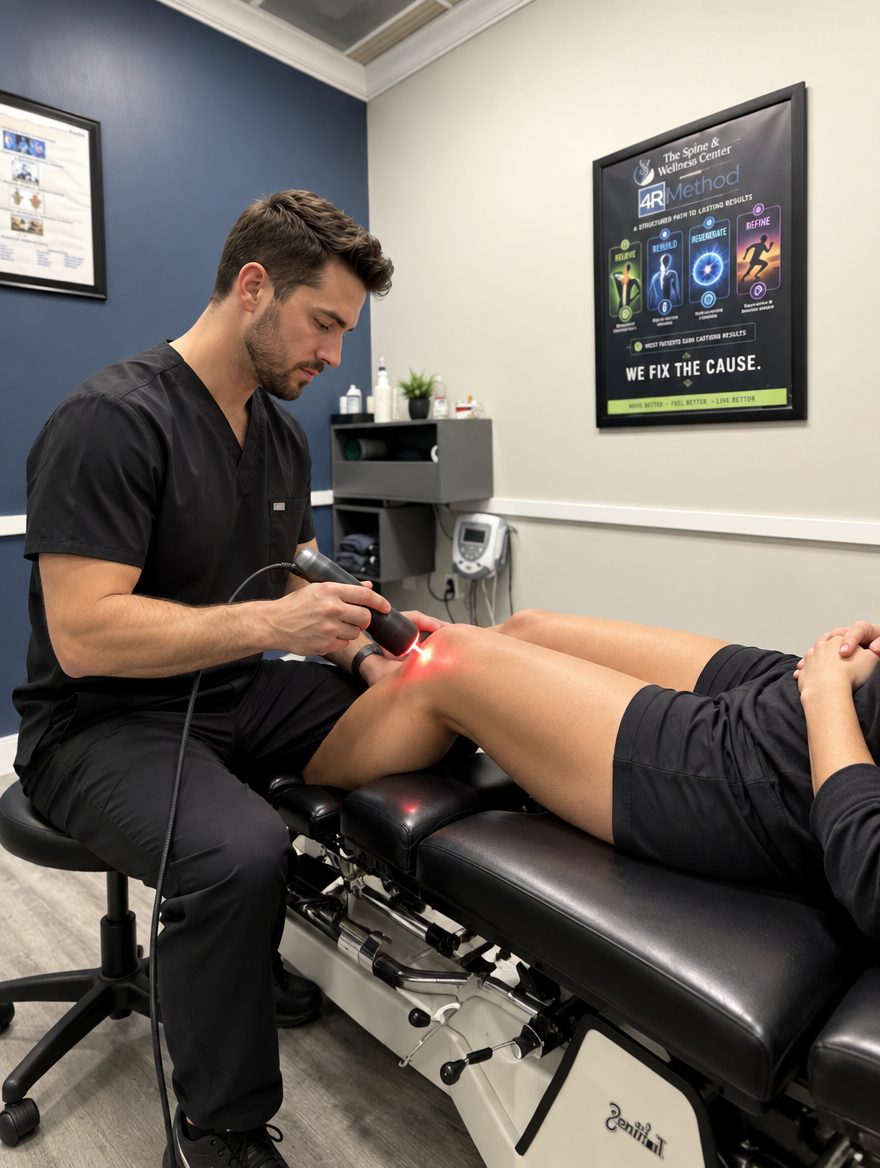
The Repair phase lowers inflammation and gently restores motion. For arthritic joints that means cold laser therapy to settle the synovial irritation, PEMF therapy to support circulation and reduce swelling, and low-force chiropractic care — instrument-assisted or gentle mobilization rather than forceful manipulation — to free stiff facet, hip and knee joints. Typical commitment is 3–5 visits a week for 4–8 weeks; most arthritis patients notice easier mornings within two to three weeks.
R2 · Rebuild — unload the worn surface
Once the joint is quieter, we address why it is overloaded. Physical therapy strengthens the quads, glutes and deep spinal stabilizers that protect a worn joint; Graston Technique releases the fibrotic, guarded tissue around it; and posture correction or gait work redistributes load away from the sore side. Rebuild usually runs 2–3 visits a week for 8–16 weeks.
R3 and R4 · Regenerate and Refine
Regenerate turns attention to the tissue itself — red light therapy and PEMF at about 2 visits a week for two months or more, supporting cellular recovery and inflammation control. Refine is the long game for a chronic condition: a brief tune-up every month or two so gains hold and flares are caught early.
Gentle chiropractic care
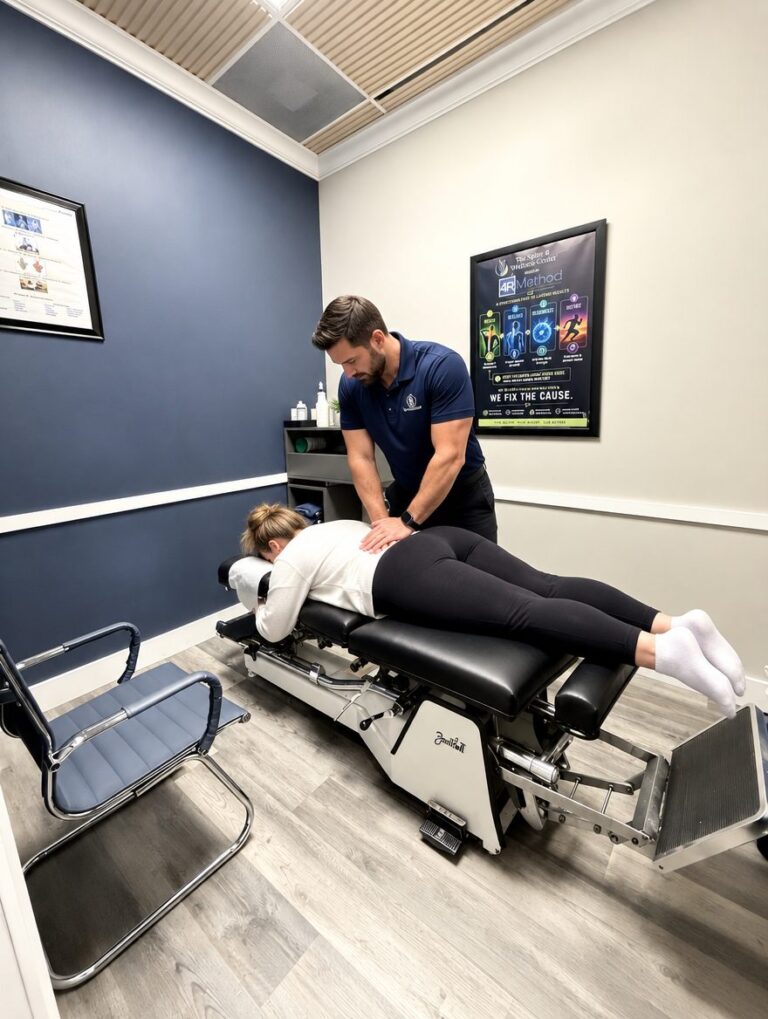
Low-force techniques that restore motion to stiff facet, hip and knee joints without stressing inflamed tissue.
Learn moreCold laser therapy
Low-level laser reduces inflammation inside the joint and supports the body's own repair response.
Learn morePEMF therapy
Pulsed electromagnetic fields improve circulation and ease swelling between visits.
Learn morePhysical therapy
Strength and mobility work that takes load off the worn surface and keeps the joint moving.
Learn more6 proven drug-free options for arthritis pain (and which joints each one suits)
Not every tool fits every joint. These are the six we use most for arthritis pain treatment in our Coral Springs clinic, matched to where they work best:
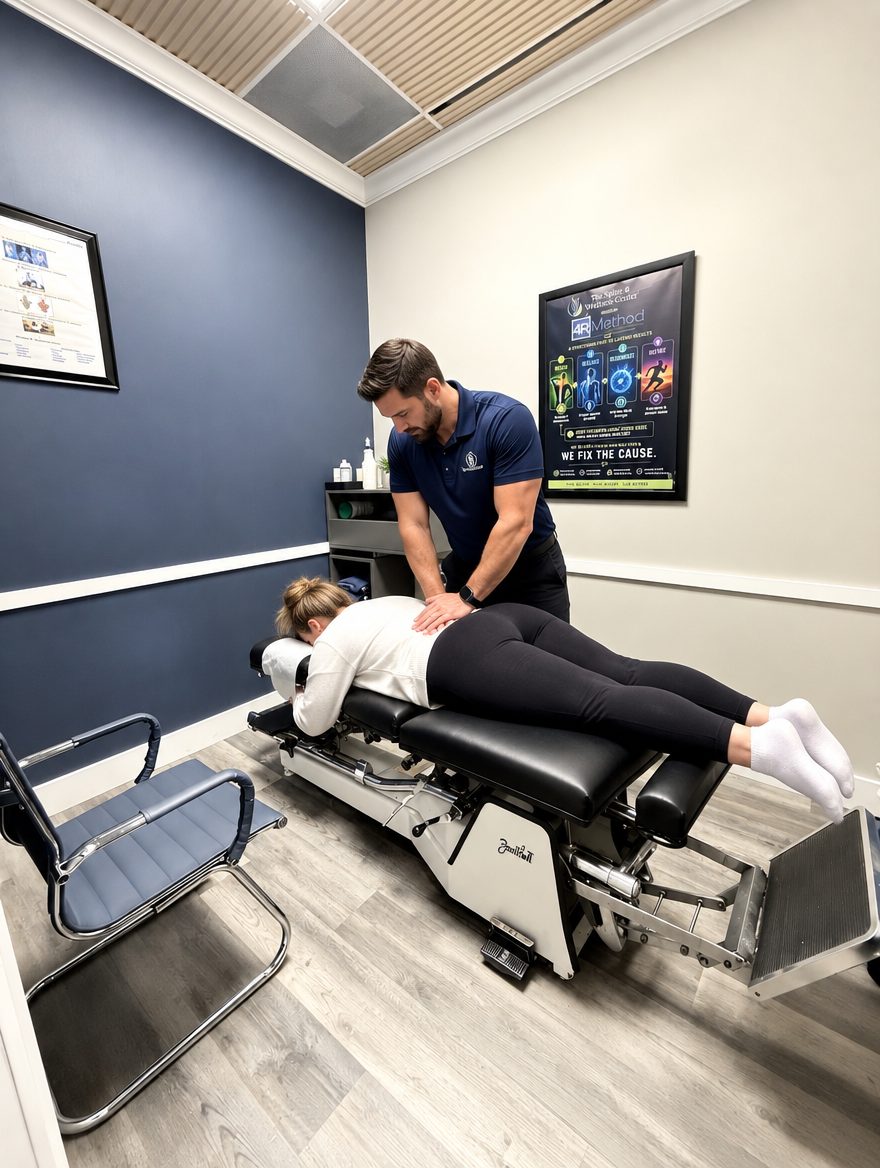
- Low-force chiropractic adjustments. Best for spinal facet arthritis and stiff hips. Gentle, specific mobilization restores motion to guarded joints — never forced through an inflamed range.
- Cold laser therapy. Best for knees, hands and acute flares. Painless photobiomodulation reduces inflammatory activity in the joint lining, about 10–15 minutes per joint.
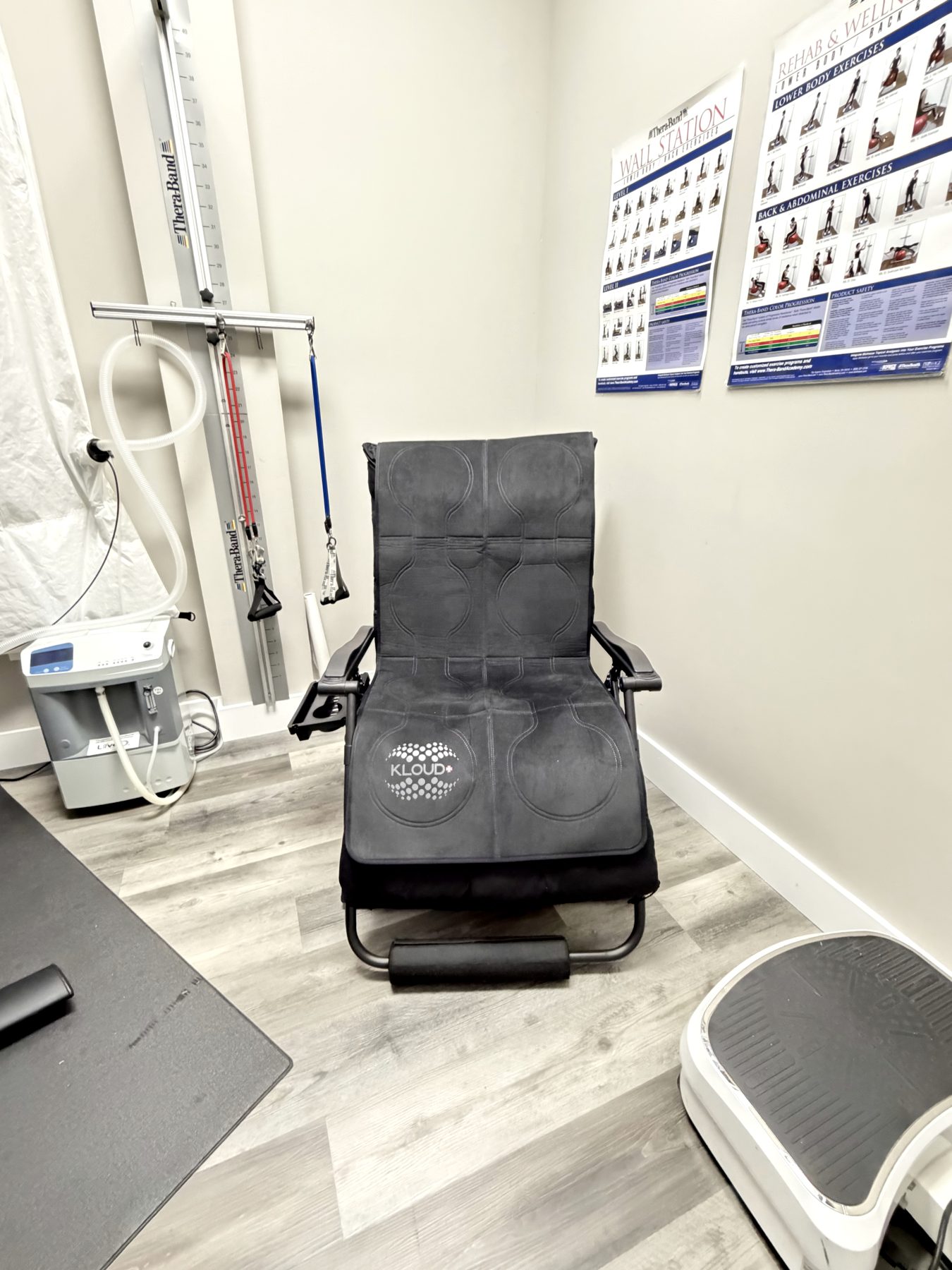
- PEMF therapy. Best as between-visit support for swollen knees and arthritic spines; improves microcirculation and eases stiffness.
- Physical therapy and movement rehab. Best for every arthritic joint. Strength around the joint is the most durable pain reliever in osteoarthritis — stronger quads mean less load on a worn knee.
- Acoustic shockwave therapy. Best for chronically irritated tendons around arthritic hips, shoulders and knees. See our shockwave page.
- Non-surgical spinal decompression. Best when spinal arthritis comes with disc narrowing and nerve symptoms; decompression gently opens the disc and facet spaces.
What is not on the list: daily anti-inflammatories as a plan, repeated cortisone injections, and joint replacement as a first step. When a joint is truly bone-on-bone we will say so and coordinate with an orthopedic surgeon — but most arthritic joints have years of good function left when they are moved, strengthened and calmed properly.
What to expect at your first two visits
We measure before we treat, so your plan is built on your actual joints rather than a label on a referral.
Visit one — we measure (and usually begin care)
- A real conversation. Which joints hurt, how long mornings stay stiff, what you have tried, any diagnosis or imaging you already have, and what you want back.
- A hands-on structural exam. Range of motion of the affected joints and spine, orthopedic tests to separate joint pain from tendon or nerve pain, gait and posture analysis, and a check of neighboring joints for compensation.
- Surface scanning: sEMG + thermal. Surface EMG shows where muscles along the spine are guarding; thermal scanning maps inflammation and nerve irritation. Painless and repeatable, so progress is measured.
- Digital X-rays, when indicated. Joint-space narrowing, spurs and alignment tell us the stage of wear. We review any MRI or prior films you bring.
Visit two — your findings and your plan
Everything explained plainly, with your scans and images in front of you: which type of arthritis is most likely, which joints are driving the pain, and a phase-by-phase plan with a realistic timeline. Treatment begins at this visit. If inflammatory arthritis is suspected, your plan will include a rheumatology referral. Want a head start? Take the 60-second spine assessment before you come in.
Arthritis pain treatment at home: what helps and what makes it worse
Between visits, daily habits decide whether an arthritic joint stays quiet or keeps flaring. These are the ones that matter most:
- Motion is lotion. Cartilage has no blood supply; it is nourished by movement. Short, frequent walks and gentle range-of-motion work beat rest — prolonged sitting is what stiffens arthritic knees and spines.
- Heat for stiffness, ice for a hot flare. A warm shower on stiff mornings; a cold pack for 15 minutes when a joint is visibly swollen.
- Manage body weight and sleep. Every extra pound adds several pounds of load through the knees on stairs, and poor sleep amplifies arthritis pain — both are worth working on.
When arthritis pain needs a doctor instead
A few patterns are not chiropractic problems and need same-day medical evaluation: a single joint that is suddenly hot, red, very swollen and painful to touch (possible infection or gout), joint pain with fever, chills or unexplained weight loss, sudden inability to bear weight after a fall, or new numbness and weakness in a limb. If any of these apply, please see a doctor or urgent care today.
For the rest — the stiff mornings, the knee that complains on the stairs, the hip that keeps you off the course — this is what we do every day for arthritis patients across Coral Springs and Parkland. For a specific joint, start with our osteoarthritis guide, the knee pain page, or the neck pain guide.
Serving arthritis patients across North Broward
Our clinic at 5675 Coral Ridge Drive, Coral Springs, FL 33076 serves Coral Springs, Parkland, Coconut Creek, Margate, Boca Raton, Tamarac, Pompano Beach and Deerfield Beach. Same-day appointments are usually available — call (954) 341-2256 or book online. Most patients from Parkland and Coral Springs are here in under 15 minutes.
Medically reviewed by Dr. Jared Cohen, DC — Co-Founder & Clinical Director, The Spine and Wellness Center. Last reviewed October 2026.
Frequently asked questions
Can a chiropractor help with arthritis pain?
Yes, for osteoarthritis and spinal arthritis. Gentle, low-force chiropractic care restores motion to stiff joints, and paired with cold laser, PEMF and movement rehab it reduces the inflammation and muscle guarding that make arthritis hurt. It does not reverse cartilage loss, and rheumatoid arthritis is co-managed with a rheumatologist.
What is the difference between osteoarthritis and rheumatoid arthritis?
Osteoarthritis is mechanical wear of joint cartilage; it builds with use, favors one side, and stiffness fades within minutes of moving. Rheumatoid arthritis is autoimmune; it causes warm, swollen joints on both sides of the body, morning stiffness lasting an hour or more, and fatigue. RA needs medical management; OA responds well to conservative care.
Is chiropractic care safe for arthritic joints?
When it is matched to the joint, yes. We use low-force, instrument-assisted and mobilization techniques chosen for the type and stage of arthritis, and we never force an inflamed or unstable joint. Your exam and imaging on visit one tell us which techniques are appropriate for you.
Does cold laser therapy work for arthritis?
Cold laser (low-level laser) reduces inflammatory activity in the joint lining and is painless and drug-free, which makes it a good fit for arthritic knees, hands and spines, especially during flares. It works best as part of a plan that also restores motion and strength rather than on its own.
How long until arthritis pain improves?
Most patients notice less stiffness and easier movement within two to three weeks of the Repair phase. Because arthritis is ongoing, the plan then shifts to strengthening and periodic tune-ups to keep the joint quiet. We set a realistic timeline after your evaluation.
Do you treat arthritis patients from Parkland and Coconut Creek?
Yes. Our clinic on Coral Ridge Drive in Coral Springs is minutes from Parkland, Coconut Creek, Margate, Tamarac and Boca Raton, and same-day appointments are usually available for arthritis pain treatment.
Keep reading
From the blog
Same-day appointments
Let's build your plan.
Find out what's actually going on and get a clear path forward. Same-day appointments available.
- Same-day appointments are usually available
- Our team calls you back to confirm your visit
- Coral Springs, serving Parkland & North Broward since 2005
Prefer to talk now? Call or text (954) 341-2256