
Treatment · Coral Springs & Parkland
Red light therapy for pain relief in Coral Springs
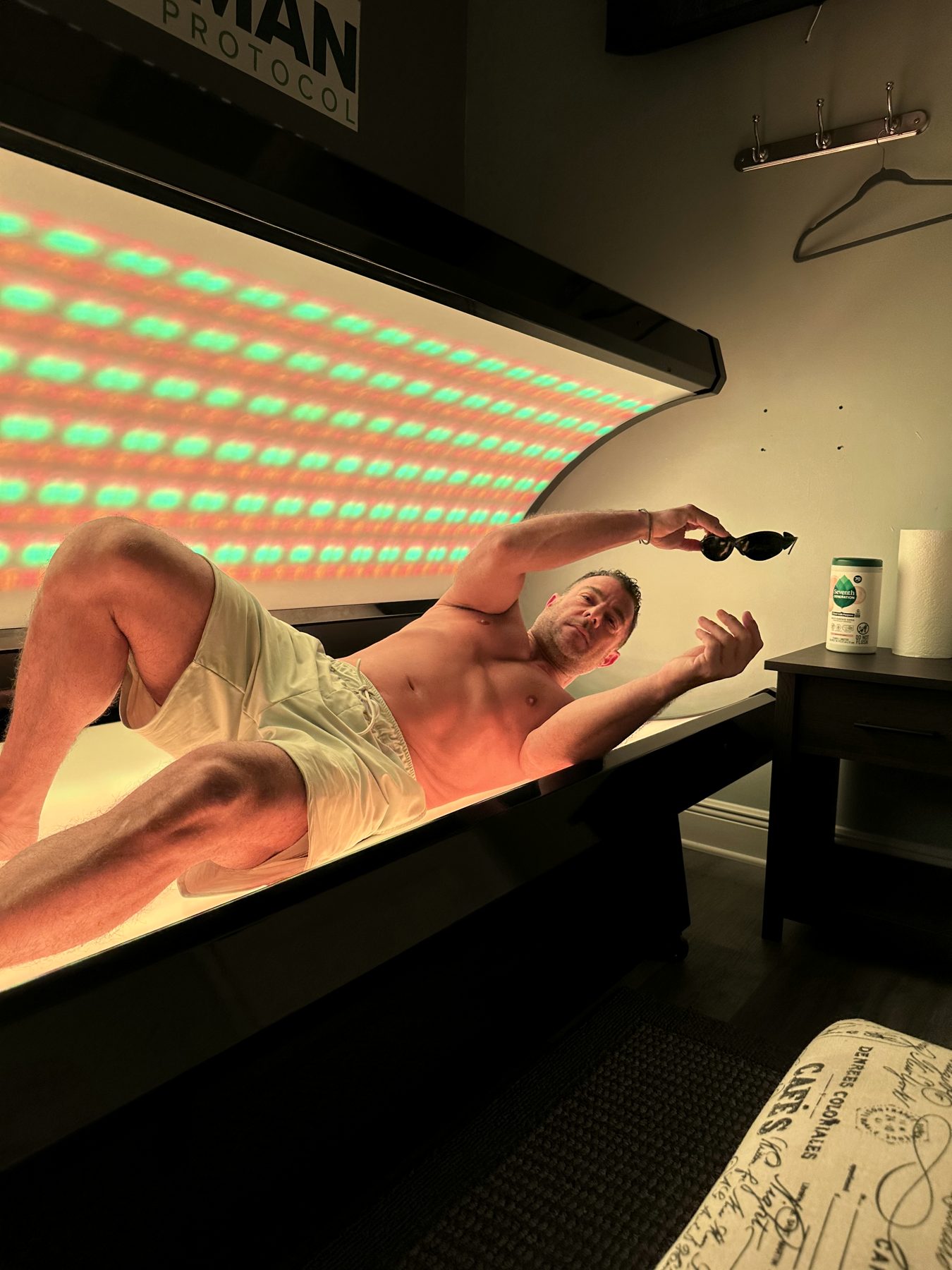
Sore joints, tight muscles, an irritated nerve — near-infrared light works at the cellular level to turn inflammation down so the rest of your care can work. Drug-free, painless, paired with decompression and adjustments.
Quick answer
Red light therapy for pain relief uses near-infrared and red wavelengths that penetrate to muscle, joint and nerve tissue, where they lower inflammatory signaling, improve local circulation and support repair. At The Spine and Wellness Center it is a Repair-phase tool, applied over the painful region before spinal decompression or an adjustment so treatment is more comfortable and holds longer.
How does red light therapy for pain relief actually work?
Red light therapy for pain relief works on the inflammation that drives most everyday aches, not on the pain signal alone. Red and near-infrared light is absorbed by the mitochondria in muscle, joint and nerve cells, which respond by producing more ATP and dialing down the chemical messengers that keep tissue swollen and sensitive.
Three things happen in the treated tissue. Inflammatory cytokines fall, so the area is less swollen and tender. Nitric oxide is released, which opens small blood vessels and improves circulation, bringing in oxygen and clearing waste. And the nerve endings that have been firing in an irritated region become less excitable, which is why patients often describe the area as ‘quieter’ after a series of sessions.
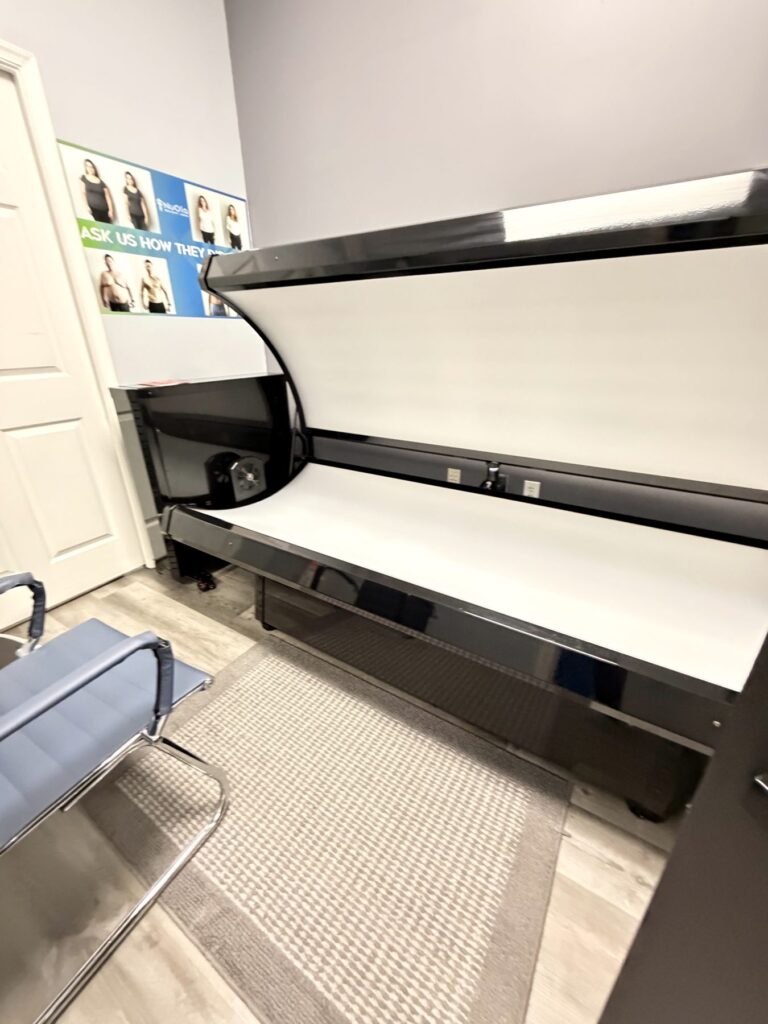
Depth matters. Visible red light acts near the surface; near-infrared light reaches several centimeters into muscle, joint capsules and the tissue around a nerve root. Our SPECTRA S10 system combines both, so a lumbar session reaches the deep paraspinal muscles and facet joints, not just the skin over them. For the general science and whole-body uses, see our main red light therapy page.

Which kinds of pain respond best to red light?
Inflammatory and soft-tissue pain responds best. Pain that comes from a structural problem — a herniated disc pressing on a nerve, a locked facet joint — still needs the structure corrected, which is why we pair the light with decompression and adjustments rather than using it alone.
- Arthritic and stiff joints. Knees, hips, hands and the facet joints of the spine that ache in the morning and after sitting.
- Muscle strain and spasm. The guarded, tight erector muscles that accompany lower back pain and neck pain.
- Nerve irritation. The inflamed tissue around a nerve root in disc patients and sciatica — see herniated discs.
- Tendon and ligament overuse. Tennis elbow, plantar fasciitis, rotator cuff irritation and the weekend-warrior injuries we treat in sports injury rehab.
- Post-injury and post-surgical soreness. Supporting the tissue-repair phase after a sprain, a fall or a procedure.
- Tension headaches driven by the upper trapezius and suboccipital muscles — see headache treatment.
Patients in Coral Springs and Parkland often arrive after months of alternating ice, heat and over-the-counter anti-inflammatories. Light does the anti-inflammatory job without the stomach, kidney and liver load of daily medication, which matters most for people who need relief week after week.
Pairing red light with spinal decompression and adjustments
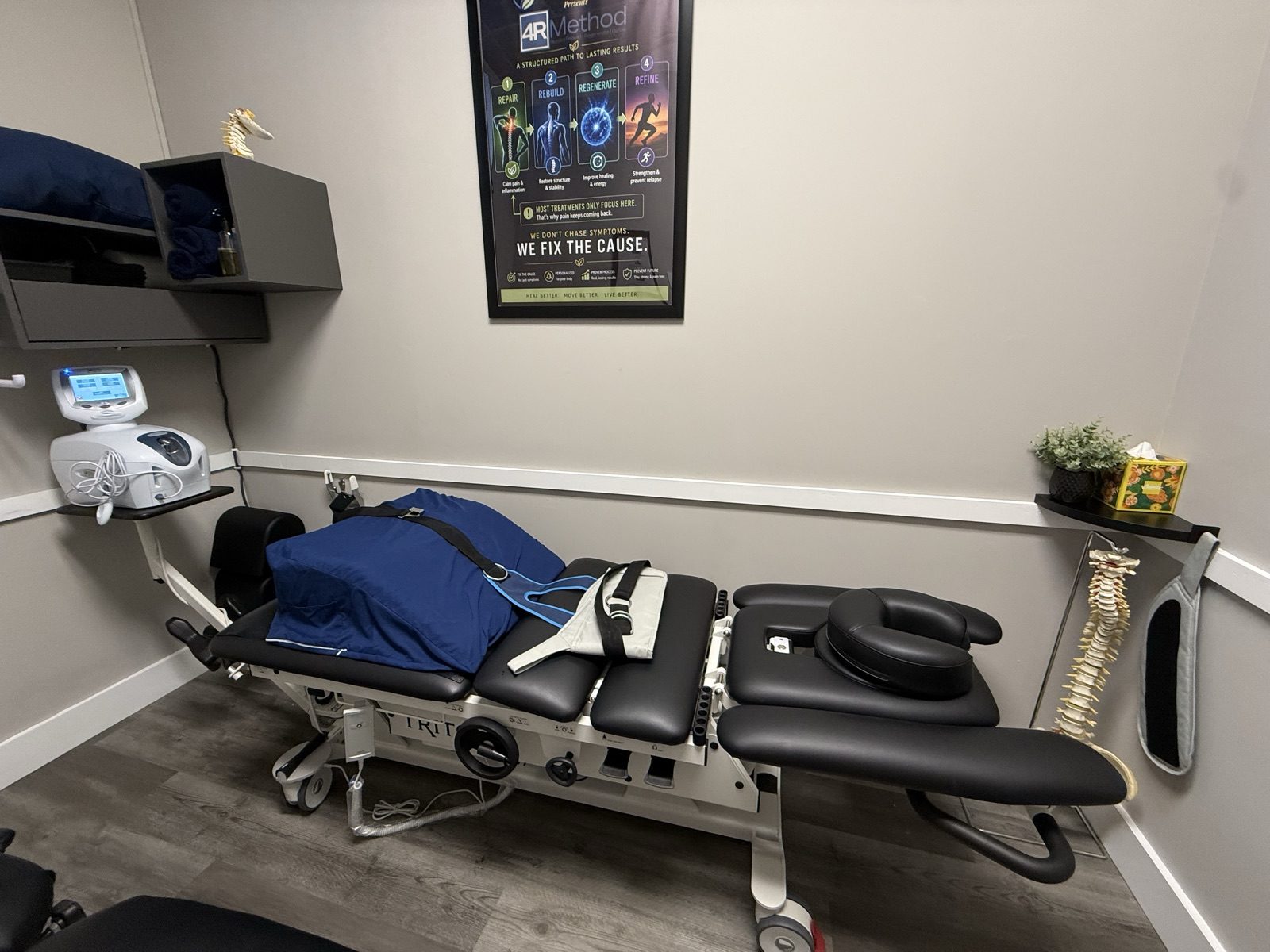
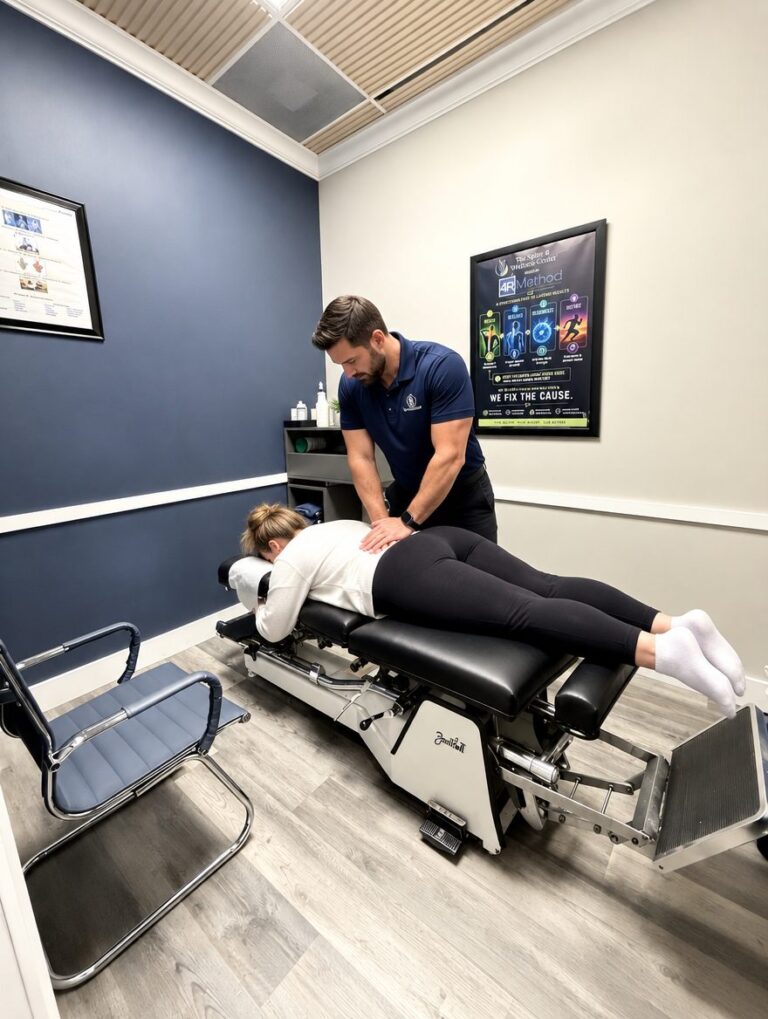
The biggest gains come from sequencing. When inflammation is high, muscles guard, and a guarded spine resists both decompression and adjustment. Treating the region with near-infrared light first lets the muscles relax, so the Triton DTS table can open the disc space more comfortably and an adjustment restores motion with less effort and less post-treatment soreness.
- Light first. A targeted session over the painful region lowers inflammation and relaxes guarding.
- Structure second. Non-surgical spinal decompression for disc and nerve patterns, or a precise chiropractic adjustment for joint-driven pain.
- Support third. PEMF or cold laser at a single hot spot when a specific point — a nerve root, a tendon — needs extra attention.
This is the same logic we use for hip and SI joint pain, where the light settles the inflamed sacroiliac ligaments before the pelvis is corrected, and for post-accident whiplash, where it calms the neck muscles before any hands-on work.
What does a pain-relief protocol look like in the 4R Method?
Red light therapy for pain relief is a Repair-phase tool in the 4R Method — Repair, Rebuild, Regenerate, Refine. The protocol changes as you move through the phases.
R1 · Repair — frequent, targeted sessions
During Repair (3–5 visits a week for 4–8 weeks) the light is applied at most visits over the painful region, right before decompression or an adjustment. Each targeted session takes only minutes. Most patients notice the treated area feeling less tender and less stiff within the first two to three weeks, alongside the structural work.
R2 · Rebuild — after hard sessions and during flares
In Rebuild (2–3 visits a week for 8–16 weeks) the light steps back as physical therapy, the Graston Technique and corrective adjustments take over. We still use it after a demanding rehab session or when a region flares, so soreness does not stall progress.
R3 and R4 · Regenerate and Refine
Chronic arthritic patients often keep a whole-body red light session in their Regenerate routine (about twice a week for two months or more) and a monthly Refine tune-up, because inflammation control is an ongoing job rather than a one-time fix.
Spinal decompression
Gentle, computer-controlled traction that takes pressure off herniated discs and pinched nerves.
Learn moreCold laser therapy
Focused photobiomodulation for a single painful point — a tendon, a nerve root, a swollen joint.
Learn moreAcoustic shockwave
For stubborn tendon and calcific problems that need a stronger stimulus than light alone.
Learn moreMassage therapy
Hands-on work for the muscle guarding that light has already begun to settle.
Learn moreWhat the evidence says — and what it does not
We keep claims measured. A 2021 systematic review and meta-analysis of randomized trials in the National Library of Medicine found that laser-based photobiomodulation reduced pain intensity in people with chronic low back pain compared with placebo or no treatment (PubMed). Other reviews of non-specific low back pain have found smaller or inconsistent effects, which is exactly why we never use light as a stand-alone treatment for a structural problem.
Cleveland Clinic describes red light therapy as promising for some pain and inflammatory conditions while noting that larger studies are still needed for many uses (Cleveland Clinic). In our clinic its strongest role is as an anti-inflammatory partner to decompression, adjustments and rehab — not a replacement for them, and not a replacement for medical treatment.
Safety and precautions
- Painless, non-invasive and drug-free; no heat damage, no UV, no downtime.
- Tell us about photosensitizing medications (certain antibiotics, retinoids, some supplements).
- We avoid treating over active cancer, open wounds, recent injections, or the abdomen during pregnancy.
- Eye protection is provided for any full-body session.
- Pain with fever, unexplained weight loss, loss of bladder or bowel control, or rapidly worsening weakness is not a light-therapy problem — please see a doctor or urgent care today.
What to expect at your first two visits
Pain is a symptom; we need to know what is producing it before we choose the protocol. So the first visit is about measuring, not treating.
Visit one — we measure (and usually begin care)
- A real conversation about where it hurts, what makes it worse, what you have tried and what you want to get back to.
- A hands-on structural exam — posture, range of motion, orthopedic and neurological tests that isolate the structure generating the pain.
- Surface EMG and thermal scanning along the spine, which maps muscle guarding and the temperature changes that point to inflammation (see the MyoVision sEMG scan).
- Digital X-rays, when indicated, so a disc or joint problem is not missed under a ‘muscle pain’ label.
Visit two — your findings and plan
Dr. Jared Cohen, DC reviews the findings with you, explains what is driving the pain and maps your plan across the four phases — including whether light is a lead tool, a supporting tool or not the right fit. Treatment begins on this visit. The 60-second spine assessment gives us a head start before you arrive.
Serving pain relief patients across North Broward
Our clinic at 5675 Coral Ridge Drive, Coral Springs, FL 33076 serves Coral Springs, Parkland, Coconut Creek, Margate, Boca Raton, Tamarac, Pompano Beach and Deerfield Beach. Same-day appointments are usually available — call (954) 341-2256 or book online. Most patients from Parkland and Coral Springs are here in under 15 minutes.
Medically reviewed by Dr. Jared Cohen, DC — Co-Founder & Clinical Director, The Spine and Wellness Center. Last reviewed October 2026.
Frequently asked questions
How quickly does red light therapy for pain relief work?
Some people feel the treated area loosen after the first few sessions; for most, the clearer change comes over two to three weeks of a Repair-phase plan alongside decompression or adjustments. Chronic, arthritic pain tends to build benefit more gradually and does best with ongoing sessions in the Regenerate phase.
Does the light feel hot?
No. It feels like gentle warmth, similar to sunlight on the skin without any UV. There is no burning, no vibration and no soreness afterward. Most patients find the session relaxing and use it to unwind before their adjustment or decompression.
Is red light better than cold laser for pain?
They are the same principle at different scales. Cold laser treats a single point with a focused handpiece — ideal for a tendon or a nerve root. Red light treats a whole region or the whole body, which suits widespread muscle pain, arthritis and general inflammation. We often use both in one plan.
Can I use red light instead of anti-inflammatory medication?
Many patients use it to reduce how often they reach for over-the-counter anti-inflammatories, but we never advise stopping a prescribed medication without talking to the prescribing doctor. Light is a complement to a structured care plan, not a replacement for medical treatment.
Will red light help a herniated disc?
It helps the inflamed tissue around the disc and nerve root, which makes the area less painful and more comfortable to treat. The disc itself needs decompression to retract and rehydrate, so for disc patients the light is paired with the Triton DTS table rather than used alone.
Do you see pain patients from Parkland and Boca Raton?
Yes. Our clinic on Coral Ridge Drive in Coral Springs is a short drive from Parkland, Coconut Creek, Margate, Tamarac and Boca Raton, and same-day appointments are usually available. Call (954) 341-2256 or book online.
Same-day appointments
Let's fix the cause.
Measure first, then treat — a plan built on your actual structure.
- Same-day appointments are usually available
- Our team calls you back to confirm your visit
- Coral Springs, serving Parkland & North Broward since 2005
Prefer to talk now? Call or text (954) 341-2256