
Conditions · Coral Springs & Parkland
Fibromyalgia treatment in Coral Springs (whole-body support)
Widespread pain, tender points, sleep that never restores, a brain that feels foggy — fibromyalgia is real, and it is a nervous-system problem more than a muscle problem. We cannot cure it. We can turn the volume down, gently, and help you do more with less payback.
Quick answer
Fibromyalgia treatment at our Coral Springs clinic is supportive, not curative. Fibromyalgia amplifies pain signals in the central nervous system, so care focuses on calming that system: gentle low-force chiropractic, therapeutic massage, red light and PEMF for sore tissue, BrainTap for sleep and stress, and paced movement. Everything is dosed to your tolerance and coordinated with your physician.
What fibromyalgia actually is (and why it hurts everywhere)
Honest fibromyalgia treatment starts with what the condition is. Fibromyalgia is a chronic disorder of pain processing: the central nervous system turns up the gain on signals from muscles, joints and skin, so sensations that should register as pressure or mild ache register as pain. The muscles themselves are not damaged — which is why X-rays and blood work come back normal and why so many patients spend years being told nothing is wrong.
The National Institute of Arthritis and Musculoskeletal and Skin Diseases describes fibromyalgia as widespread pain and tenderness, usually paired with fatigue, unrefreshing sleep, memory and concentration problems, and heightened sensitivity to touch, noise and temperature (NIAMS, Fibromyalgia). It affects far more women than men and often begins after a physical or emotional stressor — an accident, an illness, a long period of poor sleep.
That mechanism changes what good care looks like. Treatments that are aggressive, deep or exhausting tend to flare an over-sensitized nervous system. Treatments that are gentle, consistent and calming tend to help it settle. Our whole approach to fibromyalgia treatment in Coral Springs is built on that second principle.

Is it fibromyalgia, or something that looks like it?
Fibromyalgia is a diagnosis made by your physician or rheumatologist after other causes are ruled out. We do not diagnose it — but recognizing the patterns helps us know when to refer and how to treat:
- Fibromyalgia: pain on both sides of the body, above and below the waist, for three months or more; tender points at the neck, shoulders, chest, hips and knees; fatigue, poor sleep, brain fog and sensitivity to pressure; pain that moves around and flares with stress, weather and poor sleep.
- Inflammatory arthritis or autoimmune disease: warm, swollen joints, prolonged morning stiffness, rashes or fevers — needs rheumatology evaluation. See our arthritis hub.
- Thyroid, vitamin D or sleep disorders: can produce widespread aching and fatigue on their own and are checked with simple tests by your physician.
- Myofascial pain syndrome: localized trigger points in a few muscles rather than whole-body sensitivity; responds well to focused soft-tissue care.
- Spinal irritation: a stiff, restricted neck or low back that keeps feeding irritated signals into an already sensitive system — often present alongside fibromyalgia and very treatable.
Good to know
Fibromyalgia and a structural spine problem commonly coexist. Quieting the spine does not cure fibromyalgia, but it removes one steady source of irritation the nervous system has to amplify.
What fibromyalgia treatment can and can’t do
We would rather be clear than optimistic. There is no cure for fibromyalgia, and no clinic — including ours — should promise one. What supportive fibromyalgia treatment reliably does is reduce the inputs that keep the nervous system on high alert, improve sleep, ease the tender, guarded tissue, and help you build activity back without the crash that follows overdoing it.
- Can: ease muscle tension and tender points, improve sleep quality, lower day-to-day stiffness, reduce flare frequency, and support a gradual return to walking, swimming and daily life.
- Can’t: cure fibromyalgia, replace the care of your physician or rheumatologist, or substitute for medication decisions — those stay with your medical team, and we coordinate with them.
- Won’t: use deep, forceful techniques, push you past your tolerance, or schedule you so heavily that visits themselves become a flare trigger.
How we approach fibromyalgia treatment at TSAWC
Our fibromyalgia treatment follows the 4R Method — Repair, Rebuild, Regenerate, Refine — with the dose turned down and the pace slowed. For a sensitized nervous system, less done consistently beats more done occasionally.
R1 · Repair — calm the system
The Repair phase lowers irritation gently. Low-force, instrument-assisted chiropractic care restores motion to a restricted neck or low back without forceful manipulation; therapeutic massage at a light, steady pressure eases guarded muscle; red light therapy and PEMF therapy soothe sore tissue with no pressure at all. We start with shorter, lighter visits — often 2–3 a week rather than the usual 3–5 — for 4–8 weeks, and adjust to how you respond.
R2 · Rebuild — restore capacity without the crash
Once things are calmer, we rebuild tolerance: gentle, graded movement through physical therapy — stretching, walking, pool-style work, low-load strengthening — and posture support for the neck and upper back strain that feeds tension headaches and shoulder pain. Pacing is taught explicitly: activity is increased in small, planned steps, not on good days. Rebuild usually runs 2 visits a week for 8–16 weeks.
R3 and R4 · Regenerate and Refine
Regenerate is where fibromyalgia care often gives the most back: BrainTap sessions for sleep and stress regulation, red light and PEMF protocols for recovery, at about 2 visits a week for two months or more. Refine is a steady, low-frequency rhythm — a gentle visit every two to four weeks — that many fibromyalgia patients keep long-term because it holds the gains.
Gentle chiropractic care
Low-force, instrument-assisted techniques that free a restricted spine without forceful manipulation.
Learn moreMassage therapy
Light, steady pressure that eases guarded muscle and tender points without flaring them.
Learn moreRed light therapy
Photobiomodulation that soothes sore tissue and supports recovery — no pressure, no heat.
Learn moreBrainTap
Guided light-and-sound sessions that help an over-alert nervous system downshift for sleep and stress.
Learn more7 proven whole-body supports for fibromyalgia (and what each is for)
These are the seven supports we draw on most in fibromyalgia treatment, each chosen because it is gentle enough for a sensitive body:
- Low-force chiropractic. For the restricted neck and low back that keep feeding irritation into the system. Instrument-assisted and mobilization techniques only.
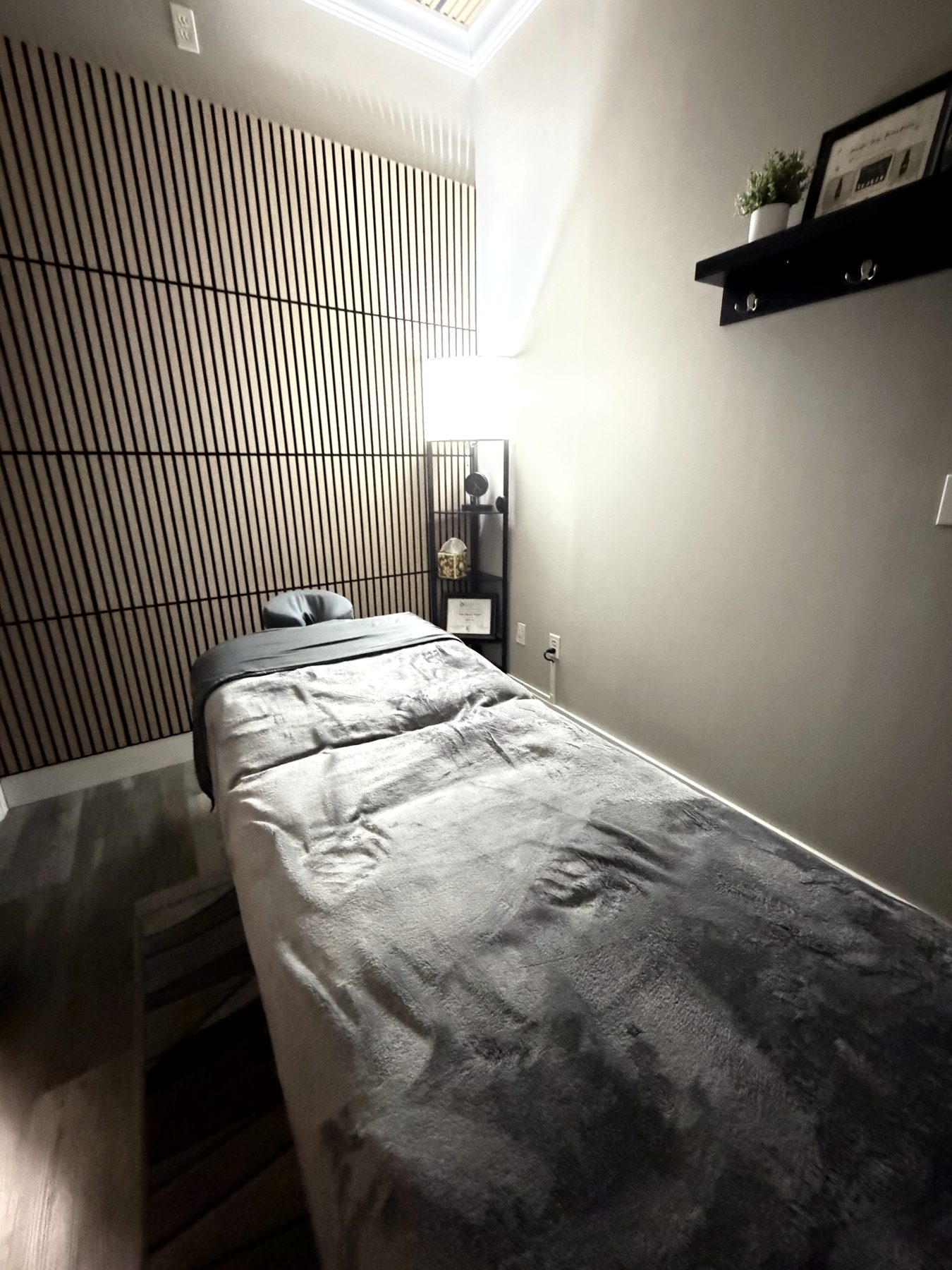
- Therapeutic massage. For tender points and guarded muscle. Light to moderate pressure, shorter sessions early on, always within your tolerance.
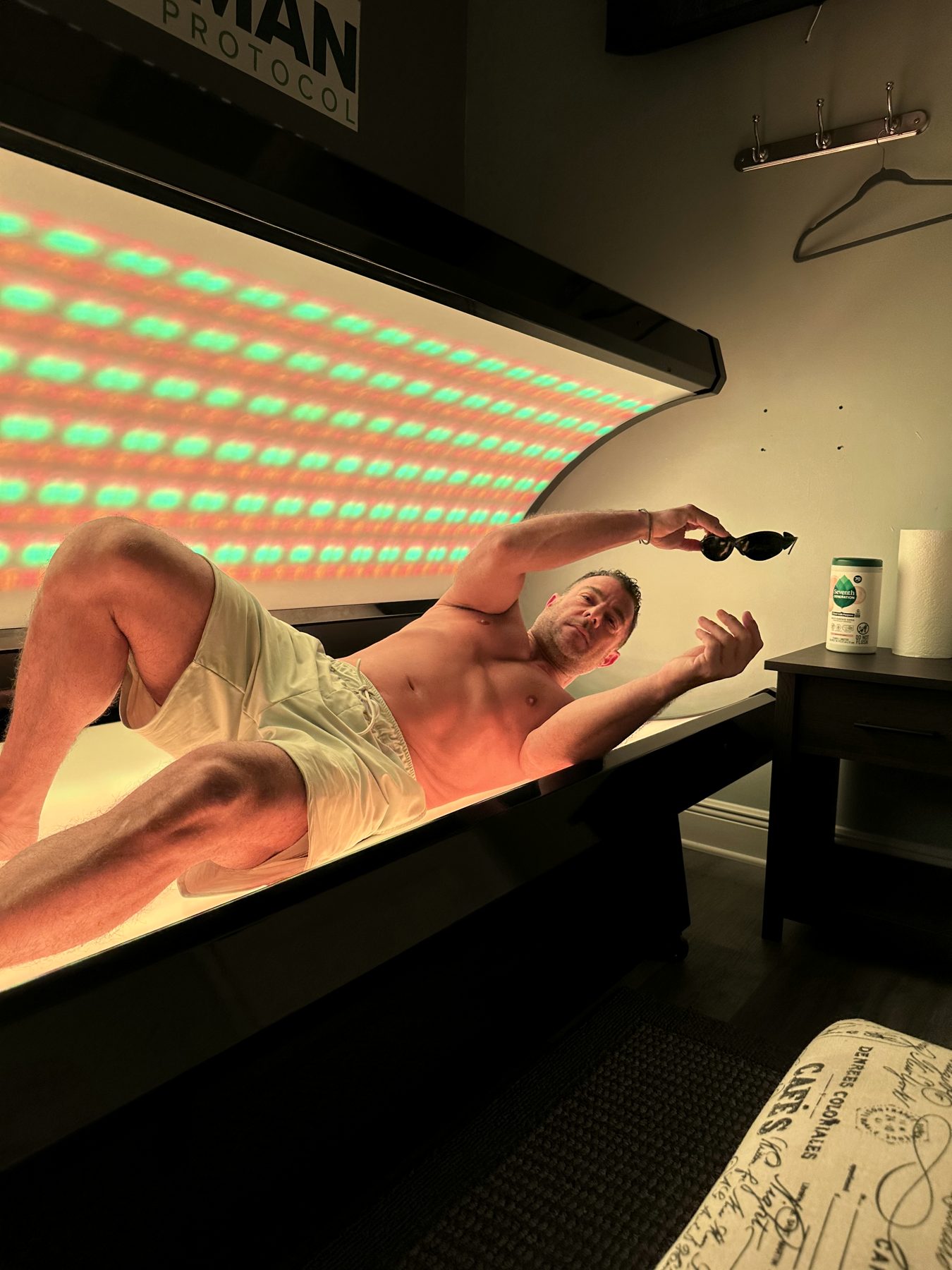
- Red light therapy. For sore tissue and recovery. Lying in warm, gentle light for about 15–20 minutes is one of the best-tolerated treatments we offer.
- PEMF therapy. For stiffness and circulation. Pulsed electromagnetic fields work with no physical contact at all.
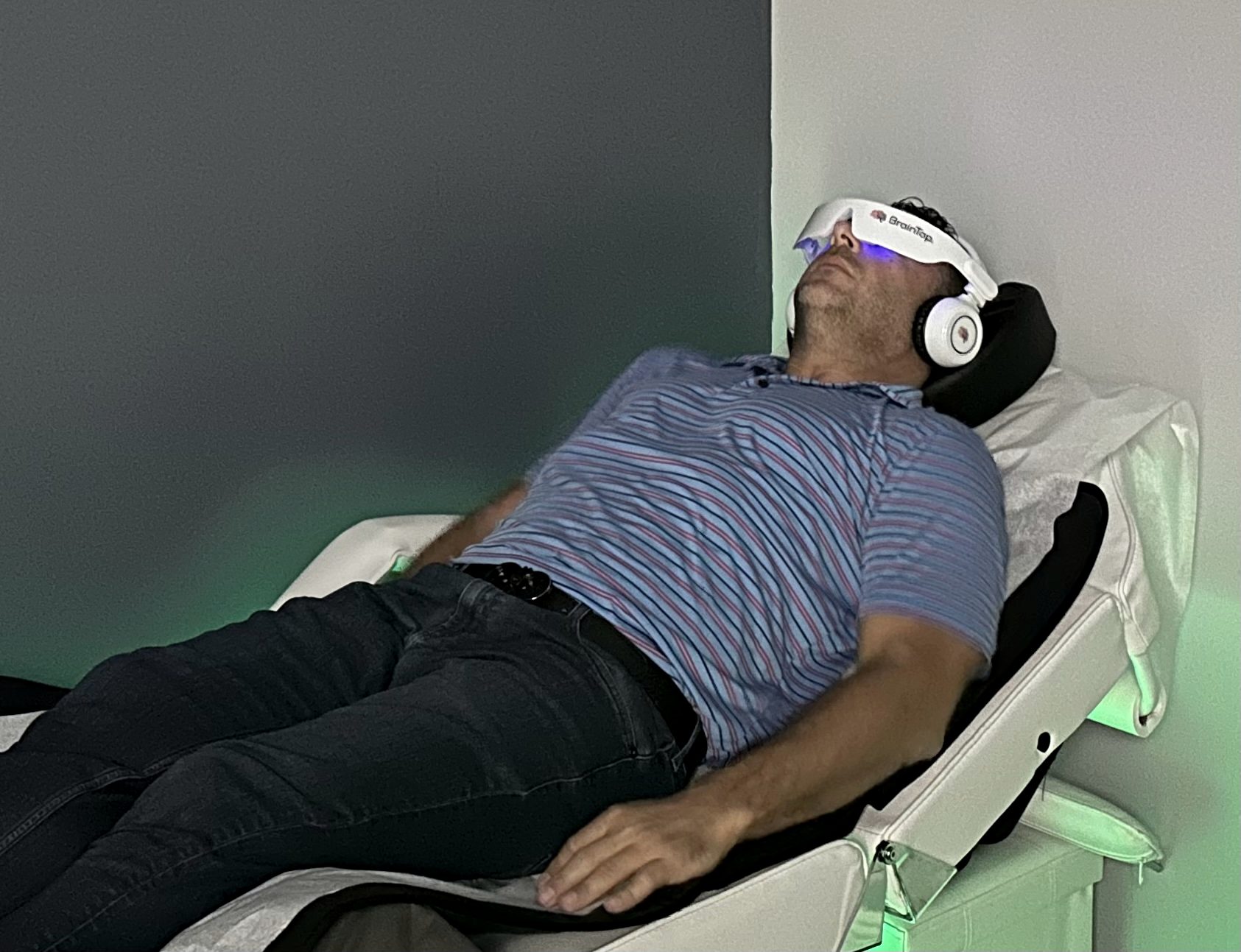
- BrainTap. For sleep and stress. Guided audio and light sessions help the nervous system practice calming down — and poor sleep is the biggest flare driver we see.
- Paced movement rehab. For capacity. Gentle, graded activity is the single most evidence-supported long-term tool in fibromyalgia, and it only works when the dose is right.
- Cold laser therapy. For specific tender points or a joint that is flaring; see cold laser.
What is deliberately not on the list: deep tissue work, aggressive stretching, high-velocity adjustments of a flaring spine, and ‘boot camp’ exercise. All of them tend to leave a fibromyalgia patient worse for days.
What to expect at your first two visits
We measure before we treat, and with fibromyalgia we listen first — most patients arrive having been dismissed before.
Visit one — we measure (and usually begin care)
- A real conversation. Your history, your diagnosis and who manages it, what flares you, how you sleep, what a good day and a bad day look like, and what you want back.
- A gentle structural exam. Posture, spinal range of motion, tender-point mapping, and a careful check of the neck and low back for restrictions that are adding irritation — done within your tolerance, never provoking.
- Surface scanning: sEMG + thermal. Surface EMG shows where the muscles along the spine are guarding; thermal scanning maps nerve irritation. Both are touch-free and painless.
- Digital X-rays, when indicated. Only if the exam suggests a structural problem worth seeing. We review any imaging or test results you bring.
Visit two — your findings and your plan
Your findings explained plainly, with your scans in front of you, and a plan that starts light and is adjusted to how you respond. Treatment begins at this visit, at a dose chosen not to flare you. If your physician or rheumatologist is involved, we coordinate. For a head start, take the 60-second spine assessment.
Fibromyalgia treatment at home: pacing, sleep and flares
What happens between visits matters as much as the visits:
- Pace, don’t push. Plan activity in small, regular amounts and stop before the pain tells you to. The good-day overdo and two-day crash is the cycle to break.
- Protect sleep like medicine. A consistent bedtime, a cool dark room, screens off an hour before — sleep is the strongest lever on tomorrow’s pain.
- Move gently every day. A short walk, stretching, a warm pool — Coral Springs mornings are made for it before the heat builds.
- Warmth over ice. Warm showers, heating pads and warm pools ease fibromyalgia stiffness; cold tends to aggravate it.
- Track flares. Noting sleep, stress, weather and activity before a flare reveals your triggers — and makes them manageable.
When fibromyalgia symptoms need a doctor instead
Some symptoms are not fibromyalgia and need medical evaluation: new joint swelling or warmth, fever, unexplained weight loss, rashes, chest pain, progressive numbness or weakness, or a sudden change in your usual pattern. If any of these apply, please see a doctor or urgent care today.
For the familiar picture — widespread ache, tender spots, exhausted mornings, a neck and back that never quite relax — we support fibromyalgia patients across Coral Springs and Parkland with care that respects how sensitive the system is. If neck tension and headaches are your biggest complaint, start with the neck pain guide; for the upper back and shoulders, the upper back page.
Serving fibromyalgia patients across North Broward
Our clinic at 5675 Coral Ridge Drive, Coral Springs, FL 33076 serves Coral Springs, Parkland, Coconut Creek, Margate, Boca Raton, Tamarac, Pompano Beach and Deerfield Beach. Same-day appointments are usually available — call (954) 341-2256 or book online. Most patients from Parkland and Coral Springs are here in under 15 minutes.
Medically reviewed by Dr. Jared Cohen, DC — Co-Founder & Clinical Director, The Spine and Wellness Center. Last reviewed October 2026.
Frequently asked questions
Can a chiropractor help with fibromyalgia?
Supportively, yes. Fibromyalgia has no cure, but gentle, low-force chiropractic care combined with massage, red light, PEMF and BrainTap can lower muscle tension, ease tender points, improve sleep and reduce the spinal irritation an over-sensitive nervous system amplifies. Care is dosed to your tolerance and coordinated with your physician.
Is chiropractic treatment gentle enough for fibromyalgia?
It is when it is designed for it. We use instrument-assisted and mobilization techniques rather than forceful manipulation, keep early visits short and light, and adjust the plan to how you respond. With fibromyalgia, less done consistently works better than more done occasionally.
Does red light therapy help fibromyalgia?
Red light therapy (photobiomodulation) soothes sore, tender tissue and supports recovery without pressure or heat, which makes it one of the best-tolerated treatments for sensitive bodies. It does not treat the underlying condition but is a useful part of a plan aimed at calming symptoms.
What is BrainTap and why is it used for fibromyalgia?
BrainTap is a guided light-and-sound session that helps the nervous system practice shifting from high alert into a calmer state. Because poor sleep and stress are the biggest flare drivers in fibromyalgia, supporting sleep and stress regulation is one of the most useful things supportive care can do.
How long until fibromyalgia symptoms improve with treatment?
Many patients notice better sleep and less stiffness within the first few weeks of gentle care, but fibromyalgia is a long-term condition with ups and downs. We aim for steady, sustainable improvement and fewer flares rather than a quick fix, and we map a realistic rhythm after your evaluation.
Do you see fibromyalgia patients from Parkland and Coconut Creek?
Yes. Our clinic on Coral Ridge Drive in Coral Springs is minutes from Parkland, Coconut Creek, Margate and Tamarac, and we schedule fibromyalgia patients at a pace that suits them.
Same-day appointments
Let's build your plan.
Find out what's actually going on and get a clear path forward. Same-day appointments available.
- Same-day appointments are usually available
- Our team calls you back to confirm your visit
- Coral Springs, serving Parkland & North Broward since 2005
Prefer to talk now? Call or text (954) 341-2256