

Conditions · Coral Springs & Parkland
Neck pain relief in Coral Springs & Parkland
Stiff necks, pinched nerves, tech neck and the headache that starts at the base of the skull — the cervical spine is small, mobile and easy to overload. We find the structure driving it and fix that. Non-surgical, drug-free, built to last.
Quick answer
Lasting neck pain relief means treating the structure that is irritated, not just the muscles that are guarding it. Most neck pain comes from a restricted cervical facet joint, a bulging disc pressing on a nerve root, or forward-head posture that overloads both. We take the pressure off with cervical decompression and precise adjustments, then correct the posture so the relief holds.
What’s actually causing your neck pain
Real neck pain relief starts with knowing which structure is hurt. The cervical spine is seven small vertebrae that carry a 10–12 pound head through thousands of movements a day. Between them sit discs, and behind each disc a pair of facet joints that guide motion. Nerve roots exit at every level on their way to the shoulders, arms and hands.
In our Coral Springs clinic, four patterns account for most of the neck pain we see. A restricted facet joint that locks and produces the sharp, ‘can’t turn my head’ stiffness. A bulging or herniated cervical disc that irritates a nerve root and sends pain, tingling or numbness into the arm (cervical radiculopathy). Forward-head posture — the ‘tech neck’ pattern from phones and laptops — that overloads the lower neck and the muscles at the base of the skull. And whiplash, the sprain-strain injury from a rear-end collision that often shows up days later.
Most people have more than one. That is why a plan that only massages, only adjusts or only medicates tends to give temporary relief. Durable neck pain relief treats the joint, the disc, the nerve and the posture that loaded them — in the right order.

Is it a stiff joint, a pinched nerve, or posture? How to tell
The pattern of your symptoms says a lot before any scan does. Here is how the common sources of neck pain tend to show up:
- Facet joint restriction: sharp, one-sided pain that is worse turning or tilting the head, often after sleeping wrong or a sudden movement; the neck feels ‘stuck’ rather than weak.
- Cervical disc or pinched nerve (radiculopathy): pain that travels from the neck into the shoulder blade, arm or fingers, sometimes with tingling, numbness or a weaker grip; often worse looking up or sitting for long periods.
- Forward-head posture / tech neck: a dull ache across the lower neck and upper shoulders that builds through the workday, with tightness at the base of the skull and headaches by late afternoon.
- Whiplash: stiffness, headache and sometimes dizziness that begin 24–72 hours after a car accident or fall. See our whiplash treatment guide.
- Muscle strain: a broad tightness after a long drive or a heavy weekend that eases over days — but repeated ‘strains’ usually mean a joint or disc underneath is the real driver.
Arm symptoms matter most. Numbness, tingling or weakness in the arm or hand means a nerve root is involved, and nerve pain responds best to decompression rather than to more stretching. Making that distinction is exactly what the exam on your first visit is designed to do.
Good to know
Neck pain and headaches are often the same problem. The upper cervical joints share nerve pathways with the head, so a restricted C1–C3 segment can produce a headache that starts at the base of the skull and wraps forward. Read more in our headache treatment guide.
How we approach neck pain relief at TSAWC
Our approach to neck pain relief follows the body’s own healing sequence — the 4R Method: Repair, Rebuild, Regenerate, Refine. Pain relief without structural correction is temporary by design, and structural correction on an inflamed, guarded neck does not hold. So we do them in order.
R1 · Repair — take the pressure off
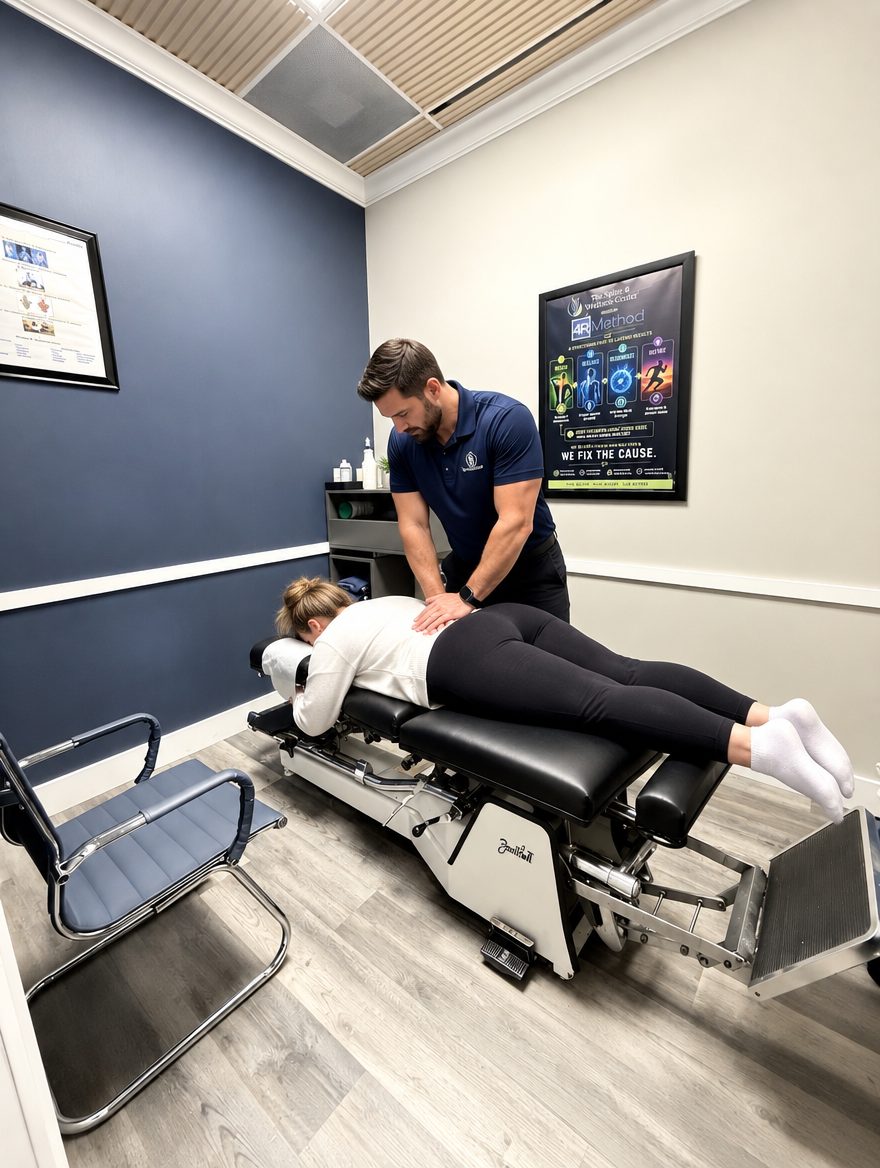
The Repair phase interrupts the pain at its source. For disc and nerve patterns that means cervical decompression on the Triton DTS table — gentle, computer-controlled cycles that open the disc space and ease pressure on the nerve root — paired with precise chiropractic adjustments to the restricted segments. Cold laser calms the inflamed tissue and massage therapy releases the guarding muscles. Typical commitment is 3–5 visits a week for 4–8 weeks; most patients notice meaningful change in the first two to three weeks.
R2 · Rebuild — correct what caused it
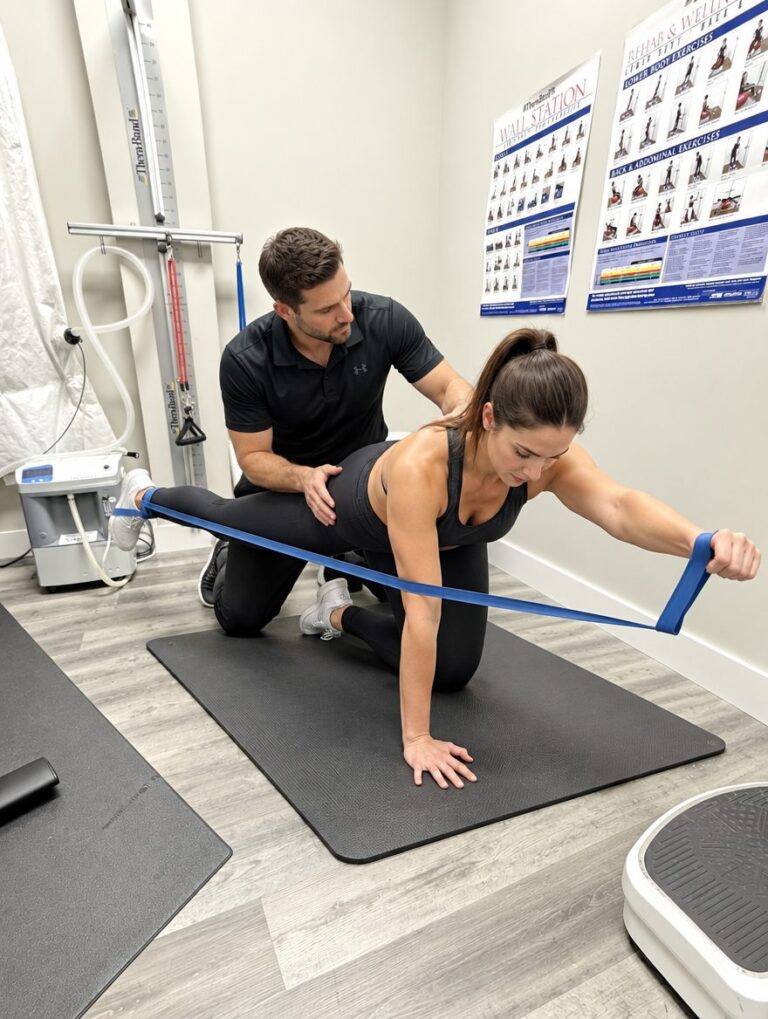
Once the nerve is quiet, we correct the architecture that produced the problem. Posture correction restores the cervical curve and retrains the deep neck flexors that switch off under forward-head loading. Graston Technique breaks down the fibrotic tissue that forms in the upper trapezius and suboccipital muscles after months of guarding. Rebuild usually runs 2–3 visits a week for 8–16 weeks. This is the phase most clinics skip — and it is why their patients come back.
R3 and R4 · Regenerate and Refine
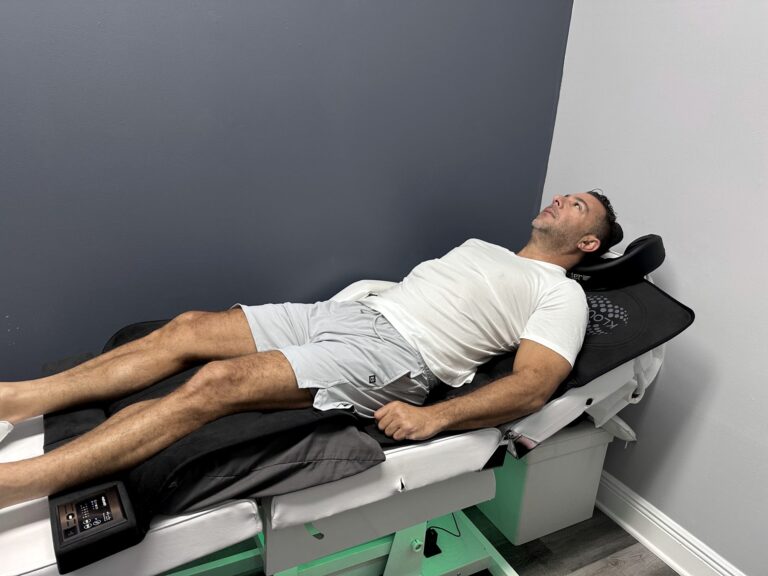
With the structure restored, the Regenerate phase (about 2 visits a week for two months or more) supports the cellular side of recovery — red light, PEMF and BrainTap for the stress component that so often lives in the neck. Refine is the long game: a brief structural tune-up every month or two so the neck pain relief you earned stays earned.
Cervical decompression
Computer-controlled traction that gently opens the cervical disc space and eases pressure on pinched nerves.
Learn moreChiropractic adjustments
Restore motion to locked cervical facet joints and switch off the muscle guarding behind a stiff neck.
Learn morePosture correction
Reverse forward-head posture and retrain the deep neck stabilizers so the correction holds.
Learn moreGraston Technique
Instrument-assisted soft-tissue work for the scar tissue and fascial restriction behind chronic neck tightness.
Learn more6 proven treatments for neck pain (and when each one fits)
Not every treatment fits every neck. These are the six tools we reach for most, matched to the pattern each works best on:
- Cervical decompression. Best for bulging or herniated cervical discs and arm symptoms. The Triton DTS table cycles gentle pulling and relaxing forces that lower pressure inside the disc so the bulge can retract from the nerve. About 20 minutes per session.
- Chiropractic adjustments. Best for facet restriction — the sharp, locked, ‘can’t check my blind spot’ kind. Specific, gentle adjustments restore joint motion and quiet the protective spasm.
- Massage therapy. Best for the muscular layer: upper trapezius, levator scapulae and suboccipital tightness that keeps the joints from moving freely between visits.
- Cold laser therapy. Best for acute flare-ups and nerve irritation — low-level laser reduces inflammation without heat, needles or medication.
- Graston Technique. Best for chronic cases with scar tissue after whiplash or years of desk posture. Instrument-assisted soft-tissue work re-initiates healing where it stalled.
- Posture correction. Best for tech neck and recurring pain. Curve restoration and deep-flexor retraining address the daily load that created the problem.
What is not on the list: long-term pain medication, repeated injections, and surgery as a first step. The American Academy of Orthopaedic Surgeons notes that most people with cervical radiculopathy improve over time with non-surgical care, and surgery is generally considered only when symptoms persist or progress despite it (AAOS OrthoInfo, Cervical Radiculopathy). Our job is to be the care that works first.
What to expect at your first two visits
Most clinics do a five-minute exam, adjust, and tell you to come back. We measure before we treat, so your plan is built on your actual structure rather than a guess.
Visit one — we measure (and usually begin care)
- A real conversation. Where it hurts, what makes it worse, how you sit and sleep, any accident history, and what you want to get back to.
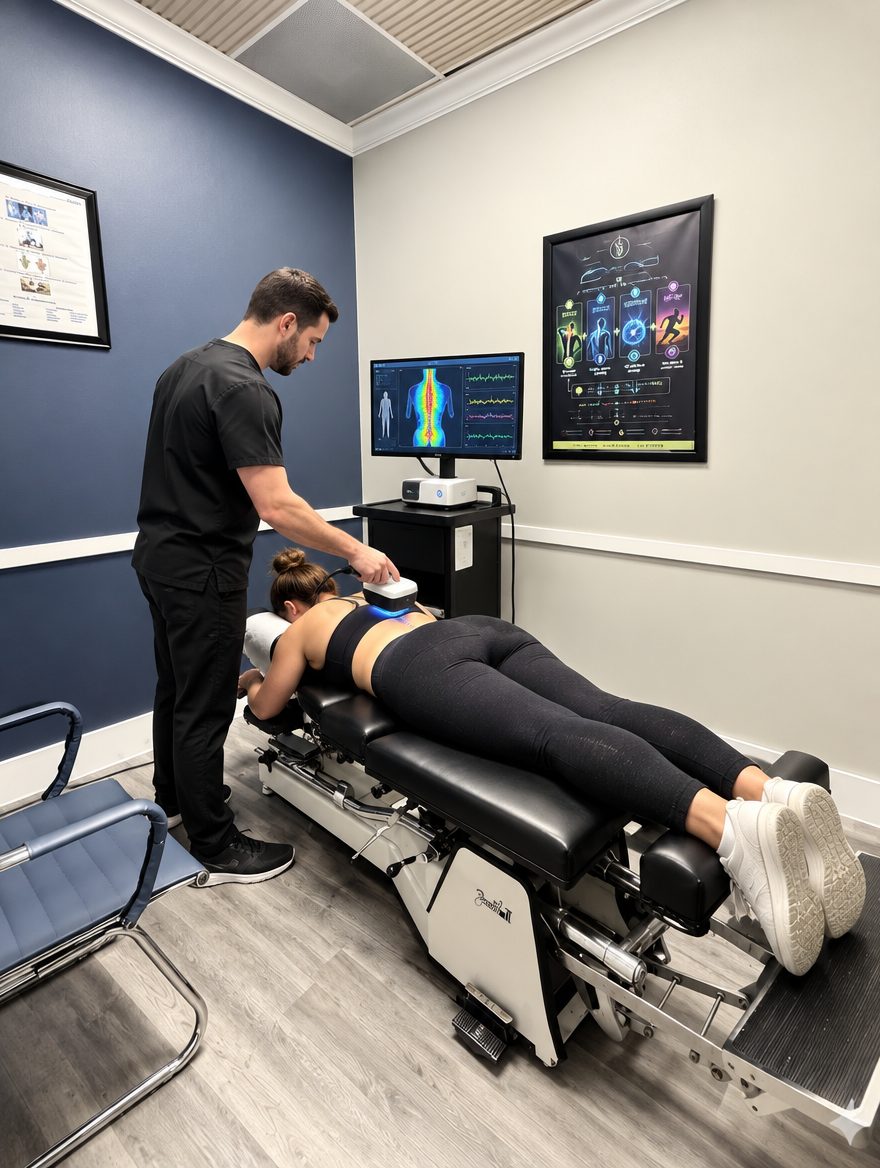
- A hands-on structural exam. Posture analysis, cervical range of motion, orthopedic tests that isolate the joint or disc generating the pain, and neurological testing (reflexes, grip strength, sensation) to see whether a nerve root is involved.
- Surface scanning: sEMG + thermal. A painless scan along the spine. Surface EMG shows where the muscles beside each vertebra are guarding; thermal scanning maps the temperature differences that point to nerve irritation. Objective, measurable, re-scannable.
- Digital X-rays, when indicated. We look at the cervical curve, disc spacing and alignment, and review any MRI you already have.
Visit two — your findings and your plan
Everything is explained in plain English with your scans and images in front of you, mapped to the four phases of the 4R Method: what we found, what we recommend, and how long it should take. Your full plan starts here — and in most cases care already began on visit one. For a head start, take the 60-second spine assessment and we will have your Spine Score and likely pattern before you walk in.
Neck pain relief at home: what helps and what makes it worse
Between visits, small choices speed recovery or stall it. These are the ones that matter most for the cervical spine:
- Raise the screen. Every inch your head drifts forward adds load to the lower neck. Bring the laptop or monitor to eye level and hold the phone up rather than looking down.
- Break up sitting. Stand, roll the shoulders and look over each shoulder for one minute every 30–45 minutes — especially on long drives on the Sawgrass or 441.
- Sleep with one pillow that fills the gap. Side sleepers need the pillow to keep the neck level with the spine; stomach sleeping twists the neck for hours and is the most common sleep-related cause of flare-ups we see.
- Move gently, don’t crank. Slow, pain-free range of motion keeps the facet joints lubricated. Forcing a stretch into an irritated nerve can make arm symptoms worse.
- Ice early, heat later. Ice for the first 48 hours of a flare; moist heat for stiffness after that.
If pain is travelling into the arm, do not wait weeks to ‘see if it settles’ — nerve symptoms respond faster the sooner the pressure comes off.
When neck pain needs urgent care instead
A small number of symptoms are not chiropractic problems and need same-day medical evaluation: neck pain with fever and a stiff neck, a sudden severe headache unlike any before, rapidly worsening arm or leg weakness, trouble with balance or walking, loss of bladder or bowel control, or neck pain after a serious fall or collision. If any of these apply, please see a doctor or urgent care today — we will be here for the recovery afterwards.
For everything else — the stiff neck, the pinched nerve, the tech neck, the whiplash that never fully went away — this is what we do all day in Coral Springs and Parkland, and we are usually able to see you the same day you call. Lower back symptoms too? Start with our lower back pain guide.
Serving neck pain patients across North Broward
Our clinic at 5675 Coral Ridge Drive, Coral Springs, FL 33076 serves Coral Springs, Parkland, Coconut Creek, Margate, Boca Raton, Tamarac, Pompano Beach and Deerfield Beach. Same-day appointments are usually available — call (954) 341-2256 or book online. Most patients from Parkland and Coral Springs are here in under 15 minutes.
Medically reviewed by Dr. Jared Cohen, DC — Co-Founder & Clinical Director, The Spine and Wellness Center. Last reviewed October 2026.
Frequently asked questions
What is the fastest way to get neck pain relief?
Take the pressure off the structure that is irritated. For a locked facet joint that means a precise adjustment and soft-tissue release in the first visits; for a disc or pinched nerve it means cervical decompression plus cold laser. Many patients feel a difference within the first two to three weeks of a Repair-phase plan.
Can a pinched nerve in the neck heal without surgery?
In most cases, yes. The majority of cervical radiculopathy cases improve with conservative care, and cervical decompression gives the disc room to retract from the nerve. Surgery is generally considered only when weakness progresses or symptoms do not respond to non-surgical treatment.
Is it safe to adjust the neck?
Cervical adjustments are gentle, specific and well tolerated when they follow a proper exam. Your first visit includes orthopedic, neurological and vascular screening, and we use low-force techniques when indicated. Any history of stroke, vascular disease or recent trauma is reviewed before Most patients have already begun care on visit one; this is where the full plan takes over.
Why does my neck pain come with headaches?
The upper cervical joints share nerve pathways with the head. When C1–C3 are restricted or the suboccipital muscles are tight, pain refers up the back of the skull and around to the temple or eye — a cervicogenic headache. Treating the neck usually resolves the headache as well.
How many visits will I need for neck pain?
It depends on the pattern and how long it has been there. A typical Repair phase runs 3–5 visits a week for 4–8 weeks, then tapers as Rebuild takes over. We re-scan regularly and adjust the plan to how you respond rather than to a fixed number.
Do you see neck pain patients from Parkland and Boca Raton?
Yes. Our clinic on Coral Ridge Drive in Coral Springs is a short drive from Parkland, Coconut Creek, Margate, Boca Raton and the surrounding communities, and same-day appointments are usually available.
Same-day appointments
Let's build your plan.
Find out what's actually going on and get a clear path forward. Same-day appointments available.