

Conditions · Coral Springs & Parkland
Neck pain treatment in Coral Springs
Not another overview — this is what treatment actually involves. Which tool we use for which neck, what a session feels like, and how the plan changes week by week.
Quick answer
Neck pain treatment at The Spine and Wellness Center is matched to the cause found on visit one: cervical decompression for disc and nerve patterns, specific adjustments for stiff or locked facet joints, and Graston or massage for muscle and fascial guarding. Sessions run 30–45 minutes, and most patients notice change within two to three weeks of the Repair phase.
What does neck pain treatment actually involve?
Neck pain treatment at our Coral Springs clinic is a structured program, not a series of identical adjustments. It combines three kinds of care — cervical decompression, chiropractic adjustments and soft tissue therapy — in proportions set by what your first-visit exam finds, and the mix changes as the neck heals. This page walks through the treatment itself: what we use, when, and what it feels like.
If you are still trying to work out what is causing your neck pain — disc, joint, muscle or nerve — start with our neck pain relief guide, which covers the patterns, the symptoms and how we tell them apart. This page assumes you want to know what happens once the cause is known.
Three principles run through every plan Dr. Jared Cohen builds. First, we measure before we treat, so the plan is based on your actual cervical structure. Second, we take pressure off the irritated structure before we try to correct it. Third, we rebuild the muscles and posture that let the problem develop, so the relief holds after the last visit.
Cervical decompression vs adjustments vs soft tissue: which does your neck need?
The right neck pain treatment depends on which structure is irritated. These are the three primary tools and the patterns each one is built for:
- Cervical decompression — for disc and nerve patterns: a bulging or herniated cervical disc (most often C5–C6 or C6–C7), pain or tingling radiating into the shoulder, arm or hand, or weakness in the grip. The Triton DTS table gently separates the cervical vertebrae in computer-controlled cycles, lowering pressure inside the disc so it can retract away from the nerve root and rehydrate. Read more on our spinal decompression page.
- Chiropractic adjustments — for joint patterns: a stiff neck that will not turn to one side, a ‘catch’ when you check a blind spot, headaches that start at the base of the skull, and segments that have locked up to guard an old injury. Specific, low-force cervical adjustments restore motion to the facet joints and quiet the muscle guarding around them.
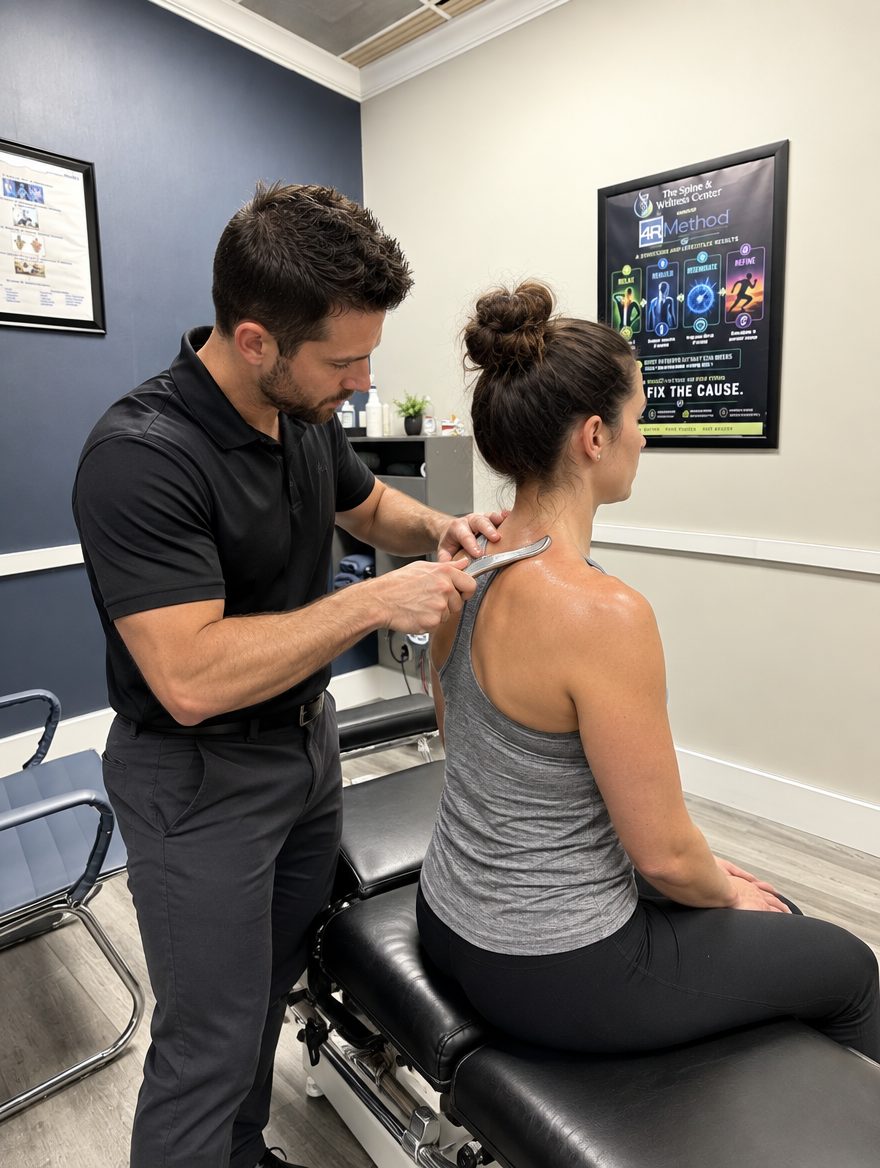
- Soft tissue therapy — for muscle and fascial patterns: upper trapezius and levator scapulae that never let go, trigger points that refer pain into the head, and the fibrotic tissue left behind by whiplash or years of forward-head posture. Graston Technique and therapeutic massage release the tissue so the joints underneath can move.
In practice most necks need more than one. A herniated disc is almost always surrounded by guarded muscles and stiff neighboring joints, so a decompression plan includes adjustments above and below the disc and soft tissue work for the guarding. The exam decides the proportions; a neck with arm symptoms is decompression-led, a neck that is simply stiff is adjustment-led.
Good to know
Arm symptoms change the plan. Tingling, numbness or weakness in the arm or hand means a cervical nerve root is involved, and nerve patterns respond to decompression far better than to stretching or forceful manipulation of the injured level.
What a neck pain treatment session is like, step by step
A typical Repair-phase session lasts 30–45 minutes and follows a consistent order, because sequence matters: we calm and release before we correct, and we correct before we load.
- Check-in (2–3 minutes). How the neck responded to the last session, any changes in arm symptoms, headaches or sleep. Progress is tracked visit to visit.
- Warm-up and inflammation control (5–10 minutes). Moist heat, therapeutic ultrasound or cold laser over the irritated segment to reduce inflammation and settle guarding. Cold laser is painless and feels like nothing more than a light touch.
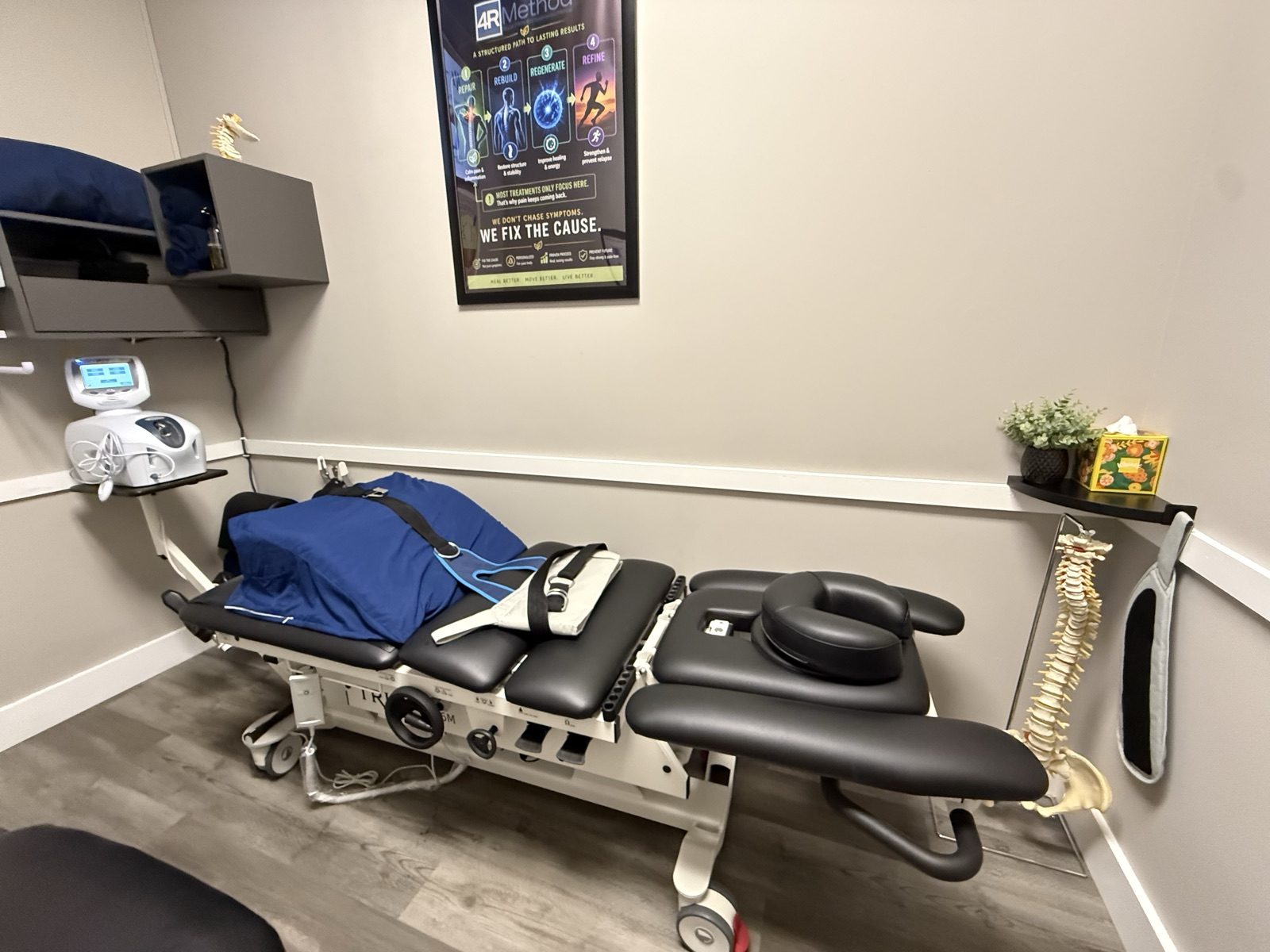
- Cervical decompression (about 15–20 minutes, when indicated). You lie on your back on the Triton DTS table with a padded cervical harness cradling the base of the skull. The table applies gentle pull-and-release cycles at a force set for your weight and tolerance. Most people describe it as a comfortable stretch; many fall asleep.
- Soft tissue work (5–10 minutes). Graston or hands-on release of the upper trapezius, levator scapulae, suboccipitals and scalenes. Graston can feel scratchy and leave mild redness that fades within a day or two.
- Adjustment (2–5 minutes). Specific corrections to the locked cervical and upper thoracic segments. Techniques range from traditional to instrument-assisted and low-force; Dr. Cohen chooses based on your exam, comfort and any disc findings.
- Home instructions (2 minutes). One or two targeted movements, posture cues for the desk and the phone, and what to expect before the next visit.
Mild soreness after the first few sessions is common and usually gone within 24 hours — similar to the feeling after a new workout. Sharp pain, new arm symptoms or dizziness are not expected and should be reported right away so the plan can be adjusted.
Neck pain treatment timeline: what changes week by week
Neck pain treatment follows the 4R Method — Repair, Rebuild, Regenerate, Refine — and each phase has a different frequency, a different goal and a different feel. Here is the realistic arc for a typical disc or joint pattern:
Weeks 1–3 · Repair begins (3–5 visits a week)
The goal is to take pressure off the disc or joint and settle the guarding. Sessions are decompression- and release-heavy. Most patients notice the first real change in this window: easier turning, fewer headaches, arm tingling that becomes intermittent rather than constant. Sleep usually improves before daytime pain does.
Weeks 4–8 · Repair continues, Rebuild starts (3 visits a week tapering to 2–3)
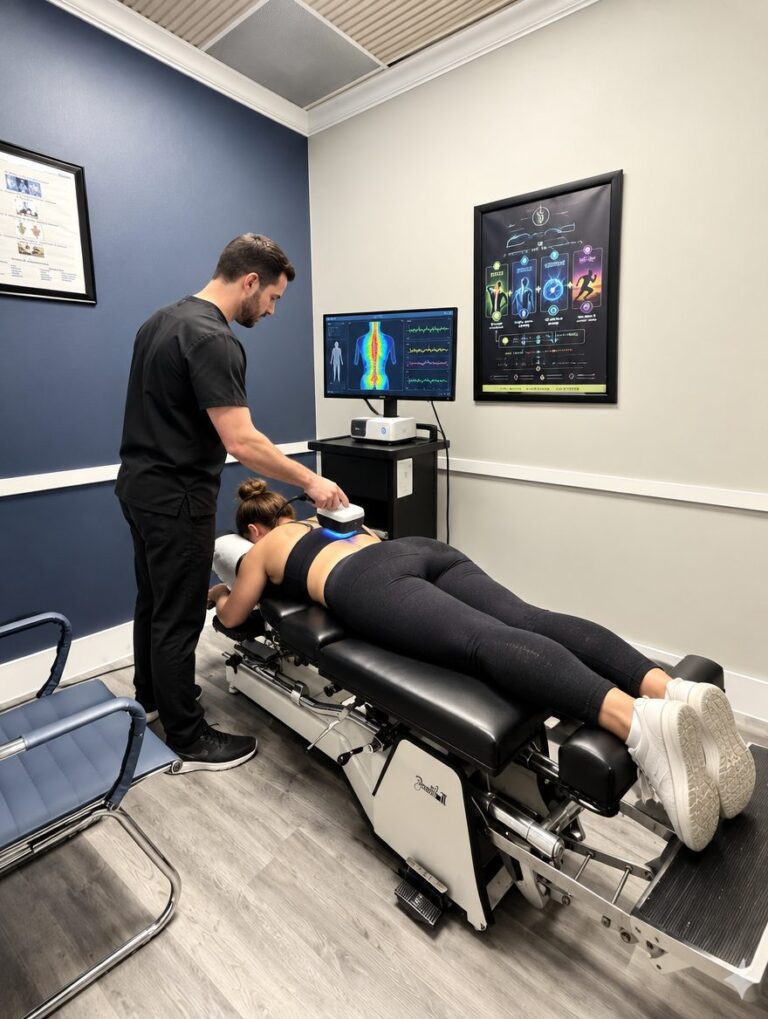
We re-scan with surface EMG and thermal imaging to confirm the muscles are no longer guarding and compare it to your visit-one baseline. As the nerve quiets, corrective exercise and physical therapy for the deep neck flexors and lower trapezius enter the sessions, and decompression tapers.
Weeks 8–16+ · Rebuild (2–3 visits a week)
The focus shifts to correcting what caused the problem: restoring the cervical curve, posture correction for forward-head posture and rounded shoulders, and strengthening so the neck can tolerate a workday without relapsing. This is the phase that separates lasting results from temporary ones.
After · Regenerate and Refine
Regenerate (about 2 visits a week for 2+ months) adds red light, PEMF and recovery protocols to support tissue quality. Refine is a brief monthly tune-up that protects the correction — especially important for desk workers in Coral Springs and Parkland who spend eight hours a day in the posture that started the problem.
How is this different from the neck pain relief guide?
Our neck pain relief guide explains the condition: what the cervical spine does, the common causes, how to tell a disc from a joint from a muscle, and what helps at home. This page explains the treatment: the tools, the session, the timeline and the trade-offs. Read the guide first if you are still diagnosing; read this page if you are deciding whether to start care.
The distinction matters because neck pain treatment is a commitment of time, and the right expectations make the difference between finishing a plan and stopping at the first good week. Pain is usually the first thing to improve and the structural correction is the last — a neck that feels better at week three is not yet a neck that will stay better.
Non-surgical spinal decompression
Gentle cervical traction that lowers disc pressure and takes the nerve root out of the fire.
Learn moreChiropractic care
Specific, low-force adjustments that restore motion to locked cervical and upper thoracic joints.
Learn moreGraston Technique
Instrument-assisted release of the fibrotic tissue that keeps the neck guarded.
Learn morePosture correction
Fix the forward-head posture and rounded shoulders that reload the neck every workday.
Learn moreIs cervical decompression safe, and does the evidence support it?
Non-surgical cervical decompression is a gentle, low-force treatment that is well tolerated by most patients. The main exclusions are fracture, spinal instability, tumor, severe osteoporosis, recent cervical surgery with hardware, and certain vascular conditions — all of which the exam and imaging on visit one are designed to identify before treatment starts.
Conservative care is the recommended starting point for most cervical disc and nerve problems. The American Academy of Orthopaedic Surgeons notes that the majority of people with a cervical herniated disc improve with non-surgical treatment, and that surgery is generally considered only when symptoms persist or neurological deficits progress despite that care (AAOS OrthoInfo, Cervical Radiculopathy). Our role is to be the conservative care that works, with objective re-scans to show whether it is.
Chiropractic adjustments of the neck are likewise low risk when performed after a proper evaluation. We screen for vascular and neurological red flags on visit one, and we use low-force or instrument-assisted techniques whenever a disc, osteoporosis or patient preference calls for them.
What to expect at visits one and two
Treatment does not begin on the first visit, because we do not treat what we have not measured. Visit one is a conversation about your history and goals; a hands-on cervical exam including range of motion, orthopedic and nerve-tension tests and neurological screening of the arms; surface EMG and thermal scanning of the cervical and upper thoracic spine; and digital X-rays when indicated to assess the cervical curve, disc spacing and alignment.
Visit two is your report of findings. Your scans and images are explained in plain English and mapped to the 4R phases with a recommended frequency and duration, and the full plan is set that day. For a head start, take the 60-second spine assessment and we will have your Spine Score before you arrive.
If your neck pain started with a collision, see our whiplash treatment page — the timeline and documentation are different. And if any of the following apply, please see a doctor or urgent care today rather than booking with us first: neck pain after significant trauma, fever with a stiff neck, sudden severe headache, progressive arm weakness, or numbness in both arms or legs.
Serving neck pain patients across North Broward
Our clinic at 5675 Coral Ridge Drive, Coral Springs, FL 33076 serves Coral Springs, Parkland, Coconut Creek, Margate, Boca Raton, Tamarac, Pompano Beach and Deerfield Beach. Same-day appointments are usually available — call (954) 341-2256 or book online. Most patients from Parkland and Coral Springs are here in under 15 minutes.
Medically reviewed by Dr. Jared Cohen, DC — Co-Founder & Clinical Director, The Spine and Wellness Center. Last reviewed October 2026.
Frequently asked questions
How long does neck pain treatment take?
Most patients notice meaningful change within two to three weeks of the Repair phase, which typically runs 4–8 weeks at 3–5 visits a week. Correcting the underlying structure in the Rebuild phase usually takes another 8–16 weeks at 2–3 visits a week. Disc and nerve patterns sit at the longer end; simple joint stiffness at the shorter end.
Does cervical decompression hurt?
No. You lie on your back with a padded harness cradling the base of the skull while the table applies gentle, computer-controlled pull-and-release cycles for about 15–20 minutes. Most people describe it as a comfortable stretch, and many relax enough to doze. Force is set for your weight and tolerance and increased gradually.
Will my neck be adjusted at every visit?
Not necessarily. Adjustments are one tool among several, and the mix is set by your exam. Disc and nerve patterns are decompression-led with low-force adjustments at the segments around the disc; stiff, locked joints are adjustment-led. If you prefer instrument-assisted or low-force techniques, we use them.
How many visits a week will I need?
Repair-phase care is typically 3–5 visits a week for 4–8 weeks, because frequent sessions early are what change an irritated disc or joint. Rebuild drops to 2–3 visits a week, Regenerate to about 2, and Refine is a brief monthly tune-up. Your plan on visit two states the exact schedule.
Can neck pain treatment help headaches and arm tingling?
Often, yes. Headaches that start at the base of the skull frequently come from the upper cervical joints and suboccipital muscles, which adjustments and soft tissue work address directly. Arm tingling usually means a cervical nerve root is irritated by a disc, which is the pattern cervical decompression is designed for.
What should I do between sessions?
Keep the neck moving gently, raise screens to eye level, avoid sleeping on your stomach, and use the one or two targeted movements given at each visit. Ice during the first 48 hours of a flare, heat for stiffness after that. Skip aggressive self-stretching or self-cracking — both can aggravate an irritated disc.

Same-day appointments
Let's build your plan.
Find out what's actually going on and get a clear path forward. Same-day appointments available.
- Same-day appointments are usually available
- Our team calls you back to confirm your visit
- Coral Springs, serving Parkland & North Broward since 2005
Prefer to talk now? Call or text (954) 341-2256