
Advanced therapies · Coral Springs & Parkland
Cold laser therapy in Coral Springs (low-level laser)
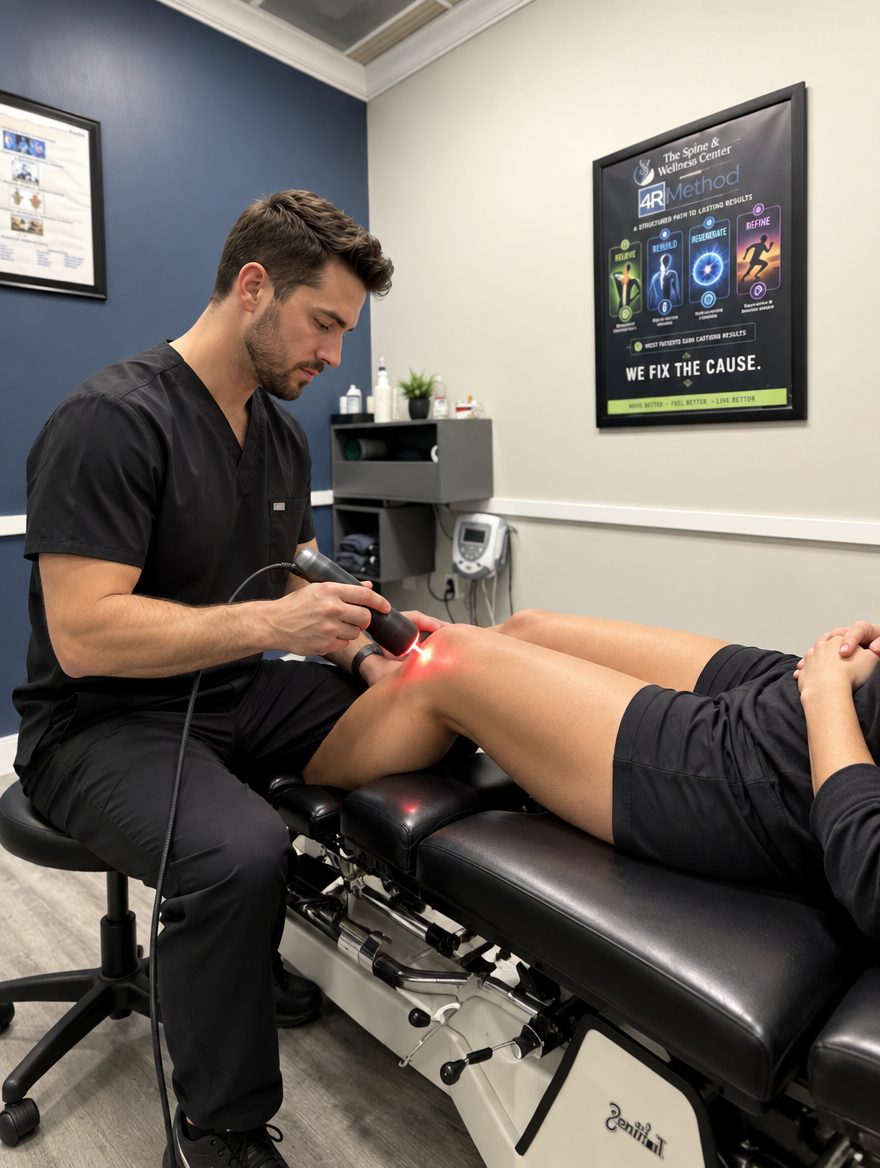
Painless, drug-free light therapy that works at the cellular level to calm inflammation and nerve irritation. A Repair-phase workhorse we pair with spinal decompression and adjustments.
Quick answer
Cold laser therapy, also called low-level laser therapy or photobiomodulation, uses specific red and near-infrared light wavelengths to stimulate cell energy production, reduce inflammation and ease nerve pain. It is painless, produces no heat, and a session takes 5–15 minutes. We use it for acute soft-tissue injuries, disc-related nerve pain and inflamed joints in the Repair phase.
What is cold laser therapy and how does it work?
Cold laser therapy uses low-intensity red and near-infrared light to stimulate healing in injured tissue without heating or cutting it. The scientific name is photobiomodulation; you will also see it called low-level laser therapy (LLLT) or class 3 laser. ‘Cold’ simply means the light does not produce the warmth you would feel from a surgical laser.
The mechanism happens inside the cell. Light at specific wavelengths (roughly 600–1,000 nanometers) is absorbed by an enzyme in the mitochondria called cytochrome c oxidase. That absorption increases production of ATP, the cell’s energy currency, releases nitric oxide (which widens small blood vessels), and dials down the chemical signals that drive inflammation.
What that means for an injury
- Less inflammation: swelling and the chemical irritants that sensitize nerve endings decrease, so pain settles.
- Calmer nerves: irritated nerve roots and peripheral nerves fire less, which is why it helps sciatica-type pain and nerve-related tingling.
- Faster tissue repair: cells with more energy and better blood supply rebuild damaged muscle, tendon and ligament more efficiently.
- No heat, no tissue damage: the energy is too low to warm or injure tissue, so it can be used on fresh injuries where heat would be a mistake.

What conditions does cold laser therapy help?
Cold laser therapy is the tool we reach for first when tissue is inflamed, a nerve is irritated, or an injury is too fresh for hands-on soft-tissue work. The conditions we treat with it most often in Coral Springs and Parkland are:
- Disc-related nerve pain — sciatica and arm pain from a bulging or herniated disc, alongside spinal decompression.
- Acute soft-tissue injuries — ankle sprains, muscle strains, whiplash and sports injuries in the first days and weeks, when swelling is the main problem.
- Inflamed joints — facet joint flare-ups in the lower back and neck, and osteoarthritic knees, hips and shoulders.
- Tendinitis and bursitis — the acute, inflamed stage of shoulder, elbow, hip and heel pain.
- Peripheral nerve irritation — carpal tunnel symptoms and other entrapments.
- Post-adjustment soreness and post-surgical recovery once the surgeon has cleared it.
Because it is painless and has no downtime, it is also a good fit for older patients, people with sensitive tissue and anyone who cannot tolerate deep pressure. It is a routine part of our sports injury rehab and car accident recovery programs.
Good to know
Cold laser calms the tissue; it does not move a joint or decompress a disc. That is why we pair it with chiropractic adjustments and decompression rather than using it on its own — the laser settles inflammation so the structural work holds.
What does a cold laser therapy session feel like?
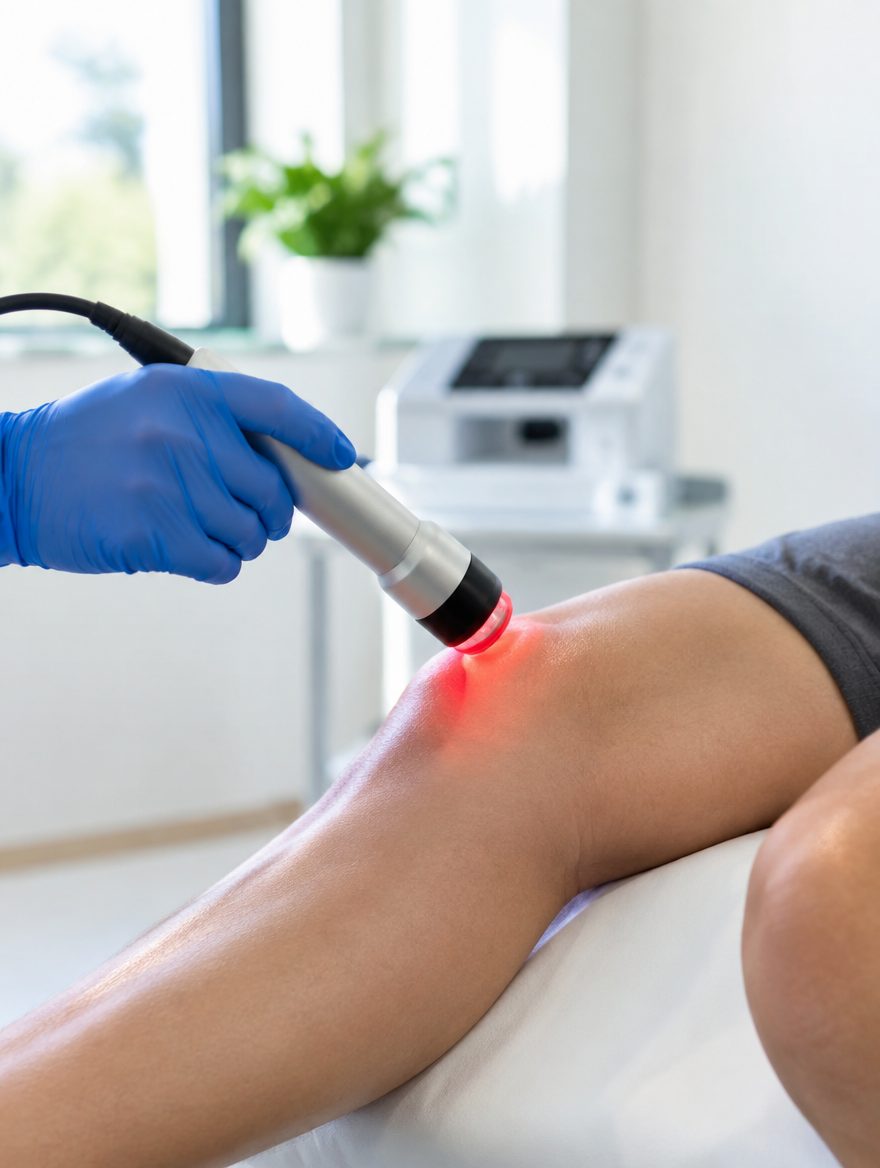
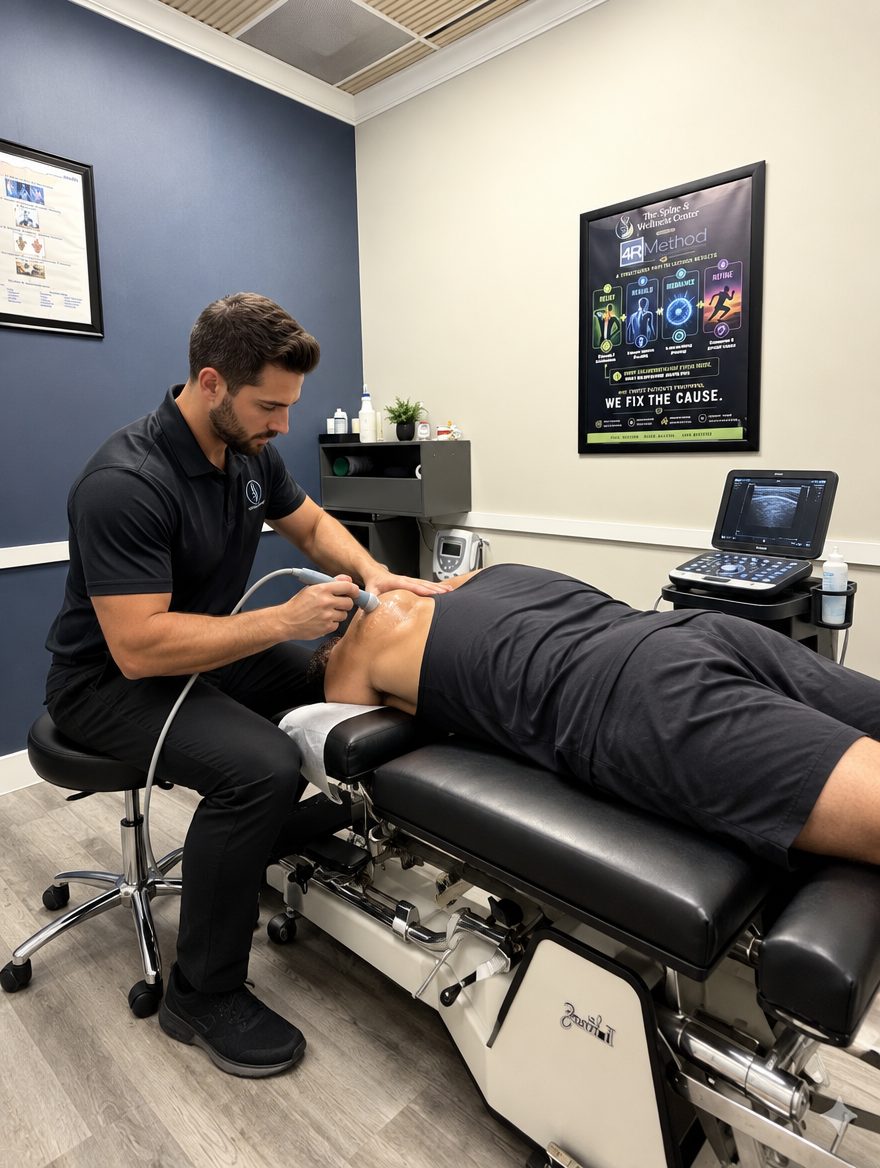
A cold laser session is painless and brief. Most people feel nothing at all, or at most a faint warmth from the handpiece resting on the skin.
- Eye protection. You and the provider wear protective glasses; the beam is safe on skin but should never be pointed at the eyes.
- Positioning. The treatment area is exposed and you lie or sit comfortably.
- Application. The handpiece is held on or just above the skin, moving across the injured area in a grid. Each point is treated for 30 to 60 seconds; a region takes 5 to 15 minutes.
- Continue your visit. The laser is usually followed by decompression, an adjustment or rehab in the same appointment.
There is no soreness afterward and no activity restriction. Some patients notice less pain immediately; for most, the change builds over the first three to six sessions as inflammation decreases. Acute injuries are typically treated two to three times a week for two to four weeks; chronic conditions over a longer, less frequent course.
Where does cold laser therapy fit in the 4R Method?
Every plan at The Spine and Wellness Center follows the 4R Method — Repair, Rebuild, Regenerate, Refine. Cold laser is a Repair-phase tool first and foremost.
R1 · Repair — take the inflammation and nerve pain down
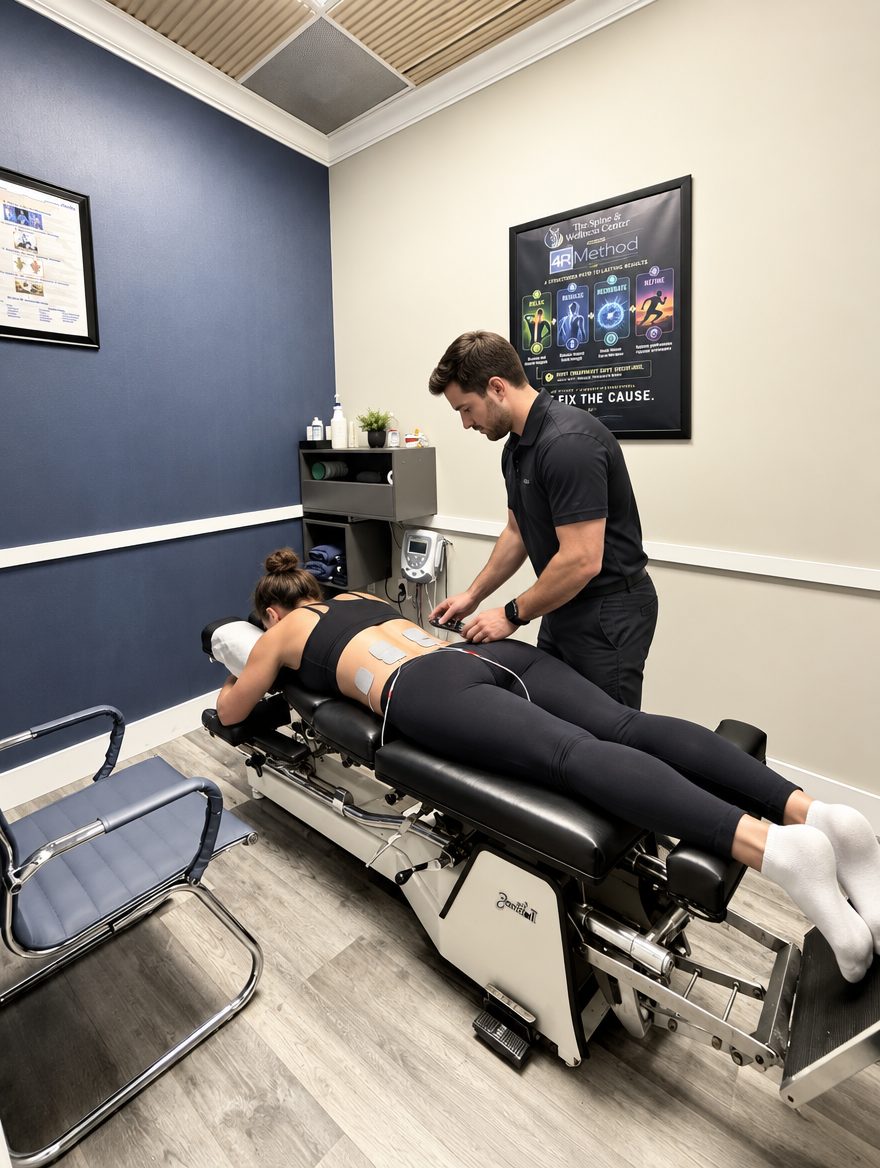
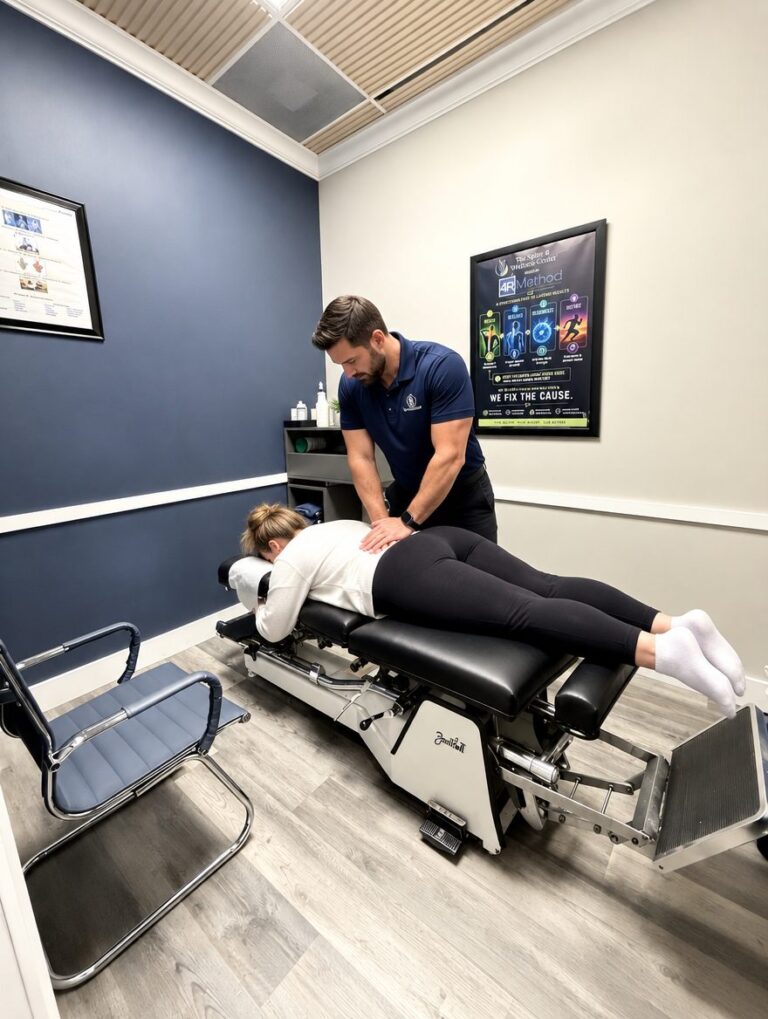
During the Repair phase (3–5 visits a week for 4–8 weeks) the laser is applied at most visits, usually right before decompression on the Triton DTS table for disc patients or before an adjustment for joint-driven pain. Its job is to quiet the inflamed, guarded tissue so the structural correction can be done comfortably and hold between visits. For fresh injuries it may be the only soft-tissue treatment for the first week or two.
R2 · Rebuild — support the tissue as it remodels
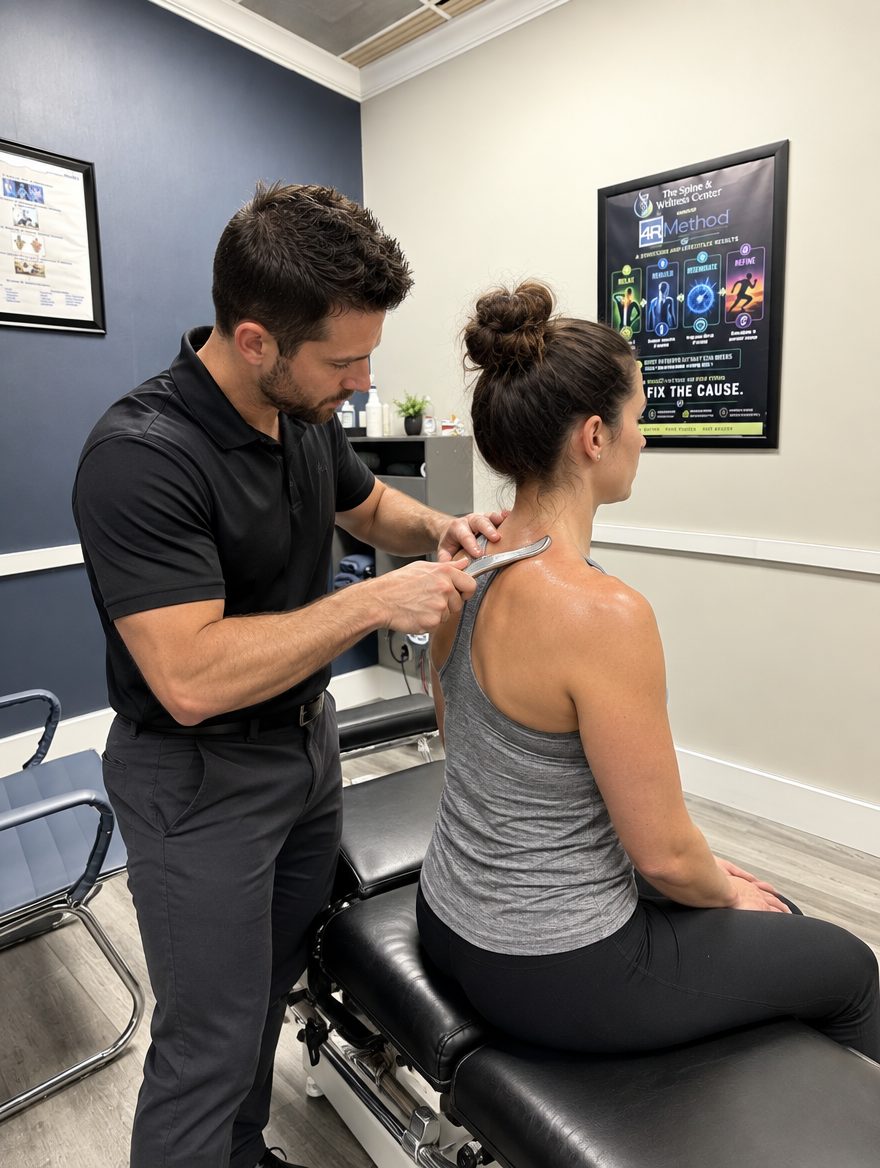
In the Rebuild phase (2–3 visits a week for 8–16 weeks) cold laser steps back as hands-on tools such as the Graston Technique and loading through physical therapy take over. We still use it after a hard rehab session or when a region flares. In the Regenerate phase, whole-body red light therapy — the same photobiomodulation principle applied to the entire body — supports recovery and energy.
Spinal decompression
The Triton DTS table takes pressure off the disc; laser calms the nerve around it.
Learn moreChiropractic care
Restore joint motion once inflammation has settled.
Learn moreRed light therapy
Whole-body photobiomodulation for recovery in the Regenerate phase.
Learn moreTherapeutic ultrasound
Deep heating for tendons and ligaments when warmth, not light, is what the tissue needs.
Learn moreIs cold laser safe? Evidence and precautions
Low-level laser therapy has been studied for several decades. A review in the journal Photomedicine and Laser Surgery describes the biological mechanism and summarizes trials reporting reductions in pain and inflammation for a range of musculoskeletal conditions, while noting that results depend heavily on using the correct wavelength and dose (Cotler et al., PMC). We are candid that evidence quality varies by condition; it is strongest for inflammatory and nerve-related pain and weaker for some chronic conditions, which is why we track your response and do not continue a therapy that is not helping.
Side effects are rare. The light is non-ionizing — nothing like X-rays or UV — and the energy is too low to burn. A small number of people notice a brief increase in soreness after the first session as circulation changes.
When we do not use cold laser
- Directly over the eyes (protective eyewear is worn at every session) or over the thyroid gland.
- Over a known cancer or tumor, or over the abdomen during pregnancy.
- Over an area with active bleeding, or a tattoo (dark pigment can absorb heat).
- In people taking photosensitizing medications, without their physician’s input.
- Over an area with reduced sensation, where we cannot rely on your feedback.
What to expect at your first two visits
We measure before we treat, so cold laser is prescribed for a specific inflamed or irritated structure rather than used as a blanket treatment.
Visit one — we measure (and usually begin care)
- A real conversation about when the pain started, whether it radiates, and what you have tried.
- A hands-on structural exam — range of motion, orthopedic tests, nerve-tension tests and neurological screening (reflexes, strength, sensation) to find out whether a nerve is involved.
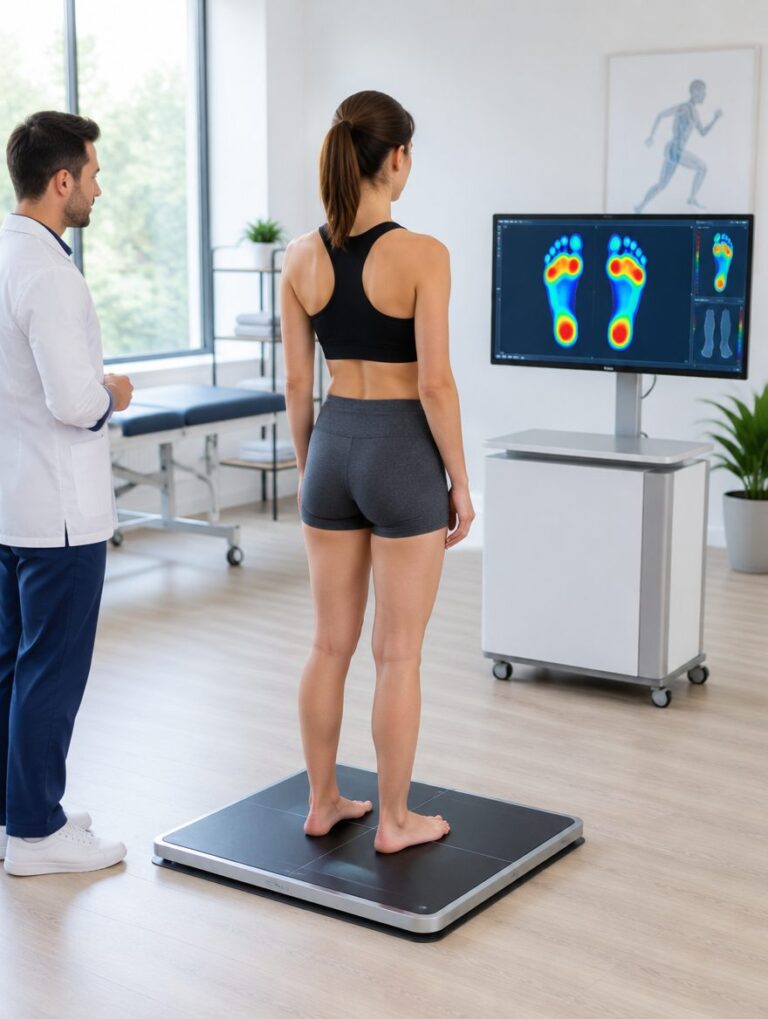
- Surface EMG and thermal scanning along the spine. The thermal scan is particularly useful here: temperature asymmetries point to inflammation and nerve irritation, which is exactly what laser targets.
- Digital X-rays when indicated, and a review of any MRI you already have.
Visit two — your findings and your plan
We explain what we found and where the laser fits in your 4R plan — how often, for how long, and what it will be paired with. Treatment begins at this visit. For a head start, take the 60-second spine assessment before you come in.
Home care between laser sessions
- Protect the healing tissue. Follow the activity guidance for your injury; the laser speeds repair but does not make a fresh sprain ready for sport.
- Ice is still fine in the first 48 hours of an acute injury; after that, gentle movement does more than rest.
- Keep moving within comfort. Short walks and the mobility work we give you keep circulation up and stiffness down.
- Stay consistent. Laser effects are cumulative; a few sessions close together do more than scattered single visits.
- Report changes in numbness, tingling or weakness promptly so we can adjust the plan.
If you have new loss of bladder or bowel control, rapidly worsening weakness, or an injury with severe swelling and inability to bear weight, please see a doctor or urgent care today.
Serving cold laser therapy patients across North Broward
Our clinic at 5675 Coral Ridge Drive, Coral Springs, FL 33076 serves Coral Springs, Parkland, Coconut Creek, Margate, Boca Raton, Tamarac, Pompano Beach and Deerfield Beach. Same-day appointments are usually available — call (954) 341-2256 or book online. Most patients from Parkland and Coral Springs are here in under 15 minutes.
Medically reviewed by Dr. Jared Cohen, DC — Co-Founder & Clinical Director, The Spine and Wellness Center. Last reviewed October 2026.
Frequently asked questions
Does cold laser therapy hurt?
No. The light is low-intensity and produces no heat, so most people feel nothing or a faint warmth from the handpiece on the skin. There is no soreness afterward and no downtime. It is one of the gentlest treatments we offer, which makes it a good fit for acute injuries and sensitive patients.
How long does a cold laser session take?
Each point is treated for about 30 to 60 seconds, and a full region such as a lower back or a shoulder takes 5 to 15 minutes. It is usually combined with decompression, an adjustment or rehab in the same visit, so plan on 30 to 45 minutes in the office.
How many cold laser sessions will I need?
Acute injuries are typically treated two to three times a week for two to four weeks. Chronic inflammation and nerve pain may need a longer course within the Repair phase. Effects are cumulative, and most people notice the change building over the first three to six sessions.
Is cold laser the same as red light therapy?
They rely on the same principle — photobiomodulation — but a cold laser delivers a focused, higher-intensity beam to a specific injured spot, while red light therapy uses panels or a bed to treat the whole body at lower intensity for recovery and wellness. We use the laser in Repair and red light in Regenerate.
Can cold laser help sciatica?
It often helps settle the inflamed nerve root behind sciatica, especially when paired with non-surgical spinal decompression that takes the disc pressure off the nerve. The laser reduces the inflammatory chemicals around the nerve while decompression addresses the cause.
Is cold laser safe to use repeatedly?
Yes for most people. The light is non-ionizing and the energy is too low to burn. We avoid the eyes, thyroid, known tumors, the pregnant abdomen and areas of active bleeding, and we check for photosensitizing medications. Protective eyewear is worn at every session.
Do you offer cold laser to patients from Parkland and Coconut Creek?
Yes. Our clinic on Coral Ridge Drive in Coral Springs is a short drive from Parkland, Coconut Creek, Margate, Tamarac and Boca Raton, and same-day appointments are usually available.
Same-day appointments
Let's fix the cause.
Measure first, then treat — a plan built on your actual structure.
- Same-day appointments are usually available
- Our team calls you back to confirm your visit
- Coral Springs, serving Parkland & North Broward since 2005
Prefer to talk now? Call or text (954) 341-2256