
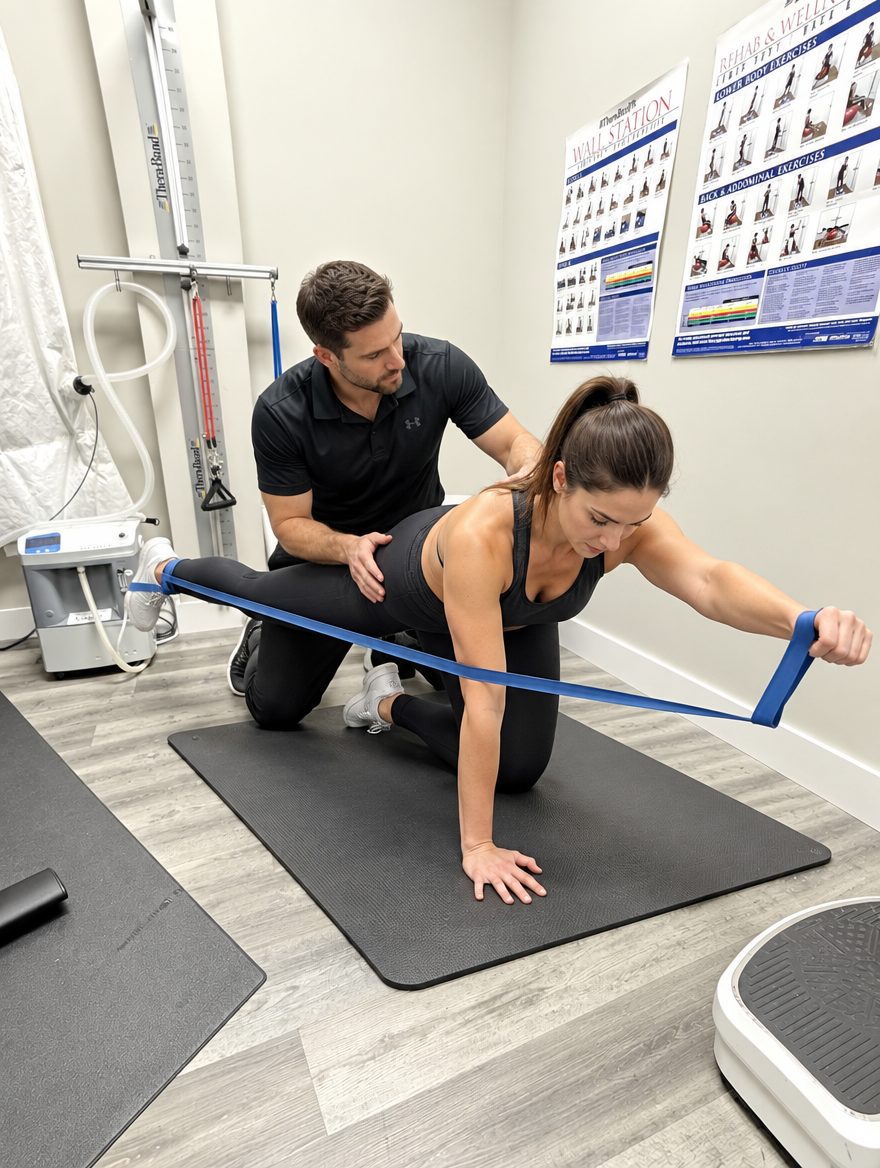
Conditions · Coral Springs & Parkland
Rotator cuff treatment in Coral Springs (non-surgical)
The deep ache when you reach, lift or roll onto that shoulder at night has a source — a cuff tendon that is irritated, impinged or partially torn. We find what is irritating it and rebuild the shoulder so it gets stronger instead of stiffer.
Quick answer
Non-surgical rotator cuff treatment calms the irritated tendon, then corrects the shoulder-blade, posture and spinal mechanics that overloaded it. The rotator cuff is four muscles and tendons that hold the ball of the shoulder in its socket. For tendinitis, impingement and most partial tears, we use cold laser, acoustic shockwave, adjustments and targeted rehab inside the 4R Method; full-thickness tears with weakness are referred for orthopedic evaluation.
What is the rotator cuff, and how does it get hurt?
Rotator cuff treatment starts with four small muscles. The supraspinatus, infraspinatus, teres minor and subscapularis wrap the ball of the shoulder and, through their tendons, hold it centered in the socket while the bigger muscles move the arm. Because the shoulder is the most mobile joint in the body, those tendons take a lot of strain.
They get hurt in three main ways. Tendinitis or tendinopathy — irritation and degeneration from repetitive overhead motion at work, in the gym, or on the pickleball and tennis courts. Impingement — the supraspinatus tendon is pinched under the bony roof of the shoulder when the shoulder blade sits forward and down, which is common with rounded, desk-bound posture. Tears — partial or full-thickness, from a sudden strain, a fall, or years of wear.
Too often the answer is an anti-inflammatory and ‘rest it’, and the shoulder gets stiffer and weaker while the mechanics that caused the problem stay in place. Our rotator cuff treatment in Coral Springs pinpoints what is irritating the cuff and addresses it directly, so the shoulder gets stronger.

Tendinitis, impingement or tear? How to tell
- Tendinitis / tendinopathy: a deep ache on the outside of the upper arm, worse with reaching overhead or behind the back and when lying on that side at night; strength is mostly intact. Builds gradually.
- Impingement: a sharp catch in a ‘painful arc’ between about 60 and 120 degrees of lifting the arm to the side; often with a clicking sensation. Usually goes with a forward shoulder posture.
- Partial tear: the same pain pattern plus some weakness, especially turning the arm outward or holding it out to the side. Often follows a specific event. Many partial tears do well without surgery.
- Full-thickness tear: marked weakness — difficulty lifting the arm at all, or the arm drifting down when held out — sometimes with a sudden ‘pop’. The American Academy of Orthopaedic Surgeons notes that many tears are managed non-surgically but that large tears with significant weakness, especially after an acute injury, warrant orthopedic evaluation (AAOS OrthoInfo, Rotator Cuff Tears).
- Not the cuff at all: pain from the neck (a pinched C5–C6 nerve) or frozen shoulder can mimic a cuff injury — see our broader shoulder pain guide.
Good to know
A shoulder that hurts but still has strength is almost always a non-surgical shoulder. Strength testing on your first visit is what tells us which path you are on.
Why the shoulder blade and neck matter for rotator cuff treatment
The rotator cuff does not work alone. The shoulder blade is the platform the cuff pulls from, and it has to rotate upward and tilt back as the arm rises to keep the tendon out from under the bony roof of the shoulder. When the shoulder blade sits forward and down — the posture of long days at a desk, driving the Sawgrass, or scrolling a phone — the space for the supraspinatus tendon narrows with every reach, and the cuff is pinched thousands of times a day.
A stiff upper back and a tight neck make it worse: if the thoracic spine cannot extend, the shoulder blade cannot tilt back, and the cuff compensates. That is why rotator cuff treatment at The Spine and Wellness Center always includes the spine and shoulder blade, not just the tendon. Treating the tendon alone is why so many shoulders ‘heal’ and then flare again the first week back in the gym or on the court.
How we approach rotator cuff treatment with the 4R Method
Our rotator cuff treatment follows the 4R Method — Repair, Rebuild, Regenerate, Refine — because calming a tendon without fixing the mechanics that irritated it is temporary by design.
R1 · Repair — calm the tendon
Cold laser for the inflamed tendon, acoustic shockwave for chronic, slow-to-heal tendinopathy and calcific deposits, gentle joint work to restore shoulder and shoulder-blade motion, and adjustments to the upper back and neck so the cuff is not fighting a stiff thoracic spine. Typically 2–4 visits a week for 4–8 weeks; most patients notice night pain easing first.
R2 · Rebuild — a shoulder that holds up under load
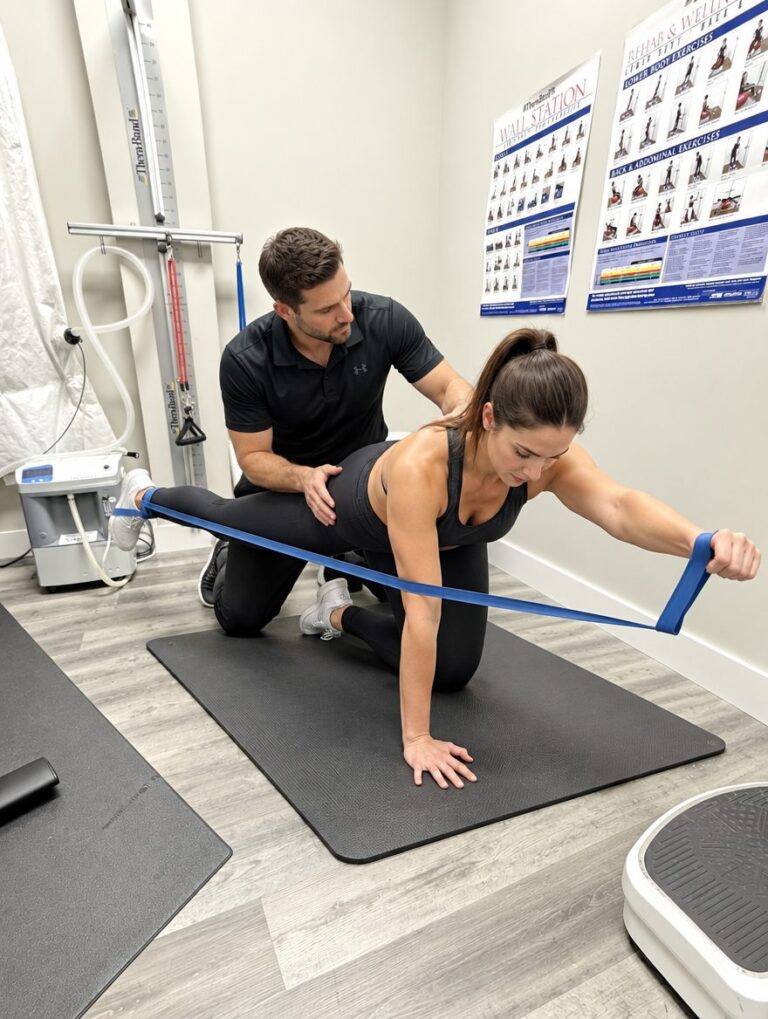
Physical therapy in a specific order: shoulder-blade control and posture, then cuff strength with the arm by the side, then progressively loaded overhead work. Graston Technique for the fibrotic tissue around a long-irritated tendon, and posture correction for the rounded shoulders that cause impingement. Usually 2–3 visits a week for 8–16 weeks.
R3 and R4 · Regenerate and Refine
PEMF and red light at about 2 visits a week to support tendon healing — tendons have a poor blood supply and recover slowly — then a brief tune-up every month or two, especially for overhead athletes and lifters.
Acoustic shockwave therapy
Focused sound waves that restart healing in chronic cuff tendinopathy and calcific tendinitis.
Learn moreCold laser therapy
Painless low-level laser that calms the inflamed tendon in the Repair phase.
Learn morePhysical therapy
Shoulder-blade control, cuff strength and overhead loading in the right order.
Learn moreGraston Technique
Instrument-assisted soft-tissue work for fibrotic tendon and capsule tissue.
Learn moreWhat to expect at your first two visits
Visit one — we measure (and usually begin care)
- A real conversation. How the injury started, which motions hurt, night pain, your sport or work demands, and what you want to get back to.
- A hands-on structural exam. Active and passive range of motion, painful-arc and impingement tests, strength testing of each cuff muscle, shoulder-blade movement, and a neck screen to rule out a referred nerve pattern.
- Surface EMG and thermal scanning. A painless scan of the neck and upper back showing where the muscles are guarding — because shoulder-blade and spinal mechanics directly affect the cuff.
- Digital X-rays when indicated. Bone spurs, calcific deposits and joint alignment; we review any MRI or ultrasound you already have.
Visit two — your findings and your plan
We explain which tendon is involved, whether the pattern is tendinitis, impingement or a tear, whether an orthopedic opinion is needed, and how the 4R Method applies with a realistic timeline. Your full plan starts here — and in most cases care already began on visit one.
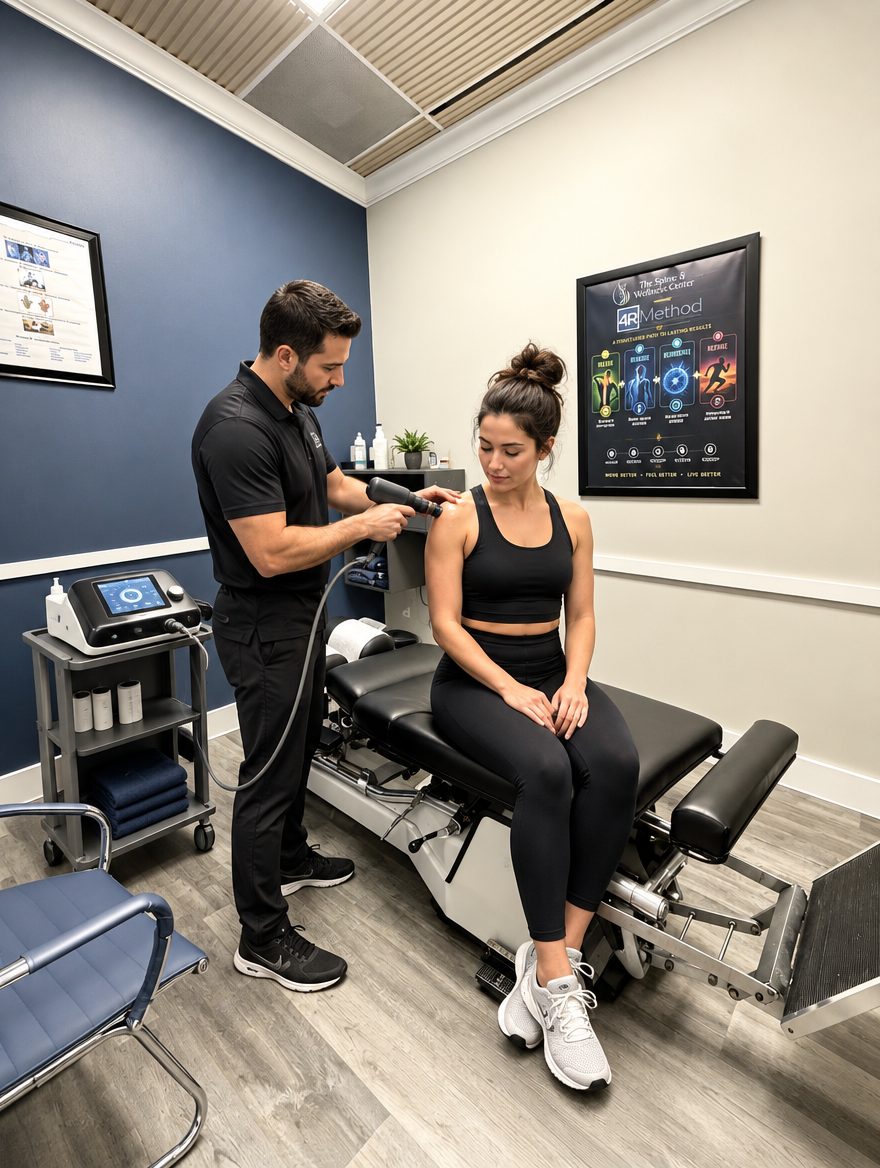
Rotator cuff care at home: what helps and what makes it worse
- Modify, don’t immobilize. Avoid the motions that provoke sharp pain, but keep the shoulder moving through comfortable ranges every day — a stiff shoulder heals slower than a moving one.
- Sleep off the shoulder. On your back, or on the other side with a pillow hugged to the chest to keep the arm supported.
- Fix the posture. Rounded shoulders narrow the space the cuff tendon runs through. Monitor at eye level, shoulder blades gently back and down.
- Pendulums and wall slides early; cuff strengthening with a light band once we have cleared it — not before.
- Ice after activity for 15 minutes in the early weeks; heat before activity once the acute irritation has settled.
Please see a doctor or urgent care today if you cannot lift the arm at all after an injury, if the shoulder looks deformed, if there is numbness and coldness in the hand, or if there is fever with shoulder pain. For the common rotator cuff pattern — the ache, the catch, the night pain — non-surgical rotator cuff treatment is what we do in Coral Springs and Parkland. Athletes can also read our sports injury rehab and pickleball injury guides.
Serving rotator cuff patients across North Broward
Our clinic at 5675 Coral Ridge Drive, Coral Springs, FL 33076 serves Coral Springs, Parkland, Coconut Creek, Margate, Boca Raton, Tamarac, Pompano Beach and Deerfield Beach. Same-day appointments are usually available — call (954) 341-2256 or book online. Most patients from Parkland and Coral Springs are here in under 15 minutes.
Medically reviewed by Dr. Jared Cohen, DC — Co-Founder & Clinical Director, The Spine and Wellness Center. Last reviewed October 2026.
Frequently asked questions
Can a rotator cuff injury heal without surgery?
Many can. Tendinitis, impingement and most partial tears respond well to conservative care that calms the tendon and corrects shoulder mechanics. Full-thickness tears with significant weakness, especially after an acute injury, should be evaluated by an orthopedic specialist, and we refer when the exam shows that pattern.
How long does rotator cuff treatment take?
Night pain and the sharp catch often ease within the first few weeks of the Repair phase. Tendons heal slowly, so a full program runs through the Rebuild phase — typically 8–16 weeks — to restore strength and overhead tolerance. Your timeline is set at your second visit.
Does shockwave therapy work for rotator cuff tendinitis?
Acoustic shockwave is used for chronic rotator cuff tendinopathy and calcific tendinitis that have not responded to rest and exercise. Focused sound waves stimulate blood flow and restart the healing response in the tendon. Sessions are brief and most patients tolerate them well.
Why does my shoulder hurt more at night?
Lying on the shoulder compresses the irritated tendon and the bursa above it, and the cuff loses the gravity-assisted space it has when you are upright. Sleeping on the other side with a pillow supporting the arm usually helps while the tendon calms down.
Is my shoulder pain coming from my neck?
It can be. A pinched C5–C6 nerve refers pain to the outer shoulder and upper arm in almost the same spot as the cuff. The difference is that neck-driven pain changes with head position and often comes with tingling; the exam on your first visit tests both.
Do you treat rotator cuff injuries for patients from Parkland and Coconut Creek?
Yes. Our clinic on Coral Ridge Drive in Coral Springs is minutes from Parkland, Coconut Creek, Margate and Tamarac, and same-day appointments are usually available for new shoulder patients.
Keep reading
From the blog
Same-day appointments
Let's build your plan.
Find out what's actually going on and get a clear path forward. Same-day appointments available.