

Conditions · Coral Springs & Parkland
Vertigo treatment in Coral Springs (BPPV & cervicogenic)
A spinning, off-balance world usually has a physical cause in the inner ear or the upper neck — and both can be found and treated without drugs. We identify which, treat it directly, and know the warning signs that mean a physician first.
Quick answer
Drug-free vertigo treatment depends on the cause. BPPV — displaced calcium crystals in the inner ear — is treated with canalith repositioning maneuvers such as the Epley, often with relief in one to a few sessions. Cervicogenic dizziness from upper neck joint dysfunction responds to gentle upper cervical care, soft-tissue work and posture correction. Vestibular rehab retrains balance. Sudden vertigo with neurological signs needs a physician first.
What causes vertigo, and why do the inner ear and neck both matter?
Vertigo treatment begins with the three inputs your brain uses to keep you upright: the inner ear’s balance organs, your eyes, and the position sensors in the small joints and muscles at the top of your neck. When one of those sends the wrong signal, the result can be vertigo — a false sense that you or the room is spinning — along with lightheadedness, nausea and unsteadiness.
The two causes we see most in Coral Springs are BPPV (benign paroxysmal positional vertigo), in which tiny calcium crystals in the inner ear come loose and drift into a canal where they do not belong, and cervicogenic dizziness, in which irritated upper neck joints and tight suboccipital muscles feed faulty position signals to the brain — common after whiplash, with forward head posture, and alongside chronic neck pain.
Medication may quiet the symptom for a while, but it rarely fixes either cause. Our vertigo treatment works to pinpoint whether your dizziness is coming from the inner ear, the upper neck, or both, and then addresses it directly — without drugs.

BPPV, cervicogenic dizziness or something else? How to tell
- BPPV: brief, intense spinning (seconds to under a minute) triggered by rolling over in bed, lying down, looking up or bending forward; often with nausea. The most common cause of vertigo, and the most treatable. The Mayo Clinic notes BPPV is usually resolved with canalith repositioning performed in the office (Mayo Clinic, Vertigo).
- Cervicogenic dizziness: unsteadiness, lightheadedness or a ‘floating’ sensation rather than true spinning, lasting minutes to hours, tied to neck pain, stiffness and sustained head positions; often worse after desk days or driving.
- Vestibular neuritis / labyrinthitis: sudden, severe, constant vertigo lasting days, often after a viral illness. Needs a physician initially; vestibular rehab helps afterward.
- Meniere’s disease: episodes of vertigo lasting 20 minutes to hours with ear fullness, ringing and fluctuating hearing loss — an ENT condition.
- Vestibular migraine: dizziness episodes in a person with migraine history, with or without headache — see migraine treatment.
Red flags — physician first
Sudden vertigo with double vision, slurred speech, facial drooping, severe headache, weakness or numbness on one side, trouble walking, chest pain, or new hearing loss can signal a stroke or other emergency. Please see a doctor or urgent care today before any chiropractic care.
How canalith repositioning (the Epley maneuver) treats BPPV
For BPPV, vertigo treatment is mechanical: guide the loose crystals out of the semicircular canal and back into the chamber where they belong. We do this in the office with canalith repositioning maneuvers — most commonly the Epley maneuver:
- Confirm the canal. The Dix-Hallpike positional test reproduces the spinning and shows a characteristic eye movement that tells us which ear and which canal is affected.
- Reposition. A series of guided head and body positions, each held for about 30–60 seconds, moves the crystals through the canal using gravity. The whole maneuver takes a few minutes and may briefly bring on the spinning.
- Re-test and repeat. We re-check; a second or third pass is sometimes needed. Many patients notice improvement after one session, and most positional vertigo resolves within a few.
- Aftercare. Keep the head relatively upright for the rest of the day; we show you a home version if the symptoms return.
The Epley is a well-established, drug-free technique with a high success rate for posterior-canal BPPV. Horizontal-canal BPPV uses a different maneuver, which is why the positional testing comes first.
How we approach vertigo treatment with the 4R Method
Our vertigo treatment follows the 4R Method — Repair, Rebuild, Regenerate, Refine — with the balance system as the target.
R1 · Repair — stop the spinning
Canalith repositioning for BPPV; gentle, specific upper cervical adjustments and soft-tissue release of the suboccipital muscles for cervicogenic dizziness; cold laser for inflamed upper neck joints. BPPV usually needs only a few visits; cervicogenic cases typically run 2–3 visits a week for 4–8 weeks.
R2 · Rebuild — retrain balance and posture
Vestibular rehabilitation is the second half of vertigo treatment — gaze stabilization, habituation and balance exercises that teach the brain to trust its inputs again — alongside posture correction and physical therapy for the deep neck muscles whose position sense was disrupted. Usually 2 visits a week for 8–12 weeks.
R3 and R4 · Regenerate and Refine
BrainTap for the anxiety and sleep disruption that chronic dizziness creates, then a brief tune-up every month or two for cervicogenic patients so the upper neck does not drift back.
Chiropractic adjustments
Gentle upper cervical work to restore the joint motion that feeds accurate position signals.
Learn morePosture correction
Unwind the forward head posture that keeps the upper neck irritated.
Learn morePhysical therapy
Vestibular rehab and deep neck retraining so the balance system recalibrates.
Learn moreWhiplash care
Dizziness after a car accident is common — the neck and the balance system are injured together.
Learn moreWhat to expect at your first two visits
Visit one — we measure (and usually begin care)
- A real conversation. What the dizziness feels like (spinning vs floating), how long episodes last, what triggers them, hearing changes, headaches, neck pain, medications, and any recent illness or injury.
- A hands-on structural and balance exam. Dix-Hallpike and roll tests for BPPV, eye-movement screening, balance and gait testing, upper cervical joint motion, palpation of the suboccipital muscles, and a neurological screen for red flags.
- Surface EMG and thermal scanning. A painless scan showing where the neck muscles are guarding — the cervicogenic component made visible.
- Digital X-rays when indicated. Upper cervical alignment and curve, especially after an accident.
Visit two — your findings and your plan
If BPPV is confirmed on visit one, repositioning begins right then, because the test and the treatment are the same positions. Otherwise, visit two is where we explain whether the pattern is inner-ear, neck or both, whether a physician or ENT should be involved, and map the 4R timeline. The 60-second spine assessment gives us a head start.
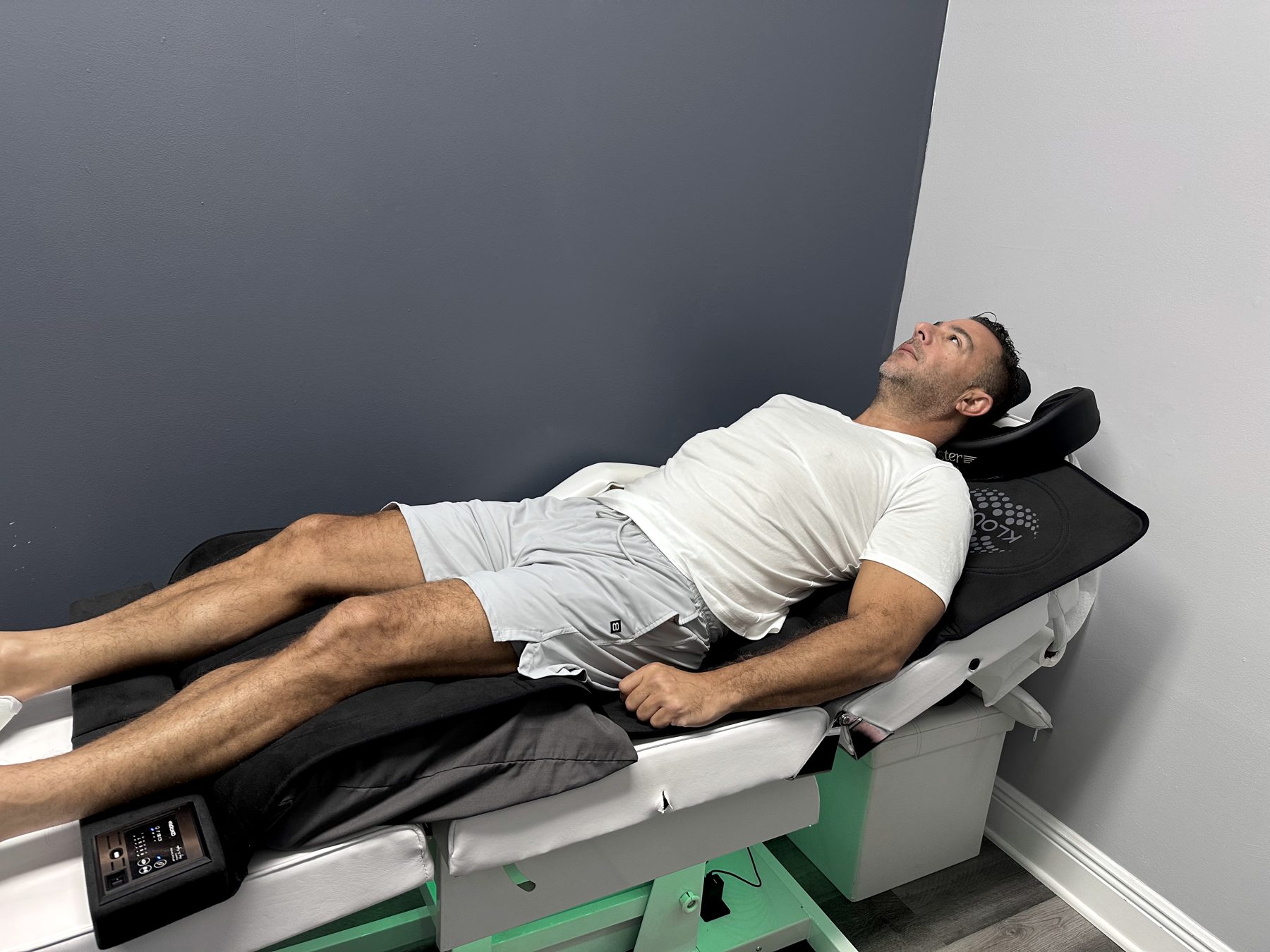
Living with dizziness: what helps between visits
- Move slowly through triggers during vertigo treatment — sit up in stages, turn the whole body rather than just the head — but do not avoid movement entirely; the brain recalibrates by being challenged gently.
- Sleep slightly elevated on two pillows for the first nights after repositioning.
- Hydrate and eat regularly. Dehydration and low blood sugar make every kind of dizziness worse.
- Fix the screen. Monitor at eye level and regular posture breaks for cervicogenic patients.
- Do the home exercises. Vestibular rehab works through daily repetition.
- Do not drive until episodes are controlled.
For the common patterns — the spin when you roll over, the floating after a long desk day, the unsteadiness since the accident — drug-free vertigo treatment is what we do in Coral Springs and Parkland. If your main symptom is headache, start with the headache treatment guide.
Serving vertigo and dizziness patients across North Broward
Our clinic at 5675 Coral Ridge Drive, Coral Springs, FL 33076 serves Coral Springs, Parkland, Coconut Creek, Margate, Boca Raton, Tamarac, Pompano Beach and Deerfield Beach. Same-day appointments are usually available — call (954) 341-2256 or book online. Most patients from Parkland and Coral Springs are here in under 15 minutes.
Medically reviewed by Dr. Jared Cohen, DC — Co-Founder & Clinical Director, The Spine and Wellness Center. Last reviewed October 2026.
Frequently asked questions
Can a chiropractor help with vertigo?
For many people, yes. When dizziness comes from displaced inner-ear crystals (BPPV), canalith repositioning maneuvers like the Epley resolve it; when it comes from the upper neck, gentle adjustments, soft-tissue work and posture correction help. We first determine whether your vertigo is a type that responds to conservative care, and refer when it is not.
What is the Epley maneuver and does it work?
The Epley maneuver is a series of guided head and body positions that moves displaced crystals out of the inner-ear canal that triggers BPPV. It is a well-established, drug-free technique with a high success rate for positional vertigo, and many patients notice improvement after one or a few sessions.
How soon will my dizziness improve with vertigo treatment?
It depends on the cause. BPPV often responds within one to a few repositioning sessions. Cervicogenic dizziness usually needs a short series of visits over several weeks as the upper neck calms and posture improves. We set a realistic timeline after the evaluation.
When is vertigo an emergency?
Please see a doctor or urgent care today if vertigo comes with double vision, slurred speech, facial drooping, weakness or numbness on one side, severe headache, trouble walking, chest pain or sudden hearing loss. These can signal a stroke or other serious condition and must be ruled out first.
What is cervicogenic dizziness?
Cervicogenic dizziness is unsteadiness or a floating sensation caused by faulty position signals from irritated upper neck joints and muscles. It travels with neck pain and stiffness, is common after whiplash and with forward head posture, and responds to upper cervical care and posture correction.
Do you treat vertigo patients from Parkland and Coconut Creek?
Yes. Our clinic on Coral Ridge Drive in Coral Springs is minutes from Parkland, Coconut Creek, Margate and Deerfield Beach, and same-day appointments are usually available for new dizziness patients.

Same-day appointments
Let's build your plan.
Find out what's actually going on and get a clear path forward. Same-day appointments available.
- Same-day appointments are usually available
- Our team calls you back to confirm your visit
- Coral Springs, serving Parkland & North Broward since 2005
Prefer to talk now? Call or text (954) 341-2256