
Core care · Coral Springs & Parkland
Physical therapy in Coral Springs (rehab & core stabilization)
Relief is the start, not the finish. Rehab retrains the deep core and hip stabilizers that protect your spine when you sit, lift and play — so the correction holds.
Quick answer
Physical therapy at The Spine and Wellness Center rebuilds the stability a painful spine has lost. After the Repair phase calms the pain, rehab restores mobility, retrains the deep core and hip muscles that switched off during injury, and progresses you back to sport and daily life. It runs alongside chiropractic care in the Rebuild and Regenerate phases of the 4R Method.
What does physical therapy do that an adjustment cannot?
Physical therapy rebuilds the muscular control that keeps a corrected spine corrected. An adjustment frees a locked joint and decompression takes the pressure off a disc — but neither one teaches the deep stabilizing muscles to do their job again. Rehab does.
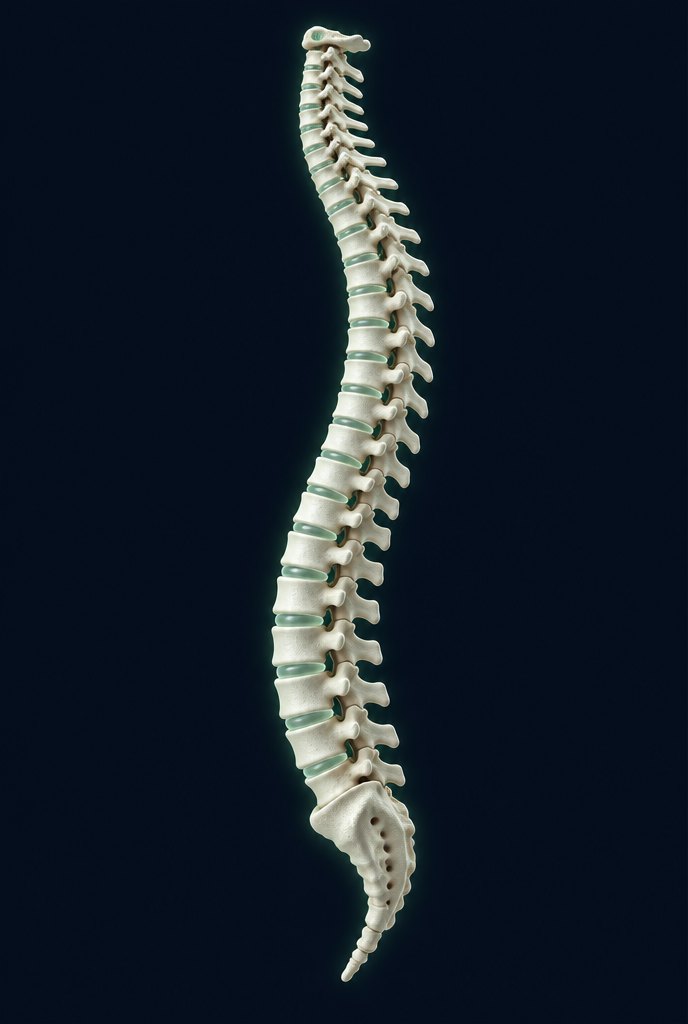
Here is why that matters. After a back or neck injury, the small muscles that stabilize each spinal segment — the multifidus along the spine and the transversus abdominis deep in the abdomen — switch off and do not switch back on by themselves. Research on motor control has shown that people with low back pain activate the transversus abdominis later and less effectively than people without pain, leaving the spine less protected under load (Hodges & Richardson, Spine, 1996).
When those stabilizers stay quiet, the big surface muscles and the discs take the load they were never designed for. That is the ‘my back goes out twice a year’ pattern we see constantly in Coral Springs and Parkland. Physical therapy exists to retrain the deep system so the pattern stops.

What are the 4 stages of rehab at TSAWC?
Rehab is a progression, not a handout of stretches. Each stage has an entry requirement and a goal, and you move to the next one when you have earned it — not on a calendar.
- Mobility restoration. Restore pain-free range of motion in the hips, thoracic spine and shoulders so the lumbar spine and neck stop compensating. Tools: guided mobility work, Graston Technique for fascial restriction, and targeted stretching only where a joint is genuinely tight.
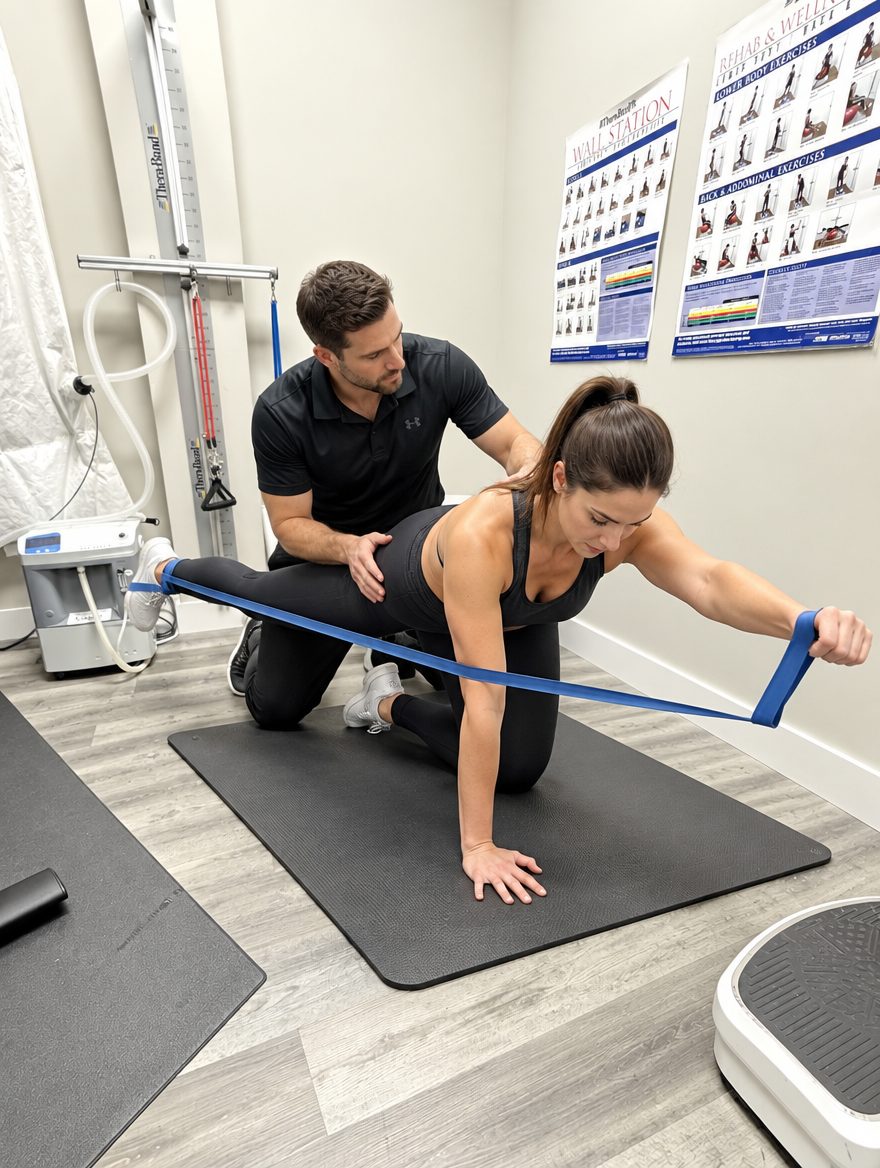
- Neuromuscular retraining. Teach the deep core and the hip stabilizers to fire first, and at the right time. This is subtle work — breathing mechanics, transversus abdominis activation, glute activation — often done on the mat with hands-on cueing and, when helpful, biofeedback from surface EMG.
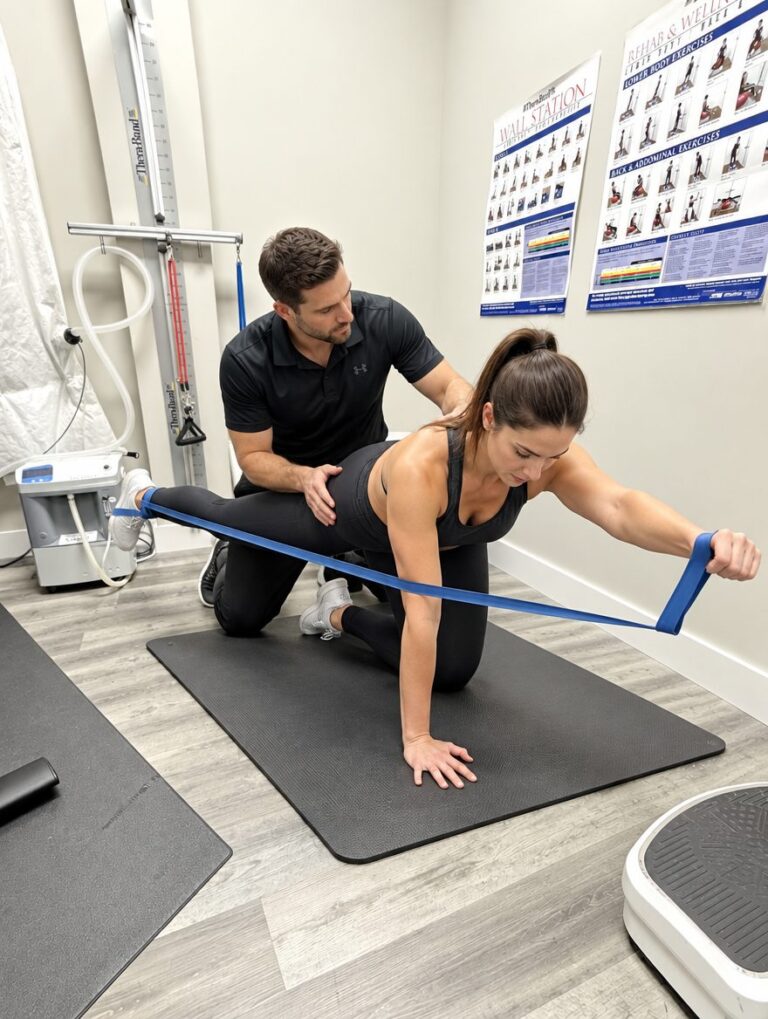
- Deep core and hip stabilization. Load the retrained pattern progressively: dead bugs, bird-dogs, side planks, banded hip work, hinge and squat patterns. The goal is a spine that stays neutral while the arms and legs move and carry weight.
- Return to sport and life. Rebuild the specific demands of your life — the golf swing, the pickleball lunge, lifting a toddler, a 10-hour desk day — with speed, rotation and endurance layered back in. Objective tests confirm you are ready.
Most patients spend the bulk of their time in stages two and three. Skipping them is the most common reason relief does not last.
How do physical therapy and chiropractic care work together?
They solve different halves of the same problem. Chiropractic care restores joint motion and alignment; physical therapy builds the muscular control that keeps the joint there. Done in the right order, each makes the other hold better.
In the Rebuild phase (2–3 visits/week, 8–16 weeks)
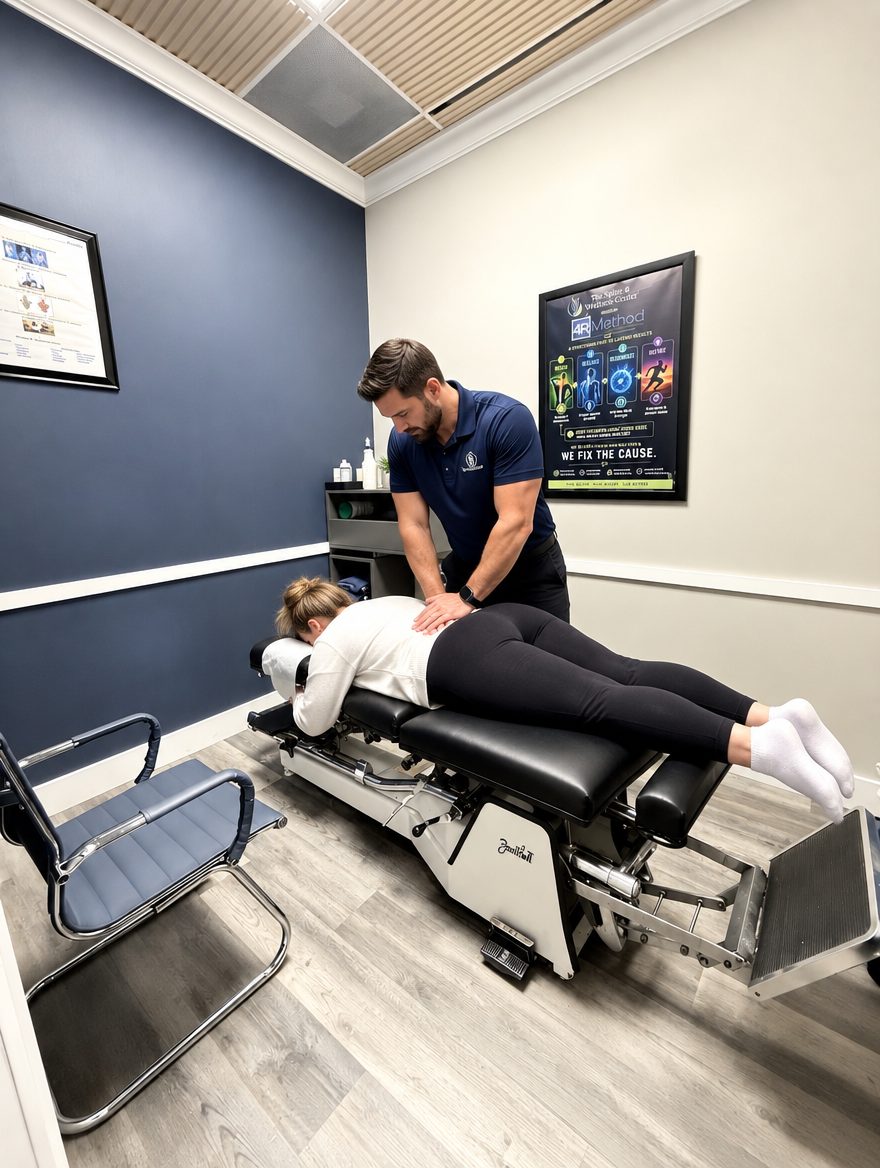
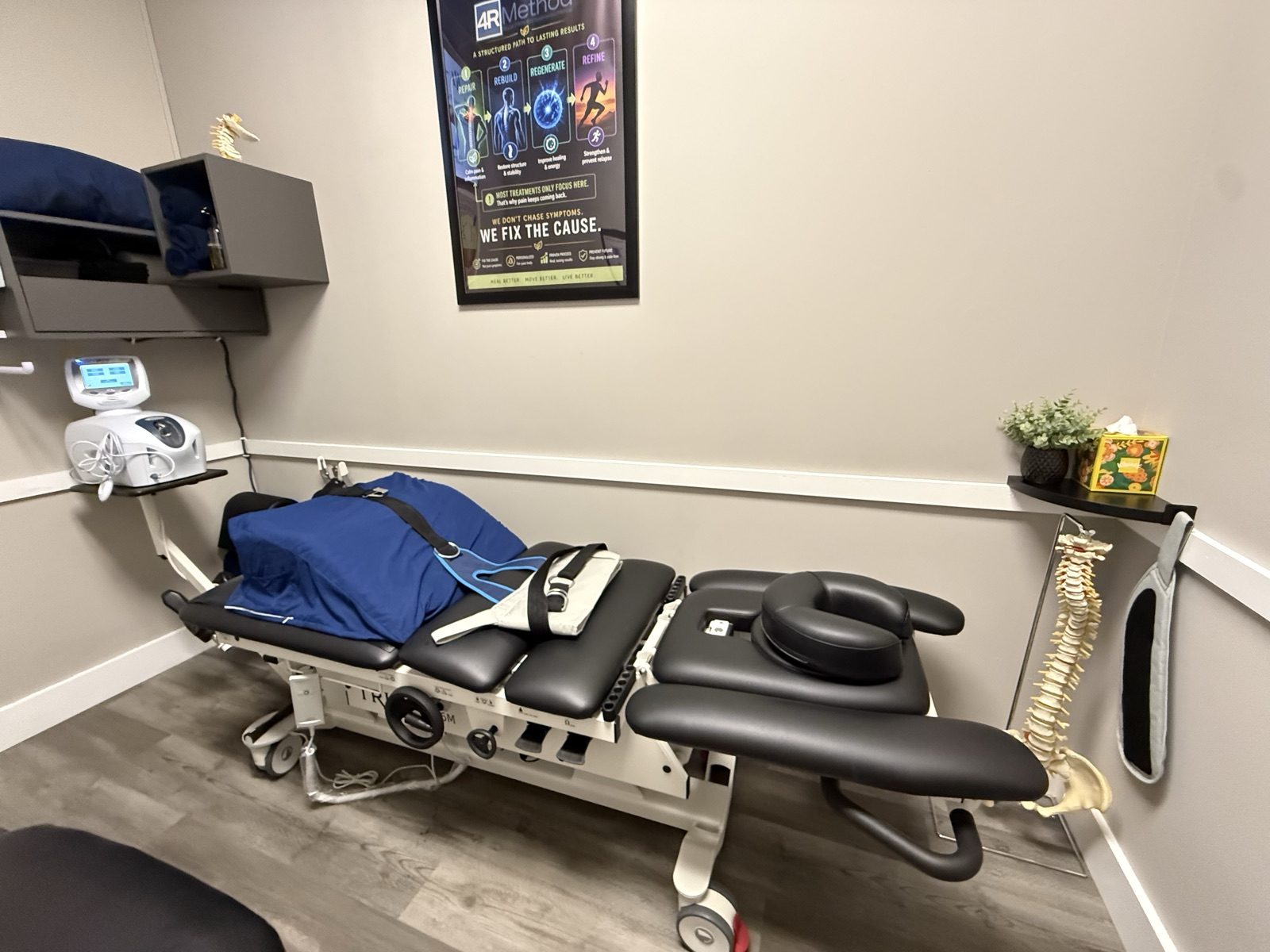
Rehab typically begins once the Repair phase has calmed the pain — after spinal decompression has quieted a disc, or adjustments have freed a locked joint. In Rebuild, a visit often pairs a corrective adjustment with 20–30 minutes of supervised rehab on the same day: the adjustment puts the segment in a better position, and the exercise immediately teaches the muscles to hold it there.
In the Regenerate phase (2 visits/week, 2+ months)
Rehab progresses to strength, endurance and sport-specific loading while red light, PEMF and recovery therapies support tissue adaptation. By the end of Regenerate you are training, not treating — and your Refine-phase tune-ups are brief because the stabilizers are doing the work between visits.
Why the order matters
Strengthening an inflamed, guarded spine makes it guard harder. Adjusting a spine with no muscular support makes the correction slip. Repair first, then Rebuild — that sequence is the whole point of the 4R Method.
Who benefits from physical therapy in Coral Springs?
Anyone whose pain keeps coming back is a candidate, because recurrence is almost always a stability problem. The people we see most:
- Recurring low back pain — the back that goes out with a sneeze or a suitcase. See our lower back pain guide.
- After a disc injury or sciatica, once decompression has done its work and the disc needs protecting for good — see herniated discs.
- Neck pain and tech neck with weak deep neck flexors and rounded shoulders from desk and phone posture — see neck pain relief.
- Hip and SI joint pain driven by weak glutes and a pelvis that keeps rotating.
- Athletes — golfers, tennis and pickleball players, runners, and high-school and college athletes in sports injury rehab who need return-to-play criteria, not just rest.
- Post-surgical patients cleared by their surgeon who want to rebuild properly rather than drift back into old patterns.
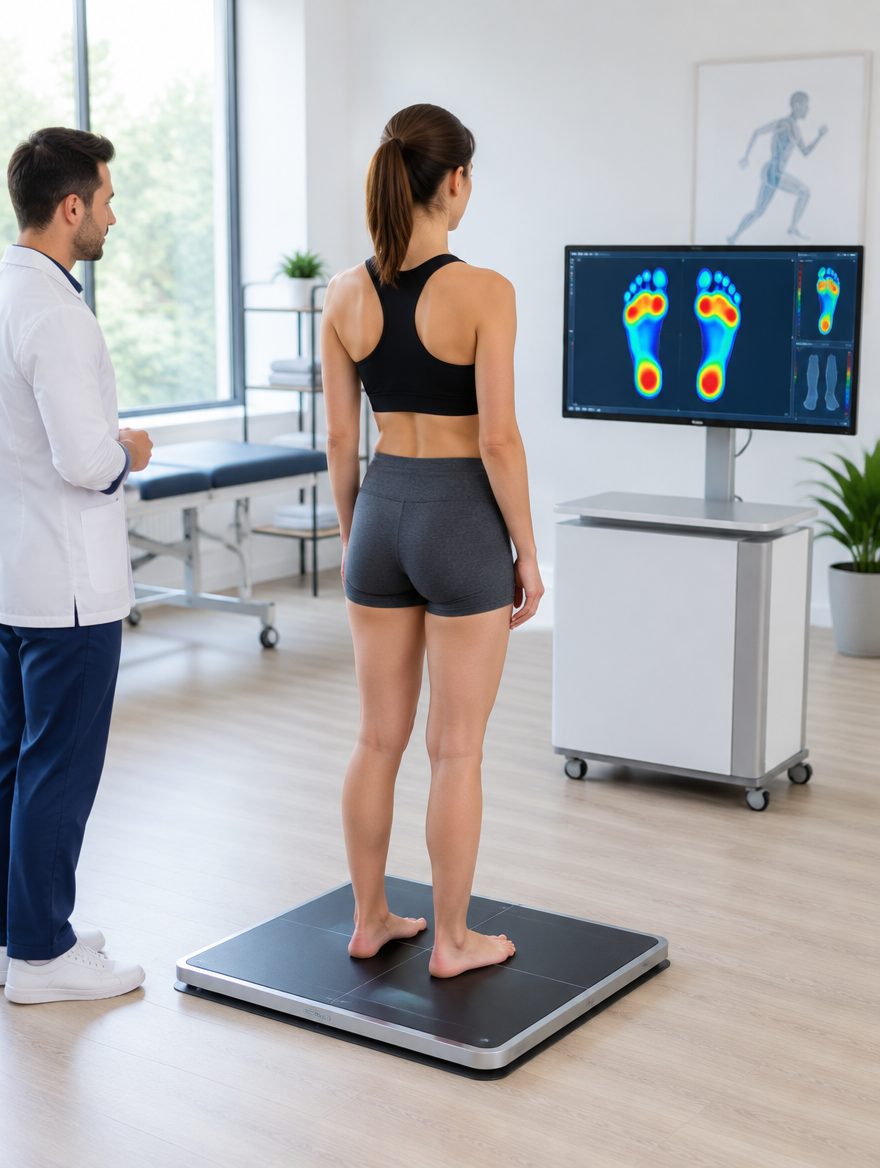
Rehab is also where we address what the GaitScan finds — foot and gait mechanics that load one side of the spine with every step on the Coral Springs sidewalks or the Parkland trails.
What does a sample rehab progression look like?
Every plan is individual, but a lower back case usually follows a recognizable arc. This example is for a desk worker with recurring low back pain and a settled disc:
- Weeks 1–2 · Foundations. Diaphragmatic breathing, transversus abdominis activation, hip hinge pattern with a dowel, 90/90 hip mobility. Short, daily, pain-free.
- Weeks 3–5 · Stabilization. Dead bugs, bird-dogs with a band, side planks from the knees, glute bridges, supported split squats. Three sets, controlled tempo, neutral spine throughout.
- Weeks 6–9 · Loading. Full side planks, suitcase carries, goblet squats, Romanian deadlifts with light load, anti-rotation presses. Strength is built on the pattern, never ahead of it.
- Weeks 10–14 · Integration. Rotation with resistance, single-leg work, loaded carries for distance, and the specific movements of your sport or job. Re-test with surface EMG and movement screens.
- Ongoing · Maintenance. A 15-minute home routine two or three times a week, plus Refine-phase tune-ups every month or two.
Each session in the clinic is supervised and hands-on; the home program between visits is short enough that people actually do it.
What to expect at your first two visits
Rehab starts with measurement, just like everything else here. We need to know what is weak, what is tight, and what is guarding before we prescribe a single exercise.
Visit one — we measure (and usually begin care)
A conversation about your history and goals; a hands-on structural exam with posture, range of motion, movement screens and strength testing; surface EMG and thermal scanning to map guarding and nerve irritation; and digital X-rays when indicated.
Visit two — report of findings, and the full plan is set
Dr. Cohen explains the findings, where you start in the 4R Method, and how rehab and chiropractic care will be sequenced. Most patients have already begun care on visit one; this is where the full plan takes over. For many people, the first rehab session is foundations — breathing and activation — and it is more challenging than it sounds. The 60-second spine assessment is a useful head start if you want your Spine Score before you arrive.
The National Institute of Neurological Disorders and Stroke notes that staying active and strengthening the core and back muscles are among the most effective ways to recover from and prevent low back pain (NINDS, Back Pain). Our rehab program is that advice, supervised and progressed properly.
Serving physical therapy patients across North Broward
Our clinic at 5675 Coral Ridge Drive, Coral Springs, FL 33076 serves Coral Springs, Parkland, Coconut Creek, Margate, Boca Raton, Tamarac, Pompano Beach and Deerfield Beach. Same-day appointments are usually available — call (954) 341-2256 or book online. Most patients from Parkland and Coral Springs are here in under 15 minutes.
Medically reviewed by Dr. Jared Cohen, DC — Co-Founder & Clinical Director, The Spine and Wellness Center. Last reviewed October 2026.
Frequently asked questions
Do I need a referral for physical therapy at TSAWC?
No. Rehab here is part of your chiropractic care plan and is prescribed after your exam on visit one. If you are coming from a surgeon or physician, bring your clearance and any imaging, and we will build the program around their guidance.
When does rehab start — right away or after the pain settles?
Usually after the Repair phase has calmed the pain, because strengthening an inflamed, guarded spine makes it guard harder. Gentle breathing and activation work can begin earlier; progressive loading waits until adjustments and decompression have stabilized the segment.
How long does physical therapy take to work?
Most people feel more stable within three to four weeks and notice fewer flare-ups by weeks six to eight. The Rebuild phase runs 8–16 weeks at 2–3 visits a week, and the home program between visits is 10–15 minutes. Re-scans confirm progress objectively.
Is this the same as going to a gym or doing yoga?
No. General exercise strengthens what is already working; rehab targets the specific deep stabilizers that switched off after your injury, in the specific pattern your spine needs, with hands-on correction. Once that foundation is rebuilt, gym and yoga become safe and useful again.
Will physical therapy help after decompression for a herniated disc?
Yes — it is the step that protects the result. Decompression lowers pressure on the disc; rehab rebuilds the core and hip control that keeps pressure low when you sit, lift and play. Patients who complete Rebuild have far fewer recurrences than those who stop when the pain stops.
Can athletes do sport-specific rehab here?
Yes. Return-to-sport work is built into the fourth stage of rehab — rotation for golf and tennis, lateral loading for pickleball and soccer, throwing mechanics for baseball — with objective return-to-play criteria rather than guesswork.
Same-day appointments
Let's fix the cause.
Measure first, then treat — a plan built on your actual structure.
- Same-day appointments are usually available
- Our team calls you back to confirm your visit
- Coral Springs, serving Parkland & North Broward since 2005
Prefer to talk now? Call or text (954) 341-2256