
Sports & Performance · 6 min read
Golfer’s & Tennis Elbow: Relief That Lasts
Nagging elbow pain from gripping, lifting or swinging usually points to an overloaded tendon. Here is how to treat it for good — not just numb it.

Quick answer
Golfer's and tennis elbow are both tendinopathies: the forearm tendons that attach to the inner (golfer's) or outer (tennis) bump of the elbow are loaded faster than they can repair. Lasting relief comes from calming the tendon, then rebuilding its capacity with progressive loading, grip mechanics and shoulder and neck correction — not from rest alone.
What golfer’s and tennis elbow really are
Golfer’s and tennis elbow are two versions of the same problem: epicondylitis, an overload of the tendons that anchor the forearm muscles to the bony bumps of the elbow. Tennis elbow (lateral epicondylitis) affects the outer bump, where the muscles that extend the wrist and fingers attach. Golfer’s elbow (medial epicondylitis) affects the inner bump, where the muscles that flex the wrist and grip attach.
Despite the names, most people who get these have never held a racket or a club. Painters, plumbers, nurses, parents lifting toddlers, and anyone typing with a mouse all day get them too. In Coral Springs and Parkland, pickleball has become the most common sporting trigger we see, followed by golf and tennis.
The important detail: after the first few weeks, this is rarely an inflammation problem. Research summarized by the American Academy of Orthopaedic Surgeons shows the tendon develops disorganized, poorly healed tissue — a tendinosis — which is why anti-inflammatories and rest give only temporary relief. The tendon needs to be rebuilt, not just quieted.
Causes and how to tell golfer’s and tennis elbow apart
Epicondylitis builds when a tendon is loaded faster than it can adapt. The usual contributors:
- Repetitive gripping, twisting or lifting — tools, racquets, kettlebells, the steering wheel.
- A sudden jump in activity: a new pickleball habit, a weekend of yard work, a heavier racquet.
- Technique faults such as a late backhand or a wristy golf swing that make the forearm do the shoulder’s job.
- Weak or stiff shoulders and a stiff mid-back, which push load down the chain to the elbow.
- A neck component: an irritated C6–C7 nerve root can make the forearm muscles tight and the elbow slow to heal — see is it carpal tunnel or a neck problem?
Telling them apart is usually simple. Tennis elbow hurts on the outside and flares when you extend the wrist against resistance, lift a kettle with the palm down, or shake hands. Golfer’s elbow hurts on the inside and flares when you flex the wrist or grip hard, and it can tingle into the ring and little fingers if the nearby ulnar nerve is irritated. Both can make a coffee mug feel heavy and the morning stiff.

6 proven steps to golfer’s and tennis elbow relief that lasts
This is the sequence we use in our tennis and golfer’s elbow program. The order matters: calm first, then load.
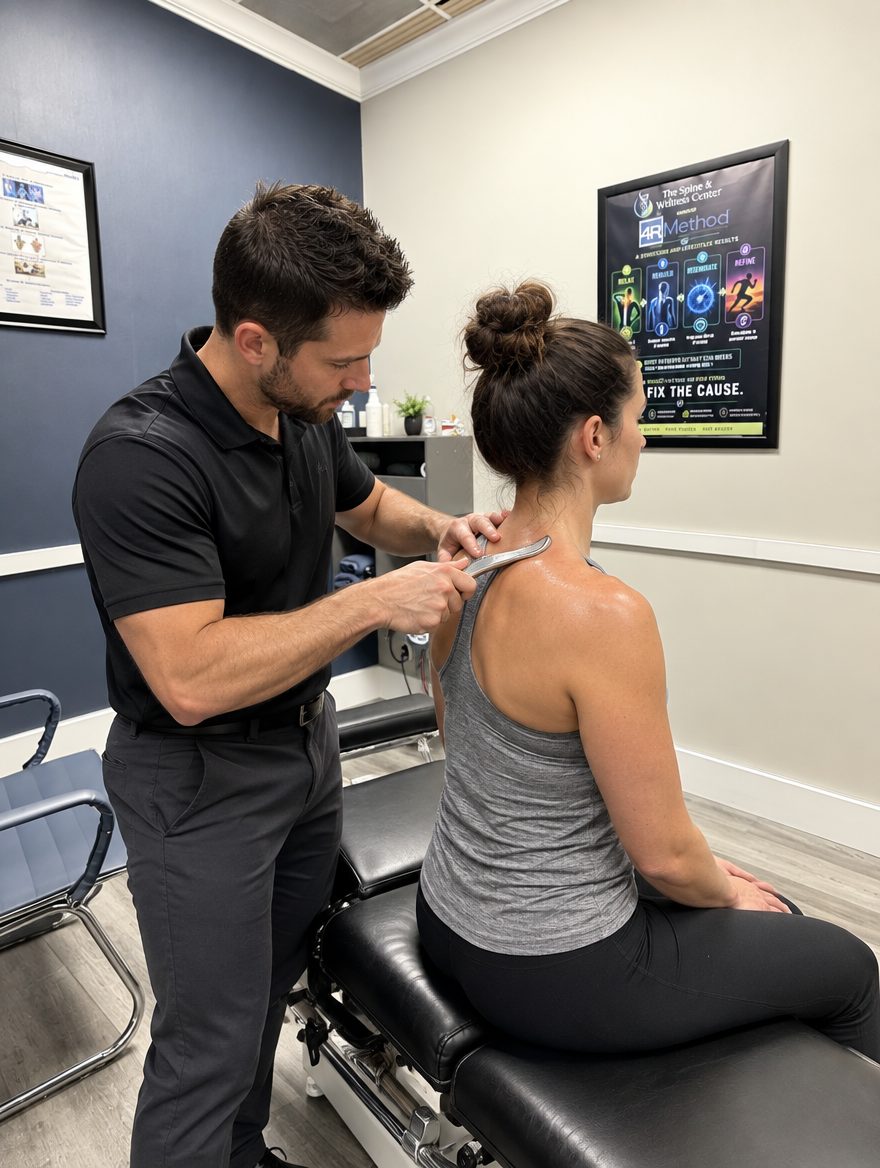
- Measure, then modify the load. We find exactly which tendon is involved and which activities overload it. You rarely need to stop everything; you need to change grip size, technique and volume for a few weeks.
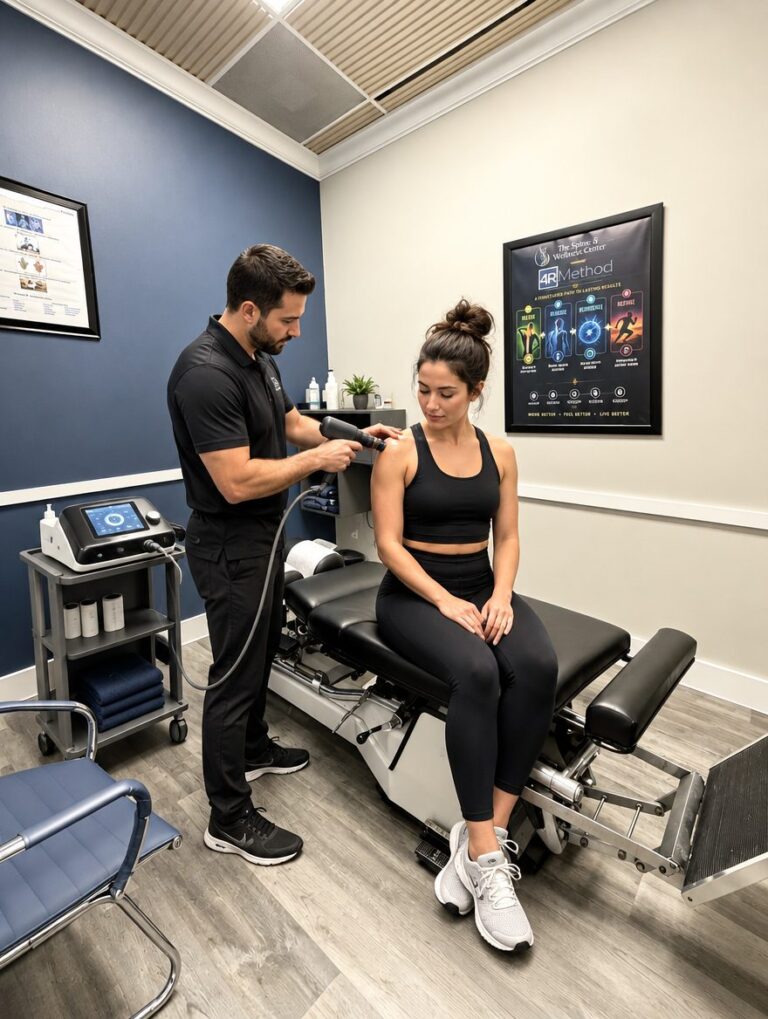
- Calm the tendon. Cold laser and therapeutic ultrasound reduce pain sensitivity; a counterforce strap offloads the attachment during the day.
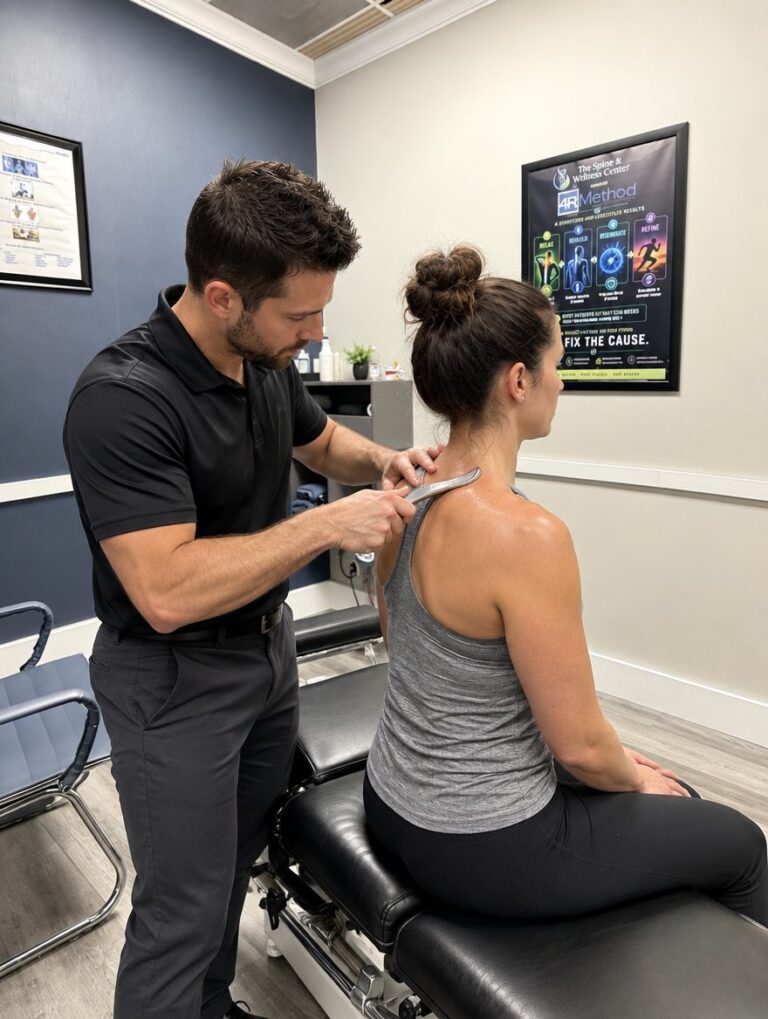
- Restart healing in the tissue. Graston Technique and, for chronic cases, acoustic shockwave therapy stimulate the stalled tendon to remodel.
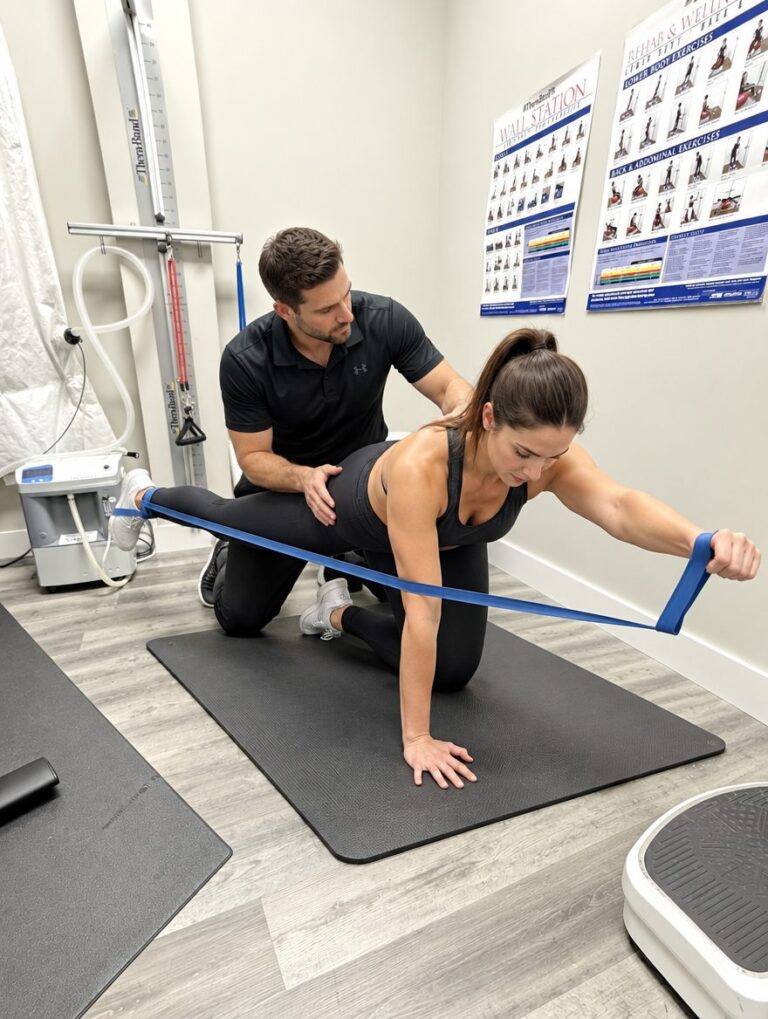
- Load it progressively. Slow, heavy eccentric and isometric wrist exercises are the most evidence-backed part of the plan. Done consistently, they rebuild the tendon’s capacity over 8–12 weeks.
- Fix the chain above it. Shoulder, mid-back and neck mobility and strength take the load off the forearm. This is the step most home programs skip, and the reason elbows relapse.
- Return to sport with a plan. Graduated volume, technique check, and the right equipment. For athletes we fold this into a structured return-to-play.
Where elbow care sits in the 4R Method
Our 4R Method fits tendon problems well. Repair (2–3 visits a week for 4–6 weeks) is steps one through three: offload, calm and restart the tissue. Rebuild (2 visits a week for 8–12 weeks) is the progressive loading and the shoulder-and-neck correction. Regenerate adds red light and PEMF for tissue quality, and Refine is monthly maintenance for people who play a lot and want to keep playing.
It starts with a first visit where we measure: a conversation about your sport and your work, a hands-on exam of the elbow, wrist, shoulder and neck, surface EMG and thermal scanning, and imaging only when indicated. Visit two is your full report of findings and plan. If your work rather than a sport is the driver, our repetitive strain injury page covers the ergonomic side.
Tennis & golfer's elbow treatment
Our full conservative program for lateral and medial epicondylitis.
Learn moreGraston Technique
Instrument-assisted soft-tissue therapy to restart tendon healing.
Learn moreAcoustic shockwave therapy
For chronic tendinopathy that has stopped responding.
Learn moreRepetitive strain injury treatment
When the keyboard, the mouse or the tools are the cause.
Learn moreWhat you can do at home starting today
- Grip lighter. Loosen the handshake on the racquet, club and steering wheel; a larger grip size often helps tennis elbow.
- Lift with the palm up (golfer’s elbow) or palm down (tennis elbow) only within comfort; carry bags on the forearm instead of the fingers.
- Isometric hold: press the wrist gently against the other hand for 30–45 seconds, 4–5 times, twice a day. This reduces tendon pain in many people.
- Open up the chest and mid-back daily; a stiff thoracic spine pushes load to the elbow.
- Warm up before play and build volume gradually — 20 percent more per week is a reasonable ceiling.
Stop any exercise if pain radiates, if the hand goes numb or weak, or if symptoms worsen for more than a day afterward. Sudden swelling, an inability to straighten the elbow, or a pop followed by weakness should be evaluated promptly — please see a doctor or urgent care today. For the ordinary, stubborn kind, an elbow that has hurt for more than six weeks has usually stopped healing on its own and is worth a proper plan. Athletes can also read our broader guide to chiropractic for athletes.
Serving elbow pain patients across North Broward
Our clinic at 5675 Coral Ridge Drive, Coral Springs, FL 33076 serves Coral Springs, Parkland, Coconut Creek, Margate, Boca Raton, Tamarac, Pompano Beach and Deerfield Beach. Same-day appointments are usually available — call (954) 341-2256 or book online. Most patients from Parkland and Coral Springs are here in under 15 minutes.
Medically reviewed by Dr. Jared Cohen, DC — Co-Founder & Clinical Director, The Spine and Wellness Center. Last reviewed October 2026.
Frequently asked questions
How long does golfer's or tennis elbow take to heal?
With a structured plan, most people feel meaningful relief within 4 to 6 weeks and reach durable, full-load function in 3 to 4 months, because tendon remodels slowly. Left to rest alone, epicondylitis commonly lingers for a year or more. The progressive loading phase is what shortens the timeline and prevents relapse.
Should I rest completely or keep playing?
Neither extreme. Complete rest lets the tendon weaken further; playing through it keeps re-injuring it. We modify technique, grip and volume so you can stay active in a reduced way while the tendon calms, then progress back to full play in stages.
Do I need a cortisone injection for tennis elbow?
Injections can reduce pain for a few weeks but do not rebuild the tendon, and repeated injections may weaken it. Most guidelines now favor progressive loading and soft-tissue therapy first. We are happy to coordinate with your physician if an injection is being considered.
Can neck problems cause elbow pain?
Yes. An irritated nerve root at C6 or C7 can keep the forearm muscles tight and slow tendon healing, and sometimes refers pain to the elbow directly. That is why our exam includes the neck and shoulder, not just the sore spot.

Same-day appointments
Reading about it is step one.
Step two is a measurement. Visit one we measure — and usually begin care; visit two you get your full findings and plan.
- Same-day appointments are usually available
- Our team calls you back to confirm your visit
- Coral Springs, serving Parkland & North Broward since 2005
Prefer to talk now? Call or text (954) 341-2256