
Stretches & Exercises · 6 min read
Neck feeling tight? Try this 30-second stretch
Screens, stress and posture make a tight neck almost inevitable. One move you can do at your desk or in the car, plus the signs that tightness has become something more.

Quick answer
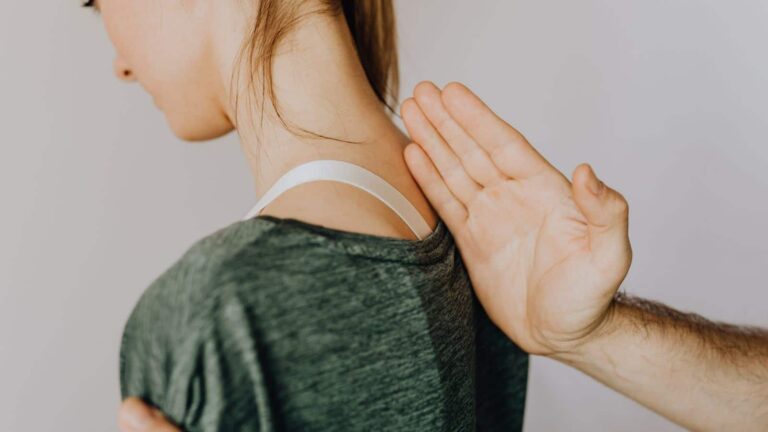
The upper trapezius release is a 30-second stretch for a tight neck: sit tall, let one arm hang, tilt your ear toward the opposite shoulder, rest the other hand lightly on your head to guide it, breathe slowly for 30 seconds, then switch sides. It lengthens the muscle that forward-head posture and stress overwork. Stop if pain radiates into the arm.
Why your neck feels tight in the first place
A 30-second stretch works because of what it undoes. The upper trapezius runs from the base of the skull and the neck out to the top of each shoulder, and its job is to hold the head up and the shoulders level. Every hour your head drifts forward toward a screen, that muscle works harder; every stressful meeting or slow drive on the Sawgrass, your shoulders creep up toward your ears and it works harder still.
Four things feed the tightness most people in Coral Springs and Parkland describe to us:
- Forward-head posture. For every inch the head sits forward of the shoulders, the neck muscles carry noticeably more load.
- Stress. Emotional tension shows up physically as raised, braced shoulders; we wrote about that loop in How Stress Affects Your Spine.
- Stillness. Sitting for hours lets tension accumulate with no movement to discharge it.
- Imbalance. Tight chest and upper traps paired with weak mid-back muscles pull the shoulders forward and the neck along with them.
Left alone, that pattern leads to restricted turning, headaches that start at the base of the skull and, eventually, irritation of the nerves leaving the lower neck. Stretching the right muscle the right way interrupts it.
The 30-second stretch, step by step
This is the upper trapezius release. It targets the exact muscle most people grab when they say “my neck is tight,” and it can be done at a desk, in a parked car or in line at Publix.
- Sit or stand tall and roll your shoulders back and down.
- Let one arm hang heavy at your side, or hold the seat of your chair with that hand to anchor the shoulder.
- Gently tilt your head so your ear moves toward the opposite shoulder, nose still pointing forward.
- Rest your other hand on the side of your head. Let its weight guide the stretch; do not pull.
- Hold for 30 seconds, breathing slowly. You should feel a stretch from the side of the neck into the top of the shoulder.
- Release slowly, return to center, and repeat on the other side.
One round per side, two or three times a day, is plenty. More is not better; the goal is to remind the muscle it is allowed to let go, not to force length into it.
Stop if
Stop the stretch if pain radiates into the arm or hand, if you feel dizzy, or if symptoms worsen afterward. Please see a doctor or urgent care today for neck pain with fever, a severe sudden headache, numbness or weakness, or after a fall or collision.

Why this 30-second stretch works
The upper trapezius becomes overactive and shortened under forward-head posture and stress. A shortened muscle pulls on the base of the skull and the neck vertebrae, restricts how far you can turn, and refers pain up into the back of the head. Lengthening it gently, with slow breathing, lowers the muscle’s resting tension, improves range of motion and gives the posture a chance to reset.
Slow nasal breathing matters more than it seems. The upper traps are accessory breathing muscles; shallow chest breathing keeps them switched on. Thirty seconds of calm breathing tells the nervous system the shoulders can come down.
If the stretch feels too easy, add a gentle chin tuck first: draw the chin straight back as if making a double chin, then tilt. That shifts the stretch slightly toward the levator scapulae, the other muscle that aches at the top of the shoulder blade after a long day. Keep it gentle; a stretch you can breathe through is the right intensity.
Pair it with the desk habits in Tech Neck: Relief Tips for Desk Workers and the right pillow setup from The Best Sleeping Position for Neck Pain, and the stretch stops being a rescue and becomes maintenance.
When stretching is not enough
A stretch relieves tension; it does not correct the reason the tension keeps coming back. If your neck is tight every day despite stretching, the driver is usually structural: a stiff segment in the lower neck, a forward-head posture that has become your default, or an irritated joint that the muscles are guarding. The Mayo Clinic lists muscle strain, worn joints, nerve compression and injury among the common causes, and only the first responds to stretching alone.
Signs it is time for an evaluation rather than another stretch:
- Tightness that is there most days for more than two or three weeks
- Headaches that begin at the base of the skull
- Reduced ability to turn your head, especially when backing up the car
- Tingling, numbness or pain into the shoulder, arm or hand
- Dizziness or a feeling of being off-balance with neck movement
At The Spine and Wellness Center, visit one measures the neck: a conversation, a hands-on structural exam, surface EMG and thermal scanning to show which muscles are overworking, and digital X-rays when indicated. Visit two is the report of findings and the plan. For persistent tension that usually means neck pain relief through gentle adjustments, soft-tissue release or massage therapy, and a short posture correction program in the Rebuild phase of the 4R Method so the muscle stops being asked to do the spine’s job.
If the tightness has been telling you something for a while, Neck Tension Might Be Telling You Something explains what it may mean, and a spine assessment is where the answer starts. Our full neck pain treatment page covers the options.
Serving neck tension patients across North Broward
Our clinic at 5675 Coral Ridge Drive, Coral Springs, FL 33076 serves Coral Springs, Parkland, Coconut Creek, Margate, Boca Raton, Tamarac, Pompano Beach and Deerfield Beach. Same-day appointments are usually available — call (954) 341-2256 or book online. Most patients from Parkland and Coral Springs are here in under 15 minutes.
Medically reviewed by Dr. Jared Cohen, DC — Co-Founder & Clinical Director, The Spine and Wellness Center. Last reviewed October 2026.
Frequently asked questions
How often should I do the 30-second stretch?
One hold of 30 seconds per side, two or three times a day, is enough for most people. Do it after long stretches of screen time or driving. More repetitions or longer holds do not add benefit and can irritate a sensitive neck; the goal is to remind the muscle to release, not to force it.
Is it safe to stretch my neck every day?
Yes, gentle daily stretching like the upper trapezius release is safe for most people and helps keep tension from accumulating. Stop if you feel sharp pain, dizziness or tingling into the arm, and get evaluated. Skip self-stretching after a fall or collision until the neck has been examined.
Why does my neck still feel tight after stretching?
Because the stretch relieves tension but does not fix what keeps producing it: forward-head posture, a stiff segment in the lower neck or an irritated joint the muscles are guarding. Tightness that returns daily despite stretching usually needs structural care and posture correction, not more stretching.
When should I see a chiropractor for a tight neck?
See us if tightness is present most days for more than two or three weeks, comes with headaches at the base of the skull, limits how far you can turn, or includes tingling, numbness or pain into the arm. Those are signs the cause is a joint, disc or nerve rather than a muscle alone.
Same-day appointments
Reading about it is step one.
Step two is a measurement. Visit one we measure — and usually begin care; visit two you get your full findings and plan.
- Same-day appointments are usually available
- Our team calls you back to confirm your visit
- Coral Springs, serving Parkland & North Broward since 2005
Prefer to talk now? Call or text (954) 341-2256